Hawaii
hale kiawe: walker warner's hidden gem along the hawaiian coastline


a minimalistic hawaiian haven
San Francisco-based architecture firm Walker Warner takes to Kailua-Kona, Hawaii to complete Hale Kiawe, a contemporary dwelling sited amidst a grove of kiawe trees. The project embodies a minimalist aesthetic while maintaining a warm, welcoming atmosphere through a palette of natural materials and interiors bathed by patterned sunlight filtered through its timber facades. Designed for simplicity and inspired by principles of Vastu Shastra — an ancient Hindu architecture theory — the family home offers a tranquil escape that prioritizes connection with nature and harmonious living.
images © Matthew Millman
walker warner draws from hindu design principles
The architects at Walker Warner design Hale Kiawe to reflect the client’s desire for a space that is stripped down to the essentials. Informed by Vastu Shastra, the layout centers around the entry, facing east as per Indian tradition, and unfolds into a series of different living areas. Open and spacious, these rooms offer a sense of serenity and renewal while maintaining a minimalist aesthetic. Taking cues from the pastoral structures that once dotted the landscape, the home features simple lines and geometries clad in corrugated metal roofing and natural wood siding. This contrasts with the undulating landscape and postcard coastline beyond.
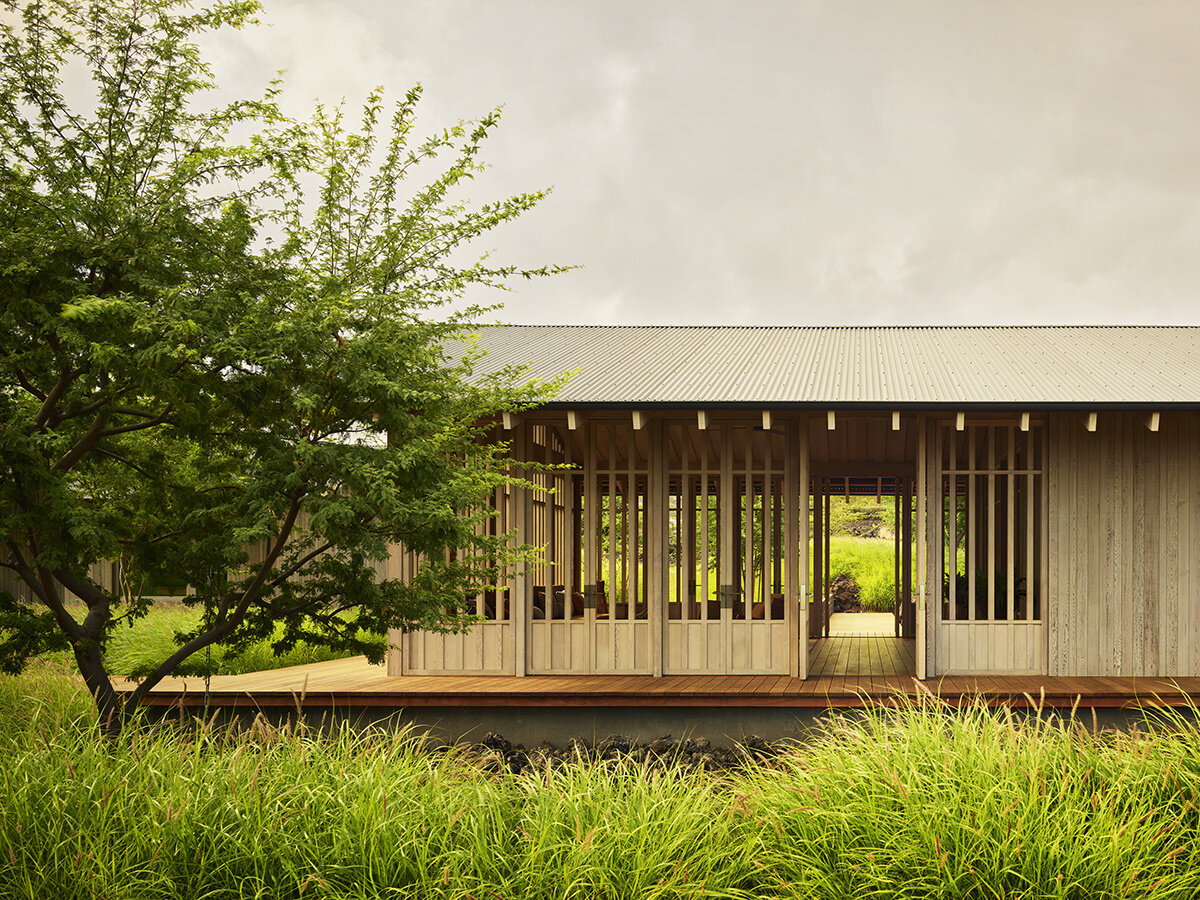
Hale Kiawe embraces simplicity, inspired by Vastu Shastra principles
hale kiawe is hidden amidst lush grasses and lava rock
The east-facing entry of Walker Warner’s Hale Kiawe is hidden from the road and leads through a meandering pathway toward a water feature and an enclosed lanai. This tranquil open-air pavilion serves as the heart of the home. The architecture rests gracefully above a bed of tall grasses and lava rock, reflecting the arid climate’s influence on the open design. Large windows and full-height doors throughout the house offer scenic views and maintain a strong connection with the natural surroundings. The muted color palette further reflects the landscape, avoiding competition with the natural beauty of the island.
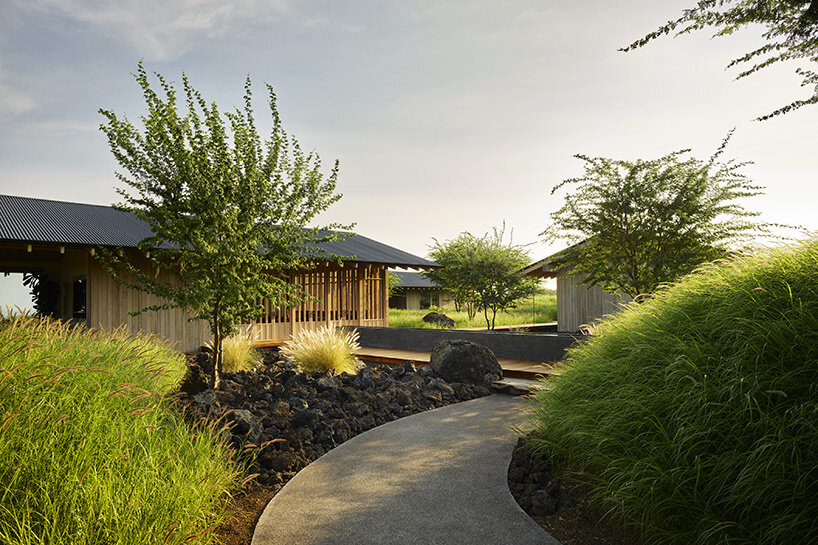
a meandering path leads to a tranquil lanai, the heart of the home
The once barren terrain has been transformed into a lush oasis with native and naturalized plant-life. This delicate balance between vegetation and lava flows is sheltered under the canopy of kiawe trees. The thoughtful integration of plants weaves together the built space and landscape, lending a sense of unity. The interiors feature custom-made furniture sourced from Bali, Mexico, and India, reflecting the homeowners’ diverse background. Kiawe wood, sourced locally whenever possible, is used for various elements, including the master bedroom’s desk and side tables, and the headboard crafted from Hawaiian Ash.
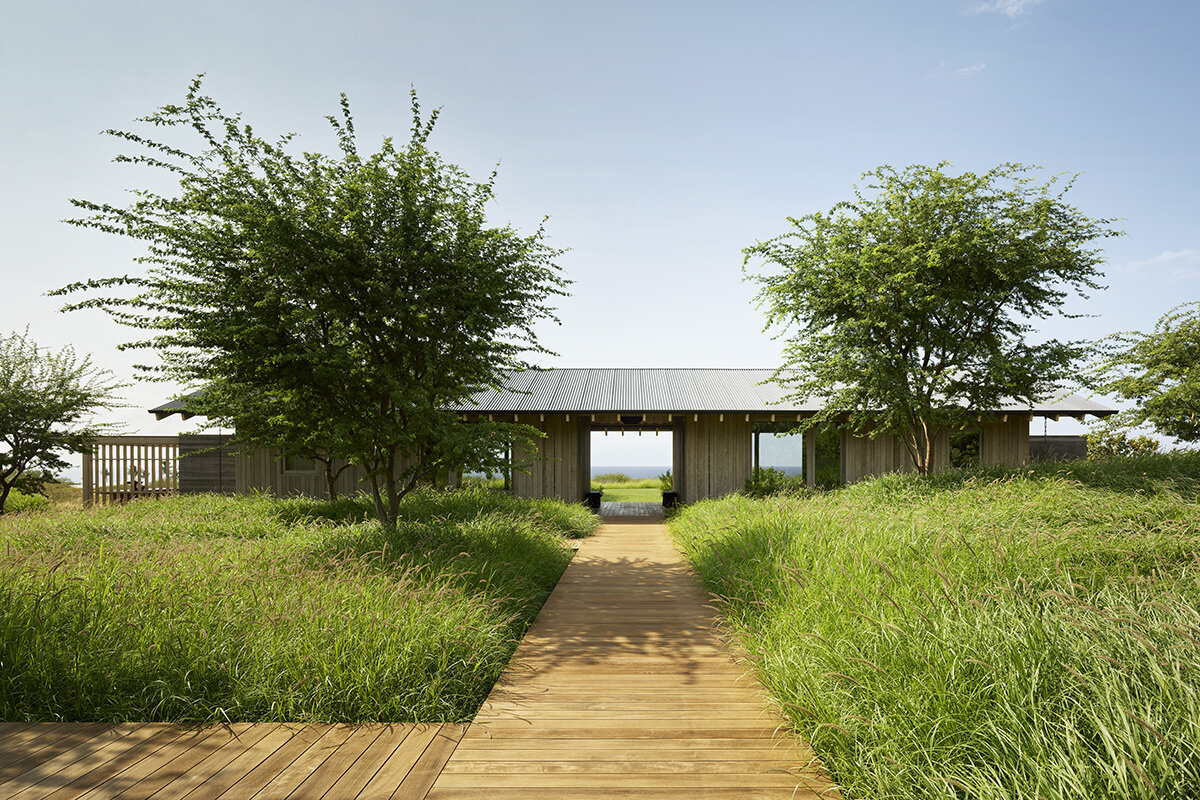
open living spaces and natural materials connect interiors to the Hawaiian landscape 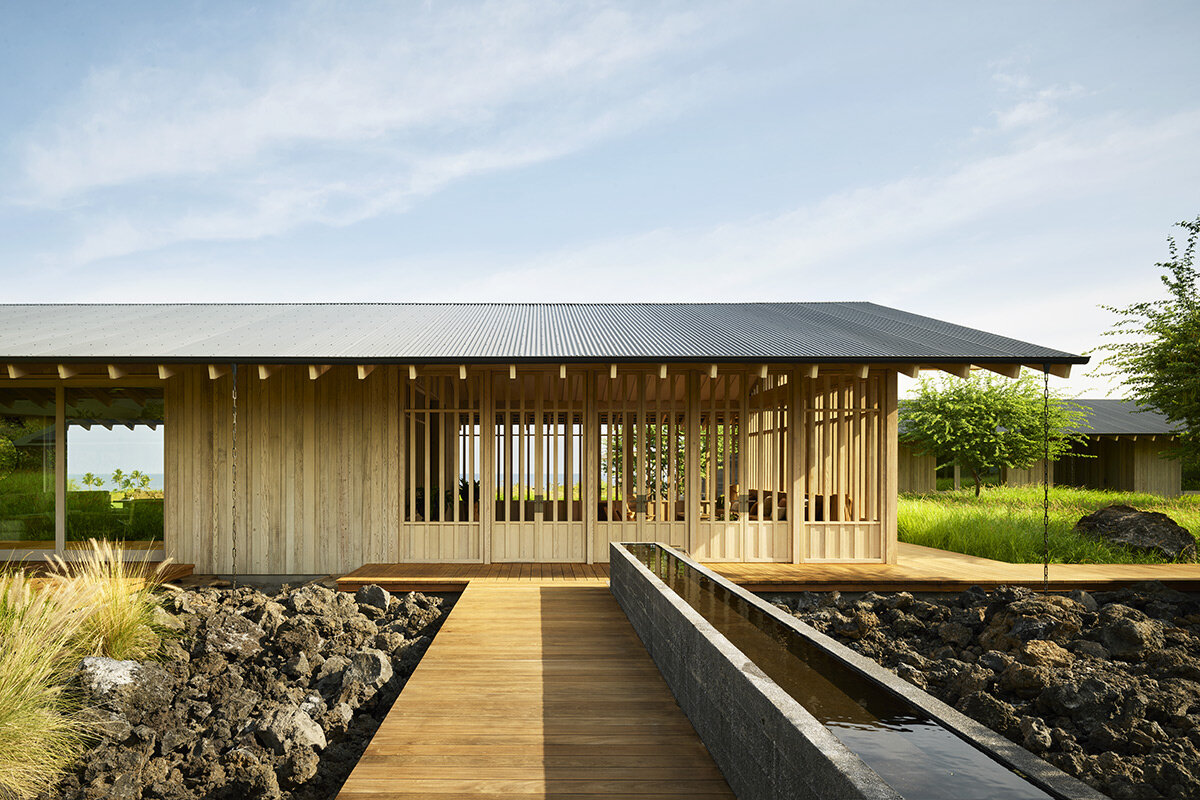
the architecture is hidden amongst native plants and lava flows



HONOLULU (HawaiiNewsNow) – A hiker was rescued after suffering a medical emergency on the Diamond Head Crater Trail Saturday morning.
The Honolulu Fire Department said crews responded at about 10:30 a.m. after a woman in her 30s became unable to descend from the top of the trail.
Firefighters climbed the trail on foot while another crew prepared a nearby landing zone for air operations.
HFD’s Air 1 helicopter inserted rescue personnel to the woman’s location, where they assessed her condition and provided basic life support.
The hiker was then airlifted to the landing zone and transferred to Honolulu Emergency Medical Services shortly after 11 a.m.
No firefighter injuries were reported.
Copyright 2026 Hawaii News Now. All rights reserved.
Hawaii
Filipino dignitaries embrace RIMPAC hospitality amid outside protests – Hawaii Tribune-Herald

Aboard the Philippine navy ship BRP Miguel Malvar on Wednesday night, prominent members of Honolulu’s Filipino community rubbed shoulders with military personnel and diplomats as they wined and dined on its deck in Pearl Harbor before the ship set sail to join other warships participating in the biennial Rim of the Pacific exercise.
“This warm atmosphere, the smiles, enthusiastic conversations truly echo the spirit of Filipino hospitality, or bayanihan … central to Filipino psychology, which means we see ourselves in others,” said Vice Admiral Jose Ezpeleta, the Philippine navy’s top officer, as he addressed attendees at Filipino Community Night reception.
“These cherished Filipino values and rich heritage are primarily reflected and carried out by you, our Filipino community,” Ezpeleta said. “Serving as a final bridge that links the Philippines to the United States cultures and peoples, and beyond defense and security, these vibrant people-to-people ties clearly form part of the foundational cornerstone of the Philippines and the United States of America.”
But outside the base’s gates on Kamehameha Highway, about 20 protesters carried signs and shouted slogans condemning the Philippine military’s participation in RIMPAC. During the protest, part of the group went to the base’s Halawa Gate and stood outside it until base security officials asked that they step back and return to the road.
The group included members of the Ho‘opae Pono Peace Project, Anakbayan Hawaii, Democratic Socialist of Oahu, Hawaii Coalition for Human Rights in the Philippines, the Party for Socialism and Liberation, Social Medicine Hawaii, and the Filipino Artist Movement.
“Everyone here is here because they love someone and they know someone that’s been impacted by U.S. militarism across the world” said Silayan Camson, a member of Filipino Artists Movement. “We’re all united in that struggle. U.S. militarism is one of the number one polluters in the world, and it has also spread across not only in the Asia-Pacific, but also in the Middle East, and that impacts day-to-day working people here, not only here in Hawaii, but across the oceans into the Philippines.”
In a statement preced-ing the protest, the HICHRP said that “while mainstream media views RIMPAC as providing valuable opportunities for the Philippine Navy to enhance interoperability with its allies and partners, the Philippines continues to enter into military agreements with the U.S. at the expense of its people.
“Filipino citizens risk becoming collateral damage amidst increasing U.S. tensions with China,” the group said. “Recent events, including the massacre of 19 individuals, including two Filipino-Americans in Negros Occidental, highlight the dire human rights situation in the Philippines.”
The American citizens in question were Lyle Prijoles, 40, and Kai Dana-Rene Sorem, 26. Both had friends in Hawaii, who gathered with local activists to hold vigils after their deaths. They were among a group of activists and researchers taking part in a program put together by leftist organizers taking them into the countryside.
They were killed in a controversial operation by Philippine army troops hunting down members of the New People’s Army — the armed wing of the Communist Party of the Philippines — in the town of Toboso.
The Philippine military described it as an hours-long gun battle with rebels that wounded one soldier before they ultimately called in air support, while activists say indiscriminate strafing fire from the sky rained down on helpless civilians below. The NPA has confirmed that 10 of those killed in the incident were armed members of the group, but maintains the other nine were unarmed civilians.
“The U.S. has been assisting and aiding the Philippine military and its human rights abuses,” argued Camson, who told the Honolulu Star-Advertiser that Prijoles and Sorem were “learning about Filipino struggles in the Philippines, they were unjustly murdered by the Philippines military, and the Philippines military has continually neglected its people.”
Manila has sought to deepen military ties with countries around the region as it has been locked in a bitter dispute with Beijing over maritime territorial and navigation rights in the South China Sea, a busy waterway that nearly one-third of all global trade travels through.
Beijing claims nearly the entire sea as its exclusive territory over the objections of most neighboring countries and many others around the world who depend on goods flowing through it. In 2016 an international court ruled in favor of the Philippines and found that China’s claims have “no legal” basis.
China rejected the ruling and has built bases on disputed islands and reefs. The Chinese military also has harassed and sometimes attacked fishermen and other marine workers from the Philippines, including scientists trying to study the ecological impacts of operations in the area.
“The officers and sailors aboard this ship are more than members of our Armed Forces of the Philippines,” said Consul General Arman Talbo, the Philippines’ top diplomat in Hawaii. “They are our fellow Filipinos, our sons, our daughters, our brothers, our sisters, who have chosen a life of service. Their dedication helps safeguard our nation’s sovereignty, protect our people, and contribute to regional peace”
“The presence of this remarkable ship in Honolulu is the source of great pride for the Filipino community here in Hawaii,” Talbo said. “As one of the Philippine navy’s newest and most capable vessels, BRP Miguel Malvar reflects our nation’s steadfast commitment to modernizing its armed forces and strengthening its ability to secure peace, security, and stability in the Indo-Pacific.”
The U.S. military, for its part, has conducted frequent “freedom of navigation” operations through the region, increasingly in partnership with other countries, and frequently makes use of Subic Bay and other ports in the Philippines to support its operations.
While U.S. troops left permanent bases in the country in the 1990s after nationalist protests led to their eviction, training rotations by American forces and now those from other countries have increased amid tensions with China along with port calls by warships. Last year, President Donald Trump and Philippine President Ferdinand Marcos Jr. announced plans for Subic Bay to become a new arms manufacturing hub.
Camson argued that “Filipinos and the Philippine budget should be going toward people’s rights and education … The working conditions and working-class people of the Philippines are struggling while their leaders are busy participating in RIMPAC when they should be focusing on how to help Filipinos both in the U.S. and back in the Philippines.”
The Philippines is also among the most likely staging areas U.S. troops would use to respond to a Chinese invasion of Taiwan. The Philippine military’s top commander, Gen. Romeo Brawner, told his troops in the northern tip of the country last year to “start planning for actions in case there is an invasion of Taiwan.”
Brawner, an alumnus of the Daniel K. Inouye Asia-Pacific Center for Security Studies in Waikiki, asserted in his remarks that “if something happens to Taiwan, inevitably we will be involved. There are 250,000 (overseas Filipino workers) working in Taiwan, and we will have to rescue them.”
The Philippine navy also has sent ships, including the Malvar, to train as far away as India and Australia. Talbo said that he sees it as a source of pride that the Philippine navy can now regularly sail its ships across the vastness of the Pacific, arguing that years ago that would have been unthinkable.
Star-Advertiser photo editor George Lee contributed to this report.
Hawaii
Evacuations ordered for Buildings 4 and 5 of the Lofts in Waikōloa as firefighters continue response to brush fire | Big Island Now

July 10, 2026, 6:19 PM HST
* Updated July 10, 6:20 PM
This story was updated at 6:19 p.m. July 10, 2026.
Hawai‘i Fire Department issued a wildfire warning and is responding to a brush fire in the Waikōloa area of South Kohala, with evacuations ordered for Buildings 4 and 5 of the Lofts in Waikōloa Village.
An evacuation shelter is open at Waikōloa Elementary School cafeteria, located at 68-1730 Hoʻokō St.
Waikōloa Road from Paniolo Avenue to Highway 190 is closed. Hawai’i Police Department advises motorists to avoid the area for at least the next 4 hours.
Only local traffic will be allowed on Waikōloa Road from Paniolo Avenue to Queen Ka‘ahumanu Highway.
More information will be provided as it becomes available. Hawai’i County Civil Defense is providing updates as conditions change.
-
 Lifestyle34 minutes ago
Love Island and Pre-Teen Punks with Jason Narducy : Wait Wait… Don’t Tell Me!
-

 Technology46 minutes ago
Oregon’s Attorney General withdraws effort to delay Paramount and Warner Bros. merger
-

 World49 minutes ago
Gunfire shatters Toronto Latin street festival, leaving at least 2 dead and multiple wounded
-

 Politics54 minutes ago
Sen. Lindsey Graham dead at 71 after ‘brief and sudden’ illness, office says
-

 Health1 hour ago
Last American to use an iron lung dies at 78 years old after childhood polio diagnosis
-

 Sports1 hour ago
Conor McGregor’s long-awaited Octagon return cut short by apparent knee injury seconds into UFC 329
-

 Technology1 hour ago
Robotaxi pit stops could pop up near you
-
 Business1 hour ago
‘Moana’ debuted just 10 years ago. Why Disney is remaking it as a live-action movie

