Hawaii
Everyone Says Oahu’s Overcrowded. We Drove 20 Minutes Past Haleiwa And Found Beautiful Empty Beaches


Most visitors think Oahu’s North Shore stops at Haleiwa because that is where traffic builds to pandemonium, where beach parking fills earlier than you can imagine, and where sitting in your car between the familiar lineup of surf breaks and food trucks largely defines the experience. Once people have crawled through and found a place to stand at Waimea or Sunset, the mental box gets checked, and the car points back toward Honolulu fast, as if everything worth seeing has already been seen. But it hasn’t.
Instead of turning around at Haleiwa, we continued west on Farrington Highway and watched the storefronts fall away in the rearview mirror. The line of rental cars thinned fast as the road narrowed and the mountains got closer to the pavement. On the ocean side, long stretches of sand opened up, and within a few miles, we were seeing more wind in the ironwood trees than cars on the road or people on the beach.
Most visitors leaving Haleiwa head east toward Sunset Beach and Pipeline, where traffic stacks up endlessly and parking lots overflow. We went the other way. Out toward Mokuleia, the commercial North Shore disappears fast, and what replaces it is space. There are no visitors circling for stalls and no steady lines at food trucks. You can pull over without searching for the one open spot in a packed lot, and entire sections of beach sit quietly without the usual cluster.
Dillingham Airfield and the working North Shore.
One of the first landmarks after Mokule’ia Beach (which we will write about soon) is what most people still call Dillingham Airfield, though its official name is Kawaihapai Airfield. It is owned by the U.S. Army and managed by the State of Hawaii Department of Transportation under a 50-year lease, and it has been operated as a military installation since the 1920s, with HDOT taking over management in 1962. HDOT leases 272 acres of the 650-acre Dillingham Military Reservation and operates the single 9,000-foot runway, with the civilian side used heavily for gliders and skydiving while the Army retains first priority for air/land operations and uses the field for helicopter night-vision training.
As we drove past, it did not feel like a visitor attraction at all, even though you can spot the roadside signs for glider rides and skydiving. A small single-engine plane rolled down the runway and lifted off against the Waianae Mountains, then a glider followed, towed upward before separating and moving almost silently above the coastline. It is one of those North Shore scenes that makes you slow down without thinking about it, because it looks like real working Oahu rather than the marketed version, with runway, mountains, and open water all in the same frame and very few people around to make it feel like a production.
Camps that have been here for generations.
Close to the airfield are two oceanfront camps that rarely enter any typical Oahu visitor’s plans. The first is Camp Mokuleia, which sits along the shoreline and is owned by the Episcopal Church. If you’re not on a retreat, you can rent a campsite or tentalo on the beach. A little farther west is YMCA Camp Erdman, which opened in 1926 and is approaching its 100th anniversary, still renting oceanfront cabins and yurts to the public.
The accommodations are straightforward, with sand steps away from the doors and long views of the horizon. This is not a resort strip, and you won’t find any valet stands or infinity pools. Families gather around grills, kids move freely between cabins and the beach, while the ocean feels part of the daily backdrop more than it is an Instagram photo opportunity.
Camp Mokuleia tentalos start at $100 a night. Camp Erdman yurts and cabins range from $250-$450 per night for up to 6 guests. For context, the average vacation rental in the Mokuleia area lists above $500 a night.
The shoreline here is not known for calm, protected swimming, and currents can be strong without lifeguard towers stationed every few hundred yards. The beach also has a lot of coral, which keeps swimmers more limited than some other beaches. And that fact alone keeps casual beach traffic lighter, and it helps explain why this stretch feels so different from busier Oahu North Shore stops. The camps and the character of the water belong to the same landscape, shaped more by geography than by commercial branding.

Where the pavement ends.
Eventually, Farrington Highway reaches a gravel lot where the pavement stops and a locked gate marks the entrance to the Mokuleia section of Kaena Point State Park. There is no visitor center funneling people through an entrance plaza. Instead, there is open sky, steady trade winds, and a handful of parked cars facing a dirt road that continues on foot toward the westernmost tip of Oahu, where you can meet the road that comes from the other side. This is truly a part of Oahu that most visitors never see.
Hikers follow the old railroad route for roughly 2.7 miles to Kaena Point itself, where seabirds nest behind protective fencing and monk seals are sometimes seen along the shore. The trail is exposed, hot, and largely flat, with no services and little shade, which naturally limits casual foot traffic. Consider not trying it in the middle of the day. But, standing at the end of the paved road, with the Waianae Mountains behind you and nothing but raw coastline ahead, feels less like arriving at any Oahu attraction and more like standing at the literal end of the island.
What stood out most was how little competition there was for space. There were only a few cars in the lot when we arrived, and long portions of the beach were untouched compared with the chaotic churn nearby at Haleiwa. It was a bit windy, the mountains anchored one side of the horizon, and the coastline extended westward without any indication that you were sharing it with scattered other people.
If you have been to the North Shore more than once and believe you have already seen it, have you ever kept driving past Haleiwa until the pavement runs out? It’s worth the drive.
Photo Credits: © Beat of Hawaii at Kaena Point State Park, Oahu.
Get Breaking Hawaii Travel News

Hawaii
Magical Creatures Sanctuary looks to develop community, educational programs – West Hawaii Today


Here’s what you need to know about the University of Arizona
UA was established in 1885, and its main campus is in Tucson. The Wildcats once had a live bobcat named Rufus as a mascot.
The Republic
If point guard JJ Mandaquit’s job at Arizona next season looks tricky and challenging, having to glue together a lineup full of potential NBA draft picks under the pressure of playing for a returning Final Four team, it might be worth considering what his grandfather and father have been up to.
They’ve been running a roofing company … in Hilo, Hawaii. The rainiest city in the country, on the windward side of the Big Island. Where some 130 inches of rain hit buildings every year, creating slick working conditions, and where, even in drier moments, there’s high humidity and trade winds to deal with.
“I had to go on the roof a couple of times,” Mandaquit said, chuckling. “But not in the rain.”
He had other things to do. With his basketball skills overshadowing the local level of play since his elementary school years, Mandaquit left Hilo as a sixth-grader to begin a higher-level basketball journey that put him in Tucson this year.
His family came with him to Oahu, where he transferred to the Iolani School of Honolulu. His father, Jason Sr., commuted back and forth between Oahu and the Big Island while still roofing, though his mother was able to transfer from Hilo to Honolulu within her job at Hawaiian Electric.
Everyone thought that was the plan for a while.
“It was a better opportunity, better education and more opportunity,” Mandaquit said. “When we left from Big Island to Oahu, that was a huge move for my family, a lot of sacrifice that went into it. I’m super grateful to my parents. When we made that move in the sixth grade, we thought that was going to be the move, that it was just going to end there, I’d go to high school there.”
It still wasn’t enough. Mandaquit outgrew the basketball scene again. By ninth grade, he moved on to Real Salt Lake Academy, which turned into Utah Prep.
In Hawaii, he found players have also been kept from high-profile West Coast clubs because of a quirky club-ball residency rule in which players are typically allowed to play only for a club in their state or a bordering one — and Hawaii borders only an ocean. So Mandaquit said he and other locals started their own “Sons of Hawaii” club to play on the “MADE Hoops” circuit.
It still wasn’t enough. Utah was next.
“We felt it was best to get out of Hawaii and chase this dream,” Mandaquit said. “It wasn’t an easy choice to leave home, but we felt looking at the big picture, if I want to play at the high Division I level, we almost felt that it was a necessity to get out of the islands, surround myself with better competition, be somewhere that allows me to be more exposed.”
That move paid off. Mandaquit grew into a high-major prospect at Utah Prep and became a mainstay with USA Basketball junior teams. He won three gold medals at FIBA events: At the 2023 U16 AmeriCup, the 2024 U17 World Cup and, on a team led by UA coach Tommy Lloyd, the 2025 U19 World Cup.
Only a secondary recruiting target of Arizona’s before he committed to Washington in November 2024, Mandaquit jumped out at Lloyd while playing for USA Basketball last summer. Mandaquit averaged 6.1 points and 5.4 assists — with nearly a 4-to-1 assist-turnover ratio — while hitting 6 of 10 3-pointers over USA’s seven-game romp.
“I had only seen him play a few times before (last summer), but I was just so impressed with his character, but also his tenacity and the effort he played with. Just how he impacted winning,” Lloyd said. “So obviously, when we saw his name on the transfer portal, it piqued my interest right away.”
Lloyd said he considered Mandaquit out of high school, but the Wildcats were also pursuing Brayden Burries and had Jaden Bradley projected to stay through last season. Lloyd said he also took a cautious recruiting approach in 2025 because “you just didn’t know” how rev-share and NIL were going to work out, since 2025-26 was the first year schools could pay players.
So Mandaquit chose the Huskies over USC and Creighton. He started the Huskies’ first five games but wound up playing off the bench for most of his 22 appearances, averaging 5.2 points and 2.1 rebounds while shooting 28.2% from 3-point range.
Mandaquit struggled with a foot issue in the preseason and eventually missed the Huskies’ last 11 games because of it, though he has since had corrective surgery and returned to the court at Arizona.
“It was a great learning experience,” Mandaquit said of Washington. “I didn’t have the year that I wanted to have, but just going through that experience is gonna be huge for me and my future. I’ve got one year of college basketball under my belt, and the Big Ten was awesome last year.”
After he left Seattle, SI’s Huskies website wrote that UW coach Danny Sprinkle “has to be reeling by Mandaquit’s departure,” saying Mandaquit’s playing style “seemed to match Sprinkle’s hard-nosed personality.”
Instead, Mandaquit will be playing for the same coach he said he loved playing under last summer in Switzerland. Mandaquit joined a team that included former UA forward Koa Peat, incoming UA freshman Caleb Holt and No. 1 NBA Draft pick A.J. Dybantsa, among others.
They were all stars, forced together to play team ball during the world’s highest-profile junior tournament.
Gold was the expectation.
“What he was able to do with our group in such a short amount of time, I just loved,” Mandaquit said of Lloyd. It was “just the culture that he was able to build. Obviously, it’s not the easiest job as a coach to be able to manage all of the star players and egos that we had. It was just the way that he was able to get everyone to just buy in and focus on a common goal, and ultimately go and reach that goal.
“It was amazing. It was the most fun I ever had playing basketball.”
Despite their bond, Mandaquit said he couldn’t have a recruiting conversation with Lloyd until after he entered the portal this spring. But that might have been a formality anyway.
Both Lloyd and Mandaquit knew plenty about each other at that point.
“This time it was fast,” Lloyd said. “We both knew what we wanted on both sides.”
Lloyd needed a true point guard to join North Carolina transfer Derek Dixon and Holt in a reloaded backcourt that lost NBA Draft picks in Burries and Bradley.
Mandaquit wanted to be under Lloyd for more than a few weeks.
Official elapsed time between Mandaquit’s early April entry into the transfer portal and his commitment to Arizona: Ten days.
“When this opportunity came back around, I couldn’t pass it up,” Mandaquit said. “I knew this is the place that I wanted to be, and I knew I wanted to be coached by Tommy.”
During an interview at McKale Center last month, Mandaquit said he’s since arrived at Arizona to find high-character guys around him, and that coaches are pushing him the way he wants to be pushed.
“I’m loving it so far,” Mandaquit said.
As a bonus, Mandaquit’s first season with the Wildcats will also take him nearly full circle. Not to Hilo and the Big Island, but to the Maui Invitational, the prestigious early-season event that Mandaquit said he routinely watched on television even if the inter-island hop and high ticket prices kept him out of the Lahaina Civic Center to watch in person.
This time, he’ll be in the building — and soaking up the atmosphere outside it. His parents, now living back in Hilo, can make the easy flight over to watch, too.
It probably won’t rain much, if at all, Lahaina being on the leeward side of Maui and all.
But, for Mandaquit, it’s still home.
“Hawaii means everything to me,” Mandaquit said. “I try to get back there as much as possible, and I feel the support of the state behind me. I feel their love, so it pushes me to work harder.”

A 32-year-old Pahoa man on probation for auto theft pleaded not guilty Thursday to sex assault charges.
Hilo Circuit Judge Peter Kubota maintained Brandon K.C. Sanchez’s bail at $108,000 and ordered him to return to court for further proceedings on Oct. 9.
A Hilo grand jury on Wednesday returned a five-count indictment charging Sanchez with second-degree sexual assault and four counts of fourth-degree sexual assault. He was also charged with five counts of violating probation.
According to court documents filed by police, the alleged offenses took place on the evening of June 15 and the victim was a 21-year-old woman.
The woman reportedly told police she had just met Sanchez when he was a customer at the Hilo fast-food restaurant where she worked. She agreed to hang out with him and allowed him to drive her car.
Sanchez drove to Honolii, and at one point told the woman he had recently gotten out of jail and wanted to have sex with her, which led to her telling him no multiple times, according to the documents.
Sanchez allegedly then asked if she’d kiss him, to which she assented under the condition that he stop the pressure to have sex.
On the way back to Hilo, Sanchez reportedly touched the woman’s breast and genitals through her clothing, put his mouth on her breast, and slipped a finger inside her genitals — all against her will.
Documents state that Sanchez admitted to police that he touched the woman’s breast through her clothing once, but denied all other allegations.
Second-degree sexual assault is a Class B felony offense that carries a maximum sentence of 10 years imprisonment. Fourth-degree sexual assault is a misdemeanor that carries a potential one-year jail term.
Sanchez remains in custody at Hawaii Community Correctional Center in lieu of bail.
Email John Burnett at john.burnett@hawaiitribune-herald.com.
-

 World12 minutes ago
EU sanctions Russia’s VK Company for helping expose Putin’s critics
-

 News42 minutes ago
One person killed in Maine in second fatal ICE-involved shooting in less than a week | CNN
-

 New York2 hours ago
How a Family of 5 Lives on $46,000 a Year in Wakefield
-

 Los Angeles, Ca2 hours ago
Southern California braces for 110-degree heat, thunderstorms this week
-
 Detroit, MI3 hours ago
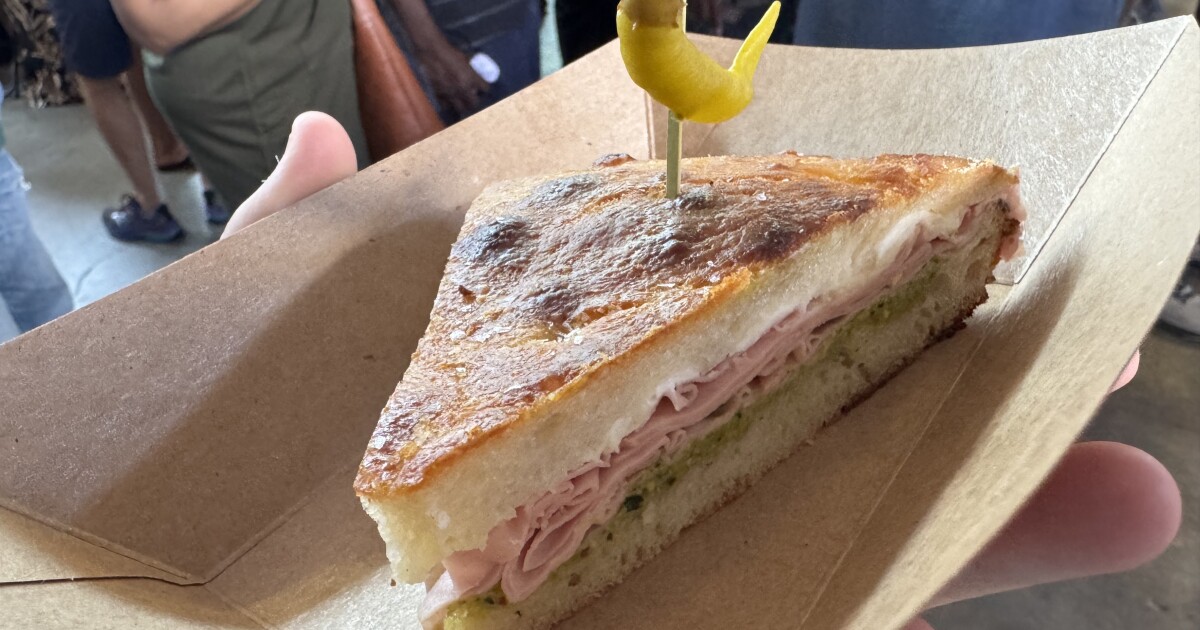
Detroit Sandwich Party returns to Eastern Market on Sept. 6
-

 San Francisco, CA3 hours ago
A Leak of San Francisco Police Drone Footage Exposes the New Reality of Urban Surveillance
-

 Dallas, TX3 hours ago
Viral East Dallas coffee shop fears major sales drop amid six-week road closure
-

 Miami, FL3 hours ago
3 hurt in fire on Lincoln Road that started underground

