Connect with us

West

Firm behind climate lawsuits faces DOJ referral after court finds ‘misconduct bordering on criminal’

Published

on

Firm behind climate lawsuits faces DOJ referral after court finds ‘misconduct bordering on criminal’

NEWYou can now listen to Fox News articles!

A federal judge’s extraordinary decision to refer Hagens Berman to the Department of Justice for possible unlawful conduct escalated to an appeals court this week, marking one of the toughest challenges yet for a high-profile law firm known, in part, for its aggressive climate litigation.

The referral came as part of a lawsuit that Hagens Berman brought related to a separate topic, alleged drug-related injuries, and involved Judge Paul Diamond taking the rare step of asking the DOJ to review whether Hagens Berman acted unlawfully.

Diamond noted in an order on Dec. 2 that a court-appointed lawyer, known as a special master, found Hagens Berman engaged in a yearslong effort to bring “fraudulent” complaints in the case in the Eastern District of Pennsylvania. Hagens Berman also obstructed discovery and “doctored evidence,” the special master found. The order noted that the firm’s apparent “misconduct bordering on criminal” warranted the DOJ’s involvement.

TOP ENERGY GROUP CALLS FOR PROBE INTO SECRETIVE ‘NATIONAL LAWFARE CAMPAIGN’ TO INFLUENCE JUDGES ON CLIMATE

Advertisement

The Department of Justice headquarters on Feb. 19, 2020, in Washington, D.C. (Drew Angerer)

Hagens Berman has aggressively pushed back on the allegations and turned to the U.S. Court of Appeals for the 3rd Circuit for relief. The firm accused the judge of bias, noting it had recently sought Diamond’s recusal from the case and claiming the judge could be retaliating.

“To rebut the charge in the court below would risk fomenting even greater ire of the district judge—ire that would be calamitous for petitioners’ clients,” Hagens Berman lawyers wrote. “To remain silent is to permit a baseless accusation leveled by an Article III judge no less, to hang like a dark, ignominious cloud over petitioners’ professional reputation.”

The clash comes as Hagens Berman continues positioning itself as a go-to firm for high-risk litigation, including environmental cases, even as its track record in that arena shows mixed results.

Last month, the firm filed a class-action lawsuit on behalf of Washington state homeowners against ExxonMobil, Shell, Chevron and other fossil fuel companies. The suit alleges the companies sparked a rise in natural disasters that has driven up homeowners’ insurance premiums and claims they mounted a “coordinated and deliberate scheme to hide the truth about climate change and the effects of burning fossil fuels.”

Advertisement

Fuel prices at a Shell gas station in Burien, Washington, on Wednesday, March 9, 2022. (Chona Kasinger/Bloomberg via Getty Images)

But in addition to the DOJ referral, Hagens Berman has thus far struggled to secure clear victories or settlements in its climate cases and was dealt some legal blows in that realm in recent years.

Efforts to reach a Hagens Berman representative for comment were unsuccessful by press time. 

In 2018, Judge William Alsup, a Clinton appointee, tossed out San Francisco and Oakland’s case, which was brought by Hagens Berman against fossil fuel companies over the alleged effects of climate change. Alsup called the scope of the cities’ claims in that case “breathtaking.”

“It would reach the sale of fossil fuels anywhere in the world, including all past and otherwise lawful sales, where the seller knew that the combustion of fossil fuels contributed to the phenomenon of global warming,” Alsup wrote.

Advertisement

The cities dropped Hagens Berman as their representation after a series of adverse decisions in that case.

CLIMATE LAWFARE CAMPAIGN DEALT BLOW IN SOUTH CAROLINA

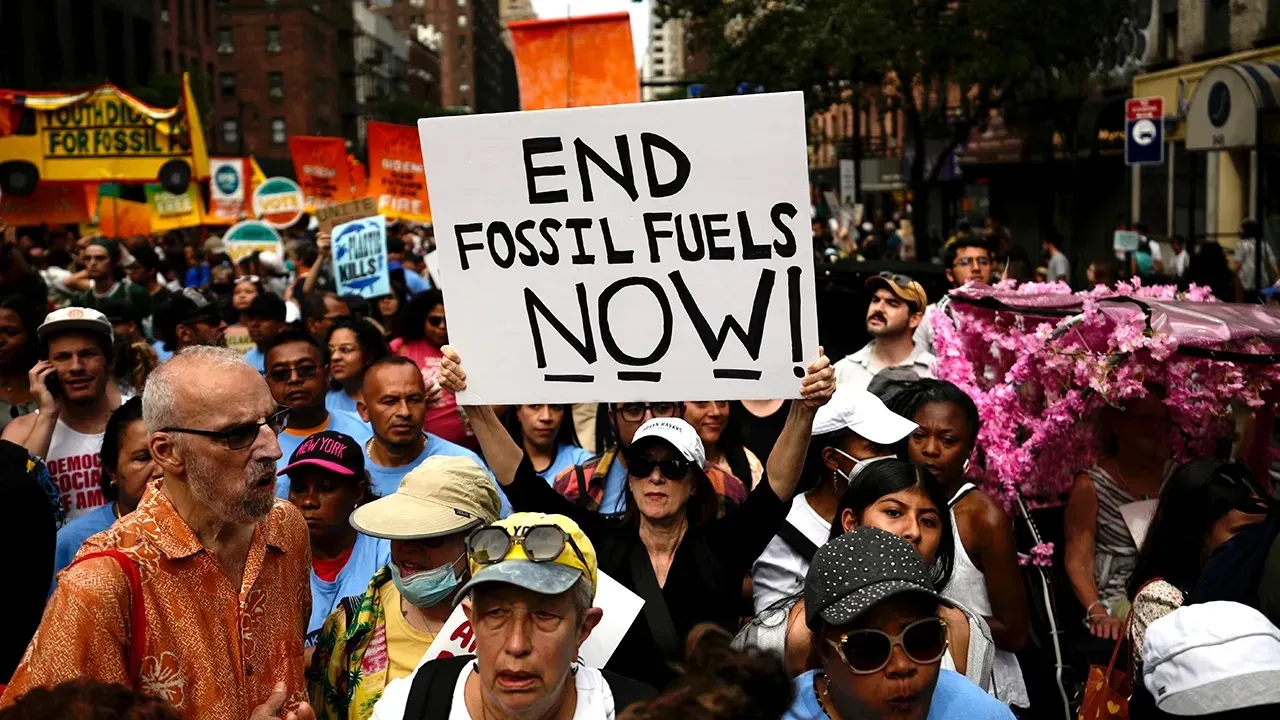
People march as they take part in a strike to demand action on the global climate crisis on Sept. 20, 2019, in New York City. (Spencer Platt/Getty Images)

The law firm also lost in a similar case that same year in New York. In that dismissal, the late Judge John Keenan, a Reagan appointee, again found Hagens Berman’s lawsuit was far too expansive.

“The City has not sued under New York law for claims related to the production of fossil fuels in New York,” Keenan wrote. “The City brings claims for damages caused by global greenhouse gas emissions resulting from the combustion of Defendants’ fossil fuels, which are produced and used ‘worldwide.’”

Advertisement

The DOJ review, if upheld by the 3rd Circuit, could now overshadow the firm’s more recent endeavors and raises the stakes for the practice as it continues to take on ambitious cases.

Read the full article from Here

Advertisement

Montana

Planning For Life After Coal Cost a Montana County Commissioner His Seat – Inside Climate News

Published

on

Planning For Life After Coal Cost a Montana County Commissioner His Seat – Inside Climate News


Robert Pancratz couldn’t believe it. 

The Musselshell County commissioner had been defeated in the Republican primary for his seat by a two-to-one margin earlier this month. Mark Olson, who lives in Musselshell and serves as the undersheriff in Golden Valley County, won by 26 percentage points.

“That just blew me away,” Pancratz said. “All of my campaign, I had not a hint that there was that much opposition.”

At stake, from Pancratz’s perspective, is the fiscal future of his community, which includes Roundup, Montana, home to Montana’s only longwall coal mine. The mine, owned and operated by Signal Peak Energy, sits on the eastern side of the continental divide in a staunchly conservative part of the state, where its presence provides jobs and its profits generate taxable revenue for local governments. (The vast majority of its coal, the dirtiest fossil fuel, goes to markets in Asia.)

Advertisement

But that revenue could potentially be diminished by tens of millions, according to calculations by Pancratz, if a bill introduced by U.S. Sen. Steve Daines, R-Mont., passes Congress. The Crow Revenue Act would convey federally held coal to Signal Peak through a land transfer to a private intermediary, depriving Musselshell County of its share of the taxes Signal Peak Energy pays to mine coal on federal land. 

If the Crow Revenue Act does not pass Congress, Signal Peak says it could be forced to shut down if it loses a lawsuit in the U.S. District Court for the District of Montana challenging the “energy emergency” the Trump administration used to grant the mine access to federal coal. That outcome would wipe out all the mine’s tax revenue and hundreds of jobs, the company claims. This month’s election hinged on Pancratz’s position on the bill and, by extension, the mine. 

Musselshell County’s three commissioners, Mike Goffena, Mike Turley and Pancratz support keeping the mine open. But they also fear Musselshell County would need to raise taxes and cut services to balance its books if the Crow Revenue Act passes as written. After studying the county’s finances, Pancratz, who works as a risk analyst consultant, concluded that the county could lose as much as $11.6 million if the Crow Revenue Act passes and the price of coal is high. The commissioners have lobbied for changes to the bill that would guarantee the county some revenue from the land transfer. 

Musselshell County commissioner Robert Pancratz lost in the Republican primary for his seat earlier this month. Credit: Courtesy of Robert Pancratz

Pancratz says he was just doing his job.

“As a risk manager, I have to develop a contingency plan for the possibility that the long-term stream of coal revenue could be disrupted or ended,” he said. “We needed to have a plan to effectively transition to other revenue sources. When I used the word transition, they took that as I was an environmentalist that was against coal.” 

“Why anybody would have a problem with that is baffling to me. But that’s what happened.”

Advertisement

According to Pancratz, Signal Peak Energy branded the men as environmentalists who want to see the company shut down forever and this willful mischaracterization played a large role in his defeat.

“The picture they painted of me was totally false,” he said.

In a recording of a commissioner meeting posted to a local Facebook group by a Signal Peak Energy employee less than a month before the election, Pancratz, Goffena and Turley can be heard strategizing how to express their concerns about the Crow Revenue Act to Daines, whom they describe as unresponsive to their concerns. 

Pancratz suggests asking for a $100 million endowment to transition from coal to “scare” Daines and Signal Peak Energy. Turley states that with funding at that level, they wouldn’t care if the mine was open or not.

“Exactly,” Pancratz responded.

Advertisement

Comments on the video show viewers expressing outrage that the commissioners would “play chicken” with the future of the mine, which provides hundreds of jobs in the surrounding area. 

This story is funded by readers like you.

Our nonprofit newsroom provides award-winning climate coverage free of charge and advertising. We rely on donations from readers like you to keep going. Please donate now to support our work.

Donate Now

Pancratz said the conversation was recorded without the commissioners’ knowledge. Montana is a two-party consent state, meaning all parties must be aware of and consent to a recording, but he allowed that it was possible one of the commissioners forgot to close a virtual public meeting after it concluded.

Advertisement

Pancratz said the conversation occurred when the commissioners found out there would be no money in the Crow Revenue Act for the county. The bill’s supporters, including Signal Peak Energy, had told them that the county would not lose any revenue under the bill, he said. 

“We were upset because we felt we’d been lied to,” Pancratz said.

Signal Peak Energy did not respond to a written message and phone call seeking comment. For a time after Signal Peak took over the mine in the late 2000s, it was plagued by malfeasance, including embezzlement, a faked kidnapping and safety and environmental violations, according to reporting by The New York Times.

Olson said he entered the race due to a “lack of transparency” from the commissioners over how the county was spending its money.

Mark Olson lives in Musselshell and currently serves as the undersheriff in Golden Valley County. Credit: Courtesy of Mark OlsonMark Olson lives in Musselshell and currently serves as the undersheriff in Golden Valley County. Credit: Courtesy of Mark Olson
Mark Olson lives in Musselshell and currently serves as the undersheriff in Golden Valley County. Credit: Courtesy of Mark Olson

But the mine played a role in his decision to run, too. As he was weighing his options, Olson said his cousin, Alan Olson, a former state legislator and former executive director of the Montana Petroleum Association, visited him and urged him to run to support the mine. After that conversation, he was convinced the mine’s survival depended on the Crow Revenue Act passing, and that trying to amend it would jeopardize the legislation.

“The more money we can get for the county, the better, but I don’t think it’s worth risking the mine closing,” Olson said. Losing federal revenue was better than losing all the jobs and the tax base if the mine closes, he concluded. 

Advertisement

Olson added that Parker Phipps, Signal Peak Energy’s CEO, has briefed him on the mine’s fiscal relationship with Musselshell County.

Olson’s background in law enforcement could add a new perspective to the county commissioner meetings, given Goffena and Turley’s background in ranching, he said, but the minutiae of the county’s budget will be new to him. 

“I am by no means an expert in any of this stuff,” he said.

Some worry that, with the mine facing a lawsuit, an unpredictable global coal market and the uncertain future of the Crow Revenue Act, the commissioners cannot afford to lose momentum in their efforts to attract new industries to the area.

Olson’s win in the primary will “set [economic diversification planning] back long term,” Nicole Borner, a former Musselshell County commissioner, who thinks Olson was hand-picked by the Signal Peak Energy to run and is not informed about what the job entails. 

Advertisement

“We will always just have a few crumbs to duct tape a few issues,” she said. “We’ll never be able to fix the prior forty years of being in a coal bust and our infrastructure just literally falling apart.” 

The storefronts of businesses in Roundup, Mont. Credit: Jake Bolster/Inside Climate NewsThe storefronts of businesses in Roundup, Mont. Credit: Jake Bolster/Inside Climate News
The storefronts of businesses in Roundup, Mont. Credit: Jake Bolster/Inside Climate News

Olson will likely run unopposed in the general election.

In his remaining time in office, Pancratz said he will continue to push for economic diversification in Musselshell County. He holds no animosity towards Olson, who calls Pancratz “a wonderful guy.” Instead, he laments not addressing concerns over his position on the mine sooner in the campaign. But he believes Signal Peak Energy’s political and social influence—the company operates a charity in the region—is what swayed the election.

“You can’t say anything that even remotely implies that you’re trying to prepare the county for the possibility that coal revenue may not be steady or high … There’s this attitude that the county is in debt to that coal mine. And the message I tried to get out is, it’s more the reverse,” Pancratz said. 

“I personally don’t believe the mine really cares about the county.”

About This Story

Perhaps you noticed: This story, like all the news we publish, is free to read. That’s because Inside Climate News is a 501c3 nonprofit organization. We do not charge a subscription fee, lock our news behind a paywall, or clutter our website with ads. We make our news on climate and the environment freely available to you and anyone who wants it.

Advertisement

That’s not all. We also share our news for free with scores of other media organizations around the country. Many of them can’t afford to do environmental journalism of their own. We’ve built bureaus from coast to coast to report local stories, collaborate with local newsrooms and co-publish articles so that this vital work is shared as widely as possible.

Two of us launched ICN in 2007. Six years later we earned a Pulitzer Prize for National Reporting, and now we run the oldest and largest dedicated climate newsroom in the nation. We tell the story in all its complexity. We hold polluters accountable. We expose environmental injustice. We debunk misinformation. We scrutinize solutions and inspire action.

Donations from readers like you fund every aspect of what we do. If you don’t already, will you support our ongoing work, our reporting on the biggest crisis facing our planet, and help us reach even more readers in more places?

Please take a moment to make a tax-deductible donation. Every one of them makes a difference.

Thank you,

Advertisement


Source link

Advertisement
Continue Reading

Nevada

Nevada’s First And Largest Military Outpost Is Now A Historic State Park To Camp, Paddle, And Hike – Islands

Published

on

Nevada’s First And Largest Military Outpost Is Now A Historic State Park To Camp, Paddle, And Hike – Islands


Ever been utterly immersed in the American West to the point it feels as if a Pony Express rider may gallop by at any moment? Fort Churchill State Historic Park in northwestern Nevada retains this Old West feel, and rightfully so. It was established as the Silver State’s first military outpost in 1860, eventually becoming the largest as well. 

Structural remnants of the adobe buildings that once served as barracks and soldiers’ quarters, among other uses, are still strewn across the arid, high-desert Nevada landscape. They served as a point of protection for pioneers, area settlers, miners, as well as the riders tasked with traversing the mountains and plains to deliver mail. The fort was also a military supply depot before being shuttered in 1869. Today, it provides a peek into America’s military past and the region’s history as a booming silver mining hub along with abundant outdoor adventure as a state park.

Advertisement

Outdoor adventures in the old west

A Nevada riverside haven full of Wild West history, Fort Churchill State Historic Park comprises 200 acres preserved with the help of the National Park Service in 1935. Camping and picnicking facilities, along with a museum and visitors’ center, were constructed while the adobe buildings were stabilized. Sagebrush, willows, and bluegrass thrive across the vast landscape while coyotes, mule deer, and foxes scamper through.  Nevada’s wild horses have also been spotted grazing the land. 

Cottonwood trees offer shade to campers near the 20 sites suited for either RVs or tents. Although no hook-ups are available, a fire ring, picnic table, and charcoal grill offer campers some amenities. Yelpers recommend the campground, citing the tranquil, wide-open space, photogenic structures, and the camp’s proximity to the ruins. They also share that the facilities are limited to pits in the ground or outhouses. Others appreciate the feeling of seclusion and privacy the abundant growth provides to some spots in the campground.

Through the park, the Carson River lazily runs its route to the Lahontan Reservoir — a full-day 15.8-mile journey by kayak or canoe for paddlers. Late-summer and into fall, the water may be too low to traverse, making spring and early summer ideal times for this trek. The Carson River is also a hidden Nevada fishing oasis teeming with trout if grabbing a pole over a paddle is preferred.

Advertisement

Fort Churchill Historic State Park offers a hike through history

Some 1.5 miles down the road from the abandoned adobe buildings, a two-story, fully intact and restored homestead built by Samuel Buckland in 1870 still stands, awaiting exploration by history buffs. Nearby, see replicas of Union soldiers along with authentic cannons, maps, and more from the fort’s heyday at the Colonel Charles McDermit Visitor Center.  Occasionally, a train may rumble by on tracks that have existed since the fort’s founding.

Hike between the homestead, Buckland Station, and Fort Churchill along a riparian nature trail for 2.2 miles. It’s an easy one-mile wander through the ruins where you can check out the explanatory signage along the way. In the Samuel Buckland Campground between spots 13 and 14 is the Stewart Trail, another way to simply stretch your legs in some scenic spots.

Keep in mind, Fort Churchill State Historic Park rests at a 4,250-foot elevation, making evenings chilly most of the year. Temperatures range between summer’s smoldering 94-degree highs and evening lows swinging down to 58 degrees Fahrenheit. Just 30 minutes from one of Nevada’s most historic towns, Dayton, the best way to reach Fort Churchill is by flying into the Reno-Tahoe International Airport and driving 48 miles to the park. Campsites are $20 a night for out-of-state visitors or $15 for Nevada residents. Entry into the park itself is $10 for visitors or $5 for Nevadans. But the history lessons and outdoor experiences are, to be cliché, priceless.

Advertisement


Source link

Advertisement
Continue Reading

New Mexico

APD: Pedestrian hit and killed in early morning crash

Published

on

APD: Pedestrian hit and killed in early morning crash


ALBUQUERQUE, N.M. – Albuquerque police are investigating a fatal crash after a vehicle struck a pedestrian early Saturday morning.

Police said the crash happened near Central Avenue and Maple. The pedestrian died at the scene from their injuries.

Police continue to investigate the crash.

Stay with KOB 4 Eyewitness News and KOB.com for updates.

Advertisement


Source link

Continue Reading
Advertisement

Trending