Denver, CO
Jamal Murray scores in clutch again as Nuggets pull off 17-point comeback to beat Pelicans in overtime


Every Nuggets comeback needs a stroke of inspiration, and this one fittingly occurred without Nikola Jokic on the floor. With 9:18 remaining in a game Denver trailed 100-90, Julian Strawther was barreled over away from the ball while Jamal Murray buried a corner 3-pointer.
A flagrant foul. A free throw for Strawther. A lob from Russell Westbrook to DeAndre Jordan. A six-point possession.
And eventually, an improbable and unnecessarily strenuous 132-129 overtime win over the Pelicans on Sunday night.
The Nuggets (15-11) have won five games this season after trailing by double digits in the fourth quarter. They were down 17 in this one, late in the third frame. But Jokic finally came alive late, and Murray punctuated his 27-point, eight-rebound game with another clutch shot, on one leg with eight seconds remaining to force overtime.
Closing lineup change
Michael Malone learned from last time. On Thursday in Portland, the Trail Blazers took a timeout to set up their last shot after Jokic tied it with 15 seconds to go. Denver’s lineup for the defensive possession: Murray, Westbrook, Michael Porter Jr., Aaron Gordon and Jokic. The result: Anfernee Simons blew by Westbrook and a notable lack of help defense for a layup at the buzzer.
With eight seconds to go in New Orleans, Murray’s 20-footer deadlocked the Nuggets and Pelicans at 119. Timeout, New Orleans.
Denver’s lineup for the defensive possession: Westbrook, Christian Braun, Peyton Watson, Gordon and Jokic.
Porter had already been excised from the closing lineup after a poor performance at both ends. But Malone made room for both Watson and Braun by trading out Murray as well — in no way an indictment on the star guard’s play, but rather a sensible deployment of two impressive young perimeter defenders. Braun and Watson joined forces, with vital help from Westbrook, to get C.J. McCollum into a tough shot at the buzzer.
Malone stuck with Westbrook and Braun in overtime, while Porter remained on the bench. Braun played just shy of 39 minutes (the second-most on the team). Murray also contributed three steals, including a crucial one in the last minute of overtime.
Jokic largely to blame this time
There’s a valid school of thought that to depend on Jokic too much is dangerous for the long-term prosperity of the Nuggets. That too many minutes, too many touches and too many stats in December are cause for wariness, not celebration.
Even if that interpretation is accurate, there’s a baseline standard of aggressiveness for any team’s best player that Jokic didn’t come close to meeting on Sunday.
Especially against the centers New Orleans was throwing at him.
Until it was almost too late.
Jokic finished with 27 points, 13 rebounds and 10 assists, after not imposing himself on Yves Missi and Daniel Theis in a way that should’ve seemed obvious for most of the night. He missed a couple of chances at the rim in a scoreless first quarter. Then in the second and third combined, only two of his seven field goal attempts were inside of 10 feet. The other five were all jumpers from 13 or more feet out. He only attempted five free throws.
At the defensive end — where Jokic is intuitive and often impactful, despite the general perception of him — he was a major part of the problem as the Pelicans won the paint 14-6 in the third quarter. They stretched their lead to 91-74 at the 1:32 mark, blowing by perimeter players and never feeling Jokic’s presence at the level of screens or near the rim.
As appropriate as it was that Denver found its spark without him, Jokic still turned out to be essential to the completion of the comeback. Once he committed to posting up, it was a one-sided game. He put up seven points in a two-minute stretch as Denver took the lead, then he added six easy points to get the Pelicans on their heels at the beginning of overtime.
Getting back on defense
The Nuggets had no excuse for appearing fatigued in New Orleans after their recent schedule, which included only three games in the last 13 days. But running the floor after live-ball changes of possession continued to be a bewildering topic.
They entered the game averaging 18.2 fast-break points allowed, the fourth-worst number in the NBA. They allowed 15 to the Pelicans by halftime. It wasn’t all turnovers this time, though Denver did commit 22 throughout the night. Players got caught in-between on 50-50 balls. Porter had an opportunity to rebound his own missed 3-pointer at one point in the second quarter, but as the long rebound bounced toward him, he turned and half-heartedly made his way toward the defensive end instead. An opponent seized the ball and sprinted past him for a layup.
The Pelicans finished the night with 23 transition points and a 56% clip from 2-point range. The Nuggets might have escaped with another win, but their flaws aren’t going away.
Want more Nuggets news? Sign up for the Nuggets Insider to get all our NBA analysis.



Denver, CO
Historic 84-year-old Bonnie Brae gas station in Denver officially listed for sale by family

DENVER — After 84 years of pumping gas and cleaning windshields, the family-owned Bonnie Brae Conoco in Denver is officially up for sale.
Located at the corner of University and Exposition, the station has been a staple in the neighborhood for generations. Owner Ken Wilson believes it could be the only remaining full-service, family-owned gas station in the city.
“Some people wouldn’t know what to do if we stopped doing this,” Wilson said.
Mike Castellucci
Wilson started working at the station when he was 12 years old. His family has owned the business through the decades, keeping photos from the 1940s through the 1970s.
“So many memories. I love coming to work. When I come here I feel like my dad never left,” Wilson said.
Wilson noted that his father died 14 years ago.
► Watch Mike Castellucci’s report in the player below:
Historic Bonnie Brae Conoco gas station in Denver officially listed for sale
The station was previously known for a sign that read “not for sale.” Now, the sign has changed to indicate the property is on the market.
“We’re just looking to the future. It’s a great property. It’s been good to us. We love the neighborhood. I love coming to work. So it’s not like I’m dying to sell this. We think it’s a very valuable property,” Wilson said.
Mike Castellucci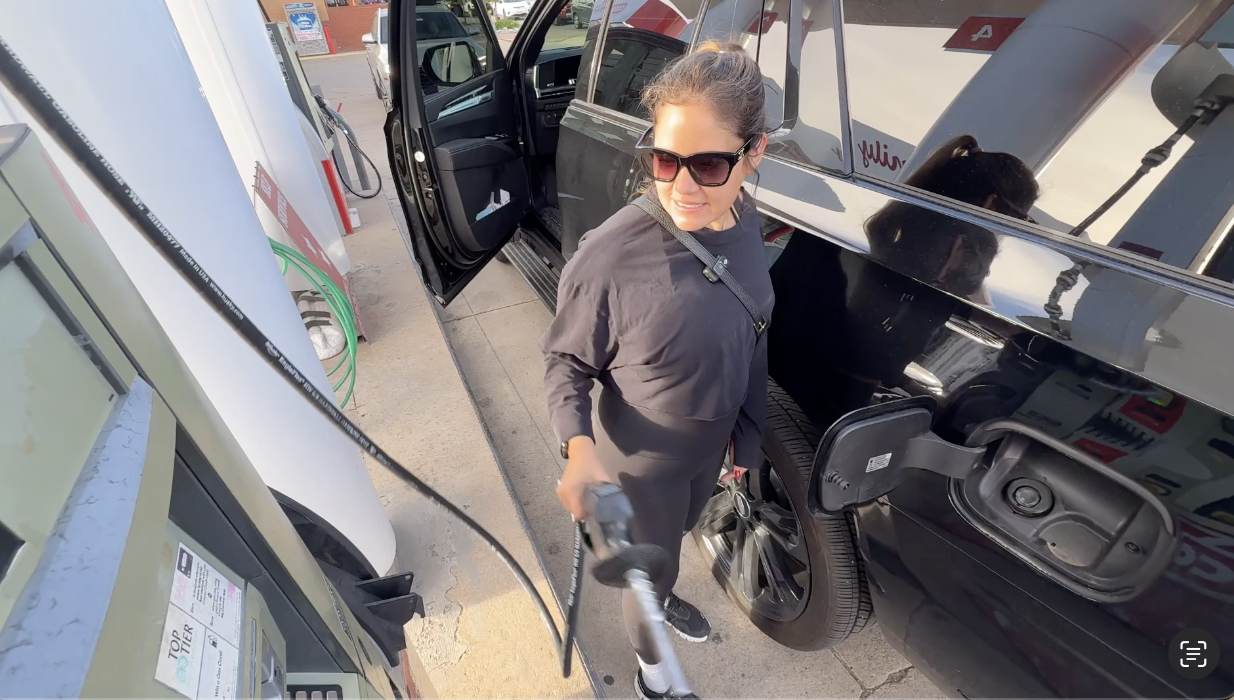
Today, employee Claude Espinoza is changing out winter tires for summer tires.
“I get it. Only so long you can run a family business,” Espinoza said.
Customers like Ali Halberson, who spent $100 to fill her car, are feeling the impact of changing times.
“I was really empty,” Halberson said.
While Halberson thinks current gas prices are “terrible,” customers in the neighborhood do not want to pay the price of watching the Wilson family’s station disappear. Other gas stations that used to operate across the street and next door are long gone, leaving the Bonnie Brae Conoco as a final remnant of a bygone era.
This story was reported on-air by a journalist and has been converted to this platform with the assistance of AI. Our editorial team verifies all reporting on all platforms for fairness and accuracy.

Denver7 | Your Voice: Get in touch with Mike Castellucci
Denver7’s Mike Castellucci covers stories that have an impact in all of Colorado’s communities, but specializes in reporting on community connections. If you’d like to get in touch with Mike, fill out the form below to send him an email.

Denver Fashion Week has become one of the city’s most buzzed-about events – but if you’ve never been, it’s easy to feel unsure about what to expect.
The good news: it’s far more accessible (and fun) than you think – and that’s exactly why people keep coming back.
Your first Fashion Week experience doesn’t have to happen in New York or Paris. It’s happening right here at Denver Fashion Week.
Seats are limited, and the most popular nights go quickly—especially VIP. Get your tickets HERE
What’s the vibe?
Forget the intimidating, ultra-elite energy of New York or Paris. Denver Fashion Week strikes a balance between elevated and inclusive. Think high-energy, visually immersive, and social.
You’re not sitting quietly—you’re part of the atmosphere.
You’ll see a mix of:
- Designers, models, local creatives, and stylists
- Influencers, press, brands, sponsors, and photographers
- Fashion, beauty, art, and music lovers dressed to be seen
The energy builds as the night goes on — from pre-show cocktails to the moment the lights dim and the runway comes alive. It’s part fashion show, part social scene, and part cultural experience.

What to wear?
The most common question: What do I wear?
The short answer — there are no strict rules. But this is your moment to show up intentionally styled.
Think of it as: elevated self-expression.


Go-To Outfit Ideas:
Elevated Streetwear
Oversized blazer, cargos or tailored pants, heels or sleek sneakers. Effortlessly cool and on-trend.
Minimal Chic
Slip dress, neutral tones, sleek bun, gold jewelry. Clean, understated and polished.
Bold Statement Look
Metallics, textures, statement outerwear or dramatic silhouettes. Perfect for turning heads.
If you’re debating between playing it safe or going bold – lean bold. This is one of the few nights in Denver where more fashion-forward always works.
What is the timeline of the night?
- Arrive early to avoid the line and find parking
- Grab a cocktail, take photos, mingle, shop
- Runway show begins
- Ask where the after party is!

What is the VIP Lounge Experience?
Experience Fashion at the Highest Level
If you’re looking to turn your night into something unforgettable, the VIP experience is where Denver Fashion Week truly comes alive.
VIP access is available to First + Second Runway Seat ticket holders, giving you a front-row connection to every moment on the runway.
VIP Perks Include:
- Priority seating with premium runway views
- Exclusive check-in experience
- Elevated atmosphere among Denver’s fashion insiders
- Exclusive access to the VIP Lounge
- Complimentary hors d’oeuvres (while supplies last)
- Elevated photo opportunities of every look
- Networking alongside press, influencers, celebrities, and fashion insiders
- Exclusive VIP discounts at select pop-up vendors
- An up-close experience of cutting-edge runway production
- Access to the VIP cash bar

Why does seating matters?
- First and second Row: premium, closest to the action, elevated photo opportunities of every look, and gain VIP lounge access.
- General Admission: relaxed, and enjoy a state-of-the-art fashion show production.
Does Denver Fashion Week support the community?
In honor of Mental Health Awareness Month this May, Denver Fashion Week has announced Ardent Grove, a Colorado-based nonprofit mental health clinic, as its official community partner for the Spring 2026 shows

Where will Denver Fashion Week be held?
For Spring 2026, Denver Fashion Week will once again transform the luxurious Furniture Row Showroom into a fully immersive runway environment. Known for its expansive layouts, modern architecture, and refined aesthetic, the space offers a setting rarely seen in traditional fashion venues.
Instead of conventional warehouses or hotel ballrooms, the runway unfolds inside a curated interior design landscape — where elevated home décor meets cutting-edge fashion.

Is it worth it?
Denver Fashion Week is more than a runway — it’s a full experience blending fashion, culture, and community.
If you love fashion, creativity, or just want a unique night out in Denver, absolutely.
And once you go, you’ll get it.

Where to stay?
Elevate your Denver Fashion Week experience with our hotel partner, Vīb Hotel. Enjoy 35% off during DFW when you book directly and stay just minutes from the action in style and comfort.
Where to buy tickets?
Seats are limited, and the most popular nights go quickly—especially VIP.
Get your tickets HERE or below

SUSTAINABLE Spring ’26 Presented by Furniture Row
Where: Furniture Row Showroom – 5445 Bannock St, Denver
Cost: $30+
The Lowdown:
This show honors designers committed to ethical production, eco-conscious materials and slow fashion principles. From upcycled textiles to responsible sourcing and transparent manufacturing, this runway proves that sustainability and high design can coexist beautifully.

SOCIETY Spring ’26 Presented by Furniture Row
Where: Furniture Row Showroom – 5445 Bannock St, Denver
Cost: $30+
The Lowdown:
Denver Fashion Week’s most elevated and couture-driven evening. This showcase highlights avant-garde collections, luxury craftsmanship and bold artistic expression. It’s a celebration of high fashion — where visionary design and dramatic silhouettes command the runway.

Family Day: YOUTH + MOMMY & ME Spring ’26 Presented by Furniture Row
Where: Furniture Row Showroom – 5445 Bannock St, Denver
Cost: $30+
The Lowdown:
A heartwarming and high-energy experience celebrates the next generation of fashion. Featuring youth designers, young models and coordinated parent-child looks, this daytime runway brings together families, creativity and community in a joyful celebration of style at every.

STREETWEAR & SNEAKERS Spring ’26 Presented by Furniture Row
Where: Furniture Row Showroom – 5445 Bannock St, Denver
Cost: $30+
The Lowdown:
Streetwear & Sneakers taps into culture, edge and urban influence. This show highlights bold graphics, statement footwear, layered styling and trend-driven collections rooted in music, art and street culture. Expect high-impact energy and looks that define what’s next in everyday fashion.

MAXIMALISM Spring ’26 Presented by Furniture Row
Where: Furniture Row Showroom – 5445 Bannock St, Denver
Cost: $30+
The Lowdown:
Maximalism Night embraces fearless self-expression. Designers will showcase vibrant color stories, dramatic textures, exaggerated silhouettes and unapologetic styling. It’s a runway dedicated to more — more volume, more detail, more personality.

OUTERWEAR + ATHLEISURE Spring ’26 Presented by Furniture Row
Where: Furniture Row Showroom – 5445 Bannock St, Denver
Cost: $30+
The Lowdown:
New for Spring 2026, Outerwear & Athleisure celebrates Colorado’s unique intersection of performance and polish. This show highlights technical innovation, structured outerwear, luxury sportswear and contemporary layering designed for movement and style.

ADAPTIVE Spring ’26 Presented by Furniture Row
Where: Furniture Row Showroom – 5445 Bannock St, Denver
Cost: $30+
The Lowdown:
Denver Fashion Week, in partnership with Guided By Humanity, invites you to a defining moment of the season, The Adaptive Runway Show, which spotlights inclusive design created for individuals of all abilities.

SWIM & RESORT WEAR Spring ’26 Presented by Furniture Row
Where: Furniture Row Showroom – 5445 Bannock St, Denver
Cost: $30+
The Lowdown:
Back by demand, Swimsuit & Resort Wear delivers high-energy glamour and vacation-ready style. Designers will present bold swim silhouettes, sculptural one-pieces, vibrant prints and flowing resort looks that set the tone for Summer 2026. It’s an evening of color, confidence and destination-inspired drama.

Kevin Garnett returns to Target Center for Timberwolves’ finale
Former Minnesota Timberwolves’ legend Kevin Garnett returned to Target Center Sunday night for the first time in eight years. He was escorted, along with his two daughters, to their courtside seats by owners Alex Rodriguez and Marc Lore. He walked out to a standing ovation from fans, and a video tribute.
MINNEAPOLIS (FOX 9) – The Minnesota Timberwolves will face the Denver Nuggets to open the Western Conference Playoffs.
It’ll mark the third time in four seasons the two teams have met in the NBA Playoffs.
Timberwolves vs Nuggets playoff series
What we know:
The Nuggets rested several of their starters against the San Antonio Spurs Sunday night, but still got a 128-118 win to earn the No. 3 seed for the Western Conference Playoffs. The L.A. Lakers fell to the No. 4 spot despite beating the Utah Jazz 131-107 Sunday night.
The Timberwolves had already earned the No. 6 seed in the West last week. They got a 136-132 win over the Houston Rockets, and in Sunday’s regular season finale, beat the New Orleans Pelicans 132-126 to finish the season 49-33.
The Timberwolves probably would’ve preferred to have the Lakers get the No. 3 seed, with star guard Luka Doncic dealing with a hamstring injury. Guard Austin Reaves is also dealing with an oblique injury.
The Timberwolves and Nuggets will play a best-of-seven series, with games 3 and 4 at Target Center, as as well as a game 6, if necessary.
Timberwolves rivalry with Nuggets
Why you should care:
The two teams enter the Western Conference Playoffs with quite the rivalry. The Nuggets went 3-1 this year against the Timberwolves in the regular season.
Last year, the Timberwolves swept the regular season 4-0, then the two teams didn’t meet in the playoffs. Minnesota got to its second straight Western Conference Finals, and the Nuggets got eliminated by the Oklahoma City Thunder.
The Timberwolves and Nuggets went seven games in the 2024 Western Conference Semifinals, and in Game 7, Minnesota came back from a 20-point deficit to win and advance to its first Western Conference Finals in 20 years.
In 2023, the Nuggets beat the Timberwolves in the first round on the way to winning the NBA title. Naz Reid and Jaden McDaniels both missed that series due to injuries.
In 2017, the Timberwolves ended a 13-year playoff drought, needing overtime to beat the Nuggets in a play-in game, 112-106.
Game 1 set for Saturday
What’s next:
The Timberwolves will travel to Denver and face the Nuggets in Game 1 of their playoff series at 2:30 p.m. Saturday. The game will be broadcast on Amazon Prime.

Detroit Chinatown Vision Committee discusses Detroit Chinatown

Bay Area bike program pays commuters to ditch their cars

TxDOT Dallas Seeks Input on Proposed Widening of FM 740/FM 548

Man seriously hurt in Dorchester crash – Boston News, Weather, Sports | WHDH 7News
Historic 84-year-old Bonnie Brae gas station in Denver officially listed for sale by family

Florida High School Football Rankings: Top 25 teams – Oct. 21

How old is Bo Nix? What to know about Oregon quarterback ahead of 2024 NFL Draft

Cleary's 21 help Le Moyne down Central Connecticut State 69-64 in OT

99th annual Pony Swim held in Virginia

Indiana Members Credit Union announced as new anchor tenant at Bottleworks District

Embattled Rep Tony Gonzales announces plans to resign amid sexual misconduct allegations

UN experts slam attacks on Gaza shelters, forced displacement in West Bank

DOJ fires at least 4 prosecutors involved in FACE Act cases during Biden administration

Melania Trump’s Epstein remarks turn up the heat on DOJ, Acting AG Todd Blanche to do more
Newsletter: Cautious optimism in Brussels as Orbán ousted in landslide Hungarian opposition win
-

 Atlanta, GA1 week ago
1 teenage girl killed, another injured in shooting at Piedmont Park, police say
-

 Georgia7 days ago
Georgia House Special Runoff Election 2026 Live Results
-

 Arkansas4 days ago
Arkansas TV meteorologist Melinda Mayo retires after nearly four decades on air
-

 Pennsylvania1 week ago
Parents charged after toddler injured by wolf at Pennsylvania zoo
-
 Milwaukee, WI1 week ago
Potawatomi Casino Hotel evacuated after fire breaks out in rooftop HVAC system
-

 Technology1 week ago
Anthropic essentially bans OpenClaw from Claude by making subscribers pay extra
-

 Austin, TX6 days ago
ABC Kite Fest Returns to Austin for Annual Celebration – Austin Today
-

 World1 week ago
Zelenskyy warns US-Iran war could divert critical aid from Ukraine