Denver, CO
Former Nuggets sixth man Bruce Brown traded in blockbuster deal


Several months after winning an NBA championship, former Denver Nuggets sixth man Bruce Brown Jr. is on the move again.
The key cog for the Nuggets signed a big money deal with the Indiana Pacers this past offseason, and on Wednesday, he was shipped to Toronto with three first-round draft picks for Raptors star Pascal Siakam. The two-time All-NBA forward needs a contract extension, and the Raptors have finally begun a teardown, which began with a trade of Og Anunoby to the Knicks last month. Meanwhile, the Pacers have taken a leap this season. They made it to the In Season Tournament finale and are sixth in the East led by Tyrese Haliburton, who looks to be the lead guard of the upcoming American Olympic team.
Though Brown was part of that success, he was third on the team in rebounds, fourth in assists and fifth in points per game. Brown’s stats are actually almost all up across the board this year—but his efficiency numbers are down from his standout season in 2022-23.
Brown, 27, got his championship ring on Sunday in Denver as the Pacers visited the Mile High City. He’ll actually be back with the Raptors on March, 11. But don’t expect the movement to mean Brown will rejoin the Nuggets anytime soon. Though he could become a free agent this offseason since he signed a two-year deal with the second year being a club option last summer—a lot needs to happen. First off, thanks to the new CBA rules, which hurt the Nuggets chances of resigning Brown to begin with, they could not pick him up this year if the Raptors waived him—similar to how Denver got Reggie Jackson last season. Second, Toronto would need to decline his $23 million player option for next season to make him a free agent. Thanks to new CBA rules the Nuggets are close to the second apron line, which would prevent them from using a near $6 million exception to sign a role player. In order to clear that money, Denver would need Jackson to decline his player option at $6 million (unlikely) and have Kentavious Caldwell-Pope decline his at $15 million and sign an extension at a cheaper number at around $12 million.
All of this is to say, even though Brown has already been dealt from his new home—Wednesday’s big trade had no impact on the likelihood the beloved former Nugget will return to Denver soon. Brown will have to enjoy life in his fifth NBA city and hope if he wants to be in the postseason this year that he’ll get dealt a second time.
Further, while the Pacers did get stronger in the move, the trade shouldn’t really impact the Nuggets as the Raptors will likely tank out and have already moved their biggest assets, and the Pacers are going to be a mid-tier playoff team out east. Denver does play in Indy next week, which will likely be Siakam’s home debut.



DENVER (KDVR) — More sunny and hot conditions are in Denver’s weather forecast for the rest of the weekend and into next week.
Denver weather tonight: Mainly clear
Saturday night will stay mainly clear and warm. Low temperatures will fall to the mid 60s, which is about 5 degrees warmer than normal for this time of year.
Denver weather tomorrow: Sunny, hot
Sunday will be sunny, breezy and hot with wind gusts out of the south southwest picking up to 20-30 mph. High temperatures will climb to the mid 90s, which is more than 5 degrees warmer than normal for this time of year, but well below the daily record of 102 set in 2024.

Looking ahead: Hot week ahead
Sunshine and a warming trend continues on Monday. High temperatures will reach just below the daily record of 100 degrees set in 2003.

More sunny and dry conditions are on the way through the workweek. Every day will start with a low in the 60s, then plenty of sunshine helping to boost high temperatures to the mid to upper 90s.

There is a slight chance for showers, mostly in the High Country, that return by the end of the week and the start of the weekend.

Getty
Peyton Watson #8 of the Denver Nuggets is a potential Lakers free-agent target.
The Los Angeles Lakers are still exploring means to improve their roster ahead of the upcoming season. Moves have been made already, but there are opportunities to add more talent around Luka Doncic.
One potential target for L.A. is Denver Nuggets star, Peyton Watson. In a proposed multi-team deal involving the Miami Heat and New Orleans Pelicans, the Lakers could land the high upside talent.
In the deal:
Both Watson and Jones have been linked with a move to L.A. this offseason, but no deal has been able to push forward. This proposal offers a chance to get both with one swing.
Lakers’ Outline for Acquiring Peyton Watson Through Trade
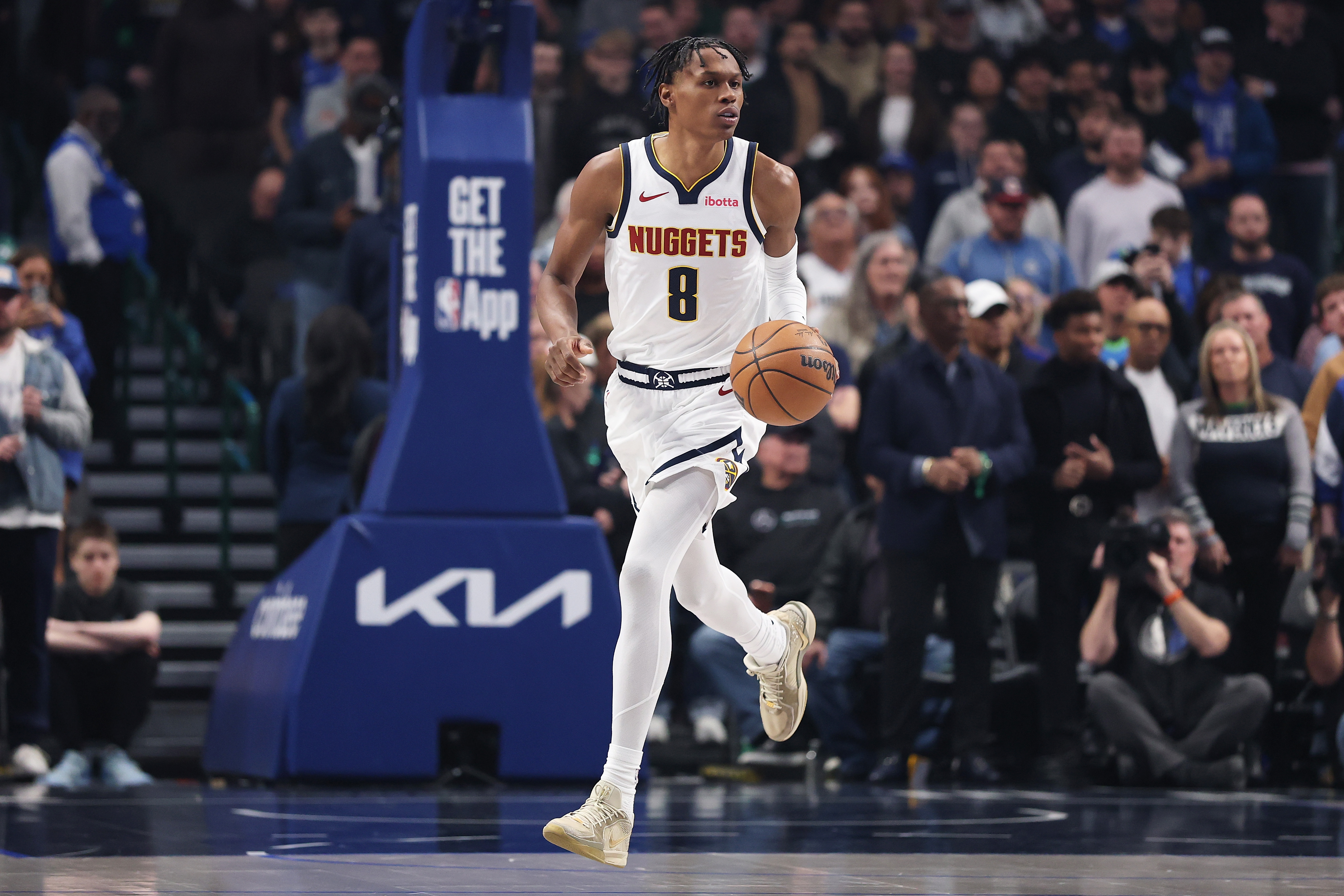
GettyDALLAS, TEXAS – JANUARY 14: Peyton Watson #8 of the Denver Nuggets handles the ball during a game against the Dallas Mavericks at American Airlines Center on January 14, 2026 in Dallas, Texas.
Watson, 23, is a restricted free agent, which makes any approach difficult. The Nuggets could match any offer to retain him and are reportedly planning to do so.
The 6-foot-8 star is coming off a breakout season in Mile High City, averaging 14.6 points, 4.9 rebounds, 2.1 assists and 1.1 blocks per game. He shot 49.1% from the field and 41.1% from three while starting 40 of his 54 appearances.
Watson’s camp is reportedly seeking north of $25 million per year which is unfavorable for the Nuggets at this point. Denver already has huge commitments to Nikola Jokic, Jamal Murray, Anthony Gordon and Christian Braun.
The Lakers can capitalize on the Nuggets’ need to move for pieces for flexibility and pitch a move for Watson. There would be adequate space to fit in the incoming star with the outgoings in this framework.
The Lakers can offer Watson a multi-year deal that doesn’t affect their flexibility. Vanderbilt’s outgoing deal is the most notable, which is why the Lakers have put him at the top of their moving list for now.
Watson’s Upside and Adding Herb Jones to the Roster

GettyLuka Doncic #77 of the Los Angeles Lakers passes the ball as he is pressured by Herbert Jones #2 and Jeremiah Fears #0 of the the New Orleans Pelicans during the second quarter of an 2025 Emirates NBA Cup game at Smoothie King Center on November 14, 2025 in New Orleans, Louisiana.
The Lakers would also get Jones out of this trade from the Pelicans. He is on a three-year, $68 million extension going through 2028-29 with a player option. His cap hit for 2026-27 sits at around $14.9 million.
With Watson and Jones, the Lakers would be bringing in roughly $38 million worth of salary, adding both Saddiq Rey for depth while sending out only about $26 million. This scenario would push L.A. well over its luxury limit but not into restrictive zones.
A potential lineup having Watson and Jones alongside Doncic, Austin Reaves and the newly acquired Walker Kessler, is positioned to be a strong core.
The real hurdle is getting Denver to move on from Watson. The franchise is committed to keeping him, even if it means giving up one of their more seasoned stars. They did activate a qualifying offer, making him restricted and they intend to match offers. Although a sign-and-trade is not impossible and the Lakers can work with that.
Adel Ahmad Adel is a writer with over five years of experience covering the NBA. His work has appeared on various media platforms, both national and local. More about Adel Ahmad
Denver, CO
One tree at a time: Denver nonprofit works to close shade gap as heat dome threatens neighborhoods

DENVER — Some Denver neighborhoods are far more vulnerable to this weekend’s incoming heat dome than others — and the difference comes down to trees.
The Valverde neighborhood on the city’s west side has about 9% canopy cover, leaving residents with little shade as temperatures climb toward triple digits.
▶️ WATCH: Denver7’s Claire Lavezzorio learns more about The Park People and how it is helping neighborhoods in Denver.
One tree at a time: Denver nonprofit works to close shade gap as heat dome threatens neighborhoods
Kim Yuan-Farrell, executive director of The Park People, a nonprofit that plants trees in underserved neighborhoods, said the disparity across Denver is stark.
“We have some neighborhoods that have wonderful canopy cover, like 20 to 30% of those neighborhoods are forested. Then a number of our neighborhoods have really low canopy cover, between four or 8% where it’s just significantly less,” Yuan-Farrell said.
Denver7
The Park People identified 28 neighborhoods in need of more tree cover, including Westwood, Globeville and Northeast Park Hill.
Trees can cool an area by 15 to 20 degrees, making a significant difference.
The National Weather Service (NWS) warned the heat dome could last through next weekend.
“The exceptional thing about this is how long it will last,” said NWS meteorologist Russell Danielson. “If you do have trees to take shelter under, it does actually cool down the temperature a decent amount.”
Yuan-Farrell said trees are more than a comfort — they are a critical piece of urban infrastructure.
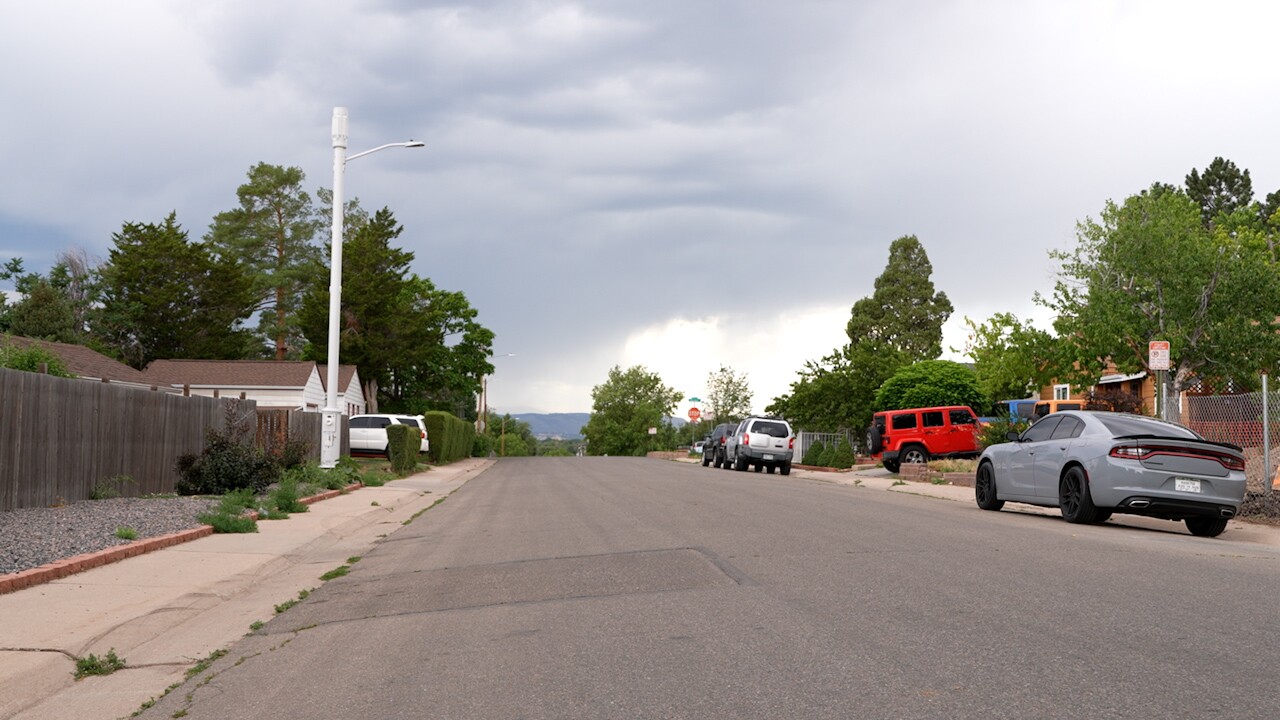
Denver7
“We really consider it a really essential element of green infrastructure, a real nature-based solution to a lot of these really serious local environmental problems,” Yuan-Farrell said.
In the map below, explore Denver’s libraries and rec centers that welcome the public in from the heat during business hours.
When asked whether Denver has a long road ahead, she did not hesitate.
“We have a lot of work ahead of us,” Yuan-Farrell said. “And we really need our whole community to get involved in that.”
The Park People plant anywhere from 1,200 to 2,000 trees a year. You can apply for one in your yard. Planting is set to begin in September.

Denver7 | Your Voice: Get in touch with Claire Lavezzorio
Denver7’s Claire Lavezzorio covers topics that have an impact across Colorado. If you’d like to get in touch with Claire, fill out the form below to send her an email.
-
 Lifestyle12 minutes ago
Love Island and Pre-Teen Punks with Jason Narducy : Wait Wait… Don’t Tell Me!
-

 Technology24 minutes ago
Oregon’s Attorney General withdraws effort to delay Paramount and Warner Bros. merger
-

 World27 minutes ago
Gunfire shatters Toronto Latin street festival, leaving at least 2 dead and multiple wounded
-

 Politics32 minutes ago
Sen. Lindsey Graham dead at 71 after ‘brief and sudden’ illness, office says
-

 Health39 minutes ago
Last American to use an iron lung dies at 78 years old after childhood polio diagnosis
-

 Sports42 minutes ago
Conor McGregor’s long-awaited Octagon return cut short by apparent knee injury seconds into UFC 329
-

 Technology47 minutes ago
Robotaxi pit stops could pop up near you
-
 Business54 minutes ago
‘Moana’ debuted just 10 years ago. Why Disney is remaking it as a live-action movie

