Denver, CO
Denver again delays decision on $800 million expansion of National Western Center


Denver again delayed making a decision over whether to spend $800 million over 35 years on an expansion of the National Western Center in a close-call vote that split the City Council on Monday evening.
The two-week postponement comes as community advocates say they need more time to analyze the agreement and to try to negotiate for additional investment in the surrounding Elyria-Swansea neighborhood from the National Western Center Authority — the group that operates the facility.
The advocates say they want to see an additional $16 million lump sum for the community investment fund under an agreement they’re developing with the National Western Center Authority.
“We can address some of the questions that have been unanswered and we can possibly negotiate some more revenue or some more benefits for the community investment fund with these two weeks,” said Alfonso Espino, one of the community advocates.
The National Western Center Authority says they can’t afford to pay that. They estimate that under the current terms of the agreement, they are already planning to dedicate at least $22 million to the community investment fund over the next 35 years through various measures.
“We get up every day to create community benefit,” said Brad Buchanan, CEO of the National Western Center Authority. “Every decision we make is looking through the lens of community benefit.”
In a 7-5 vote, the council decided to postpone the vote until June 2. City officials say it’s unlikely that the agreement between the entities will change during that time. Espino argues that even if that’s true, they’ve successfully gotten concessions from previous delays.
“We feel that it’s important to make the gesture,” Espino said.
Council members Serena Gonzales-Gutierrez, Flor Alvidrez, Sarah Parady, Paul Kashmann, Amanda Sandoval, Stacie Gilmore and Jamie Torres voted in favor of the postponement.
“I’m asking for a little bit more time so that his conversation can continue,” Gonzales-Gutierrez said when proposing the postponement.
Council members Chris Hinds, Darrell Watson, Amanda Sawyer, Diana Romero-Campbell and Kevin Flynn voted no.
“I will continue to fight for more funds to go to (community investment fund),” Watson said. “I also know that in two weeks, the response that’s going to come back to the community is that there is not going to be a $16 million dollar lump sum.”
This is the second time the council has postponed the vote in two weeks. If they don’t take action on it June 2, it will automatically be approved.
The National Western Center Authority said they’ve already agreed to several community benefits, including a 4,000-square-foot community center and 5 acres of open space. They also plan to set aside 1% of all their hotel fees to go toward the fund and will offer all attendees the ability to round up their purchases to donate to the fund.
They say they will continue to look for other ways to donate to the fund. The dollars will be used for anti-displacement measures in the community to prevent gentrification caused by from the project.
Several council members who ultimately voted no said they agree with the efforts from the advocates to try to protect their community.
“You are right. You have been displaced, you have been marginalized, you have lived in one of the most polluted zip codes in the state,” Sawyer said. “I’m just not sure that the language of this agreement is going to change any in two weeks.”
The project represents the next stage of a massive project on the 250–acre campus, which has been under redevelopment since 2019. The city and its partners in the project want to expand the facility into a year-round exhibition with agricultural education and entertainment.
The public-private partnership chose Community Activation Partners, a consortium of contractors, as the developer. That group includes Fengate Asset Management, Hensel Phelps Construction, McWhinney Real Estate and Sage Hospitality.
The plan would include building a 4,500-seat equestrian center, a 570-stall stable, a 160-room hotel, 30 to 40 units of workforce housing and 580 parking spaces.
The principal cost is estimated to be $400 million and would be financed over 35 years through annual payments of up to $23 million. Without any refinancing, that would amount to about $800 million.
It would be paid for from revenue from Ballot Measure 2C, a 2015 voter-approved measure that permanently extended taxes on hotels and car rentals to support the National Western Center.
Construction would begin this fall with a goal of completion by 2028.
Stay up-to-date with Colorado Politics by signing up for our weekly newsletter, The Spot.
Originally Published:



Denver, CO
One tree at a time: Denver nonprofit works to close shade gap as heat dome threatens neighborhoods

DENVER — Some Denver neighborhoods are far more vulnerable to this weekend’s incoming heat dome than others — and the difference comes down to trees.
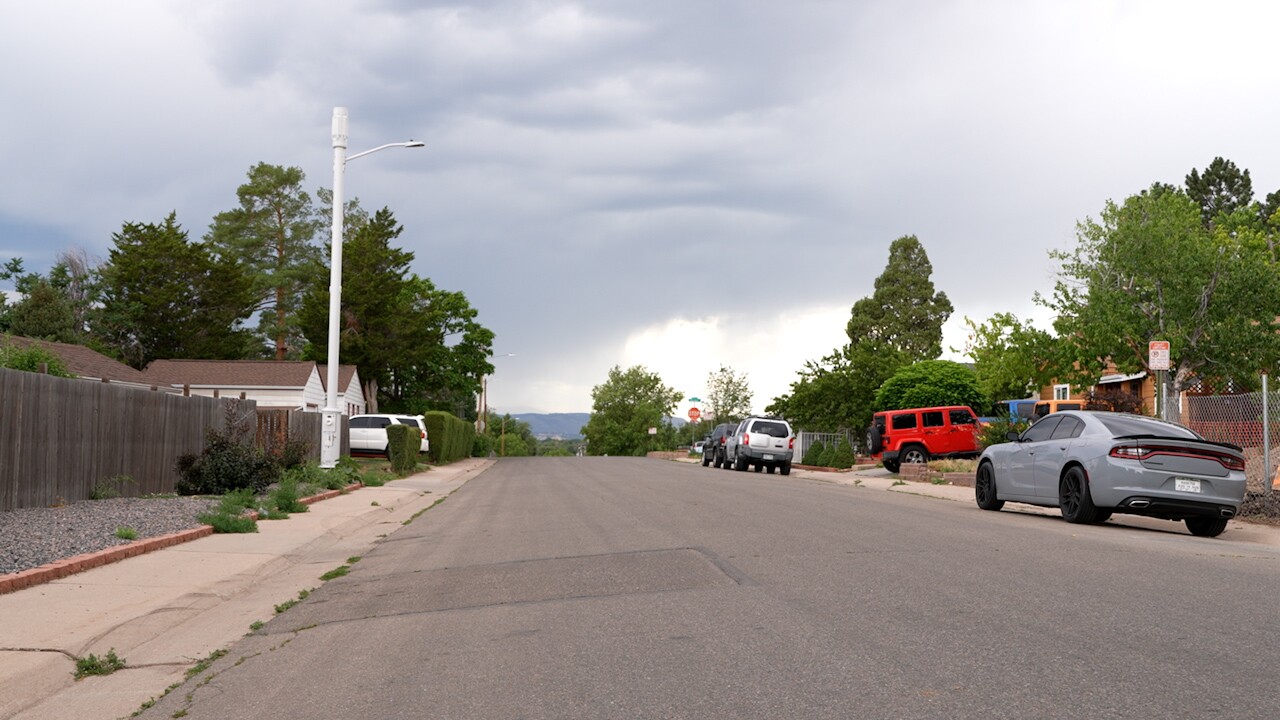
The Valverde neighborhood on the city’s west side has about 9% canopy cover, leaving residents with little shade as temperatures climb toward triple digits.
▶️ WATCH: Denver7’s Claire Lavezzorio learns more about The Park People and how it is helping neighborhoods in Denver.
One tree at a time: Denver nonprofit works to close shade gap as heat dome threatens neighborhoods
Kim Yuan-Farrell, executive director of The Park People, a nonprofit that plants trees in underserved neighborhoods, said the disparity across Denver is stark.
“We have some neighborhoods that have wonderful canopy cover, like 20 to 30% of those neighborhoods are forested. Then a number of our neighborhoods have really low canopy cover, between four or 8% where it’s just significantly less,” Yuan-Farrell said.
Denver7
The Park People identified 28 neighborhoods in need of more tree cover, including Westwood, Globeville and Northeast Park Hill.
Trees can cool an area by 15 to 20 degrees, making a significant difference.
The National Weather Service (NWS) warned the heat dome could last through next weekend.
“The exceptional thing about this is how long it will last,” said NWS meteorologist Russell Danielson. “If you do have trees to take shelter under, it does actually cool down the temperature a decent amount.”
Yuan-Farrell said trees are more than a comfort — they are a critical piece of urban infrastructure.
Denver7
“We really consider it a really essential element of green infrastructure, a real nature-based solution to a lot of these really serious local environmental problems,” Yuan-Farrell said.
In the map below, explore Denver’s libraries and rec centers that welcome the public in from the heat during business hours.
When asked whether Denver has a long road ahead, she did not hesitate.
“We have a lot of work ahead of us,” Yuan-Farrell said. “And we really need our whole community to get involved in that.”
The Park People plant anywhere from 1,200 to 2,000 trees a year. You can apply for one in your yard. Planting is set to begin in September.

Denver7 | Your Voice: Get in touch with Claire Lavezzorio
Denver7’s Claire Lavezzorio covers topics that have an impact across Colorado. If you’d like to get in touch with Claire, fill out the form below to send her an email.

To the well-trained eye, Denver figured to be one of the epicenters of this NBA offseason.
With two starters due for a combined $25.8 million salary increase, and with a potential rising star on the bench determined to land a lucrative contract extension, something had to give. The Nuggets were about to get too expensive for owner Stan Kroenke to stomach. Especially after their debacle of a playoff run, which ended before it could begin.
This was the prevailing sentiment for two months leading up to free agency. Almost all Nuggets-related chatter, both inside and outside Ball Arena, was about which player(s) they would sacrifice in a trade. Team president Josh Kroenke poured jet fuel on the rumor mill when he declared in May that “everything is on the table” except trading three-time MVP center Nikola Jokic.
Another high-ranking official in the Kroenke sports empire, Kevin Demoff, had hinted months earlier that Denver’s inclination might be to avoid the luxury tax entirely next season as to avoid paying the NBA’s punitive “repeater tax” rates. That was long before the Nuggets revealed to their power brokers that they were nowhere close to championship-worthy.
So, uh, what’s going on in Denver?
More than a week since the league’s free agency period began, most teams have completed their offseason business. The Nuggets have been puzzlingly idle. A few highlights so far: Tim Hardaway Jr. leaving for Miami as expected, Jonas Valanciunas getting waived for salary cap relief as expected, Marvin Bagley III and Tyus Jones signing one-year deals.
Going all-in or playing it conservatively?
Something doesn’t add up. As in, it adds up to a sum that continues to leave most NBA observers skeptical. Denver is leaving everyone guessing right now, even other teams.
Should fans be frustrated by the lack of action? Encouraged by it? Or is everything simply on hold?
There are two sides to this to unpack: the financial and basketball perspectives. They’re obviously intertwined, but when trying to make sense of this situation, it’s best to start with the financial side, because that was an obstacle that seemed to be motivating Denver’s roster decisions even before the on-court problems that emerged against Minnesota.
Before last season, the Nuggets were choosing between two extension-eligible 2022 draftees who had one year remaining on their rookie contracts: Christian Braun and Peyton Watson. They chose Braun, the more proven player at that point, an efficient 15-point-per-game starter the previous season, and a strong (if flawed) defender. They signed him to a five-year deal that would go into effect in 2026. They felt comfortable taking Watson to restricted free agency and maybe even losing him. Three years into his career, he seemed to be developing into a solid 3-and-D bench player, and maybe not much more than that.
The Nuggets were looking ahead to their 2026-27 payroll and didn’t want to commit large chunks of money to both players. Watson told The Denver Post in October: “From what I understand, it was just a financial business decision. Obviously, with the new CBA and the second apron, things of that nature, they wanted to stay out of that.”
Braun went on to have an injury-riddled season, the worst of his career. Watson had the best season of his career, particularly by showcasing his off-the-dribble ability when Jokic was hurt in January.
And so the Nuggets knew they would be entering the 2026 offseason with six starter-level players whose combined salary would result in a roster payroll above all three tax thresholds: the luxury tax ($200.4 million), first apron ($209 million) and second apron ($221.7 million). They wanted to keep Watson, recognizing the importance of his two-way talent and athleticism. They signaled as much to other teams.
If their previous actions had already indicated they were prepared to sacrifice him to stay under the second apron, then changing course and keeping him would surely mean sacrificing someone else.
This was the foundational logic that led people around the NBA to believe they were almost guaranteed to trade a starter. An oversimplification of the salary cap math looked like this: Lose one of your six starter-level players to get under the second apron, or lose two to duck the tax entirely. Perhaps other creative ways to shed salary would emerge, but this was the basic state of the union. Jon Wallace and Ben Tenzer would be tasked with threading the needle between cutting payroll and improving the roster.
From this perspective, the fact that Denver has not traded any of the six starter-level players yet can ironically be interpreted as an aggressive stance, not a conservative one. The moves that were expected to have happened by now would’ve been motivated primarily by money, not purely by basketball. Could it be that the Kroenkes are going all-in to chase a second championship? Suddenly, in the last few days, there’s been reporting from national media outlets such as The Athletic that “Denver’s ownership has not given its front office a mandate to cut costs.” The Post has been told similarly.
But that didn’t seem to be the case three weeks ago when the Nuggets were actively exploring the trade market for Braun and Cam Johnson, as The Post and other outlets reported.
What can it mean? Maybe there’s been a change of heart, and an executive decision has been made to spend lavishly. Maybe it’s connected to the team’s pursuit of LeBron James in free agency (how do you even begin to pitch him on coming to Denver if you’re not willing to pay up?), or maybe it’s a reaction to Jokic’s decision to wait one more year to sign a new extension. As direct as he was in publicly stating his plan to sign next summer, maybe the pressure of him entering the last guaranteed season of his current contract scared the Nuggets straight.
Maybe this is an earnest, full-throttle statement of championship intent.
Or maybe the abrupt timing of this leakage is a little too convenient.

Gauging the Watson market
The Nuggets have multiple reasons to want the rest of the NBA to believe they’re working with a blank check right now. One of those reasons: Watson.
Negotiations have clearly not gone smoothly. The line of demarcation is $25 million. That’s Braun’s average annual value on his new contract — the deal Denver prioritized over Watson — and now it’s the number Watson’s camp can fixate on. His side can point to last season and claim that going forward, he is worth the same amount or more. The Nuggets can point to the previous three years and say Braun’s overall body of work is better so far. As this is happening, another team is reportedly lingering, with a desire to poach Watson. The Clippers reside in his hometown, and they’ve already made moves this summer to get younger and clear their books.
Watson is a restricted free agent, meaning the Clippers must extend him an offer sheet, the terms of which Denver can match to retain him. Offer-sheeting a player can be risky because it ties down your cap until the situation is resolved, with no guarantee that you will successfully land the player you’re targeting. The Nuggets are saying behind the scenes that they’re prepared to match any offer sheet. Basically, they’re trying to scare off LA (and any other suitor) by indicating the offer sheet would be a waste of time, and the only real way to get Watson from them is to execute a sign-and-trade, sending Denver other assets in exchange for the right to sign the RFA. Utah just did this with Walker Kessler, who ended up with the Lakers via sign-and-trade. How can you bolster your leverage in a situation like this? By signaling publicly that you’re willing to pay an exorbitant payroll and tax bill to keep Watson and everyone else.
This also sends a message that you aren’t desperate to trade a starter (or two) to keep Watson — that you’re more than happy to hold on to Johnson, Braun, Aaron Gordon, or Jamal Murray if the offer isn’t strong enough.
If there is a spending mandate, then other teams might look to take advantage with low-ball trade offers.
So maybe the lack of a spending mandate could turn out to be a bluff for leverage. Or maybe it’s a real edict, a genuine commitment to competitiveness at all costs. There’s almost no way to know for sure until the Nuggets take an action to back up their words. For now, inaction has the appearance of aggression, as Denver attempts to feel out the market.
Certainly, it seems like the key domino will be how the Watson dilemma works itself out — either in the form of a contract extension, or an unmatched offer sheet, or a sign-and-trade, or a begrudgingly accepted qualifying offer ($6.5 million).
ESPN front office expert Bobby Marks (a former NBA executive) projected this week that if the Nuggets retain Watson at a $25 million cap hit and don’t trade any starters, their luxury tax bill next season would exceed $170 million — an almost unprecedented amount that includes second apron and repeater tax penalties. That’s in addition to what the raw roster payroll would be.
Between player salaries and taxes, it would be a $400 million team.
Which finally brings us to the basketball perspective on Denver’s offseason holding pattern. It would be one thing to pay that much if the Nuggets had just lost the NBA Finals in a tight six-game series with their current roster — if they knew for a fact that a championship was barely out of reach last season.
But the Nuggets didn’t make the Finals. They didn’t win a single playoff series. They lost in the first round to an injured opponent. They weren’t close.
Fans of an NBA team obviously have no obligation to care about the dent in a billionaire owner’s wallet. But it’s also reasonable enough for Nuggets fans to want change this offseason, independent of the financial complications. There’s a fair case to be made that Denver should be pursuing trades purely based on basketball, even if the Kroenkes have decided they’re willing to spend like few owners have ever spent. Perimeter defense, shot creation depth, downhill quickness and frontcourt physicality are all visibly lacking.
It’s just that the reason fans want change might not be exactly aligned with the reason this ownership group would want change.
It’s difficult to imagine the Nuggets feeling satisfied with the results of the last three seasons enough to truly run it back with the same top six players and less depth.
Then consider that those six players are aging. Then consider that the cost of those six players is multiplying.
That’s more than enough evidence to leave you wondering if Denver’s silence is misleading.
Want more Nuggets news? Sign up for the Nuggets Insider to get all our NBA analysis.

DENVER — Denver Mayor Mike Johnston is launching a $100 million plan to boost the local economy and support 10,000 jobs over the next three years.
Johnston announced the four-part program Thursday morning, flanked by business leaders while praising downtown businesses like brunch eatery Snooze.
▶️ WATCH: Denver7’s Alex Dowd reports on the plan
Denver mayor promises to create 10K jobs in next 3 years
Snooze Co-Founder Adam Schlegel said his business benefited from a similar program when U.S. Sen. John Hickenlooper was mayor in the early 2000s.
“The city really was the one that stepped up,” Schlegel said. “We wouldn’t have started if it wouldn’t have been for the economic development office. We ended up getting an incentive from the city to open up, particularly in this space [downtown]. It was a fiscal incentive to do it, in addition to coaching.”
Both of those are offered in the new four-part Denver Jobs Agenda. With funding from the Denver Downtown Development Authority and the Office of Economic Development and Opportunity, Johnston aims to develop start-ups in the city, grow existing businesses and draw in new companies while working to advance the Denver-area workforce across industries.
At the end of the last fiscal quarter, Denver’s unemployment rate hovered around 3.6% — under the national rate of 4.2% — according to U.S. Bureau of Labor Statistics, while office vacancy sits just under 40%, according to commercial real estate broker CBRE.
Johnston and other speakers made multiple references to more jobs bringing more people downtown.
“Denver has so many things going for it, so it will come back,” Schlegel said. “It’s not coming back as fast as I want, or as much as anyone will, but will it have a long-term future? 100%. It’s things like this, though, that I think give us a lot of hope that it can happen sooner than waiting it out.”
▶️ Watch the full press conference
Press conference: Denver mayor announces Denver Jobs Agenda
Chris Berthiaume, the city’s director of workforce industry initiatives, says the three workforce development centers across Denver serve around 20,000 people each year. He’s confident this new initiative will help more of those visitors find employment.
“We want to focus on things like aerospace, cybersecurity, green construction,” Berthiaume said. “This new initiative really just tightens the focus on sectors that we know are growing. Colorado is home to a huge aerospace culture. Quantum technology is emerging and coming. Green workforce are jobs that we know drive around Denver. Construction is everywhere. We need to make sure we have a skilled workforce that’s ready to take on those jobs.”
While also finding employers to hire them and stay within the community for the long haul.
“I think the reason businesses work — certainly restaurants work — is that you are integral to the community specifically where you are,” Schlegel said. “There are so many people in our community that really believe in Denver and want to see what it can be, and so it will get there.”
It’s well on the way. Denver’s Economic Development Corporation says they’re working with 52 active prospects that could bring more than 12,000 jobs to the area.
Coloradans making a difference | Denver7 featured videos
Denver7 is committed to making a difference in our community by standing up for what’s right, listening, lending a helping hand and following through on promises. See that work in action, in the videos above.
-

 New York21 minutes ago
How ‘The Wire’ Star Jamie Hector Spends a Hot Day in Brooklyn
-

 Los Angeles, Ca24 minutes ago
Burglars ransack Sherman Oaks condo building during fumigation
-

 Detroit, MI44 minutes ago
Metro Detroit weather forecast, July 10, 2026 — 11 p.m. Update
-

 San Francisco, CA54 minutes ago
Classical music series helps reconnect downtown San Francisco community
-

 Dallas, TX59 minutes ago
Dallas police officers, paramedics recall saving woman stuck in a ravine for days;
-

 Boston, MA1 hour ago
Red Sox win 7th straight game just hours after landing in New York
-
Denver, CO1 hour ago
One tree at a time: Denver nonprofit works to close shade gap as heat dome threatens neighborhoods
-

 Seattle, WA1 hour ago
VIDEO: West Seattle Summer Fest 2026 day 1, evening report

