West
Cruz calls Newsom ‘historically illiterate,’ posts clown emoji after governor fires back

NEWYou can now listen to Fox News articles!
Sen. Ted Cruz, R-Texas, blasted California Gov. Gavin Newsom on social media, posting a clown emoji after the Golden State governor claimed that the lawmaker from the Lone Star State had called him “illiterate.”
Cruz had actually referred to Newsom as “historically illiterate.”
But Newsom, who is dyslexic, fired back, writing, “Ted Cruz calling a dyslexic person illiterate is a new low, even for him.”
THE MOST UNUSUAL PRESIDENTIAL CANDIDATE: NEWSOM IS DYSLEXIC, STRUGGLES WITH SPEECHES, REJECTS ‘LIBERAL’ LABEL
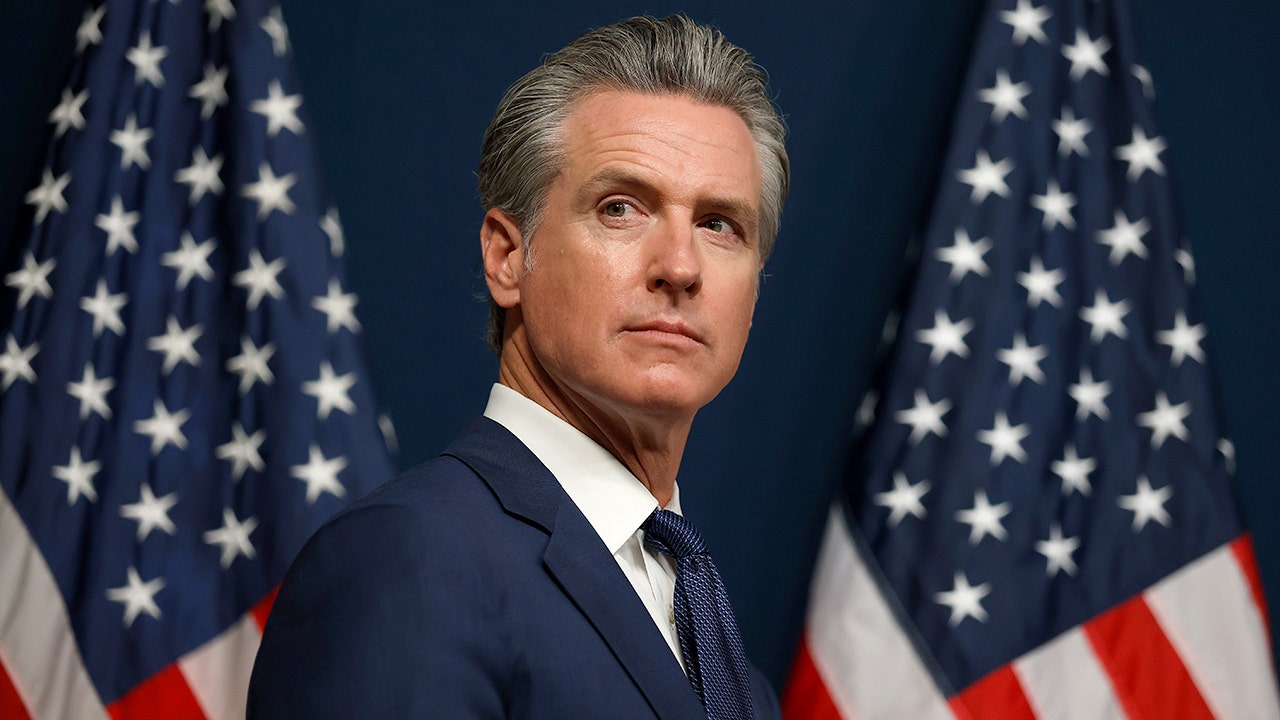
California Gov. Gavin Newsom looks on during a bill signing event related to redrawing the state’s congressional maps on August 21, 2025, in Sacramento, California. (Justin Sullivan/Getty Images)
Cruz pointed out that he had not claimed that the governor is unable to read.
“I didn’t say you couldn’t read, you [clown emoji],” Cruz responded.
TRUMP BLASTS NEWSOM’S UK PACT, WARNS FOREIGN LEADERS AS 2028 BUZZ BUILDS
Sen. Ted Cruz, R-Texas, arrives to a hearing in the U.S. Capitol on Dec. 17, 2025 in Washington, D.C. (Heather Diehl/Getty Images)
“I said you were ‘historically illiterate’,” he added, “because you apparently have no idea that Eisenhower federalized the national guard to stop Dem governors from defying federal law. Specifically, on September 23, 1957, President Eisenhower issued Executive Order 10730, federalizing the Arkansas National Guard & ordering U.S. Army troops (101st Airborne Div) to Little Rock, Arkansas. This action broke the blockade by Dem Gov Orval Faubus, allowing the Little Rock Nine to desegregate Central High School.”
Others, including conservative talk radio host and OutKick founder Clay Travis, also weighed in on Newsom’s claim that Cruz had called him illiterate.
‘DOUBLING DOWN ON STUPID’: NEWSOM, AOC, TRASH TRUMP AT EUROPEAN SUMMIT AS THEY RAISE 2028 PROFILES
14 February 2026, Bavaria, Munich: Gavin Newsom, Governor of the US state of California, takes part in the 62nd Munich Security Conference. (Marijan Murat/picture alliance via Getty Images)
“He called you ‘historically illiterate,’ which means you don’t know basic history. You not having ever heard of this phrase or knowing what it means makes you a moron,” Travis wrote.
Read the full article from Here



HONOLULU (HawaiiNewsNow) – It’s shaping up to be a slower-than-usual summer for Hawaii’s tourism industry, but business leaders hope events that market the islands’ unique local food and products can turn that around.
The state expects total visitor arrivals to grow only about 2 percent this year. Numbers slid half a percent in April from the previous year, with the largest market, West Coast tourists, falling nearly 5 percent. The statewide hotel occupancy rate averaged 76.4 percent.
Economists blame higher airfares, rising inflation, fewer international visitors and uncertainty following the March kona low storms.
State-supported events like the Hawaii Lodging & Tourism Association’s (HLTA) Hawaii Hotel and Restaurant Show and DBEDT’s Hawaii Made Conference aim to boost tourism by promoting products you can only find in Hawaii.
“We’re going to continue to struggle, but we can’t stop promoting. We can’t stop advocating,” said HLTA President/CEO Mufi Hannemann. “If you can travel during these times, you’re going to come and have a wonderful experience in Hawaii whether you’re just coming for sun and surf or you’re coming here to immerse in our culture or to do business, this is the place to come.”
And those who do come are spending more.
At the Hotel and Restaurant Show this week, local food manufacturers hoped to secure more buyers in the hospitality industry.
Many rely on business and leisure visitors trying their products while in Hawaii and taking them back home where they promote it.
“The traceability that you want to know where your food is coming from,” said June Rees, general manager of Kauai Shrimp, which has 40 ponds off the coast of Kekaha. You’ll find their shrimp on many menus across the islands.
“There are a lot of people that heard about us but never tried, so this show gives us exposure to the new restaurant or chef that have heard about the name but never really tried the product.”
But fewer tourists mean less sales and slower business growth and investment.
Jina Wye is the founder of Okonokai, which makes snacks from native seaweed grown off the Kona coast on Hawaii Island.
“It’s like a superfood that everyone should be eating everyday,” she said. “There’s a lot of just missing infrastructure for manufacturing, but that’s something that we’re working on. It’s actually why I’m part of this whole like DBEDT pavilion because the state is really working hard to develop more infrastructure.”
For the family behind Aloha Star Coffee Farm, getting their award-winning premium kona coffee into airports, hotels and restaurants is key.
“Getting the opportunity to find the market niche that we need,” said Karina Rodriguez, co-owner of Aloha Star Coffee. “We are small, that sometimes we don’t have all the resources for marketing and, and going to the biggest stores, and we are working on that.”
Food entrepreneurs will get another chance to promote their products at DBEDT’s Hawaii Made Conference this Tuesday at the Sheraton Waikiki. Click here to register and for more information.
The 16th Hawaii Food & Wine Festival is another event that promotes local chefs and restaurants while promoting tourism. It spans three weekends from Oct. 16 to Nov. 8 across three islands. Find information here.
Copyright 2026 Hawaii News Now. All rights reserved.

MOUNTAIN HOME, Idaho (CBS2) — A joint investigation by the Elmore County Sheriff’s Office and the Mountain Home Police Department has led to the arrest of a man accused of multiple sexual offenses in Elmore County and the city of Mountain Home.
An arrest warrant was issued on June 10, 2026, for Dillon Thorpe following an investigation conducted by Elmore County Sheriff’s Office detectives. Thorpe was taken into custody on June 11, 2026, on a warrant by the Idaho State Police.
Thorpe is charged with rape, child enticement, lewd conduct with a minor, and sexual abuse of a child under the age of 16.
Authorities said additional details about the investigation will not be released at this time because of the nature of the crimes and to protect the privacy of victims and witnesses.
Law enforcement believes there may be additional suspected victims and/or witnesses who have not yet been identified. Anyone with information or evidence relevant to the investigation is encouraged to contact the Elmore County Sheriff’s Office or the Mountain Home Police Department to make a report.

MISSOULA — Four out of five members of Montana’s Public Service Commission were in a federal courtroom in Missoula Thursday morning, as the PSC’s former president challenges the disciplinary action taken against him earlier this year. Now, newly released documents are shedding more light on to what led up to this point.
(Watch the video for a closer look at the case.)
New documents shed light Montana PSC dispute
Commissioner Brad Molnar has sued President Jeff Welborn, Vice President Jennifer Fielder and Commissioner Annie Bukacek – the three PSC members who voted in May to require him to work remotely, after an investigation into complaints about his workplace conduct. Molnar has claimed he is being unfairly punished for constitutionally protected speech, and he asked Senior U.S District Judge Donald Molloy to allow him to return to the PSC offices.
Matthew Monforton, Molnar’s attorney, told the judge that barring Molnar from the building was limiting his ability to do his job.
“He has not been officially kicked out of office, but his voice has clearly been diminished,” said Monforton.
But Natasha Jones, an attorney representing the other three commissioners, said the findings were about behavior, not just speech, and that the PSC’s action was a reasonable response.
“These are serious concerns about a pattern of conduct that has made employees quit,” she said.
Jonathon Ambarian
On Tuesday, Molloy ordered the release of redacted versions of two full investigative reports into Molnar’s conduct – more than 100 pages of documents. Monforton had moved for the full reports to be made public, and Molloy ruled attorneys for the other PSC members hadn’t shown a compelling reason to keep the documents under seal as long as the names of people involved in the investigation were obscured.
While the names remained redacted in the investigation reports, the attorneys for Welborn, Fielder and Bukacek also filed additional documents – including a public declaration from Bukacek and from former PSC executive director Alana Lake, providing information about their allegations against Molnar.
The two reports, from an outside investigator, cover Molnar’s alleged actions over two periods: the first from February to August 2025, and the second from August to October 2025. The investigation began after the first formal complaint, filed by Bukacek in May 2025 – though the reports say employees had been bringing up concerns about Molnar’s behavior informally for several months prior.
Bukacek’s complaint claimed Molnar had repeatedly made what she called “sexualized and demeaning comments.” The examples she cited included saying the PSC should replace “Taco Tuesdays” with “Topless Tuesdays,” reminiscing about watching girls in bikinis as a teenager, and commenting about the beauty of women in areas of China who didn’t get “old and wrinkly.”
In her declaration, Bukacek also claimed Molnar had “maliciously disseminated false information” about her and “engaged in behavior that was dismissive, derisive and otherwise abusive.”
“My primary concern now is not for my safety nor my feelings, but for the rest of the staff who may not have the temperament to speak up or may feel too intimidated to speak up given concerns over job security,” Bukacek said in her declaration.
MTN News

The investigators determined Molnar had violated the PSC’s code of conduct by making comments of a sexual nature, and that it appeared his behavior had continued for some time after he was warned about it. They also found he had behaved unprofessionally and in a belittling manner toward Bukacek, though they said Bukacek herself had at times used “language that could be considered inappropriate” in emails to staff or other commissioners. Bukacek told MTN she “readily self corrected” any behaviors that were brought to her attention.
The investigation also found a violation in connection with a complaint from a PSC staff member, who said he “felt bullied” by Molnar when the commissioner sent an email complaining about his team not being “people with competence.”
However, much of the first report and the entire second report was focused on conduct after the initial complaints, when Molnar was accused of retaliating against people who participated in the investigation. Lake said in her declaration that she saw “an immediate and significant change in his behavior toward staff involved in the process.” She claimed he said he would use an attorney and private investigator to go after people who filed complaints, and she accused him of publicly criticizing her in interviews and removing her job responsibilities because of her handling of the investigation.
Lake said Molnar’s actions led to “declining morale within the agency,” undermined staff members’ ability to do their jobs and damaged her reputation. She said that led her to resign as executive director.
“I believe no employee should be forced to choose between reporting misconduct and protecting their career, reputation, or personal well-being,” she said in her declaration.
Lake has since become Helena city manager.

Jonathon Ambarian
The report said there was evidence to show Molnar had retaliated, including by “making disparaging statements about investigation participants” including Lake, by sending an email warning he could file complaints of his own against people involved, and by taking other actions investigators said could dissuade employees from reporting behavior in the future.
Monforton said during Thursday’s hearing that the initial comments Bukacek complained about were jokes Molnar had admitted were inappropriate, that he regretted saying them, and that he hasn’t made any similar comments in about a year. But he argued the vast majority of the findings against Molnar were about retaliation – and that those were primarily based on speech that the other commissioners don’t have the right to interfere with.
Monforton said it’s unreasonable to punish Molnar for what he said in the July news conference where he announced he was under investigation, in interviews with the media or in commission meetings. He said Molnar’s conduct doesn’t rise to the level of actual retaliation.
“This is an elected official, engaging in speech in his forum,” Monforton said.
He said Molnar may have made harsh comments toward staff, but that he had the right to raise objections about the way the agency does business.
Jonathon Ambarian

Monforton also argued the retaliation claims no longer justify keeping Molnar out of the office, since Welborn, Fielder and Bukacek voted to remove him as president in October and he no longer has the authority he’s accused of misusing. He said there haven’t been further complaints about his behavior since that time.
“We’re not asking for the moon and stars, we’re asking for the status quo as it existed for the last seven months,” he said.
Jones said there is enough evidence to show Molnar would have been punished regardless of whether any protected speech was excluded.
“This is not about a couple of jokes,” she said.
Jones said Molnar made maliciously false statements about people like Lake, and that type of statement isn’t covered by free speech protections.
She also said Molnar’s exclusion from the PSC offices is temporary, and that the PSC will reconsider whether to let him return if he apologizes for his actions, accepts the agency’s code of conduct and undergoes training.
Molloy indicated he saw indications that there was “acrimony” on both sides of the situation, and said he was skeptical it would be resolved easily.
“It would be nice if instead of juvenile behavior, there was professional behavior,” he said.
However, the judge said there was an avenue for Molnar to pursue if he wanted to reach a resolution.
Molloy took no immediate action Thursday. He told the parties he would rule as quickly as he could.
-

 Connecticut1 minute ago
Sierra Club Connecticut, State Representatives Host Black Lungs Matter: Juneteenth Press Event – CleanTechnica
-

 Delaware6 minutes ago
From blueprint to breakthrough: Tackling affordable housing in Wilmington
-

 Florida13 minutes ago
Weather Aware Day declared for Friday as heat and strong storms threaten Central Florida
-

 Georgia16 minutes ago
DHS appears to axe plan to construct immigration detention megacenter in small Georgia town
-

 Hawaii21 minutes ago
Ambassadors of aloha: Food events aim to boost tourism with unique Hawaii-made products
-

 Idaho28 minutes ago
Idaho State Police arrest Dillon Thorpe on rape, child enticement charges in Elmore County
-

 Illinois31 minutes ago
Beecher City farm suffers heavy damage following ‘wicked storm’
-

 Indiana36 minutes ago
Braun asks regulators to reconsider $71 million AES rate increase

