Colorado
Ban on gender-affirming surgery for minors makes Colorado ballot


A proposal to ban gender-affirming surgery for minors in Colorado will head to the November ballot, the Secretary of State’s Office announced Tuesday.
Protect Kids Colorado, the advocacy group backing the initiative, submitted nearly 165,000 signatures to qualify the measure for the ballot. The measure needed about 125,000 to qualify. It is the third of three measures backed by the advocacy group and the second specifically concerning transgender people.
The measure would ban health care professionals from knowingly performing, prescribing or providing surgery to minors “for the purpose of altering biological sex characteristics.” Those types of surgeries have been extremely low, despite the attention they receive.
In 2019, there were 2.1 reported gender-affirming surgeries per 100,000 children aged 15-17 across the country, according to a 2024 study published by the American Medical Association. There were nearly zero such surgeries performed on children aged 13 and 14, and zero performed on children 12 and younger.
Protect Kids Colorado has also won a spot on the ballot for an initiative to ban transgender youth and adults from competing on interscholastic or intramural sports teams that don’t align with their sex assigned at birth, and an initiative to require life sentences for people convicted of child sex trafficking.
Each measure would need a simple majority of support from voters to become law in 2027.
Erin Lee, executive director of Protect Kids Colorado, has previously praised volunteers for gathering the signatures.
“Protecting children is not a partisan issue; it’s a moral one,” she said when the proposal about trans athletes qualified for the ballot.
The measures have also drawn immediate opposition from LGBTQ+ rights organizations and supporters. Opponents of the measure have formed Families Not Politics to oppose the measures.
“Now that these measures have qualified for the ballot, voters should know what’s at stake,” Nadine Bridges, executive director of One Colorado, said in a statement issued by the opposition committee. “Coloradans have always valued individual freedom and the rights of families to make private decisions without political interference, but these measures would go against those core values. ”
Stay up-to-date with Colorado Politics by signing up for our weekly newsletter, The Spot.



All flights at Denver International Airport are grounded because of high winds, causing nearly 700 flight delays Thursday as thunderstorms and hail hit Colorado’s Eastern Plains.
Federal Aviation Administration officials ordered the DIA ground stop at 5 p.m. and extended it twice because of ongoing high winds, according to the alert. The ground stop is now set to expire at 8 p.m.
Wind gusts at the airport hit 45 mph at 5:18 p.m. and blowing dust is limiting visibility, according to the National Weather Service., and was still gusting at 29 mph just before 7 p.m.
Colorado weather: Severe thunderstorm watch, possible tornadoes for Eastern Plains
Airlines reported 674 flight delays at the Denver airport as of 7:10 p.m., including 260 delays on Southwest, 179 on United and 138 on SkyWest, according to the flight tracking website FlightAware.
Severe thunderstorms are expected to bring wind gusts up to 70 mph, golf ball-sized hail and the potential for tornadoes to the Eastern Plains this afternoon and evening, NWS forecasters said.
This is a developing story and will be updated.
Get more Colorado news by signing up for our daily Your Morning Dozen email newsletter.

The group behind an upcoming rebate program is hoping to get more Coloradans to make the switch to heat pumps for their heating and cooling needs.
Power Ahead Colorado, administered by the Denver Regional Council of Governments, says applications for the new rebates will open this summer. However, people are already taking advantage of incentives.
“I am so ready for the summer,” said Denver homeowner Eric Gehringer, who came home from work as his heat pump was being installed, and he’s pretty excited about it.
“We’re going to be in the house, just chillin’, like, ‘Oh man, is it warm outside? I don’t even know,’” he joked.
Gehringer is upgrading from a swamp cooler and chose a heat pump over a traditional heating and cooling system.
“With the rebates that are happening right now, it just made financial sense as well,” he said.
Several rebates can be stacked for maximum savings, including a state rebate from Xcel Energy.
“The average size of those rebates has been anywhere from $6,000 to $12,000, depending on the size of the heat pump,” said Trevor Seeyle, the president and CEO of Independent Power, a Boulder-based company that installs heat pumps.

Power Ahead Colorado will also be launching a $1,500 rebate program this summer.
“Our typical heat pump installation is probably anywhere from $15,000 to $25,000, and on average, those stacked heat pump rebates are probably about $10,000, and so it’s a significant portion of the installation cost,” Seeyle added.
Heat pumps are also a more energy-efficient option than traditional heating and cooling, and more Coloradans are making the switch.
Independent Power says they install around seven to eight per week.
Heat pumps work by pulling heat from the outside air when it’s cold, and cold from the air when it’s hot outside. The unit then disperses it within the home.
And although heat pump technology has improved to handle sub-zero temperatures in the colder months, there’s also an option to install a furnace along with it.
“That’s the backup that will typically only be running when it’s very, very cold outside,” Seeyle explained.
Heat pumps could be the long-term future of heating and cooling, with people like Gehringer eager to go all in.
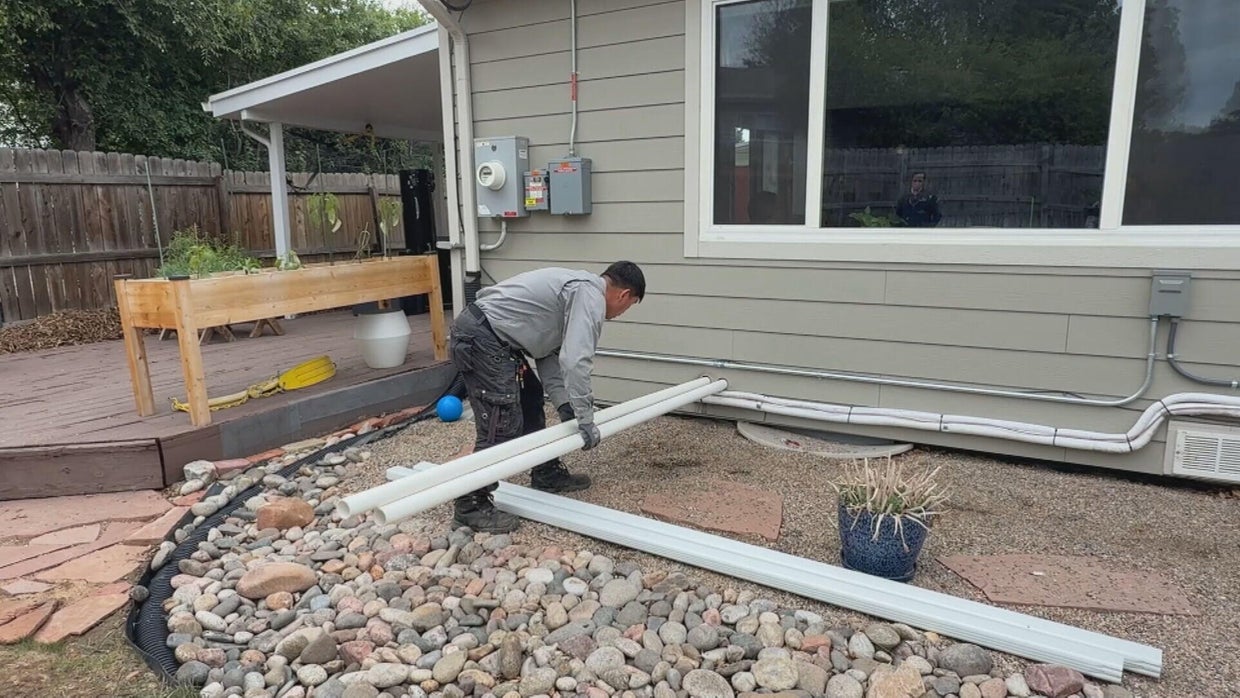
“And seeing that the swamp cooler is gone is fabulous,” Gehringer added.
Colorado
Colorado Supreme Court orders children’s hospital to resume gender-affirming care for minors

DENVER (AP) — The Colorado Supreme Court has ordered Colorado’s largest provider of gender-affirming care for young people to resume medical treatments like puberty blockers and hormone therapy despite threats that providing the care could lead to losing federal funding.
Children’s Hospital Colorado suspended medical treatments for transgender patients under 18 in January after it said the U.S. Department of Health and Human Services opened an investigation into its treatments following a series of clashes between President Donald Trump’s administration and advocates over transgender health care for children.
WATCH: Trump administration seeks to cut off access to transgender health care for U.S. children
The hospital said in a statement that it is reviewing Monday’s court ruling and considering its next steps. It previously said it would continue to provide mental health treatment for minors and also medical treatment for patients aged 18 to 21.
Four transgender girls, ranging from age 10 to 17, sued the hospital, through their parents, alleging that the hospital was violating the state’s antidiscrimination law by refusing to provide them treatment both because of their gender identity and their disability, gender dysphoria. Gender dysphoria is the distress caused when someone’s gender expression doesn’t match their sex assigned at birth.
The girls said they feared not being able to get medication and monitoring to prevent them from undergoing puberty and developing male traits. And they cited mental health fallout, including depression and suicidal ideation.
The court sided with the girls in a 5-2 ruling, finding that the decision to shutter the services for minors violated a state antidiscrimination law. In the majority opinion, Justice William Wood III said, “We conclude that the actual immediate and irreparable harm to petitioners outweighs the speculative harm CHC may face if the federal government further acts against it.”
In a dissent, Justice Brian Boatright said the hospital didn’t make its decision to stop the case because of the gender identity of the patients. Rather, he wrote, “It was a decision driven by the direct threat to the viability of the entire hospital.”
A Kansas judge also sided with transgender minors in a ruling last week.
The Colorado hospital’s TRUE Center, which focuses on gender-affirming care, is one of the largest programs in the country and the only comprehensive care center in the Rocky Mountain region, according to the lawsuit.
Children’s Hospital Colorado said the HHS opened the investigation of the hospital after Health and Human Services Secretary Robert F. Kennedy Jr. issued a declaration that called treatments like puberty blockers, hormone therapy and surgeries unsafe and ineffective for children and adolescents experiencing gender dysphoria, or the distress when someone’s gender expression doesn’t match their sex assigned at birth.
An Oregon-based federal judge ruled in March for Colorado and 20 other states that Kennedy’s declaration went too far.
Mulvihill reported from Haddonfield, New Jersey.
A free press is a cornerstone of a healthy democracy.
Support trusted journalism and civil dialogue.
-

 Denver, CO5 minutes ago
Police investigate shooting at Montbello Recreation Center
-

 Seattle, WA11 minutes ago
3 Seattle Seahawks UDFAs Who Could Steal a Spot on 53-Man Roster
-

 San Diego, CA17 minutes ago
Colorado Muslims grieving, want accountability after San Diego mosque shooting
-
 Milwaukee, WI23 minutes ago
FBI seeks to interview Milwaukee police about 2020 election
-

 Atlanta, GA29 minutes ago
Video shows person of interest in deadly Atlanta shooting, police say
-

 Minneapolis, MN35 minutes ago
Homicide investigation underway in north Minneapolis after double shooting leaves 16-year-old dead
-

 Indianapolis, IN41 minutes ago
‘We’re a bunch of psychos’: Crashing is part of the job for Indy 500 drivers
-

 Pittsburg, PA47 minutes ago
Motorcyclist found dead near I-79 in Cranberry 2 days after crash, police say

