Connect with us

West

California woman says gym revoked her membership for calling out man in women’s locker room

Published

on

California woman says gym revoked her membership for calling out man in women’s locker room
NEWYou can now listen to Fox News articles!

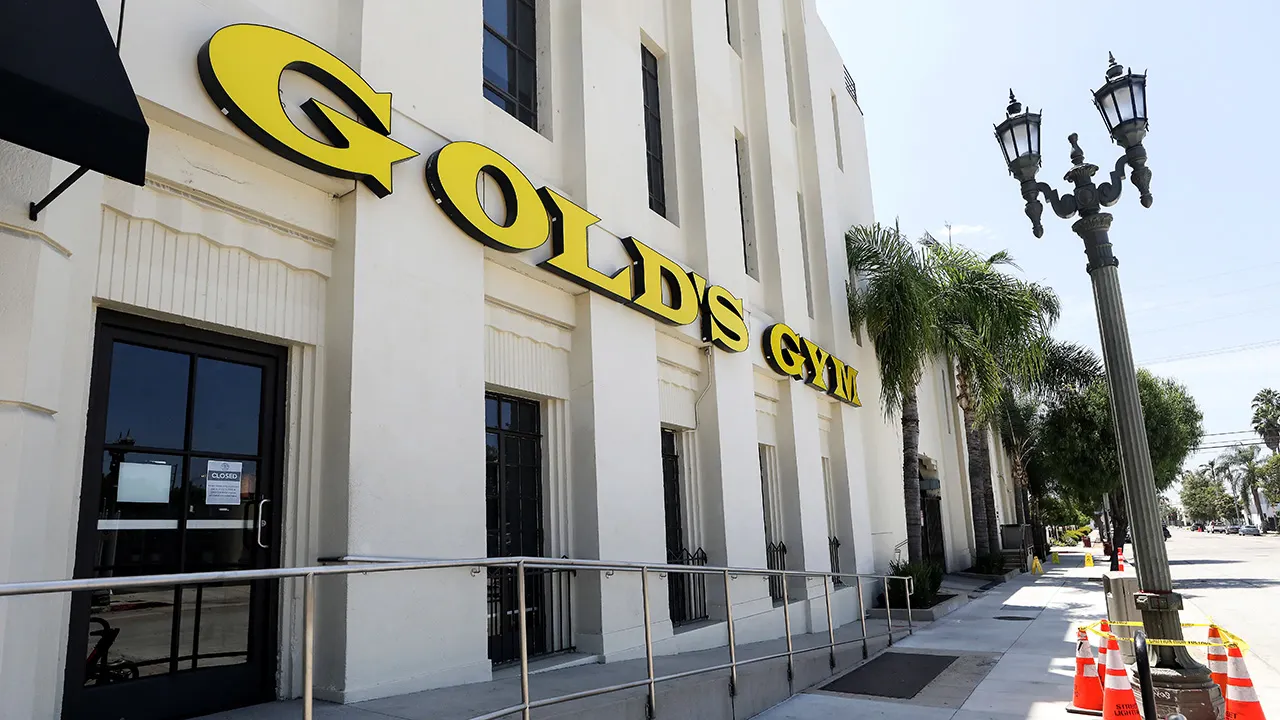
A California woman says her gym membership was revoked after she objected to a man repeatedly entering the women’s locker room at a Los Angeles Gold’s Gym.

Tish Hyman posted a video on social media showing a confrontation that took place on Nov. 2. The man, who is seen walking toward the women’s restroom as other members express concern, has reportedly been using the women’s locker room for weeks. 

Hyman says multiple women filed complaints, but nothing changed.

Advertisement

OutKick reached out to both Gold’s Gym and EōS Fitness for comment but did not immediately receive a response. (Mario Tama/Getty Images)

“I need everyone to hear this,” Hyman wrote on Instagram. “Multiple women and I have repeatedly made written reports on this man for coming into our women’s locker room harassing us, and the gym staff has done absolutely nothing!!”

Hyman said she was terrified when the man entered the locker room behind her and allegedly called her a “b—-” in a deep, angry voice.

“I RAN OUT INTO THE GYM SCREAMING THERE IS A MAN IN THE REST ROOM!!” she wrote. “I called for help and men in the gym got involved, THANK GOD and the staff finally decided to act.”

Staff eventually removed the man from the area, but they kicked Hyman out, too.

Advertisement

“They removed him — but then they turned around and terminated my membership too, as if I was being punished for speaking up,” she wrote. “I WAS LITERALLY SCARED. THE WOMEN IN THE GYM ALL AGREED WITH ME. MANY were relieved that someone finally said something out loud.”

Hyman added: “Should we keep giving gyms our money if they won’t protect us? IS IT TIME we CANCEL our GYM memberships until they understand that women’s safety isn’t negotiable!??”

NATIONAL WOMEN’S SOCCER LEAGUE DEFENDS ATHLETE WHO FAILED GENETIC SEX TEST AS PLAYERS CLASH OVER GENDER RULES

Tish Hyman said she has been harassed online since talking about the person entering a women’s locker room. (MATTHIEU DELATY/Hans Lucas/AFP via Getty Images)

Tish Hyman: ‘I’m being punished for not wanting to be naked in front of men in the restroom.’

Later, on her Instagram stories, Hyman lamented losing her gym membership and detailed the online harassment she’s since received from people calling her names like “TERF” (trans-exclusionary radical feminist).

Advertisement

“I’m so sad right now because I just feel like I’m being punished for speaking up. I feel like I’m being punished for not wanting to be naked in front of men in the restroom,” she said. “I feel like I’m being assaulted for not wanting to do this. It’s not right.”

Another gym member posted video of Hyman after her removal, in which she is seen speaking out loudly to others nearby.

“Everybody saw that man in the f—ing locker room,” she said. “No one’s saying s—. And I’m f—ing done with it.”

OutKick’s Riley Gaines shared the footage on X, praising Hyman for refusing to stay silent.

“If we saw boldness like this back in 2020, this insanity would’ve never been allowed to fester like it has,” Gaines wrote. “God bless you for speaking the truth loudly.”

Advertisement

US OLYMPIAN OPENS UP ON LEADING LAWSUIT AGAINST GOVERNING BODY OVER TRANS ATHLETES IN WOMEN’S COMPETITION

Hyman has documented other incidents involving the same man. In a video posted last week, the individual is seen walking through the locker room wearing a sports bra and reportedly told Hyman she should leave the locker room because “straight women like d—, and they’re probably looking at me more than you.”

Keep in mind underage girls also use this locker room.

Gold’s Gym Beverly Center, where the incident occurred, was acquired by EōS Fitness last week. OutKick reached out to both Gold’s Gym and EōS Fitness for comment but did not immediately receive a response.

It’s worth noting, though, that many gyms have policies prohibiting the use of cameras or recording devices in locker rooms, and the company could cite that rule as justification for terminating Hyman’s membership.

Advertisement

Just Another Day In California

Under California law, individuals are allowed to use restrooms and locker rooms that align with their self-declared gender identity. That includes gyms.

Tish Hyman said she documented other incidents involving the same person.  (Helmut Fricke/picture alliance via Getty Images)

“You have the right to use the restroom consistent with your gender identity… both in public settings, like schools, and at your workplace,” California’s Attorney General states in its official “Know Your Rights” guidance.

Hyman is now urging others to speak up and to consider walking away from gyms and other establishments that fail to protect women.

Advertisement

“Men, think of your wives, sisters, mothers and daughters,” she wrote on Instagram. “Stop men from bullying, harassing and assaulting women in locker rooms.”

Follow Fox News Digital’s sports coverage on X, and subscribe to the Fox News Sports Huddle newsletter.


Read the full article from Here

California

PlayOn Sports fined $1.1 million by California watchdog over student data violations

Published

on

PlayOn Sports fined .1 million by California watchdog over student data violations


California’s privacy watchdog has ordered PlayOn Sports to pay a $1.10 million fine and change how it handles consumer data after finding the company’s practices violated state law in ways that affected students and schools in the state.

The California Privacy Protection Agency Board issued the decision following a settlement reached by CalPrivacy’s Enforcement Division.

The decision is the first by the board to address privacy violations involving students and California schools.

Schools across the country use PlayOn Sports’ GoFan platform to sell digital tickets to high school sporting events, theater performances, and homecoming and prom dances, with attendees presenting tickets at the door on their mobile phones.

Advertisement

Schools also use PlayOn Sports’ platforms for other sports-related activities, including attending games, streaming them online, and looking up statistics about teams and players.

In California, about 1,400 schools contract with PlayOn Sports for these services.

[RELATED] X faces possible fines as EU probes Grok nonconsensual, sexualized deepfakes

GoFan is also the official ticketing platform for the California Interscholastic Federation, the governing body for high school sports.

According to the board’s decision, PlayOn Sports used tracking technologies to collect personal information and deliver targeted advertisements to ticketholders and others using its services.

Advertisement

The company allegedly required Californians to click “agree” to tracking technologies before they could use their tickets or view PlayOn Sports websites, without providing a sufficient opt-out option.

“Students trying to go to prom or a high school football game shouldn’t have to leave their privacy rights at the door,” said Michael Macko, CalPrivacy’s head of enforcement. “You couldn’t attend these events without showing your ticket, and you couldn’t show your ticket without being tracked for advertising. California’s privacy law does not work that way. Businesses must ensure they offer lawful ways for Californians to opt-out, particularly with captive audiences.”

The decision also describes students as a uniquely vulnerable population and warns that targeted advertising systems can subject students to profiling that can follow them for years, expose them to manipulative or harmful content, and develop sensitive inferences about their lives.

Instead of providing its own opt-out method, PlayOn Sports directed students and other users to opt out through the Network Advertising Initiative and the Digital Advertising Alliance, which the decision said violated the company’s responsibility to provide its own way for consumers to opt out. The company also allegedly failed to recognize opt-out preference signals and did not provide Californians with sufficient notice of its privacy practices.

“We are committed to making it as easy as possible for all Californians — from high school students to older adults, and everyone in between — to make the choice of whether they want to be tracked or not,” said Tom Kemp, CalPrivacy’s executive director. “Californians can opt-out with covered businesses, and they can sign up for the newly launched DROP system to request that data brokers delete their personal information.”

Advertisement

Beyond the $1.10 million fine, the board’s order requires PlayOn Sports to conduct risk assessments, provide disclosures that are easy to read and understand, and implement proper opt-out methods.

The order also requires the company to comply with California’s privacy law prohibiting the selling or sharing of personal information of consumers between 13 and 16 without their affirmative opt-in consent.


Source link

Continue Reading

Colorado

Colorado breweries warn new tax hike bills could lead to more small business closures, job losses

Published

on

Colorado breweries warn new tax hike bills could lead to more small business closures, job losses


A bartender pours a beer at a bar in Summit County on Thursday, Feb. 29, 2024. A new bill intended to provide funds for alcohol-related addiction prevention, treatment and recovery programs could cost small breweries and wineries up to 160% in taxes and fees.
Andrew Maciejewski/Summit Daily News

Colorado brewers are raising red flags over new bills that could increase taxes and fees on small alcohol businesses, many of which are already struggling to keep their doors open.

House Bill 1271, known as the Alcohol Impact & Recovery Enterprises bill, creates three government-run enterprises designed to fund programs for alcohol-related addiction prevention, treatment and recovery programs — all funded through fees imposed on alcoholic beverages. The bill is sponsored by four Democratic lawmakers.

Colorado per capita alcohol consumption is higher than the national average. The state also has one of the higher alcohol-related death rates in the country, with around 24 deaths per 100,000 residents as of 2023, according to data from Trust for America’s Health. 


Data from the Colorado Health Institute shows not everyone who could benefit from treatment for alcohol use disorders currently receives it, largely due to factors like cost, accessibility and stigma.

Advertisement

Were the bill to pass, manufacturers and wholesale distributors would have to pay five cents in fees per gallon of beer, cider and apple wine, seven cents per liter of wine and 35 cents per liter of spirits to be used toward alcohol-related treatment and recovery programs. As state lawmakers plan cuts to balance a $850 million budget deficit, advocates for these programs argue the funding from the bill could help offset any potential losses.


For local breweries and wineries in the mountains, however, this would be a significant financial blow to an already struggling industry.

“This is not the time for us to be implementing new taxes on an industry that is hurting right now,” said Carlin Walsh, owner of Elevation Beer Company and chair of the Colorado Brewers Guild. “As a brewer, I feel like the state is looking a gift horse in the mouth.”

Beer, wine, cider and spirits generate around $22 billion in economic activity for Colorado, according to the Colorado Beverage Coalition. The state is home to nearly 420 breweries, 145 wineries, nearly 20 cideries and 100 distilleries. 

Faced with rising costs and waning appetites, however, over 100 Colorado breweries have shuttered their doors since 2024, marking the first time since 2005 that more breweries closed than opened. Meanwhile, national surveys confirmed alcohol consumption in the U.S. is at a 90-year low.

Advertisement

Walsh said breweries already pay eight cents per gallon in taxes, which for a company like Elevation translates to roughly $30,000 in taxes annually. Fees from the new bill would add another $12,000 to its yearly expenses.

“The alcohol industry at large is one of the most regulated industries in the United States, period. We already pay a very heavy tax,” Walsh said, adding that breweries provide tens of millions of dollars to Colorado’s general fund. “Our position is that there’s already money available. Those dollars go to the general fund, and it’s really up to the state to manage what we already provide and to decide what is their priority. We don’t feel like it should be on our shoulders to increase the amount that we pay to the state just because the state wants to endeavour on new programs.”

The Colorado Beverage Coalition said the imposed fees would be a 60% cost increase on alcohol businesses. Paired with an estimated 100% increase in taxes from a referred ballot measure proposed last week — House Bill 1301 — the impacts would be disastrous for the industry, Walsh said.

House Bill 1301 would refer a measure to the November ballot that would increase excise taxes on alcohol and increase sales and excise taxes on marijuana in order to fund a mental health hospital in Aurora.

“Our brewery and so many other breweries, we just don’t have capacity for that. We’re already a low margin business to begin with,” Walsh said. “If this happens, this is going to drive further consolidation amongst our members. It’s going to drive further closures.”

Advertisement

Larger alcohol companies may be in a better position to absorb some of the costs from increased fees, said Shawnee Adelson, executive director for the Colorado Brewers Guild. Small businesses in rural resort markets, on the other hand, are not in that position.

“At a certain point when costs just keep going up and up and up, there’s no more place to cut,” Adelson said.

Colorado jobs, tourism could see ripple effects

The Colorado Beverage Coalition estimates House Bill 1271 could impact several of the 131,000 brewery, winery and distillery jobs in the state.

The Colorado Beverage Coalition estimates House Bill 1271 would jeopardize 131,000 brewery, winery and distillery jobs in the state, in addition to “greatly increasing cost on consumers.” Walsh said an average brewery would “no doubt” have to cut jobs if either, or both, bills were to pass.

“Depending on the size of a brewery, it could be the cost of a full-time staff or multiple full-time staff to cover the cost of these (fees), so there is a real concern about job losses due to increased costs,” Adelson added.

The Colorado Distillers Guild also argues the bill would be a blow to the tourism industry, as visitors could be deterred by increased consumer costs and a dwindling beer culture.

“A lot of (breweries) will either have to absorb that cost or pass it on to the consumer. And right now, in the current state of the economy, we understand that a lot of consumers are price conscious right now, which is also contributing to lower consumption,” Adelson said. “Passing on that price is going to be really hard for consumers to swallow as well.”

Advertisement

The bill is not entirely new, as similar legislation by the same name was proposed in 2024. The original bill, which died in committee, received significant pushback from Gov. Jared Polis due to concerns that it would end up raising prices for consumers. Polis also requested that sponsors exempt beer companies from the fees.

Aside from a stakeholder meeting ahead of the bill’s introduction, Adelson said the Colorado Brewers Guild had not been contacted by lawmakers about the plan for an excise fee increase.

“We’ve had two years to sit down and have discussions with lawmakers about this. Nobody has reached out. Nobody has sat down with us to say, ‘Hey, this is our goal. We wanna get this done. How can you guys meet us halfway?’” Walsh said.

Being an enterprise fee rather than a tax, House Bill 1271 would not go to voters for approval. Instead, the change would be implemented through legislation only and automatically go live in July 2027. Because the bill would create three separate enterprise fees for beer, wine and spirits — each capped at $20 million annually per state law — the state could collect up to $60 million from all three.

The bill would also create a new 11-member board appointed by the governor to oversee the three enterprises, which would be made up of alcohol industry representatives, behavioral health professionals, public health experts and individuals in recovery.

Advertisement

On top of feeling that a financial change of that magnitude should be left up to voters, Walsh said he’s heard from businesses that are concerned about the potential for the board to increase fees in the future.

“There are very few guard rails around how this enterprise can operate, including the ability for them to raise the tax price that we’re currently paying. There’s very few restrictions within this bill that control how much they can increase that tax,” Walsh said. “In two years they could come back and say, ‘Oh we’re going to increase it another five cents or 10 cents.’”

For Adelson, the fees would impact more than just manufacturing facilities and business  operations.

“They’re community gathering spaces and they’re third places,” Adelson said. “They give back a lot and so I think I just want to make sure that the consumer realizes that we’re not just talking about production facilities, but your local neighborhood brewery that’s down the street and that your neighbours own or your friends work at.”

Advertisement


Source link

Continue Reading

Hawaii

The Places Visitors Love Most In Hawaii Just Hit Their Limit

Published

on

The Places Visitors Love Most In Hawaii Just Hit Their Limit


If you’ve driven Hana Highway recently, as we have, tried to wedge your rental car onto the shoulder at Honolua Bay, inched along North Shore behind an hours-long nonstop line of brake lights, or followed a social media pin taking you to Hoopii Falls, Hawaii just put those exact places into specific future plans.

The state updated plans naming specific beaches, roads, trails, and bays where visitor pressure is highest and outlining what officials say could change at each. The first round of these (DMAPs) leaned heavily on broader goals and community meetings. The latest version, however, now lists the individual sites and attaches proposed actions. These are among the most in-demand places people build into their trips, not some policy abstractions.

Before assuming your next trip will look dramatically different, one basic reality is worth noting. The Hawaii Tourism Authority does not manage the roads, trails, bays, or neighborhoods in question, so the counties, DLNR, Hawaiian Home Lands, and private landowners will be needed to carry out most of what has just been described. In almost every case, the first year at least is focused on more studies, coordination, and setting up of what might come next.

Scenic Point from Road to Hana

Maui: Hana and Honolua finally get specific plans.

Maui’s plan centers squarely on the iconic Hana Highway, with six of the island’s nine site-specific actions targeting that single corridor.

The ideas are relatively straightforward. Paid community stewards at high-traffic stops such as Keanae Peninsula, a first-of-its-kind Hawaii tour guide certification program requiring culturally accurate mo’olelo (storytelling), safety guidance, and place-based knowledge instead of loosely scripted commentary, together with clearer signage identifying safe and legal pullouts while reminding drivers to let residents pass instead of backing up traffic for visitor photo opportunities.

Advertisement

At Bamboo Forest off Hana Highway, the plan addresses repeated trespassing onto private land. There have been 35 rescues there over the past decade, most requiring use of emergency helicopters. The proposal calls for signage clearly indicating no access. But because that land is privately owned, any real restriction there depends on the owner’s full cooperation.

Honolua Bay carries perhaps the boldest concept of all in the statewide package of suggested changes, including a reservation and shuttle system to eliminate illegal roadside parking, a cultural trail staffed by stewards before visitors ever reach the water, and water stewards who will be paddling out to orient snorkel boat passengers. No procurement process has started, and no shuttle contract exists, so the idea remains on paper for now. Kaupo, where a recently paved road has attracted more traffic and complaints, would also get sensor-linked warning signs at blind hills to focus on driving safety.

Big Island: Kealakekua Bay may see closings.

Kealakekua Bay is the main headline site here, as might be expected. The draft introduces the possibility of “rest days” during coral spawning or other sensitive periods, coordinated by the DLNR, when the bay would be closed to visitors. It is still a concept and would require coordination beyond HTA.

At Keaukaha near Hilo, cruise ship impacts drive the conversation ideas, and the community has pushed for a permanent role in shaping how visitor flow is handled around the port. A steward program piloted in 2023 is now being formalized rather than remaining as a short-term experiment.

South Point, or Ka Lae, sits on Hawaiian Home Lands, so the state’s role here is to support the Department of Hawaiian Home Lands’ existing plan rather than create a new one from scratch. Hilo itself is described as needing more visitor activity even as other Big Island sites seek to manage crowding.

Advertisement
Kaena Point State Park OahuKaena Point State Park Oahu

Oahu: North Shore, pillboxes, and parking reality.

On Oahu, it’s the iconic North Shore that anchors the plan. Five sequenced actions are listed, but the first year focuses on studies, coordination, and groundwork.

There is no shuttle system scheduled for immediate rollout and no reservation platform ready to launch. During the public webinar, officials said any fees would be site-specific and pointed to the extremely limited parking infrastructure as a major constraint.

Lanikai Pillboxes and Maili Pillbox are cited as trails that have seen steep increases in use due to social media exposure. Lanikai already has daytime parking restrictions on residential streets between 10 am and 4 pm, and Maili has experienced a recent fatality. The plan for Lanikai is to evaluate managed access, while for Maili, it begins with determining who is responsible for the trail and what authority exists in order to manage it.

Downtown Honolulu appears in the draft as a future walkable corridor linking Iolani Palace, Honolulu Hale, and nearby historic sites and shops.

Waipo'o Falls Trail at Waimea Canyon KauaiWaipo'o Falls Trail at Waimea Canyon Kauai

Kauai: this waterfall became a neighborhood fight.

Hoopii Falls in Kapaa has become one of the most tense sites in the statewide plans. What was once a local waterfall became a high-traffic destination after intense social media exposure. The trail crosses private, lease, and state lands and is not formally maintained, and residents have placed rocks and tree stumps at neighborhood access points to slow or block visitor flow. The plan’s near-term focus is to gather more data and bring landowners together to clarify jurisdiction and what can legally be done before any formal access system is devised.

The Kapaa Crawl along Kuhio Highway is listed as a priority, but the proposed response, which is a shuttle and visitor hub concept centered on Coconut Marketplace, has no funding, no operator, and no timeline.

Kokee and Waimea Canyon are also included. Two of four proposed actions are already deferred beyond the first funding year, and the near-term steps focus has moved to installing visitor counters and studying whether a reservation system would be feasible.

Advertisement

What changes on your next trip.

Across all four islands, social media is repeatedly cited as a significant accelerant, turning lesser-known spots into must-see stops almost overnight. And in that regard, there is no end in sight.

There are no additional statewide fees attached to these newly identified sites, no disclosed budgets for even the most ambitious concepts, and HTA does not gain or lose any new enforcement authority through these drafts.

If you are visiting in the coming months, you are unlikely to encounter reservation systems at Honolua Bay, formalized rest-day closures at Kealakekua, shuttles operating on the North Shore, or state-managed access changes at Ho’opi’i. Most of what is described for year one is groundwork.

You can review the full island-by-island drafts here: https://www.hawaiitourismauthority.org/what-we-do/destination-management-action-plans/

Do these plans go far enough or too far at the sites you know best?

Advertisement

Get Breaking Hawaii Travel News


Source link

Advertisement
Continue Reading

Trending

