West
Bryan Kohberger defense suggests 'alternate perpetrators' in Idaho murders, joining infamous legal strategy

NEWYou can now listen to Fox News articles!
Bryan Kohberger’s defense team brought up the possibility that there were “alternate perpetrators” involved in the quadruple murders during a hearing in early May, but Kohberger is hardly the first person to point the blame at other individuals.
During a May 15 pretrial hearing, Judge Steven Hippler revealed that Kohberger’s defense team made a filing that suggested an alternate suspect. Kohberger is charged with first-degree murder in the Nov. 13, 2022, deaths of University of Idaho students Xana Kernodle, 20, Kaylee Goncalves, 21, Madison Mogen, 21, and Ethan Chapin, 20.
While Hippler did not rule on whether he was going to allow Kohberger’s defense team to present the “alternate perpetrators” theory during trial, he did ask for more evidence supporting their claim.
Former federal prosecutor James Trusty told Fox News Digital the strategy isn’t necessarily a “full-throated defense” but rather a strategy used to create reasonable doubt within the jury.
BRYAN KOHBERGER DEFENSE CLAIMS ‘ALTERNATE PERPETRATORS’ IN IDAHO STUDENT MURDERS
Bryan Kohberger enters the courtroom for his arraignment hearing in Latah County District Court on May 22, 2023, in Moscow, Idaho. (Zach Wilkinson-Pool/Getty Images)
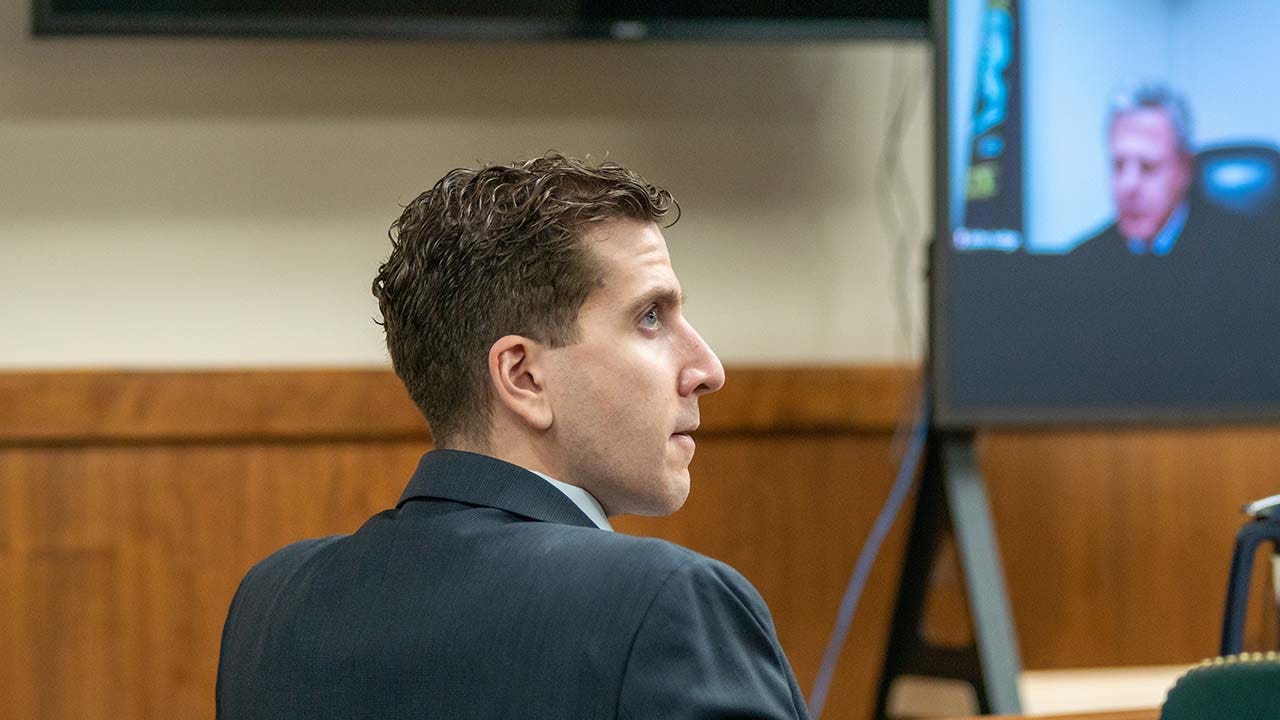
Bryan Kohberger appears in court in Moscow, Idaho, on Oct. 26, 2023. (Kai Eiselein/Pool)
“The problem is, a lot of times, it’s really designed to be not a full-throated defense to say Mr. Smith was the one that committed the murder, but just to create reasonable doubt. It’s keeping in mind that the standard is tilted in favor of the defendant appropriately. And so the idea is to not always go full-throated and say he absolutely did it, but to make a run at it, to play it out in front of the jury, let them kind of come to their own conclusion that there’s at least some doubt as to who did it,” Trusty said.
Here’s a look at other criminal cases in which the suspects invoked an alternate perpetrator.
O.J. Simpson – 1994
O.J. Simpson was accused of killing his ex-wife, Nicole Brown Simpson, along with her friend, Ronald Goldman, on June 12, 1994.
Simpson’s defense team attempted to bring in the alternate perpetrators’ theory when they suggested in 1995 that the murders were done by Colombian drug lords, according to the New York Times.
Simpson’s lawyer, Johnnie L. Cochran Jr., said in court that Brown Simpson and Goldman weren’t the intended targets of the murder, but he suggested that one of her friends, Faye Resnick, was the person that Colombian drug lords had planned to kill.
SIGN UP TO GET THE TRUE CRIME NEWSLETTER
O. J. Simpson sits in Superior Court in Los Angeles on Dec. 8, 1994. (POOL/AFP via Getty Images)
Cochran said the drug dealers wanted to kill Resnick over money she allegedly owed.
Simpson was ultimately acquitted but said after the trial that he would keep working to find the person who killed his ex-wife and Goldman.
“My first obligation is to my young children, who will be raised the way that Nicole and I had always planned. … But when things have settled a bit, I will pursue as my primary goal in life the killer or killers who slaughtered Nicole and Mr. Goldman. They are out there somewhere. Whatever it takes to identify them and bring them in, I will provide somehow,” Simpson said.
OJ SIMPSON MURDER TRIAL: SUPPRESSED WITNESS TESTIMONY CASTS SHADOW OVER VERDICT
Scott Peterson – 2002
Scott Peterson was found guilty in 2004 of killing his wife, Laci, and their unborn son, Conner. Laci Peterson disappeared from the couple’s Modesto, California, home on Christmas Eve in late 2002. A pedestrian found her unborn son’s body, decomposed at the time, in San Francisco Bay in April 2003.
During Peterson’s 2004 trial, his attorney, Mark Geragos, claimed a burglary near the couple’s home at the time of her disappearance might have been connected to her death, according to the New York Post.
Peterson was found guilty and sentenced to life in prison without the possibility of parole.
FOLLOW THE FOX TRUE CRIME TEAM ON X
Scott Peterson and Amber Frey are pictured at a Christmas party on Dec. 14, 2002, before the murder of Laci Peterson and before Frey knew Scott Peterson was a married man. (Superior Court of California, San Mateo County)
In April, the Los Angeles Innocence Project filed a petition that claimed 17 eyewitnesses who lived or worked in the Petersons’ neighborhood “reported seeing a woman fitting Laci’s description walking a dog in the neighborhood and nearby park” on the morning of Dec. 24, 2002, after Scott left for the day.
Casey Anthony – 2008
Casey Anthony was accused of killing her 2-year-old daughter, Caylee, in 2008.
Prosecutors alleged that Casey Anthony used duct tape as the murder weapon, claiming the mother covered her mouth and nose with it, which resulted in the child’s death. Her body was found in a wooded area in Orange County, Florida.
Anthony’s defense lawyers claimed Caylee Anthony accidentally drowned while swimming in her grandparents’ pool.
‘MOST HATED MOM’ CASEY ANTHONY RETURNS TO NATIONAL SPOTLIGHT AFTER ACQUITTAL IN DAUGHTER’S MURDER
Casey Anthony was acquitted on charges tied to her daughter’s death. (Getty Images)
During the trial, Anthony’s defense attorney, Jose Baez, argued that Caylee Anthony’s father, George, covered up the drowning and sexually abused his daughter. George Anthony vehemently denied those accusations.
Casey Anthony was acquitted on charges of first-degree murder, aggravated manslaughter of a child and aggravated child abuse, butshe was found guilty of four misdemeanor counts of providing false information to law enforcement.
Dr Sam Sheppard – 1954
Dr. Sam Sheppard was accused of killing his wife, Marilyn Sheppard, on July 4, 1954.
According to Cleveland Historical, the family hosted a Fourth of July party. After the party, Sam Sheppard decided to go on a walk alone along a Lake Erie beach in Bay Village, Ohio.
GET REAL-TIME UPDATES DIRECTLY ON THE TRUE CRIME HUB
When he returned, Sam Sheppard discovered his wife’s body “chopped up” on their bed.
Bay Village police arrested him on a murder charge on July 30, 1954. He was found guilty at trial but maintained that a bushy-haired man was the individual who killed his wife. Sam Sheppard said he chased the man while he was fleeing their home.
His conviction was overturned in 1966.
Jeffrey MacDonald – 1970
Jeffrey MacDonald was accused of murdering his pregnant wife and two daughters on Feb. 17, 1970, according to the News & Observer.
Colette Stevenson MacDonald, 26, along with the couple’s two daughters, Kimberley, 6, and Kristin, 2, were stabbed and beaten to death at their home located on the Fort Bragg Army base in North Carolina. Jeffrey MacDonald had several stab wounds.
MacDonald allegedly told Army investigators at the time that his family was killed by a group of hippies, which included a woman in a floppy hat. The woman, according to MacDonald, chanted, “Acid is groovy, kill the pigs.”
MacDonald was indicted on three counts of murder by a federal grand jury in January 1975, but the trial didn’t start until 1979. He was found guilty of first-degree murder for his wife’s death and two second-degree murders for the deaths of his daughters. He was sentenced to three terms of life in prison.
The Associated Press contributed to this report.
Read the full article from Here


Lauren Antonoff
More than halfway into his first term, Mayor Mike Johnston finally met with his own Bicycle Advisory Committee and reiterated a familiar promise: Denver can increase road safety without taking any convenience away from drivers. “We want this to be a city where it is safe and easy to get around by bike or by foot,” Johnston told Westword after the meeting. “We want to build infrastructure and a culture that makes that easier, and we think we can do that without making it more difficult for drivers.”
The mayor is wrong. If Denver is serious about making our streets safer for everyone — people driving as well as people walking, biking, rolling or taking transit — then we have to be honest about what that requires. Real safety improvements will sometimes mean slowing cars down, reallocating space or asking drivers to take a slightly longer route. In other words, we must be willing to trade a bit of convenience for a lot of safety.
We already make this trade-off all the time. Parking in front of the fire hydrant across from my house would be extremely convenient, but I don’t do it because it would put my neighbors at risk if a fire broke out. I don’t enjoy going through security screening every time I attend a Denver City Council meeting, but I accept it because it keeps a critical public forum safe. These small inconveniences are simply part of living in a community where everyone’s well-being matters.
So why is the idea of asking drivers to accept minimal inconvenience — a few extra minutes, a block or two of walking from their parking spot to their final destination — treated as politically impossible, even when it could prevent deaths and life-altering injuries?
Will you step up to support Westword this year?
At Westword, we’re small and scrappy — and we make the most of every dollar from our supporters. Right now, we’re $20,000 away from reaching our December 31 goal of $50,000. If you’ve ever learned something new, stayed informed, or felt more connected because of Westword, now’s the time to give back.
Denver committed to Vision Zero nearly a decade ago, pledging to eliminate traffic fatalities. Yet year after year, the death toll remains stubbornly high, topping eighty lives lost annually since the pandemic. The reason is not mysterious: City leaders have consistently prioritized driver convenience over safety, even as people continue to die on our streets.
For generations, Denver’s street designs have catered not just to driving, but to driving dangerously. The majority of streets on the city’s High Injury Network — just 5 percent of streets where half of all traffic deaths occur — are major arterials like Colfax, Federal, Colorado, Speer and Alameda. These corridors are engineered to move as many vehicles as quickly as possible. People walking and biking are left to navigate speeding traffic with minimal protection, crossing up to eight lanes just to reach the other side.
We know what works. The data is unequivocal: On streets like these, the most effective safety improvements reduce the space available for fast-moving vehicles. Road diets, narrower lanes, shorter crossings and dedicated space for sidewalks, bike lanes and bus lanes all make streets safer for everyone — including drivers — by bringing speeds down to survivable levels.
And yet, Mayor Johnston’s recent decision to abandon the planned road diet on Alameda Avenue is only the latest example of the city retreating from proven safety measures because they might inconvenience drivers. The city noted that its revised plan for Alameda would save drivers an extra sixty seconds of driving time, compared to the original road diet.
The mayor must confront a hard truth: We cannot keep people safe without changing the status quo, and the status quo is built on prioritizing speed and convenience over human life. Denver cannot have it both ways.
So the real question for Mayor Johnston is this: How many lives is Denver willing to sacrifice to preserve driver convenience?
So far in 2025, we have lost 87 people — and counting.

(Photos courtesy Brenda Hatley)
By Hayden Yu Andersen
Reporting for West Seattle Blog
Dozens of youth robotics teams from elementary and middle schools across the district gathered on December 6 at Robert Eagle Staff Middle School for this year’s FIRST Lego League qualifier. By the end of the day, three teams from West Seattle – Madison Middle School, Lafayette Elementary School, and Alki Elementary School – emerged triumphant, with their sights set on the next round of the tournament.
Of the schools who competed that day, nine were from West Seattle, including Genesee Hill Elementary, Fairmount Park Elementary, Gatewood Elementary, Arbor Heights Elementary, West Seattle Elementary, and the aforementioned teams that are moving up to the next round.
A local parent tipped us about the students’ achievement, so we set out to get details. We spoke with Brenda Hatley, a coach for Madison Middle School, the only West Seattle middle-school team to advance to the next round, and she says the turnout at the qualifiers was impressive. Hatley first became a coach for her son’s 4th-grade team and was one of the founding parents for Lafayette Elementary’s Lego Robotics team.

She says the program, which pairs engineering with LEGO, coding, and real-world projects, is a fantastic program for students who are less interested in athletics but still want to capture the excitement of a pep rally.
“It’s not a sports team, but they’re still getting so hyped up. The kids were cheering for each other, and the pressure was there; coaching through that was an incredible experience,” Hatley said.

Madison’s team, the Madbots, will play their next match on December 26th, at a to-be-determined location. The teams that do well this month will move on to the city-wide competition in Downtown Seattle, before moving to the regionals at Washington State University, and beyond to the international finals. Regardless of how they perform, Hatley says she and the other parents are planning to travel with their team to the city-wide and regional competitions.
“I’m really proud of the team,” Hatley said. “Last year, the fifth graders didn’t move on, and we had lower expectations; we just went in to learn more and get better. This year, we get to move on and see what the next level looks like.”
San Diego, CA
San Diego’s cost-of-living committee led big policy fights in 2025. The City Council is ending it.

A year after creating a special committee on cost-of-living, the San Diego City Council is shutting it down.
Councilmember Sean Elo-Rivera, who chaired the committee, said he was content to let it die as the council had plenty of work to do completing policy initiatives that started there.
The committee took on some of the most high profile and divisive issues that the city considered last year, such as the successful effort to increase the minimum wage for tourism workers to $25 starting in July 2026.
But it also operated just as city officials passed new and increased fees that added to residents’ cost of living. The city’s new monthly trash fee, hikes to parking rates around town and increased charges for using city facilities all hit residents’ bottom lines this year.
Elo-Rivera stood by approving those fees with one hand while trying to combat costs with the other.
“The cuts on the table that those fee increases mitigated or avoided — library, recreation center and park hours services — were things the community said they didn’t want cut,” he said. “The fees we established were the most fiscally responsible way to avoid those cuts.”
Elo-Rivera is still pushing two other cost-of-living initiatives that could pass in 2026. One is a joint effort with the county to ban landlords from charging hidden fees tacked on to rent. The other is a potential June ballot measure to impose a $5,000 per-bedroom tax on vacation rentals or second homes.
“I completely understand why someone would say, ‘If you want to fix the cost of living, don’t raise these other costs,’” Elo-Rivera said. “We proposed a vacation home tax for the specific purpose of having the things that city residents want and deserve, without the cost of that resource falling on the backs of middle class and working class San Diegans.”
San Diego this year also became the first city in the country to ban grocery stores from offering digital-only deals, another initiative that started at the committee.
Elo-Rivera said the fees the city passed this year “only made it more important to have urgency to address cost-of-living increases driven by corporate greed, those that are disproportionately felt by everyday people.”
Councilmembers Henry Foster III and Marni von Wilpert also served on the select committee. Elo-Rivera credited them for stepping up.
“Everyone wants to talk about affordability, but nobody wants to own it,” he said. “There’s a tension there, but those two weren’t afraid to stand next to this issue and wrestle it.”

Boston sports anecdotes aplenty feature on new YouTube channel

Sacrificing Convenience for Safety Is the Right Thing to Do

Three West Seattle schools’ teams advance in FIRST Lego League competition

San Diego’s cost-of-living committee led big policy fights in 2025. The City Council is ending it.

Behind Milwaukee’s recent restaurant closures

Florida High School Football Rankings: Top 25 teams – Oct. 21

Cleary's 21 help Le Moyne down Central Connecticut State 69-64 in OT

How old is Bo Nix? What to know about Oregon quarterback ahead of 2024 NFL Draft

99th annual Pony Swim held in Virginia

Video: ‘It Didn’t Have to Happen This Way:’ U.Va. Faculty Call for Review of Police Response to Protests

Sen Murphy warns ‘people are going to die’ as Congress punts on expiring Obamacare subsidies

Ex-Pakistan PM Imran Khan, wife sentenced to 17 years in corruption case

U.S. launches strikes in Syria targeting Islamic State fighters after American deaths

Trump administration touts ‘most secure border in history’ as 2.5 million migrants exit US

How the reparations loan for Ukraine fell apart at the eleventh hour
-

 Iowa6 days ago
Addy Brown motivated to step up in Audi Crooks’ absence vs. UNI
-

 Iowa1 week ago
How much snow did Iowa get? See Iowa’s latest snowfall totals
-

 Maine4 days ago
Elementary-aged student killed in school bus crash in southern Maine
-

 Maryland6 days ago
Frigid temperatures to start the week in Maryland
-

 Technology1 week ago
The Game Awards are losing their luster
-

 South Dakota6 days ago
Nature: Snow in South Dakota
-

 New Mexico4 days ago
Family clarifies why they believe missing New Mexico man is dead
-

 Nebraska1 week ago
Nebraska lands commitment from DL Jayden Travers adding to early Top 5 recruiting class