Arizona
Arizona Democrats attempt to repeal the state’s 19th century abortion ban – The Boston Globe


For a third straight week, Democrats at the Arizona Legislature are attempting Wednesday to repeal the state’s near-total ban on abortions, again spotlighting an issue that has put Republicans on the defensive in a battleground state for the presidential election.
Republicans have used procedural votes to block earlier repeal efforts, each time drawing condemnation from Democratic President Joe Biden, who has made his support for abortion access central to his campaign for reelection.
Arizona Republicans have been under intense pressure from some conservatives in their base, who firmly support the abortion ban, even as it’s become a liability with swing voters who will decide crucial races including the presidency, the U.S. Senate and the GOP’s control of the Legislature.
The vote comes a day after Biden said former President Donald Trump, his presumptive Republican rival, created a “healthcare crisis for women all over this country,” and imperiled their access to health care.
The Arizona Supreme Court concluded the state can enforce a long-dormant law that permits abortions only to save the pregnant patient’s life. The ruling suggested doctors could be prosecuted under the law first approved in 1864, which carries a sentence of two to five years in prison for anyone who assists in an abortion.
A week ago, one Republican in the Arizona House joined 29 Democrats to bring the repeal measure to a vote, but the effort failed twice on 30-30 votes. Democrats are hoping one more Republican will cross party lines on Wednesday so that the repeal bill can be brought up for a vote. There appears to be enough support for repeal in Arizona Senate, but a final vote is unlikely May 1.
The law had been blocked since the U.S. Supreme Court’s 1973 Roe v. Wade decision guaranteed the constitutional right to an abortion nationwide.
After Roe v. Wade was overturned in June 2022, then-Arizona Attorney General Mark Brnovich, a Republican, persuaded a state judge that the 1864 ban could be enforced. Still, the law hasn’t actually been enforced while the case was making its way through the courts. Brnovich’s Democratic successor, Attorney General Kris Mayes, urged the state’s high court against reviving the law.
Mayes has said the earliest the law could be enforced is June 8, though the anti-abortion group defending the ban, Alliance Defending Freedom, maintains county prosecutors can begin enforcing it once the Supreme Court’s decision becomes final, which is expected to occur this week.
If the proposed repeal wins final approval from the Republican-controlled Legislature and is signed into law by Democratic Gov. Katie Hobbs, a 2022 statute banning the procedure after 15 weeks of pregnancy would become the prevailing abortion law.
Planned Parenthood officials vowed to continue providing abortions for the short time they are still legal and said they will reinforce networks that help patients travel out of state to places like New Mexico and California to access abortion.
This past summer, abortion rights advocates began a push to ask Arizona voters to create a constitutional right to abortion.
The proposed constitutional amendment would guarantee abortion rights until a fetus could survive outside the womb, typically around 24 weeks. It also would allow later abortions to save the parent’s life, or to protect her physical or mental health.
Republican lawmakers, in turn, are considering putting one or more competing abortion proposals on the November ballot.
A leaked planning document outlined the approaches being considered by House Republicans, such as codifying existing abortion regulations, proposing a 14-week ban that would be “disguised as a 15-week law” because it would allow abortions until the beginning of the 15th week, and a measure that would prohibit abortions after six weeks of pregnancy, before many people know they’re pregnant.
House Republicans have not yet publicly released any such proposed ballot measures.



Don’t miss these 5 metro Phoenix hidden gem restaurants
From Ethiopian cuisine to mesquite-grilled chicken, check out these five restaurants in metro Phoenix that have flown under the radar for too long.
A former candidate for Gilbert mayor has opened the first Arizona location of a Founding Fathers-themed ice cream shop in Chandler.
Brooker’s Founding Flavors Ice Cream is a Utah-based ice cream shop centered around the early history of the United States. Female employees scoop cones in bonnets and dresses; male employees wear tricorn hats and coats. The ice cream flavors have names like Martha Washington’s Colonial Cotton Candy and Alexander Hamilton’s Not Throwing Away My Scoop.
On a trip to Utah in 2019, Arizonan Shane Krauser went to a Brooker’s and was blown away.
“I walked out of that, called my wife Janelle and I said, ‘We will own one of these,’” Krauser said.
The couple had no previous restaurant experience, but decided to open up the chain’s first location outside of Utah, choosing a storefront near the intersection of Chandler Boulevard and Dobson Road. The store opened on June 6.
Krauser loves how the shop creates conversation among customers about American history.
“I love history. I love the Founding Fathers. I love the ideals of America,” Krauser said. “It’s an amazing concept.”
Opening Founding Flavors isn’t political, it’s a ‘labor of love’
Krauser is a retired lawyer turned motivational speaker who addresses topics including “freedom, the proper role of government and the parameters of the U.S. and state constitutions,” according to his website.
In 2024, Krauser ran for Gilbert mayor, but withdrew his candidacy amid scrutiny over involvement with a past investment fraud scheme and his son’s appearance in a video with the Gilbert Goons, The Arizona Republic reported.
Although the shop plans to host events celebrating the 250th anniversary of the U.S., such as one for Constitution Day in September, Krauser said he does not see the ice cream store as related to his political career.
“The mayoral run was something to be involved in politically. This is more of a labor of love,” Krauser said. “This is not political in nature at all. It’s an ice cream shop with an American theme.”
Details: 2560 W. Chandler Blvd. #3, Chandler. brookersicecream.com, 480-881-6100.
Reach the reporter at reia.li@gannett.com. Follow @reia_reports on Instagram.

Arizona CEO accused of stealing millions
Jeffrey Gottfurcht, the now-former CEO of Mesa startupo Cyber Dive, is accused of stealing at least $1.5 million from the company to buy gifts for his girlfriend. FOX 10’s Brian Webb has more.
PHOENIX – An Arizona chief executive officer is facing major legal trouble after being accused of embezzling money from his company.
What we know:
Cyber Dive is an Arizona startup that sells child-safety smartphones, designed so parents can monitor their children’s online activity. The company is run out of a business complex in Mesa, but the startup is barely hanging on after the CEO allegedly took off with the money to spend on his girlfriend.
Jeffrey Gottfurcht is facing federal embezzlement charges. He stands accused of lying and doctoring documents to trick investors before running off with at least $1.5 million.
On the company Facebook page, Gottfurcht claimed to be the first rheumatoid arthritis sufferer to scale Mount Everest.
Local perspective:
Red flags first popped up at the company on Feb. 13, with strange occurrences coming into the office.
Derek Jackson, who co-founded Cyber Dive, recalled the moment the discrepancies came to light.
“They mentioned to me something about getting routing documentation for funds from an acquisition deal,” Jackson recounted. “They said ‘where are those documents?’ He said he was gonna send him at 3 p.m. today, and my response was what deal are you talking about?”
Dig deeper:
Court documents show Gottfurcht used the money to buy his escort girlfriend a Lamborghini, a four-bedroom house in Miami, and a diamond ring. The girlfriend has posted videos on TikTok, but her identity is hidden because she has not been charged with a crime.
When asked to confirm if Gottfurcht purchased the car, the diamond ring, and the house, Jackson responded, “Yes. So it gets deep. Yes, it gets very deep.”
“It’s a huge gut punch,” Jackson said regarding the impact on the startup. “I think it’s been challenging to stay motivated to keep the company going because when this happened, Jeff drained the account to zero.”
At the Cyber Dive headquarters, half the workforce was let go. Jackson is now serving as the interim chief executive officer, looking for new investors to keep the lights on while coming to grips with the loss of a partner and friend.
Jackson stated that the total amount of money taken is closer to $4 million.
“I was in the army. I was an intelligence officer. I was targeting people in ISIS. I don’t even hate terrorists as much as I hate Jeff right now,” Jackson said.
The other side:
No one answered the door at the Paradise Valley home Gottfurcht shares with his wife and three children. Court paperwork shows that his wife is seeking a divorce, and helped turn her husband in to the authorities.
What’s next:
Gottfurcht was previously arrested in Scottsdale in May over allegations of domestic violence. He remains behind bars on a $250,000 bond.
The Source: Information in this report was gathered from Derek Jackson, and from court documents.
-
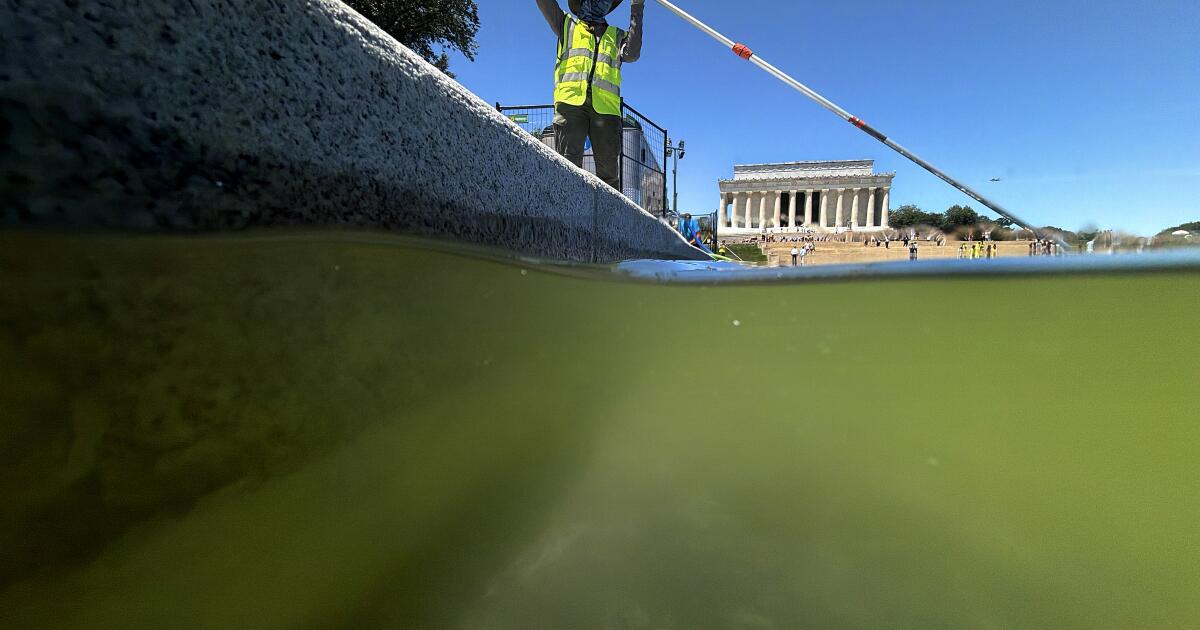 Science6 minutes ago
Here’s why the Lincoln Memorial Reflecting Pool went green so fast
-
 Sports9 minutes ago
Shohei Ohtani out of Dodgers’ lineup vs. Orioles for birth of his second child
-

 World21 minutes ago
Lebanese influencer organises World Cup event amid Israel’s attack on Leban
-
 News44 minutes ago
Air Force One, gifted to Trump from Qatar, arrives at Joint Base Andrews
-

 New York2 hours ago
Video: Fans Show Up to the Parade in Their Best Knicks-Themed Attire
-

 Los Angeles, Ca2 hours ago
Victims sought after man allegedly points gun at passing cars in Santa Clarita Valley
-

 Detroit, MI2 hours ago
Best barbershop in Metro Detroit: Finalists for this year’s Vote 4 The Best
-

 San Francisco, CA3 hours ago
How to watch San Francisco Giants vs. Miami Marlins

