Alaska
Robert Seitz: Energy bills of the 33rd Legislature didn't address long-term plan for Railbelt


By ROBERT SEITZ
I was excited the Alaska Legislature engaged in efforts to encourage production of Cook Inlet gas.
I was, however, very disappointed when a legislator could not move forward a bill to reduce royalty payments on Cook Inlet gas because he could find no certainty it would work to increase production.
This much is clear: It can’t work if not passed. Whether or not it would work is not the point, but that it might work is worth a try.
Southcentral Alaska is desperate for increased production of Cook Inlet gas. I’m not sure what the other Cook Inlet gas bills that died would have done, had they passed, but I will do more research to understand the driving force behind the reluctance to get on board for energy security in Alaska.
Carbon sequestration is something possibly useful for gasification of coal or some other energy process, so it could be a beneficial tool for our state’s energy tool box. Simply storing someone else’s CO2 does not excite me, but if it can bring in some money while we figure out just what our energy policy needs to be — green or hydrocarbon — it’s worth a try.
House Bill 307 was greatly modified from the original submission on Feb. 2, especially modified on the last day of session, May 15. I remain concerned much of the text may contain hidden landmines that could be used to deviate from the original intent and force more renewable sources to the system, even if the system is not ready for more variable sources.
The ERO (Electrical Reliability Organization) and the RTO (Railbelt Transmission Organization) discussed in H.B. 307 seem patterned after similar organizations in other states for the sole purpose of forcing wind and solar expansion to local utilities. We could have done better in Alaska to plan for altering our electrical power system to match the severity of our winters, thus ensuring we all survive the cold and dark.
Long-term planning with step-by-step engineering is needed for the long-duration energy storage necessary, and to make sure we have the means to capture excess variable energy produced, so we have it when we need it most. Mandating is not the solution.
I am also concerned that with H.B. 307, additional power generation from hydrocarbon fuel could be denied and there is no provision or recommendation for planning for the Railbelt system.
As I have been stating for eight years, for wind and solar distributed resources to be successful, we need energy storage means, such as pumped hydro, which would allow all excess solar and wind generation to be captured for use during the cold and dark months.
I was certain that the Railbelt Transmission Organization would not be fully implemented until the new transmission line was designed and being installed. It may be quite difficult to identify portions of the system which are transmission line within some of the utilities and for them to be given over to the RTO.
The key to the healthy growth of the Railbelt power system is continued production of Cook Inlet gas, which will provide time for the development of whatever wind and solar might be added, inclusion of pumped hydro or other energy storage and any other less variable sources such as geo thermal or Cook Inlet tidal. One major goal is to develop our system to produce more and cheaper energy to support refining processes for the ore produced in Alaska, so we can build whatever our future economy will be driven by.
The Alaska Sustainable Energy Conference is this week. I look forward to hearing more about viable solutions to Alaska’s energy needs.
My next commentary will address the claim that Alaska is warming two to four times faster than the rest of the planet. It doesn’t feel like it to me, so I dug into the data.
Robert Seitz is a professionally licensed electrical engineer and lifelong Alaskan.



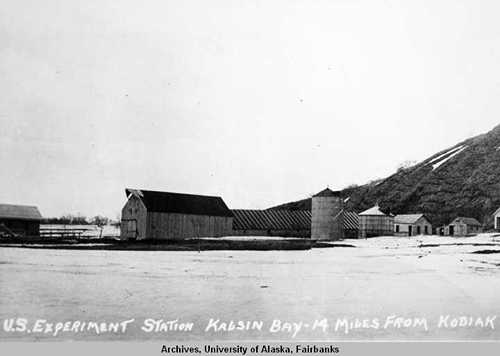 On this day in 1898, the United States Department of Agriculture would open an experimental station on Kodiak Island to experiment with cattle breeding.
The station, authorized by the 1887 Hatch Act, would open in Kalsin Bay, 14 miles to the south of present-day Kodiak
The station’s initial mission was to assess the adaptability of Galloway cattle to the island’s conditions. Different hay grains were also experimented with.
Later, Sitka Black-tailed Deer and Roosevelt Elk would be introduced to the station, deer in 1900 and elk in 1928. While initially the elk were to be released on Kodiak Island, it was determined that the possibility of competition with the cattle for winter food meant that they would instead be introduced to Afognak Island to the north.
The Kalsin Bay Station was one of several that would be established throughout Alaska.

MANLEY HOT SPRINGS — It’s so quiet in these spruce hills and tamarack swamps that 27 hours and 50 miles passed between when Forest Wagner and I said goodbye to one human being at Old Minto and hello to the next near Baker.
Space is in ample supply here on these pressed-in snow trails between towns and villages of Interior Alaska.
Forest and I are out here riding these ephemeral ribbons of blue-white moving westward, with a goal of reaching Nome.
Last Saturday, when it warmed to minus 12 degrees Fahrenheit, I lurched my loaded fat bike out of my home in Fairbanks. Saying goodbye to my wife and dogs, I rumbled eastward on a boot-packed trail that after a mile led to a plowed bike path. I then rolled through the familiar University of Alaska Fairbanks campus and onward 8 miles to Forest’s cabin.
He handed me a mug of coffee and an egg sandwich. Then we started pedaling our fat bikes down Chena Pump Road until we reached the Tanana River.

We found a trail groomed for a multi-sport winter race, turned right, and headed downstream on our home river, there half a mile wide. It was a day when the weather finally nodded toward spring. Fair-a-dise showed up with bluebird skies as the day warmed to 8 degrees Fahrenheit.
After a month of pillowy snows and crazy cold temperatures and re-telling people our new takeoff days to semi-suppressed eye rolls, we were finally unstuck from the glue of town.
If an object wasn’t hanging off our bikes, we didn’t need it. No more fiddling with the load or obsessing on the 7-day weather forecast. Just big ol’ tires humming on dry snow.
Now, five days and 145 miles later, Forest and I are digesting French toast and bacon our friend Steve O’Brien cooked for us as we wait on the dryer in the Manley washeteria. When we get a few dollar bills we will take showers.

It’s a good life here on the trail, just-add-water living at its finest. Eat everything in front of you, apply some sunblock and keep mashing on the pedals.
Steve O’Brien is one of the many people helping us move westward. In one of the most clutch moments, my wife Kristen and our friend Jen Wenrick appeared wearing headlamps on the packed snow ramp off the Tanana River in Nenana. They handed us burgers and fries from the Monderosa.
After a surprise tough day due to soft trail that had us working real hard, those burgers and Cokes were like oxygen.
There have been many other acts of kindness from Jenna and David Jonas, Steve Ketzler, Forest’s dad Joe Wagner and others. Tonic for the body and soul.

We will meet more excellent people, including some old friends, as we ratchet toward Nome.
When my satellite tracker is on, you can see our arrow creeping across the landscape here: https://share.garmin.com/NedRozell.

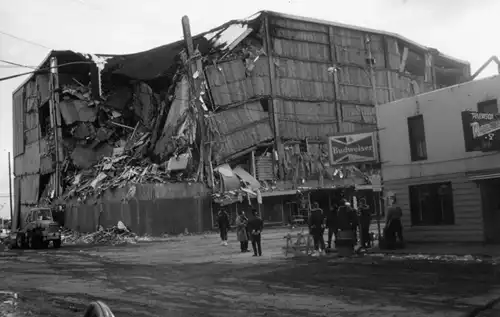
It was on this day in 1964 that a massive 9.2 earthquake in Southcentral Alaska.
The massive quake at 5:36 pm on March 27th caused much devastation throughout the region and generated a huge tsunami that inundated many communities in the region.
The quake was the largest in the history of the United States and initially killed 15 people while the resulting tsunami killed an additional 100 people in the new state and another 13 in California as well as five in Oregon.
The megathrust earthquake endured for four minutes and thirty-eight seconds and ruptured over 600 miles of fault and moved up to 60 feet in places.
The deadly quake occurred 15 and a half miles deep 40 miles west of Valdez and generated a ocean floor shift that created a wave 220 feet high.
As many as 20 other smaller tsunamis were generated by submarine landslides.

Tracker: Alabama Basketball’s Returners, Additions, Departures for 2026-27 Season

This Day in Alaska History-March 28th, 1898

Former Arizona State OL Max Iheanachor Talks transition to NFL

ARKANSAS A-Z: Norris Church Mailer — From Atkins to literary fame | Arkansas Democrat Gazette

The race to drop César Chávez’s name has begun. These experts have advice

Florida High School Football Rankings: Top 25 teams – Oct. 21

How old is Bo Nix? What to know about Oregon quarterback ahead of 2024 NFL Draft

Cleary's 21 help Le Moyne down Central Connecticut State 69-64 in OT

99th annual Pony Swim held in Virginia

Indiana Members Credit Union announced as new anchor tenant at Bottleworks District

Dem senators dodge crucial question on illegal alien accused of killing Chicago college student

EU Parliament unblocks key political hurdle in digital euro talks

Man arrested in plot to firebomb Palestinian activist’s home after undercover op

WATCH: Senate hearing goes silent after Angel Father confronts top Dem over daughter’s death

US diplomat Marco Rubio denounces settler violence, tolls in Hormuz strait
-

 Detroit, MI1 week ago
Drummer Brian Pastoria, longtime Detroit music advocate, dies at 68
-

 Movie Reviews1 week ago
‘Youth’ Twitter review: Ken Karunaas impresses audiences; Suraj Venjaramoodu adds charm; music wins praise | – The Times of India
-

 Sports7 days ago
IOC addresses execution of 19-year-old Iranian wrestler Saleh Mohammadi
-

 New Mexico6 days ago
Clovis shooting leaves one dead, four injured
-
 Business1 week ago
Disney’s new CEO says his focus is on storytelling and creativity
-

 Tennessee5 days ago
Tennessee Police Investigating Alleged Assault Involving ‘Reacher’ Star Alan Ritchson
-

 Technology6 days ago
YouTube job scam text: How to spot it fast
-

 Texas1 week ago
How to buy Houston vs. Texas A&M 2026 March Madness tickets