Business
Sony Pictures CEO Tony Vinciquerra talks 'arms dealer' strategy, defends 'Spider-Man' spinoffs

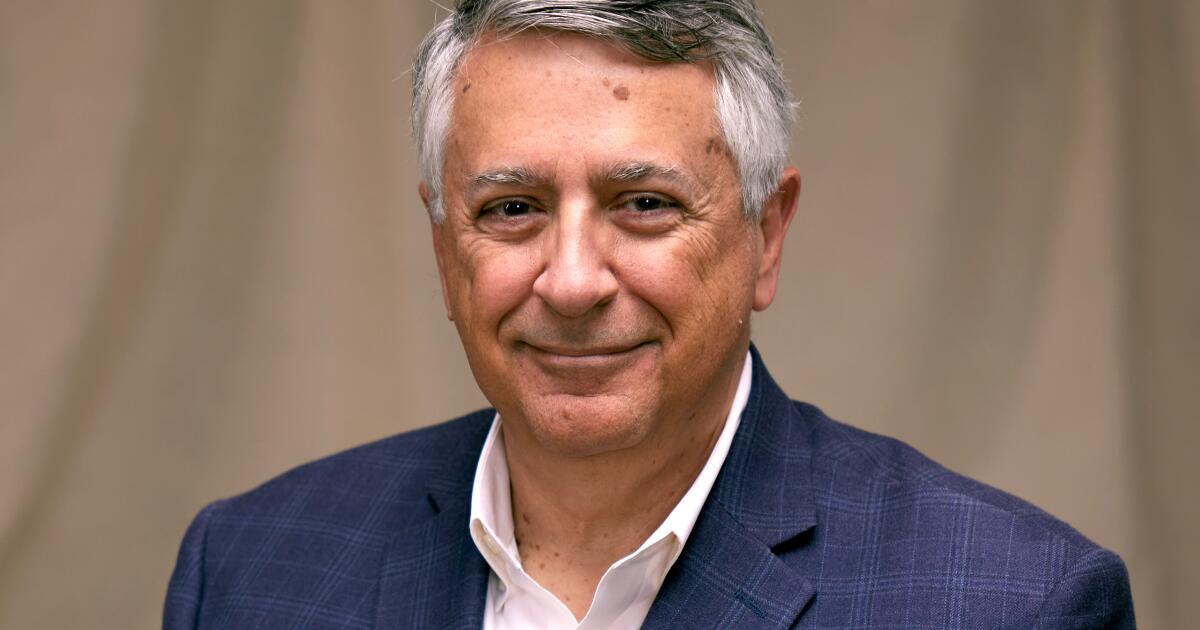
When Tony Vinciquerra arrived at Sony Pictures Entertainment in 2017, it was far from business as usual.
The Culver City studio was still reeling from a 2014 cyber attack that exposed employees’ personal information and revealed internal communications, damaging its reputation and leading to major financial losses. Its film studio was in such a slump that Tokyo parent company Sony Corp. took a nearly $1 billion write-down just months before Vinciquerra was announced as the new chief executive and chairman.
At the time, he was working at private equity firm TPG after a long career at Fox Networks.
“When people approached me about this job, I really wasn’t looking to go back to work full-time, be in the office every day,” said Vinciquerra, 70. “But what was really attractive was the potential.”
Under his leadership, Sony Pictures mounted a comeback.
The film studio revitalized several franchises, including “Jumanji” and “Bad Boys,” churned out its all-important “Spider-Man” movies and started to capitalize on its sister PlayStation video game division by making film and TV series based on that intellectual property. The studio continued to nurture its key shows “Jeopardy” and “Wheel of Fortune,” weathering host changes for both. And it branched out, making acquisitions in the anime market and in movie theaters.
But the studio also had its share of struggles. Like every studio, Sony’s business was hurt by the pandemic and last year’s dual strikes. The company mounted a failed bid for Paramount Global earlier this year. The film studio’s efforts to expand the “Spider-Man” universe into movies about characters other than the titular superhero have had middling box office results.
On Jan. 2, Vinciquerra will step down from his role and hand control to current Sony Pictures Chief Operating Officer Ravi Ahuja in a planned succession that was signaled for months.
Vinciquerra spoke with The Times ahead of his last day to reflect on his more than seven-year tenure at Sony Pictures and what’s to come for him. This conversation has been edited for clarity and length.
Describe the state of Sony Pictures when you arrived in 2017.
The environment of the studios and the business was still vibrating from the hack. There was so much damage done by that in terms of invasion of privacy and sharing of emails. It was palpable. You could feel it even in June of ’17 when I joined.
The financials showed a lot of room for improvement. The fact that Sony owned pictures, music, PlayStation and technology … there’s no other company in the business that had that combination of assets. I didn’t understand why the company wasn’t trading IP back and forth among its units, and they weren’t really working together. So I saw that as a great opportunity; it’s really why I decided to come here.
What were your main priorities when you started in the job?
All of our competitor companies either had started, or were about to start, general entertainment streaming services, and we were under some pressure to do that as well. But we realized pretty quickly that if everybody else is doing that — all seven or eight of our competitors were doing that — why should we? Knowing that they would be fighting tooth and nail to get subscribers, why wouldn’t we just be the arms dealer to supply the weapons for those streaming services to fight each other and thereby improve our business?
We also, at the time, had 110 cable networks. And it was pretty clear that that business was on the downslope. So we set a strategy to get out of that business for the most part, except in markets where cable networks are still doing really well, which is Latin America, Spain and India.
Looking back at what’s happened with all the streamers, the arms dealer decision looks pretty prescient now.
It was pretty obvious, and also the cable network decision was pretty obvious. And really, what’s going on in the business today, most of the streaming services will become profitable, but the cable networks are going in the wrong direction, and that’s not going to change. That’s really the issue for our colleague companies.
How do you feel about the future for anime?
We haven’t rolled Crunchyroll out in the entire world yet, so we still have quite a ways to go. The audience for anime is violently passionate — violent in a good way, not violent in a bad way. They are the most passionate audience ever. It’s got a great future. And unfortunately, others have noticed now and are starting to get into the business. Netflix and Hulu are starting to get in the business and raise the cost of product for us. But, you know, that comes with success.
Part of your tenure included the strikes, and you’ve commented before on how you feel the contract terms from the unions are increasing costs and forcing productions out of the U.S. Do you think the new California film tax credit proposal will change things?
I don’t think the California change will really impact [the situation] because it still doesn’t cover above-the-line actors, it doesn’t cover casting, and it’s still a very difficult process to get done in California.
Not only did the union deals raise costs, but California raises costs as well, just the regulations and the hoops that you have to jump through to get production done here. My suggestion would be, as I’m leaving this job, is that they take a real hard look at the program and the restrictions on the business and and try to figure that out.
How do you feel about the performance of the film studio during your tenure?
We’ve had mostly very, very good results. Unfortunately, [“Kraven the Hunter”] that we launched last weekend, and my last film launch, is probably the worst launch we had in the 7 1/2 years so that didn’t work out very well, which I still don’t understand, because the film is not a bad film.
But we’ve been very successful. We’ve beat our budgets every year I’ve been here, even through strikes and COVID, and max bonuses several of the years for all the employees. It was a good run, and the film studio was a big part of it.
Going back to “Kraven the Hunter,” and Sony had “Madame Web” earlier this year, which also underperformed …
Let’s just touch on “Madame Web” for a moment. “Madame Web” underperformed in the theaters because the press just crucified it. It was not a bad film, and it did great on Netflix. For some reason, the press decided that they didn’t want us making these films out of “Kraven” and “Madame Web,” and the critics just destroyed them. They also did it with “Venom,” but the audience loved “Venom” and made “Venom” a massive hit. These are not terrible films. They were just destroyed by the critics in the press, for some reason.
Do you think that the “Spider-Man” universe strategy needs to be rethought?
I do think we need to rethink it, just because it’s snake-bitten. If we put another one out, it’s going to get destroyed, no matter how good or bad it is.
How do you feel about the state of the industry going into 2025?
There’s a period of asset readjustment coming. It’s going to be for the next year and a half to two. I think it’s going to be a little bit chaotic. The one thing we do know for sure is that the demand for entertainment is not going down. It’s becoming slightly different. But once all of these companies get to the point where they’re stable, they’ll have a great run ahead of them.
2026 is going to be a great year in the film business. And the television business is still perking along, and our market share keeps going up, so we’re very content there. And then we’re looking at other businesses. The film and TV business are probably not going to be great growth businesses, but we’re looking at other things. We have Crunchyroll, we have Alamo Drafthouse and we’re looking at location-based entertainment projects. I’m pretty comfortable with where the company is right now. It’s very stable, relative to the rest of the business.
What made Sony interested in the Alamo Drafthouse deal?
It’s a very different, very unique concept for viewing a film. It’s a very small business. So we have to grow into the markets that are important to domestic box office.
Alamo, even though it only has 41 locations, has 4.5 million loyalty program members, so we have a built-in way to talk to their customers. That’s going to be a very, very big advantage of it for us in the future. And secondly, the customer profile of Alamo Drafthouse is not terribly dissimilar to Crunchyroll. So we’ll use it to promote Crunchyroll, and we’ll also use it in a lot of other ways. It was not a big cash outlay, but the results of what we’re going to gain from this by having a view of our customers’ likes and dislikes will benefit us greatly in the long run.
After you step down, you’ll be moving into an advisor role for 2025. What does that role look like?
I’m here to answer questions, and I’ll be doing some work with Sony Tokyo, but I’ll be in a different office, hidden away so nobody can find me. I don’t know. We’ll see how it works out.
What are your plans for the future?
I don’t know yet. I’ve had a lot of outreach from private equity firms and and other investment-oriented companies. I’m not going to think about it until after the holidays. But most likely will involve some return to private equity or investment companies, but not for sure.
How would you describe your legacy at Sony Pictures?
Where I get my psychic reward is helping people to do their jobs better and get better in their careers, and that’s really how I judge how well I do. The second part of that corollary is to leave a place better than I found it. And I think I’ve done that most every place I’ve been at. I like to fix things and that’s really how it all comes together.
I think I’m leaving the place in a better place, but time will tell. It feels like it’s a very stable business, and I think that’s the legacy.

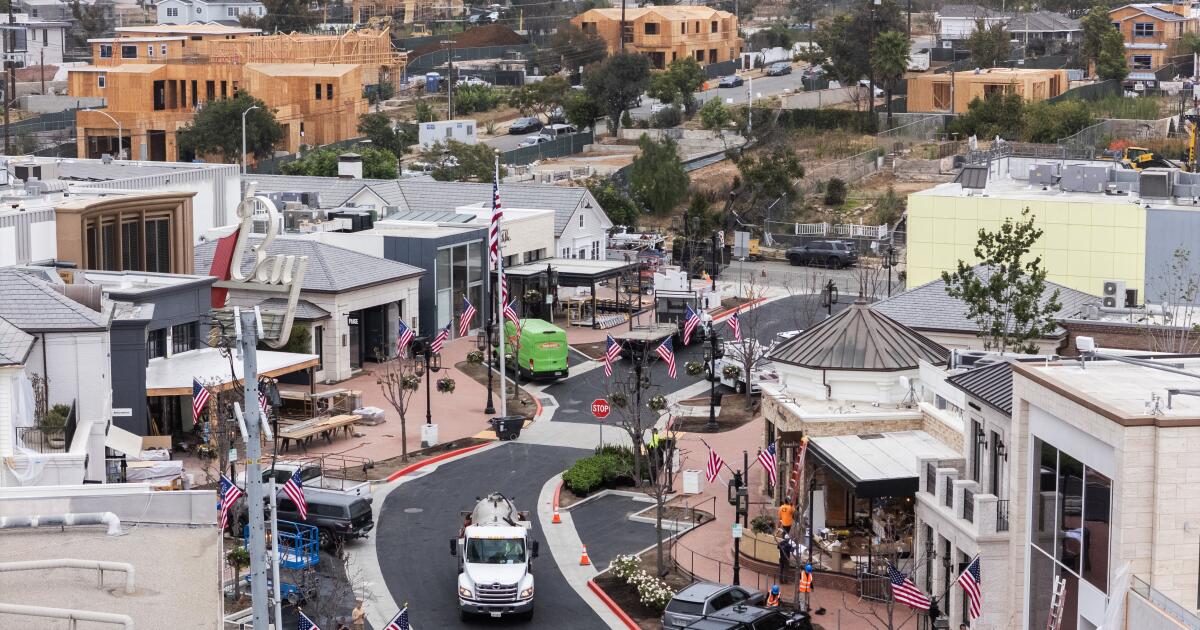
The luxury shopping center in Pacific Palisades will reopen next month after more than $100 million in renovations forced by the January 2025 wildfire that devastated the Los Angeles neighborhood.
Palisades Village will reopen Aug. 15, owner Rick Caruso announced Wednesday. The outdoor center survived the blaze that destroyed homes and other businesses but needed refurbishment to eliminate contaminants that the fire could have spread.
Crews are putting finishing touches on mall buildings after tearing them down to the studs, treating the wood and rebuilding the walls, Caruso said.
“Everybody’s working, and stores are moving their products in,” he said. “It’s a really cool feeling that people have really locked arms and are working together.”
An electrician installs lighting for a restaurant at Rick Caruso’s Palisades Village on Thursday. The shopping center is scheduled to reopen mid-August.
(Myung J. Chun / Los Angeles Times)
Pacific Palisades resident Allison Polhill, who is rebuilding the home of 30 years that her family lost in the blaze, said she is “thrilled” at the prospect of returning to the mall she used to frequent. Its comeback is a boost for the community, she said.
“Every single step that we make to reopen our commercial corridors is going to bring more people back into the Palisades,” said Polhill, who expects to move back into her home at the end of August.
A total of 6,822 structures were destroyed in the Palisades fire, including more than 5,500 residences and 100 commercial businesses, according to the California Department of Forestry and Fire Protection.
Caruso previously attributed the mall’s survival to the hard work of private firefighters and the fire-resistant materials used in the mall’s construction.
The $200-million shopping and dining center opened in 2018 with a movie theater and a roster of upmarket tenants, including Erewhon, which may be the only grocer in the heart of the fire-ravaged neighborhood when it opens.
Caruso’s company was able to fill the mall with tenants despite the long shutdown.
Palisades Village is 99% leased, with the majority of tenants returning, said Jackie Levy, chief financial and revenue officer. Nearly one-third of the shops and restaurants are new to the property.

A firefighter carries a hose back to his rig while walking through a destroyed home from the Palisades fire in Pacific Palisades on Jan. 7, 2025.
(Genaro Molina / Los Angeles Times)
Last year, Pacific Palisades-based fashion designer Elyse Walker said she would reopen her eponymous store in Palisades Village after losing her 25-year flagship location on Antioch Street to the inferno.
Other neighborhood shops destroyed in the fire that are reopening at the mall include K Bakery and Loomey’s Toys, which caters to children up to age 12 and used to be across the street from Palisades Elementary Charter School.
“It’s been a journey and I’m excited because I wasn’t sure that there was going to be a place to come back to,” said toy store owner Amanda Rastegar. “Hopefully we can bring some of that magic back.”
Rastegar’s home in the Palisades survived but was damaged by the fire. The family returned about eight weeks ago. Her last memory of the fire was a burning supermarket.
“I just couldn’t wrap my brain around what was happening,” she said. “By the time I left, Gelson’s was on fire.”
Among the returning tenants is Angelini Ristorante & Bar. Well-known Los Angeles chef Gino Angelini said he will be in the kitchen next month for a return of the Italian restaurant.
“We won’t do a big celebrity open,” he said. “We want to have a very soft opening and see our customers come back.”

Construction takes place at Rick Caruso’s Palisades Village on Thursday. The shopping center is scheduled to reopen mid-August.
(Myung J. Chun / Los Angeles Times)
An elaborate celebration would not feel “correct for me,” Angelini said, because the devastation has been “very sad” for so many.
Other new tenants include local chef Nancy Silverton, who has agreed to move in with a new Italian steakhouse called Spacca Tutto. Women’s activewear retailer LESET will open its first West Coast location.
Caruso said he is optimistic that customers will return to the center, even though many Pacific Palisades residents are still dispersed. One tracking system estimated that about 30% of the Village’s customer base was impacted by the fire, he said.
“That means 70% did not get impacted, so there’s a lot of customers still left out there,” Caruso said. Historically, the center drew customers from as far away as Beverly Hills and Calabasas, as well as Malibu, Brentwood and Santa Monica.
He also hopes many will be inspired to visit the revived mall.
“I believe in the goodness of people and I believe that people are going to want to support the Palisades,” he said. “They’re going to want to be there and support the businesses that have had the courage and the heart to reopen.”

Walmart is rapidly expanding its network of electric vehicle chargers designed for customers to use while they shop.
The network could help fill gaps in EV infrastructure in states with greater need for chargers. Walmart, which has more than 5,000 locations in the U.S. and hundreds in California, says more than 90% of Americans live within 10 miles of one of its stores.
The chargers also offer an incentive for customers to choose Walmart — Walmart Plus members will receive a 10% discount off an average price of $0.46 per kilowatt-hour of energy at the company’s chargers.
Walmart chargers are already available at more than 75 locations in 17 states, with Texas boasting the most charging stations, followed by Florida and Arizona.
Matthew Nelson, Walmart’s director of energy policy, said last week on LinkedIn that the network will soon reach 29 states, including California.
“We are delivering on the promise of affordable, reliable and convenient charging,” Nelson said in his post.
According to Walmart’s website, six charging stations are coming to California soon, though the company did not offer a specific timeline.
The chargers will be installed at stores in Antelope, Brea, Fresno, Stockton, Suisun City and Vallejo.
Most charging sites in California will include eight to 16 fast-charging stalls, said Walmart spokesperson Kelsey Bohl.
The company first announced plans in April 2023 to install its own EV chargers at Walmart and Sam’s Club stores, with a goal of installing thousands of chargers by 2030. Partnering with ABB E-Mobility and Alpitronic, it added 25 new charging sites this past May and six more in June.
“Walmart is building a leading retail-integrated EV fast-charging network, focused on delivering an affordable, reliable and convenient charging experience where customers already shop,” Bohl said in an emailed statement. “Customers can charge while they shop, access stations through the Walmart app they already use, and benefit from affordable pricing.”
The charging stations already available include 612 individual charging stalls using 400-kilowatt chargers. Each stall has a dual charging cord with both Combined Charging System and North American Charging Standard connectors. The standard connectors, designed by Tesla, are smaller and lighter than the combined systems.
The primary way to pay for the chargers is through the Walmart app, but the company is also experimenting with built-in credit card readers to allow those without the app to use the stations.
Customers can check charger availability on the Walmart app. The company said the chargers will be available 24 hours a day.

Robotaxis could be turning into robocops.
A self-driving Waymo reported two teens to San Mateo, Calif., police on Monday after they were found drinking alcohol and shooting toy guns in the back of the vehicle.
According to a social media post from the San Mateo Police Department, officers detained two 15-year-olds after the Waymo they were riding in contacted the department and stopped in a parking lot until law enforcement arrived.
“Parents do you know where your teens are?” the San Mateo Police Department wrote on Facebook following the incident. “Waymo does!”
Officers removed both teens from the vehicle and determined they were using toy guns to shoot Orbeez out the windows. Orbeez are small, water-absorbing beads sold at toy stores.
“Toy guns, water guns, and BB guns all pose real dangers, especially to an untrained eye,” the Police Department said. “The simple handling of them can cause fear in [passersby].” “
A video posted on Facebook shows at least five officers and a police dog responding to the scene and approaching the Waymo with their weapons raised.
Waymo did not immediately respond to a request for comment.
Waymo vehicles have internal cameras and microphones that may be used in an emergency or to “promote safety and security,” according to Waymo’s online support page.
The cameras are also used to ensure the vehicles are clean and to help find lost items, according to the support page.
The company said it does not use facial recognition or other biometric identification technologies to identify individuals.
“In more urgent circumstances, support may access live video during a trip,” the Waymo page said.
The San Mateo Police Department’s Facebook post has garnered nearly 60 comments, with one user accusing Waymo of “snitching.”
“At least they got a designated driver?!” one user commented.
-

 Maine2 minutes ago
Graham Platner says he’ll withdraw from Senate race in Maine
-

 Maryland9 minutes ago
Maryland man sentenced to 15 years for attempting to join ISIS
-

 Michigan12 minutes ago
Sherrone Moore’s former assistant sues University of Michigan over alleged FOIA violations
-

 Massachusetts17 minutes ago
Max McColgan and Joseph Lenane share stroke play medals at 118th Massachusetts Amateur Championship – The Boston Globe
-

 Minnesota24 minutes ago
Man seriously injured in north Minneapolis shooting; no arrests
-

 Mississippi27 minutes ago
Ben Crump seeks independent autopsy in Nolan Wells death
-

 Missouri32 minutes ago
Missouri politicians champion unity, diversity on America’s 250th
-

 Montana39 minutes ago
Montana signs onto data center energy cost protection pledge

