


Hi, friends! Welcome to Installer No. 124, your guide to the best and Verge-iest stuff in the world. (If you’re new here, welcome, send me your Coachella fits, and also you can read all the old editions at the Installer homepage.)
Technology
Republicans attack ‘woke’ Netflix — and ignore YouTube


When Netflix co-CEO Ted Sarandos entered the Senate office building on Tuesday, he got thrown a curveball. What started as a standard antitrust hearing relating to the Warner Bros. merger quickly devolved into a performative Republican attack about the spread of “woke” ideology on the streaming service. At the same time, arguably a much more influential platform was completely ignored: YouTube.
After grilling Sarandos about residual payments, Sen. Josh Hawley (R-MO) launched into a completely different line of questioning: “Why is it that so much of Netflix content for children promotes a transgender ideology?” Hawley asked, making an unsubstantiated claim that “almost half” of the platform’s children’s content contains so-called “transgender ideology.” The statement harkened to a pressure campaign launched by Elon Musk months ago in which he called on X users to unsubscribe from Netflix for having a “transgender woke agenda,” citing its few shows with trans characters — shows that were canceled years ago.
“Our business intent is to entertain the world,” Sarandos replied. “It is not to have a political agenda.” Still, other Republican lawmakers, including Sens. Ashley Moody (R-FL) and Eric Schmitt (R-MO), piled on, bringing up a post Netflix made following the murder of George Floyd, and the French film Cuties, which sparked a right-wing firestorm years ago. Sen. Ted Cruz (R-TX) even asked Sarandos what he thought about Billie Eilish’s “no one is illegal on stolen land” comment at the Grammys. It seemed like they were grasping at straws to support their narrative that Netflix’s acquisition of Warner Bros. could somehow poison the well of content for viewers.
“My concern is that you don’t share my values or those of many other American parents, and you want the United States government to allow you to become one of the largest — if not the largest — streaming monopolist in the world,” Hawley said. “I think we ought to be concerned about what content you’re promoting.”
While it’s true that Netflix will control a substantial portion of the streaming market when — and or if — it acquires Warner Bros. and its streaming service HBO Max, it’s hard to criticize Netflix without bringing up YouTube.
“YouTube is not just cat videos anymore. YouTube is TV.”
For years now, Netflix has been trying to topple YouTube as the most-watched streaming service. Data from Nielsen says Netflix made up 9 percent of total TV and streaming viewing in the US in December 2025, while Warner Bros. Discovery’s services made up 1.4 percent. Combining the two doesn’t even stack up to YouTube, which held a 12.7 percent share of viewership during that time. “YouTube is not just cat videos anymore,” Sarandos told the subcommittee. “YouTube is TV.”
Unlike Netflix, YouTube is free and has an ever-growing library of user-created content that doesn’t require it to spend billions of dollars in production costs and licensing fees. YouTube doesn’t have to worry about maintaining subscribers, as anyone with access to a web browser or phone can open up and watch YouTube. The setup brings YouTube a constant stream of viewers that it can rope in with a slew of content it can recommend to watch next.
But not all creators on YouTube are striving for quality. As my colleague Mia Sato wrote, YouTube is home to creators who try to feed an algorithm that boosts inflammatory content and attempts to hook viewers, in addition to an array of videos that may be less than ideal for kids.
Like it or not, YouTube is the dominant streamer, with an endless supply of potentially offensive agendas for just about anyone. But for some reason, it’s not the target of this culture war. If these lawmakers actually cared about what their kids are watching, maybe they’d start looking more closely at how YouTube prioritizes content. Or, if they don’t like the shows and movies on Netflix, they could just do what Sarandos suggested during the hearing: unsubscribe.


This week, I’ve been reading about restaurant bread and GLP-1s and Lenny Rachitsky and Artemis II fashion, watching the new boy band doc because I will always watch a boy band doc, also watching every clip I can find from Justin Bieber’s Coachella set, filling the Schitt’s Creek-shaped hole in my heart with Big Mistakes, getting increasingly excited about The Mandalorian and Grogu, and watering my new lawn so it doesn’t die. Please don’t die, lawn. You were so expensive.
I also have for you a couple of new AI apps to install on your computer, new action cameras worth planning a trip around, a new sci-fi action game to play, and much more.
Oh, and a reminder: Send me the thing you made! We’re doing self-promotion week in Installer (probably next week but maybe the week after), and either way I want to hear about the things you’ve been making, building, coding, creating, whatever-ing that you think the Installerverse might like. I’ve already heard from SO MANY of you, and it rules — keep the good stuff coming! Let’s dig in.
(As always, the best part of Installer is your ideas and tips. What are you watching / reading / playing / listening to / storing on your NAS this week? Tell me everything: installer@theverge.com. And if you know someone else who might enjoy Installer, forward it to them and tell them to subscribe here.)
- OpenAI Codex. Here’s OpenAI’s latest stab at an all-in-one AI superapp, which includes a web browser, new coding tools, and a setting that allows Codex to just use your computer for you. Tread lightly, as always, but people seem to be liking Codex a lot recently.
- Gemini for Mac. I’m mad at Google for tying its Mac app to a keyboard shortcut lots of people use for other things, and for making the app a login item by default. But! This is immediately the best way yet to interact with Gemini, and even Google Drive and Photos, from your computer. Into my dock it goes.
- Beef season two. Beef is one of the very best shows nobody ever seems to talk about. I’ve been burned before by the “we’ll just do it again but with a whole new cast” premise — looking at you, True Detective — but this is a win even just as a reason to rewatch the first season.
- Gradient Weather. Y’all, I think somebody finally made the gorgeous, simple weather app Android has been desperately needing. It’s very new and very beta, but I love the look, and I love that the whole aesthetic shifts with the weather. Insta-install.
- Lorne. By all accounts this is about as close as anyone has ever gotten to a truly inside look at Saturday Night Live and its semi-mythological creator, Lorne Michaels. Morgan Neville mostly makes great docs and got a ton of access for this one; I’m very excited to watch it.
- “Where Are All Of These GPUs Actually Going?” A very fun answer to a surprisingly complex question: What are companies doing with the unbelievable quantities of chips they’re buying? The numbers are all kind of pretend, and How Money Works does a good job making them make sense.
- The DJI Osmo Pocket 4. It’s very sad that this gimbal camera isn’t coming to the US in the near future, because more buttons, better slo-mo, and more built-in storage are all terrific upgrades. I use a Pocket 3 all the time, and will be keeping an eye out for the upgrade.
- The GoPro Mission 1 Pro ILS. This one’s still in “coming soon” mode, but it is the first GoPro in a long time I’ve been excited about. Adding an interchangeable lens mount, along with all the other Mission 1 upgrades, is going to completely change the kinds of things people do with GoPros. I can’t wait to see this thing out in the wild.
- Coachella TV. I’ve never spent much time with YouTube’s Coachella livestream, but this year’s show has been terrific. It almost feels like a concert doc being shot in real time — and there’s more Bieber to come!
- Pragmata. I am always here for a game that’s not trying to be a live-service, battle-royale, open-world anything, and instead just sends you on an adventure. It may suffer from being a touch too derivative, but it still appears to be very much my kind of game.
I’ve been a fan of Maria Popova’s work for… about as long as I can remember. Maria runs a site called The Marginalian, which I started following back when it was called Brain Pickings; under both names the site has been a fountain of stuff to read, with surprising and smart ideas about just about everything. I spend a lot of time reading, and on the internet, and I can’t think of anyone who shows me more stuff I never would have found otherwise.
Maria put out a book earlier this year, called Traversal, that is all about how people look at, think about, and reckon with the world around them. There is a lot going on in this book, and I suspect you’ll like it. I asked Maria to share her homescreen with us, curious if she also had a more enlightened take on all things technology.
Here’s Maria’s homescreen, plus some info on the apps she uses and why:
The phone: iPhone 16 – still too large for me, but I had to grudgingly resign to it after my last 13 mini gave up Moore’s ghost.
The wallpaper: Spring moonrise behind leafing maple in the forest where I live much of the year.
The apps: Evernote, Phone, Safari. (Blank Spaces is the app that turns the icons to text.)
The usual life-management tools (calendar, connection, climate) plus Evernote, which I have been using since 2003 and which is by now an Alexandria of meticulously organized information that just about runs my life.
I also asked Maria to share a few things she’s into right now. Here’s what she sent back:
- Robert Macfarlane and Jackie Morris’s Book of Birds: A Field Guide to Wonder and Loss.
- Joan As Police Woman’s record Lemons, Limes and Orchids.
- Jad Abumrad’s miniseries Fela Kuti: Fear No Man.
- The lovely reminder of who we can be in the story of how humanity saved the ginkgo.
Here’s what the Installer community is into this week. I want to know what you’re into right now as well! Email installer@theverge.com or message me on Signal — @davidpierce.11 — with your recommendations for anything and everything, and we’ll feature some of our favorites here every week. For even more great recommendations, check out the replies to this post on Threads and this post on Bluesky.
“Becca Farsace recommended the OhSnap Mcon on her channel recently and I picked one up. It’s super slick and works great with the Delta emulator so far. I got Goldeneye running just fine with it after a little tuning.” — Ian
“Really been enjoying Plain Text Sports to follow the start of baseball season. Loads fast, has everything I want with none of the ESPN cruft” — Rich
“I’ve almost finished reading Service Model by Adrian Tchaikovsky and I’m obsessed: equal amounts of humor and existential dread. It’s very silly, very thoughtful, and frankly a very Verge-y take on technology.” — Olof
“YouTube has been my recent go-to for surprisingly good short films that you would probably never hear about or would probably get lost in the Hollywood machine. For instance, this one called Aborted was amazing and there are more like it out there.” — Steve
“Definitely watch Jon Bois’ hilarious, quirky, and informative series about the birth of the internet mashed up with Home Improvement TV show references.” — Logan
“I bought a MacBook Air a few weeks ago after looking at the Neo and getting fed up by Windows, and I bought a few helper apps to fix small annoyances I had with the notch and
Spotlight. There are a lot of good notch applications but I bought Alcove — having the notch show me when I raise and lower volume makes the giant black bar in the middle of my screen feel slightly less useless somehow. I’ve also been using TinyStart, which is really
fast and nice! These two helper apps have made using the Mac as my main computer feel much nicer than it did the last time I tried.” — Iris
”My passion for discovering TTRPGs and learning about game design has led me into a deep dive on the Youtube channel Knights of Last Call. Long live-streams and VODs and a super active community have opened my eyes to even more of what is possible in TTRPGs.” — Simeon
“Season 3 of Shrinking on Apple TV just ended on such a powerful note. The ensemble cast just keeps bringing it and the writing realistically takes on all kinds of human problems we all deal with or know about. A+” — Aaron
“I find SO MANY great book recommendations thanks to The Big Idea feature on John Scalzi’s blog, Whatever!” — Steve
You surely already know this, but I spend way too much time on snacks. Eating them. Researching them. Thinking about them. Longing for more of them. And I know I’m not alone! So I have big news: My wife recently brought home a variety pack of candy from YumEarth, and it’s all excellent. It’s basically Skittles, Starbursts, and Sour Patch Kids, but with more natural ingredients and a lot less sugar. (But still a lot of sugar, because it’s candy. Sugar-free candy is a lie.)
I am constantly on the lookout for a way to make my bad habits a little better, without making my life worse in the process. This is a perfect one. The Skittles equivalent are called “Giggles,” which is awful, but they’re delicious. So I’ll allow it. I’m gonna go get some right now.
Follow topics and authors from this story to see more like this in your personalized homepage feed and to receive email updates.

People attend the 2023 Snap Partner Summit at the Barker Hangar in Santa Monica, California, on April 19, 2023. (Frederic J. Brown/AFP via Getty Images)
NEWYou can now listen to Fox News articles!
Welcome to Fox News’ Artificial Intelligence newsletter with the latest AI technology advancements.
IN TODAY’S NEWSLETTER:
– Snapchat parent company cuts 1,000 jobs in major AI-driven workforce restructuring
– The AI you use every day is biased — and it’s quietly shaping your worldview, new report says
– First-ever moratorium on AI data centers passes Maine legislature
TECH SHAKE-UP: Snapchat parent company cuts 1,000 jobs in major AI-driven workforce restructuring – Snapchat’s parent company, Snap, announced it is laying off approximately 1,000 employees—about 16% of its full-time workforce — as part of a major restructuring effort driven by the integration of artificial intelligence. The tech firm expects the cuts and AI-driven workflow efficiencies to yield over $500 million in annualized savings, following pressure from an activist investor to streamline operations and rein in costs.
CODED INFLUENCE: The AI you use every day is biased — and it’s quietly shaping your worldview, new report says – A new report from the America First Policy Institute reveals that popular artificial intelligence systems consistently lean left and possess a subtle ideological bias that can quietly shape users’ worldviews. The findings suggest that these hidden design choices not only reflect ideological assumptions but can actively persuade and influence public opinion on key political and social issues, raising transparency concerns over AI’s growing role in daily life.
TECH BOOM BRAKES: First-ever moratorium on AI data centers passes Maine legislature – Maine is poised to become the first state to impose a moratorium on large artificial intelligence data centers, advancing legislation that would pause approvals for hyperscale facilities requiring over 20 megawatts of power until October 2027. The move, which reflects growing national backlash over power grid strain and environmental impacts, will serve as a major test case for how states balance the massive energy demands of Big Tech with local economic and ecological concerns.
FBI agents executed a search warrant at the Spring, Texas, home of a suspect in the Molotov cocktail attack on the home of OpenAI CEO Sam Altman. (Fox News)
COPYCAT RISK: Molotov cocktail attack on Sam Altman’s home sparks fears of copycat strikes against tech executives – Following a predawn Molotov cocktail attack on OpenAI CEO Sam Altman’s San Francisco home, federal authorities are on high alert for copycat strikes against other high-profile tech executives. The suspect, Daniel Moreno-Gama, was motivated by anti-AI extremism and allegedly carried a manifesto listing additional AI executives and their addresses, prompting San Francisco District Attorney Brooke Jenkins to pursue aggressive prosecution amid escalating rhetoric surrounding artificial intelligence.
EVOLVED HACKING: AI is now powering cyberattacks, Microsoft warns – According to a new report from Microsoft Threat Intelligence, cybercriminals and nation-state actors are increasingly utilizing artificial intelligence to accelerate and scale their cyberattacks. Hackers are using generative AI to write convincing phishing emails, build malicious infrastructure and dynamically generate malware, significantly lowering the technical barrier to entry for cybercrime and prompting calls for stronger digital security measures.
WATCH OUT: Is Mark Zuckerberg’s Meta AI getting too smart? – Meta has unveiled its foundational AI model, Muse Spark, equipping its Meta AI assistant with advanced multimodal capabilities like image comprehension and parallel task handling across apps like WhatsApp, Instagram, and Facebook. Fox News Digital details that the upgrade is part of Mark Zuckerberg’s aggressive push toward a “personal superintelligence,” allowing the AI to seamlessly analyze photos, answer complex health queries, and simultaneously execute multi-step planning tasks.
OPINION: SEN BERNIE SANDERS: Artificial intelligence is coming for the working class. We must fight back – Sen. Bernie Sanders is calling for a federal moratorium on new artificial intelligence data centers until strong safeguards are enacted to protect the working class from widespread job displacement. Sen. Sanders warns that AI oligarchs are deploying revolutionary technologies to replace human workers entirely, urging Congress to rethink the American social contract and ensure the AI boom benefits everyday citizens rather than just billionaires.
COSTLY CONVENIENCE: OPINION: AI tax filing sounds easy — until it leaves you owing the IRS thousands of dollars – While using AI chatbots like ChatGPT to file taxes may seem like a convenient shortcut, relying on them can lead to costly errors and severe IRS penalties due to the tools’ inability to accurately apply complex tax codes. Expert Hemant Bhargava cautions taxpayers to treat AI as a translator rather than a decision-maker, emphasizing that consumer AI systems frequently miscalculate liabilities and fail to securely handle highly sensitive financial data.
DIGITAL DOPPELGANGER: Meta reportedly building an AI version of Mark Zuckerberg to interact with company employees – Meta is reportedly developing a photorealistic, artificial intelligence-powered version of CEO Mark Zuckerberg to interact directly with company employees, according to a recent report. Zuckerberg has been actively training the AI character on his own mannerisms and strategies to foster stronger internal connections, a move that aligns with the tech giant’s broader ambition to integrate “personal superintelligence” across its platforms.
Facebook founder Mark Zuckerberg. ( David Paul Morris/Bloomberg via Getty Images)
MAJOR REVAMP: Allbirds drops sneakers, reinvents itself as an AI infrastructure company – San Francisco-based footwear brand Allbirds is abandoning its sneaker business to reinvent itself as an artificial intelligence infrastructure company called NewBird AI. The stunning pivot involves a $50 million convertible financing agreement to acquire high-performance graphics processing units (GPUs), aiming to meet the massive, unmet demand for AI cloud computing capacity among enterprise developers.
‘KEEP UP’: Reese Witherspoon warns AI is three times more likely to replace women – Actress Reese Witherspoon took to Instagram to urge women to embrace artificial intelligence, warning that jobs traditionally held by women are three times more likely to be automated by the emerging technology. Witherspoon’s concerns align with a recent UN study, and the Hollywood star is encouraging her followers to actively learn about AI so they aren’t left behind in a rapidly evolving digital landscape.
LATTE UPGRADE: Starbucks uses ChatGPT to suggest drinks based on mood as expert warns of hidden downsides – Starbucks has launched a beta integration with ChatGPT, allowing customers to receive customized beverage recommendations tailored to their mood, taste, and even the weather. Fox News Digital reports that while the AI tool offers a fun and highly personalized ordering experience, experts warn it could quietly manipulate consumer behavior by consistently nudging users toward sweeter, higher-calorie drinks that satisfy impulsive emotional cravings.
SPOT ON: AI could be coming for your wine as experts turn to technology for industry overhaul – Scientists have developed an AI-powered handheld sensor called RipenAI that uses machine learning and optical technology to instantly determine the ripeness of grapes directly on the vine. This revolutionary, non-destructive tool could transform the winemaking industry by optimizing harvest timing and improving the overall quality and efficiency of wine production.
FOLLOW FOX NEWS ON SOCIAL MEDIA
Facebook
Instagram
YouTube
X
LinkedIn
SIGN UP FOR OUR OTHER NEWSLETTERS
Fox News First
Fox News Opinion
Fox News Lifestyle
Fox News Health
DOWNLOAD OUR APPS
Fox News
Fox Business
Fox Weather
Fox Sports
Tubi
WATCH FOX NEWS ONLINE
Fox News Go
STREAM FOX NATION
Fox Nation
Stay up to date on the latest AI technology advancements, and learn about the challenges and opportunities AI presents now and for the future with Fox News here.

I am immensely grateful to Sam, Mark, Aditya and Jakub for fostering a research environment that allowed us to pursue ideas off-the-beaten path from the company’s mainline roadmap. It’s tempting in life to mode collapse to the most important thing, but cultivating entropy is the only way for a research lab to thrive long-term, and Sam deeply understands this. Sora was a project that could not have happened anywhere but OpenAI, and I will always deeply love this place for that.

Detroit, MI14 minutes ago
Troopers arrest Detroit woman after drive-by shooting on I-94

San Francisco, CA26 minutes ago
Trio of Bay Area High School baseball games at San Francisco Giants’ Oracle Park

Dallas, TX32 minutes ago
Akheem Mesidor selected by Cowboys by Blogging The Boys in SB Nation’s community mock draft

Miami, FL38 minutes ago
Former Titans GM mock Miami right tackle to the Cleveland Browns at 6

Boston, MA44 minutes ago
Practice Report: Bruins Have Last Skate in Boston Before Leaving for Buffalo | Boston Bruins

Florida1 year ago
Florida High School Football Rankings: Top 25 teams – Oct. 21

Oregon2 years ago
How old is Bo Nix? What to know about Oregon quarterback ahead of 2024 NFL Draft

Connecticut2 years ago
Cleary's 21 help Le Moyne down Central Connecticut State 69-64 in OT

Virginia2 years ago
99th annual Pony Swim held in Virginia

Indiana2 years ago
Indiana Members Credit Union announced as new anchor tenant at Bottleworks District

Politics9 hours ago
BBQ lovers beware: Middle East conflict might disrupt your summer plans this year

World10 hours ago
White House vs the pope: What is behind the Catholic just war doctrine

News10 hours ago
What’s it like to negotiate with Iran? We asked people who have done it

Politics21 hours ago
Grieving mothers scorch Dem lawmaker after he pivots during hearing to attack ‘MAGA Republicans’

World22 hours ago
Pressure mounts on Peru’s election authorities amid presidential race delay
-

 Ohio4 days ago
‘Little Rascals’ star Bug Hall arrested in Ohio
-

 Arkansas1 week ago
Arkansas TV meteorologist Melinda Mayo retires after nearly four decades on air
-
 Science4 days ago
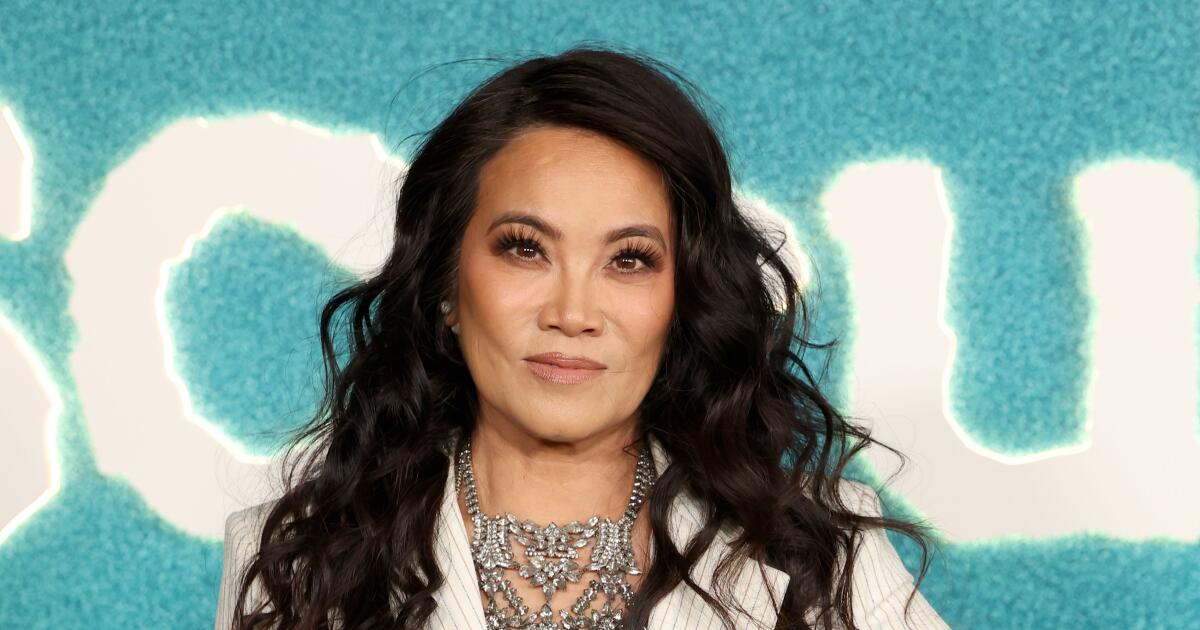
‘Dr. Pimple Popper’ Sandra Lee had a stroke last fall. Here’s how the TV doc is bouncing back
-

 Politics4 days ago
Dem fundraising giant in the hot seat as GOP lawmakers demand answers over dodged subpoena
-

 Health1 week ago
Woman discovers missing nose ring traveled to her lungs, causing month-long cough
-

 Politics7 days ago
Trump blasts Spanberger ahead of Virginia meetings, says state faces tax base exodus like New York, California
-

 San Francisco, CA6 days ago
President Trump terminates Presidio Trust
-

 Technology1 week ago
Is the ‘Holy Grail of batteries’ finally ready to bless us with its presence?