Sports
Reflections on Pete Rose, the Hall of Fame and the spot where his plaque will never hang


I know exactly where Pete Rose’s Hall of Fame plaque should have been hanging — for the past three decades.
You’d have found it in the middle of a powerhouse cluster in the plaque gallery — nestled in between the plaques of Tom Seaver and Reggie Jackson. Among others.
Thousands of baseball fans would have gawked at it by now. I can still imagine them, reading that plaque and trying to comprehend that more than 23,000 men have played in Major League Baseball — and Pete Rose got more hits than any of them.
But that’s what could have and should have happened, in a What-If World in which the Hit King was known only for those 4,256 hits and not for … well, so much else.
For three decades, it has saddened me to gaze at that spot on the wall in Cooperstown, N.Y., and reflect on why Rose’s plaque was missing from this Land of the Legends. And on Monday, that sadness only grew, as the news spread that Rose had died, at age 83.
I’ve said and written many times that Pete Rose was the saddest baseball story I ever covered. Now let me explain where that sadness comes from. Like so many others who knew him, it comes from the inescapable thought that his story shouldn’t have ended this way.
Pete Rose was so good at baseball. But more than that, it was so much fun to watch him play baseball. He was a daily fireball of dust and dirt, line drives and headfirst bellyflops, quips and quotes that made you laugh out loud.
He was a Rookie of the Year at 22, an MVP at 32 and still the league leader in hits at 40. The Pete Rose Show was something, all right.
He got a hit in 44 games in a row. He passed Stan Musial to set the all-time National League record for hits. He passed Ty Cobb to lead the whole continent in hits. He was a walking, talking, baseball history museum. And he knew everything about everything that anyone could possibly have stuffed inside that museum.
He was the most magnetic baseball figure of my lifetime. And I don’t say that casually. I’ve thought about this for years. We couldn’t stop watching Pete Rose any time he set foot on a baseball field. We couldn’t stop talking about him when he stepped off that baseball field.
He had an infectious smile. He sprinted to first base after all 1,566 walks. He could turn on his nightclub act and entertain you any time that came in handy. He could make himself the center of the baseball universe. He was the most powerful presence in every room he ever entered.
If only we’d spent the last few decades talking about that guy.
But once the truth began to seep out about that other world Rose lived in, it would never be the same. If only there had never been such a thing as gambling. If only the Hit King hadn’t gravitated toward so many of the unsavory figures in that other world. If only he hadn’t left so many other troubling allegations in his wake, particularly involving his treatment of women. If only …
If only he’d understood that he wasn’t bulletproof. If only he’d taken it all more seriously when the commissioner, Bart Giamatti, asked to talk with him about these gambling allegations the commissioner’s office had caught wind of. If only that had been a wake-up call … instead of the impetus for the suspension that would define Pete Rose for the rest of his life.
It’s now 35 years since I sat in that ballroom in New York where Giamatti announced that he was banning “Mr. Rose” for life for gambling on his own team. I’ll never forget the murmur that rippled through that room as the commissioner uttered those words on Aug. 24, 1989. How could this be happening – Pete Rose’s career ending not on a ballfield but in a ballroom?
That felt all wrong — but not because Giamatti’s decision was wrong. Because the man he was suspending had made so many wrong turns and so many wrong decisions that he brought that fate on himself.
Except it turned out that was not the end of the story. Over the next 15 years or so, Rose had his chances maybe not to get reinstated and work in baseball, but to at least get himself onto a Baseball Hall of Fame ballot. Of course, you know how that worked out.
He had so many chances to save himself. But whatever it was he needed to do to make that happen, it felt as though he did the opposite. Over and over and over again.
Pete Rose connects for his 4,192 career hit to surpass Ty Cobb as baseball’s Hit King. (Bettmann / Getty Images)
In 2002, his friends, Mike Schmidt and Joe Morgan, arranged a secret meeting between Rose and Bud Selig, then the commissioner of baseball. The Hit King had to know he would never have a greater opportunity than this one.
Selig spelled out what baseball expected of him if the league was even going to consider adjusting his life sentence. Rose would need to stop gambling — all the gambling. He would need to stop hanging out at all those casinos and racetracks.
And finally, there was this: He would need to hold a press conference — to admit to his “crime,” to admit that yes, he’d bet on baseball, to apologize to everyone he’d betrayed and to promise none of this would ever happen again. They shook hands. And then …
Rose walked out of that meeting and headed directly for an appearance at a sports book in Las Vegas. The commissioner and those around him were furious. Rose’s fate was sealed forever that day. It’s hard to argue it was anyone’s fault except his own.
I’ve known since then exactly how this saga was going to end. I’ve known since then that Pete Rose’s Induction Day in Cooperstown would never arrive. I’ve known since then that there would always be that spot in the gallery where his plaque would never hang. I’ve known since then that I’d be writing this column, on the day he died.
But knowing this was coming doesn’t make it any less sad.
Can you feel that sadness and yet understand that no one was more responsible for how this ended than Rose himself? I believe you can. Why can’t both things be true? I think it’s possible — even sensible — to have two sets of Pete Rose memories.
The hits, the hustle, the records, the indelible moments, the laughs, the fun that flowed from watching the Hit King play baseball — I’m not banning those for life. I’ll think of them forever and smile.
But the turn the rest of his life took — why would I not look at that with sadness? I think about what should have been, and I wish he’d done so many things differently.
It’s strange to think now that he was suspended “for life” by Giamatti. And now that the “lifetime” part of his suspension no longer applies, does that mean that someday, there could be a door the league might open to allow Pete Rose a place in the Hall?
Why not? It never made sense to me that the Hall of Fame wouldn’t find some sort of way to honor the man who got more hits than anybody who ever stood in a batter’s box.
Why isn’t it possible to celebrate all the hits while honestly acknowledging the other side of the story? Why can’t his plaque do both? That’s what I’d do if I was the “Plaque Czar.”
But you know and I know that’s not what will happen. I’ve met many writers who feel as though Rose served his time, so if he ever appeared on our ballot, they’d vote for Pete Rose, the Hit King, even if they had issues with Pete Rose, the Bet King. But it’s a waste of time even to think about that. There’s a better chance of Taylor Swift appearing on our ballot than there is of Rose ever appearing on the writers’ ballot.
And even if Rob Manfred or some future commissioner were ever to change his mind, what version of any veterans committee would ever elect him? Barry Bonds and Roger Clemens found out two years ago that their door is still slammed shut. So why would we think Rose would be any different?

Could Pete Rose end up in Cooperstown? At the moment, it’s difficult to see a pathway. (Getty Images)
And now that he’s gone, it could never carry the same meaning anyway. I’ve always wondered what Pete Rose’s Induction Day would have looked like. Haven’t you? How many baseball fans would have spread out on those Cooperstown hills to hear that speech?
What would he have said that day? What would the other Hall of Famers have said about him? How many would have found something else to do that weekend? It would have been an Induction Day unlike any other — one we would have talked about for decades.
Just like the Hit King himself.
It’s going to take a little while for this to sink in. For as long as I’ve been covering baseball, there has always been Peter Edward Rose to make our lives far more interesting. He was always there, any time we needed a column topic on a slow day. And everyone who knew him had a story to tell.
Now there’s one thing I know for sure. I’ll never forget the life and times of Pete Rose — but especially when I walk through the halls of Cooperstown and stare at that spot where his plaque should hang.
Required reading
(Top photo of Pete Rose in 1984: George Gojkovich / Getty Images)



NEWYou can now listen to Fox News articles!
Max Verstappen snatched the torch from Lewis Hamilton and became one of the most unstoppable Formula 1 drivers in the sport from 2021 to 2024.
The 2025 and 2026 seasons have been a struggle for the Red Bull racer. He finished second to McLaren’s Lando Norris in the drivers’ standings last season, ending his streak of world championships, and has yet to finish in the top five this year.
Red Bull driver Max Verstappen of the Netherlands steers his car during the Japanese Formula One Grand Prix at Suzuka in central Japan, Sunday, March 29, 2026. (AP Photo/Hiro Komae)
After finishing eighth in the Japanese Grand Prix, Verstappen suggested he was contemplating retirement at the age of 28.
“Privately I’m very happy,” Verstappen told the BBC. “You also wait for 24 races. This time it’s 22. But normally 24. And then you just think about is it worth it? Or do I enjoy being more at home with my family? Seeing my friends more when you’re not enjoying your sport?”
He made clear he was suggesting that 2026 could be his final season.
“I want to be here to have fun and have a great time and enjoy myself. At the moment that’s not really the case,” he said. “Of course I do enjoy certain aspects. I enjoy working with my team. It’s like a second family. But once I sit in the car it’s not the most enjoyable unfortunately. I’m trying. I keep telling myself every day to try and enjoy it. It’s just very hard.”
ISRAELI RACING STAR ‘NERVOUS’ AS FAMILY DEALS WITH IRAN’S RETALIATORY STRIKES, EXPRESSES HOPE FOR REGION
Red Bull driver Max Verstappen, right, of the Netherlands and Mercedes driver Kimi Antonelli of Italy talk during the drivers parade ahead of the Japanese Formula One Grand Prix at Suzuka in central Japan, Sunday, March 29, 2026. (AP Photo/Eugene Hoshiko)
Part of the struggles for Verstappen has been trying to get acclimated to the regulation changes.
“I can easily accept to be in P7 or P8 where I am,” he said. “Because I also know that you can’t be dominating or be first or second or whatever, fighting for a podium every time. I’m very realistic in that and I’ve been there before. I’ve not only been winning in F1.
“But at the same time when you are in P7 or P8 and you are not enjoying the whole formula behind it, it doesn’t feel natural to a racing driver,” he continued. “Of course I try to adapt to it, but it’s not nice the way you have to race. It’s really anti-driving. Then at one point, yeah, it’s just not what I want to do.”
Maybe a break in the schedule will help clear Verstappen’s head.
Formula 1 will have a few weeks off as two races that were set for April in Bahrain and Saudi Arabia were canceled because of military operations in Iran.
Red Bull driver Max Verstappen of the Netherlands leaves during the qualifying session of the Japanese Formula One Grand Prix at the Suzuka Circuit in Suzuka, Japan, Saturday, March 28, 2026. (Franck Robichon/Pool Photo via AP)
CLICK HERE TO DOWNLOAD THE FOX NEWS APP
The next race is set for May 3 in Miami.
The Associated Press contributed to this report.
Follow Fox News Digital’s sports coverage on X and subscribe to the Fox News Sports Huddle newsletter.
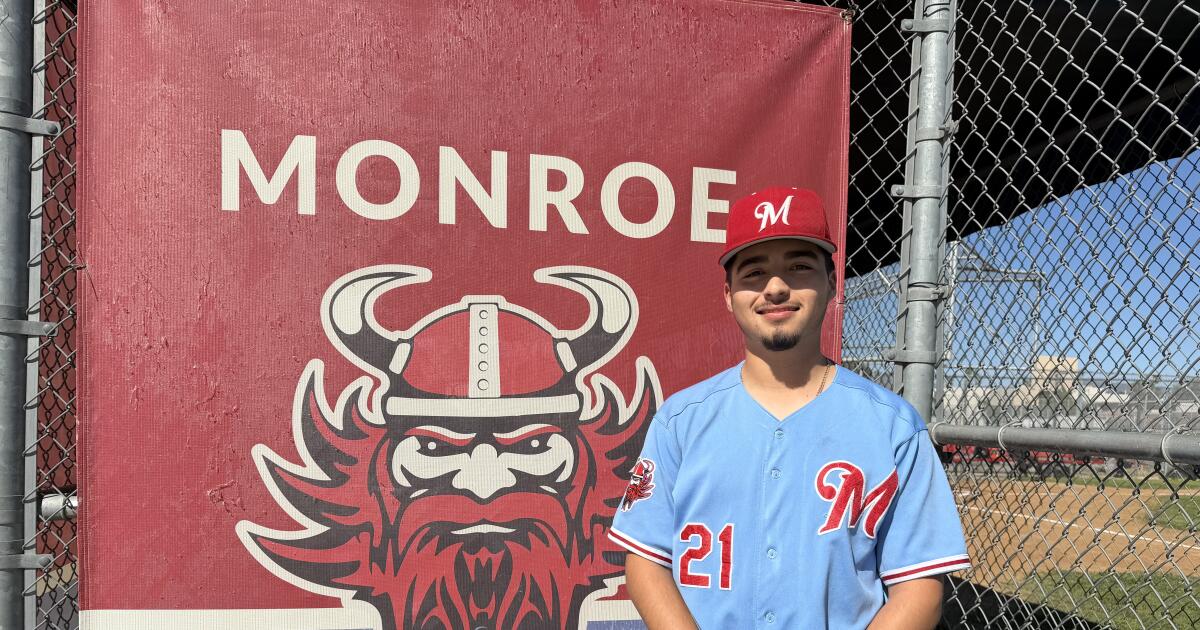
It’s an hour before Monroe High’s baseball team takes infield practice. In the dugout dressed in his uniform, Miguel Gonzalez has his scissors out giving a free haircut to a teammate.
“Ten out of 10,” infielder Alexander Hernandez said when describing Gonzalez’s barber skills.
His pitching skills aren’t bad either. He struck out 12 in six innings in his season debut. He’s 5-0 with a 0.69 ERA. He’s a four-year varsity player for the surprising Vikings, who are 13-1 to start this season under second-year coach Eddie Alcantar.
The fact that Gonzalez is still playing might come as the biggest surprise if you knew all the responsibilities he faces as an 18-year-old.
Alcantar was getting worried last January when Gonzalez didn’t show up for winter workouts.
“I have a rule if you don’t show up for practice, you don’t play,” Alcantar said.
They finally met and Gonzalez revealed he’s been too busy working as a barber. And then came the big news: He’s going to become a father in July.
The Monroe High baseball team is off to an 13-1 start.
(Eric Sondheimer / Los Angeles Times)
It’s a delicate balancing act between work, school, baseball and the seriousness of being a parent as a teenager.
“I’ve been able to figure scheduling little by little,” Gonzalez said. “I do sleep. Maybe five hours.”
Gonzalez said he worked seven days a week as a barber during the summer. He’s been saving for his future while also making sure he did not have to ask his parents for money. He works weekends and sometimes has to leave practice after an hour for work.
As far as baseball, he added a slider this season, picked up some velocity and tries to throw three pitches for strikes.
Against Eagle Rock, he struck out 10 and gave up two hits in a 3-1 win. Against Arleta, he struck out 10 in six innings during a 6-1 victory with one walk. Against Westchester, he got two outs — both strikeouts — in a 3-1 win. Against Vaughn, he gave up two hits in six innings of a 2-0 victory..
Monroe, which used to be a City Section powerhouse in the 1970s when Denny Holt was head coach, also has received a strong season from junior Luis Martinez, who has 21 hits and is batting .500.

Pitcher Miguel Gonzalez has helped Monroe to an 13-1 start with a 5-0 record and 0.69 ERA.
(Eric Sondheimer / Los Angeles Times)
He said his parents have been supportive: “They have told me it’s a really big responsibility.”
After high school, he plans to go to an occupational school to learn more about being a barber. He’d love to continue playing baseball, but that will depend on his development and his priorities. So far, his balancing act is keeping him levelheaded and determined.
He’s been working since he was 5 when he helped his father in landscaping. He switched to cutting hair and loves it. His clients swear by him.
“He’s a good kid,” Alcantar said.

NEWYou can now listen to Fox News articles!
For the first time in more than two decades, the Illinois men’s basketball team will still be dancing when the Final Four tips off.
Iowa’s underdog run in the NCAA Tournament ended Saturday with a 71-59 loss to a dominant Illinois team. Before Illinois could cut down the nets at Houston’s Toyota Center, a buzzer malfunction caused a loud, roughly 10-minute delay.
The buzzer initially sounded signaling the end of a media timeout with just under eight minutes remaining in the first half. The horn continued blaring for about another seven minutes.
A referee talks with the scorer’s table during an official’s timeout due to a broken shot clock horn during the first half of an Elite Eight game between Iowa and Illinois in the NCAA Tournament Saturday, March 28, 2026, in Houston, Texas. (AP Photo/Ashley Landis)
Players stood on the court ready to play for a couple of minutes before both teams started to warm up as the buzzer continued to sound.
It was finally silenced, to cheers from the crowd, but then the main scoreboard and video screen that hangs over the middle of the court went dark.
The game ultimately resumed with the big scoreboard still off. Two smaller scoreboards at each end of the arena were working.
Freshman guard Keaton Wagler scored 25 points to help secure Illinois’ first Final Four berth since 2005.
Keaton Wagler (23) of the Illinois Fighting Illini dribbles against Isaia Howard (23) of the Iowa Hawkeyes during the first half in the Elite Eight of the 2026 NCAA Tournament at Toyota Center March 28, 2026, in Houston, Texas. (Alex Slitz/Getty Images)
This will be the sixth overall trip to the Final Four for Illinois, which has never won a national title. The Fighting Illini will face either Duke or UConn next week in Indianapolis.
The Associated Press contributed to this report.
Follow Fox News Digital’s sports coverage on X, and subscribe to the Fox News Sports Huddle newsletter.

Massachusetts bakery that made signature pizza trays for more than 100 years closes for good

Suing Fleet Farm: How Minnesota pierced federal immunity for the gun industry

Lawmakers signal K-12 teachers will get $2,000 raise, first pay increase since 2022 – SuperTalk Mississippi

Gov. Kehoe announces mid-Missouri gubernatorial appointments

Montana Rescue Mission, former counselor, deny negligence accusations

Florida High School Football Rankings: Top 25 teams – Oct. 21

How old is Bo Nix? What to know about Oregon quarterback ahead of 2024 NFL Draft

Cleary's 21 help Le Moyne down Central Connecticut State 69-64 in OT

99th annual Pony Swim held in Virginia

Indiana Members Credit Union announced as new anchor tenant at Bottleworks District

Scathing report claims nation’s oldest labor union ‘betrayed’ MAGA members through ‘shocking’ spending

Republican US lawmaker demands Congress vote on any Iran troop deployment

So you went to a No Kings protest. Now what?

JD Vance says he was ‘obsessed’ with UFOs, believes aliens are actually ‘demons’
The EU's recipe for trade deals : easy on beef, tough on wine
-

 Sports1 week ago
IOC addresses execution of 19-year-old Iranian wrestler Saleh Mohammadi
-

 New Mexico1 week ago
Clovis shooting leaves one dead, four injured
-

 Miami, FL3 days ago
Jannik Sinner’s Girlfriend Laila Hasanovic Stuns in Ab-Revealing Post Amid Miami Open
-

 Tennessee6 days ago
Tennessee Police Investigating Alleged Assault Involving ‘Reacher’ Star Alan Ritchson
-

 Minneapolis, MN3 days ago
Boy who shielded classmate during school shooting receives Medal of Honor
-

 Politics1 week ago
Schumer gambit fails as DHS shutdown hits 36 days and airport lines grow
-

 Technology1 week ago
YouTube job scam text: How to spot it fast
-

 Science1 week ago
Record Heat Meets a Major Snow Drought Across the West