Business
Anthropic shuts down Mythos access after sweeping U.S. order


Anthropic PBC has disabled access to its most advanced artificial intelligence models, including Mythos, following an unprecedented order by the Trump administration to keep the technology out of the hands of all foreign nationals.
The U.S. government told Anthropic to suspend access to the Fable 5 and Mythos 5 models by any foreign national “whether inside or outside the United States,” citing national security concerns, the company said in a statement.
A U.S. official confirmed that the Commerce Department sent the letter. The model developer has since shut off access to both systems to all customers to ensure compliance.
Never before has the U.S. government taken such sweeping measures to rein in foreign access to frontier AI models developed by an American company. The Trump and Biden administrations have limited access abroad to other consequential technologies such as semiconductors and supercomputers, and some have debated the merits of blocking access to AI models. But restrictions on the software itself have raised constitutional and commercial concerns.
Anthropic said it believes the U.S. government issued the order after discovering that it’s possible to “jailbreak,” or bypass the guardrails, of Fable 5, a recently released version of Mythos that the company blocked from carrying out cybersecurity tasks.
“We disagree that the finding of a narrow potential jailbreak should be cause for recalling a commercial model deployed to hundreds of millions of people,” Anthropic said in its website post. “If this standard was applied across the industry, we believe it would essentially halt all new model deployments for all frontier model providers.”
Researchers at Amazon.com Inc. had conducted jailbreak research that revealed some vulnerabilities in Anthropic’s model, according to a report in the Wall Street Journal.
Amazon and the U.S. government were in contact about the vulnerability before the controls were imposed, according to people familiar with matter who were granted anonymity to discuss sensitive conversations. Amazon Chief Executive Andy Jassy was involved in those exchanges, one of the people said. The Information reported earlier that Jassy raised concerns to senior U.S. officials.
An Amazon spokesperson said it’s not uncommon for governments to consult with the company on security risks, but declined to share details of any such discussions.
The government’s move to so widely restrict access to a set of AI models in the name of national security threatens to set a precedent for all major AI model developers including OpenAI, Alphabet Inc.’s Google and Meta Platforms Inc. Industry leaders such as Nvidia Corp. Chief Executive Officer Jensen Huang and OpenAI CEO Sam Altman have in the past encouraged the US government to instead promote worldwide adoption of American AI systems and protect the nation’s lead.
“For anyone who was naive and perhaps hoping that this leverage wouldn’t be exerted, it’s a massive wake-up call,” Aidan Gomez, the co-founder of Cohere Inc., a Nvidia Corp.-backed AI startup, said Saturday in an interview. “No one can deny it any more.”
Anthropic said it received the government order at 5:21 p.m. New York time on Friday. The end-of-day directive runs counter to earlier statements, as well as an executive order recently signed by President Trump, which suggested the administration wouldn’t pursue a licensing regime for model reviews.
Friday’s directive also threatens to escalate long-standing tensions between Anthropic and some within the Trump administration. Earlier this year, the AI developer clashed with the Pentagon over the use of its technology for military and surveillance purposes. The administration declared the company a U.S. supply-chain risk as a result of the blowup and ordered U.S. agencies to phase out the use of its products.
Privately held Anthropic, which has long positioned itself as a more responsible AI developer, first released its Mythos model in April to a very limited group of companies and institutions, warning that its ability to find cybersecurity vulnerabilities made it too risky to distribute more widely.
There were signs that the limited release was working to ease tensions between Anthropic and the Trump administration: In April, the U.S. government was preparing to make a version of Mythos available to major federal agencies, Bloomberg previously reported.
Mythos also accelerated the Trump administration’s efforts on AI policy, which included the recent executive order that called for voluntary model review. That order explicitly said that nothing in it should be construed as creating a mandatory licensing regime.
David Sacks, Trump’s former AI czar and current co-chair of the President’s Council of Advisers on Science and Technology, said that Anthropic refused to fix a jailbreak of the guardails in its Fable model.
“The Admin’s hope now is that Anthropic remediates the safety issue, the export control is lifted, and Fable goes back into general release,” he wrote in a post on X. “The Admin wants all of this to happen as soon as possible. It is frankly bewildered that Anthropic hasn’t wanted to comply with safety requests that it previously said were its highest priority.”
The latest government restriction is colliding with a race among U.S. developers to deliver the most advanced AI models and prove to their investors that the technology can turn a profit. Both OpenAI and Anthropic are seeking initial public offerings as soon as this year, following SpaceX’s own historic IPO.
The rush to deliver the most cutting-edge AI models spurred Anthropic itself to post a lengthy blog earlier this month, calling for the creation of a system in which governments and AI developers collectively decide when to slow work on the technology to stave off the risks it may pose.
“It would be good for the world to have the option to show or temporarily pause” AI work that may be dangerous, the company said in the post at the time. AI is advancing to the point where the technology can make human work thousands of times more efficient or even replace it, creating a new set of risks, the company said.
The European Union’s executive arm said that it’s assessing Anthropic’s statement and is continuing to talk to allies about the potential risks and cybersecurity concerns related to powerful new AI models. The European Commission added that the latest developments underline Europe’s need for technological sovereignty.
‘“s a person in the field, I’m not particularly thrilled to see this,” said Cohere’s Gomez. “I don’t think this is partnerly, I don’t think this is the right thing to do for the broader technological alliances that have developed over the course of the past 80 years.”
Eastland and Lowenkron write for Bloomberg. With assistance from Shirin Ghaffary, Yi Wei Wong, Gian Volpicelli, Spencer Soper and Thomas Seal.

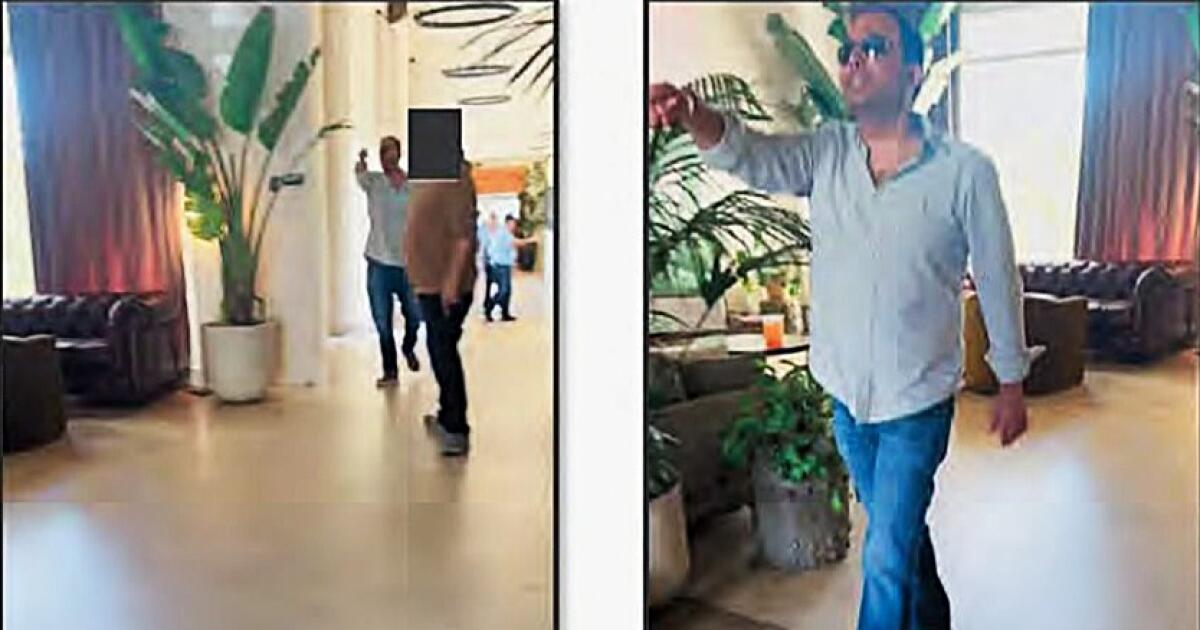
An Orange County real estate investor accused of criminally defrauding an Arizona bank of nearly $100 million pleaded not guilty Monday and remains in custody.
Mahender Makhijani, 44, of Corona del Mar — who also was ordered by an arbitrator to pay $1.34 billion in a separate civil fraud case — was arraigned in Santa Ana federal court on two charges.
He is accused of bank fraud and making a false statement to a bank in a June 8 case involving a $100 million real estate loan made by Phoenix-based Western Alliance Bank. He was taken into custody on June 10.
Makhijani is accused of providing bogus collateral for the October 2024 loan now in default. In a civil lawsuit, Western Alliance said the outstanding balance as nearly $99 million.
Prosecutors say he falsified title insurance policies that showed the bank would have a first lien on the underlying collateral if the loan went bad, when in fact it did not.
A trial was set for August 11 before U.S. District Judge David O. Carter in Santa Ana.
Michael Schachter, his criminal defense attorney, did not respond to messages seeking comment.
In the civil case, an arbitrator in May ordered Makhijani to pay Laguna Beach real estate mogul Mohammad Honarkar $1.34 billion after ruling he had fraudulently induced him into a 2021 joint venture — and then wrested control and lost to creditors more than two dozen properties Honarkar had owned.
Makhijani has not been criminally charged in that case, but prosecutors alleged in an affidavit in support of the bank fraud charges that he used “force and threats” in his dealings with Honarkar and others — including taking over the landmark Hotel Laguna in 2023 that Honarkar was renovating.
Prosecutors sought to hold Makhijani without bail after his arrest.
The affidavit noted he is a legal Indian immigrant with a home and bank accounts in that country, has access to private jets and threatened to “run away” if caught in a difficult situation.
The request was denied and he was granted $500,000 bail.
However, Makhijani remains in custody after a hearing sought by prosecutors last month before Magistrate Judge Autumn Spaeth.
The judge declined to accept a $450,000 cashier’s check submitted by a Makhijani associate for the bail, finding insufficient proof the source of the funds was legitimate, according to court records.
Makhijani is not prominent outside Orange County real estate circles, but he established a thriving distressed-assets business over the last decade that attracted prominent Southern California real estate investors.
Prosecutors said it paid for a lifestyle that included two multimillion-dollar homes in Corona del Mar, a luxury apartment in Newport Beach and various luxury vehicles.
As of last month, prosecutors had not fully traced his assets, which they believe are not held in his name and some of which may be in India.
The businessman employed an array of shell companies and strawmen to sign documents on his behalf, and to stand in for him as operators of his companies, according to the affidavit.
Makhijani told an associate he took extra precautions because wanted to insulate himself from litigation and that “they were sharks in the distressed world who took advantage of people,” the affidavit stated.
Business
Many indie festival films struggle to get distribution. Alamo Drafthouse is trying to change that

Dine-in movie theater chain Alamo Drafthouse Cinema is launching a new initiative to show unreleased independent films that had successful festival runs, a move that comes as specialty films have struggled to gain distribution.
The Alamo Exclusives program, announced Wednesday, will give limited theatrical runs to films that showed at festivals including Sundance, the Toronto International Film Festival, Tribeca Festival and South by Southwest festival, as well as Alamo’s own Fantastic Fest.
The idea is to help showcase films that received critical acclaim, but did not secure distribution or acquisition deals. The chain will not acquire these films, but instead will enter into agreements with filmmakers to exhibit their films on Alamo Drafthouse screens. By showing these films to audiences on the big screen, these films could get the momentum they need for further opportunities.
The program’s first film will be the documentary “Butthole Surfers: The Hole Truth and Nothing Butt,” which debuted last year at South by Southwest and chronicles the history of the punk rock band.
The film will be shown in Alamo Drafthouse theaters for a limited time later this summer.
The Austin-based chain, which is owned by Sony Pictures, has a long history of curating indie films for its audiences, giving Alamo Drafthouse confidence that its viewers want to see these kinds of movies, company chief executive Michael Kustermann said in a statement.
“Time and again, they’ve shown they’ll come out to support bold, original films when given the opportunity,” he said. The new Alamo Exclusives “gives us another way to champion filmmaker-driven films that deserve to be discovered and connect them with the wider Alamo Drafthouse audience.”
The initiative comes at a difficult time for indie films. Since the pandemic upended the movie business, traditional studios and distributors have had less appetite for risk, including betting on smaller indie films out of festivals.
And as the 2023 dual writers’ and actors’ strikes thinned out theatrical lineups, that aversion to uncertainty became a push for reliable and profitable hits.
“Too many incredible films premiere at festivals and then never receive the theatrical life they deserve,” Lisa Dreyer, director of Fantastic Fest and film innovation at Alamo, said in a statement. “We are actively searching for films across all genres, from horror to comedy, to everything in-between, to champion in this new, exciting way.”
The recall of a popular chip brand over salmonella concerns was recently upgraded to the U.S. Food and Drug Administration’s highest level, just ahead of the Fourth of July holiday and countless backyard barbecues.
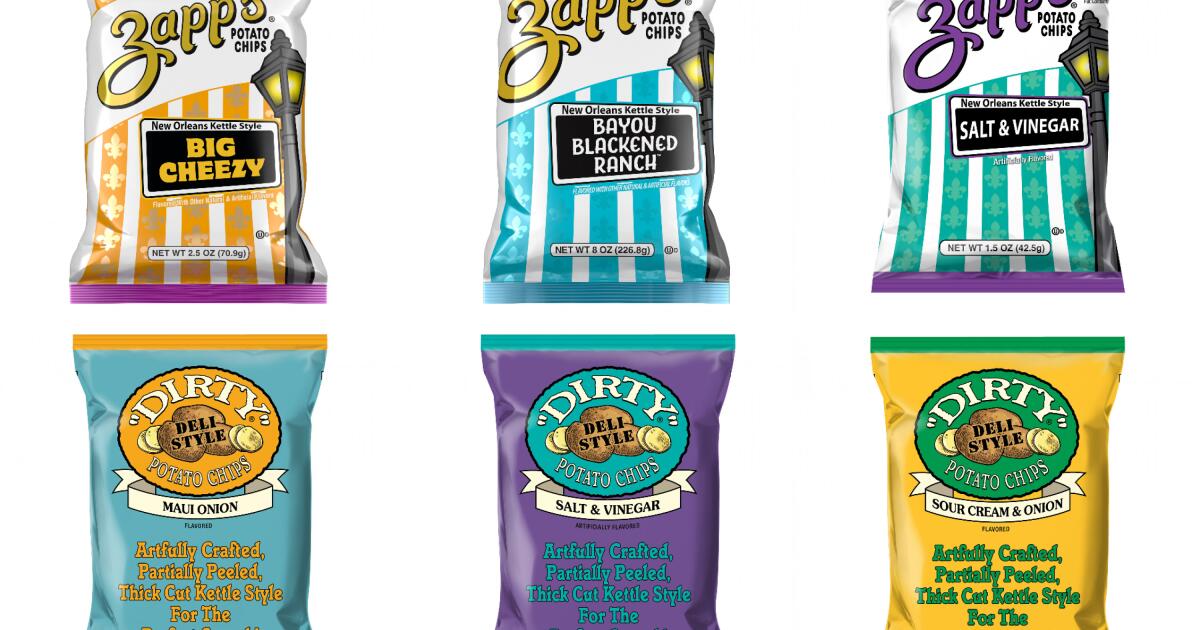
On June 24, the FDA designated the recall of several varieties of Zapp’s and Dirty brand potato chips as Class I, meaning it’s “a situation in which there is a reasonable probability that the use of or exposure to a violative product will cause serious adverse health consequences or death.”
FDA has classified the following items as Class I:
Zapp’s
- 1.5-ounce Zapp’s Bayou Blackened Ranch Kettle Chips
- 2.5- and 8-ounce Zapp’s Bayou Blackened Ranch Potato Chips
- 1.5- and 8-ounce Zapp’s Big Cheezy Potato Chips
Dirty
- 1.5- and 2-ounce Dirty Brand Salt and Vinegar Potato Chips
- 2-ounce Dirty Maui Onion Chips
- 2-ounce Dirty Sour Cream and Onion Potato Chips
The chips are produced by Utz Quality Foods, LLC, which on April 28 issued a recall after learning “that a seasoning containing dry milk powder, sourced from California Dairies, Inc. and supplied by a third-party supplier, may contain the presence of Salmonella.”
Salmonella can lead to sometimes deadly infections in elderly people, young children and those with weakened immune systems, according to the FDA.
More than 680,000 bags are included in the recall.
Anyone who has these products should not eat them and should discard them immediately.
What to look for
Salmonella is a foodborne illness that can be fatal to young children, pregnant women, older adults and people with weakened immune systems, according to the National Institutes of Health.
Symptoms may develop 12 to 72 hours after infection, according to the FDA.
The FDA said that people with strong immune systems infected with salmonella may experience fever, diarrhea (which may be bloody), nausea, vomiting and abdominal pain. The illness can last four to seven days.
In rare cases, the infection may produce more severe illnesses such as arterial infections, endocarditis and arthritis, the agency added.
What to do if infected
If you contract salmonella, the Centers for Disease Control and Prevention recommends drinking plenty of fluids to prevent dehydration.
The CDC advises consulting a doctor before taking antidiarrheal medicine or antibiotics. If severe symptoms continue after two days, seek medical help, the agency says.
Because those with diarrhea can spread salmonella to others, it’s also recommended to avoid sharing food or preparing meals for others, sexual contact and swimming in public pools, and to stay home while sick.
Times staff writer Jasmine Mendez contributed to this report.
-

 Technology1 minute ago
Starship delivery robots leave campuses for cities
-
Business6 minutes ago
Orange County real estate investor pleads not guilty in $100 million bank fraud case
-
 Entertainment13 minutes ago
Tom Sandoval’s ex Victoria Robinson accuses him of abuse; her restraining order is denied
-
 Politics21 minutes ago
Trump heads to NATO as tensions simmer with Europe
-
 Science28 minutes ago
New FireSat satellites promise faster wildfire detection over California and beyond
-
 Sports31 minutes ago
U.S. hopes of a historic World Cup run on home soil shattered in loss to Belgium
-

 World43 minutes ago
Cuba sees nationwide power blackout for third time in six months
-
 News1 hour ago
The U.S. men’s run at the World Cup ends with a 4-1 Round of 16 loss to Belgium


Pingback: Anthropic shuts down Mythos access after sweeping U.S. order - News Area