Sports
Football and CBD: A complicated relationship


A couple of years ago, Hannah Deacon took a call from a football agent.
Deacon, who had no background in football, was surprised. What she did have, however, was a deep knowledge of cannabidiol (CBD), a legalised chemical extracted from cannabis — and this is what the agent wanted to talk to her about. Some of his clients were interested in starting a company selling CBD, which promises to help users overcome stress and anxiety, and he wanted her advice.
Deacon was appalled. It was her impression that the group were trying to make a quick buck out of something they did not understand. She refused to get involved.
“They weren’t passionate about it,” Deacon tells The Athletic. “These are patients’ lives we’re talking about…”
The incident was instructive, both about the controversy attached to discussions around CBD and how football, and footballers, have become one of its biggest marketplaces.
In the UK, former footballers have been at the forefront of marketing CBD, particularly on social media. Former Premier League players such as Matthew Le Tissier, John Hartson, Paul Merson, John Aldridge and Dean Windass all say it has helped transform their lives; from a more recent vintage, the ex-England and Liverpool goalkeeper Chris Kirkland is also a strong advocate. Former England international David Beckham, meanwhile, had a minority stake in the cannabinoid product firm Cel AI before selling in February.
David Beckham has sold his stake in a CBD products firm (Vittorio Zunino Celotto/Getty Images)
In many ways, football is an obvious marketplace for CBD. Former professionals habitually complain of managing pain to some degree because of old injuries, while many have spoken about the mental challenges that come when they no longer have the adrenaline rush of matches that have defined their lives for so long.
Anthony Fowler, the former boxer and cousin of ex-Liverpool and England striker Robbie Fowler, runs Supreme CBD, a company which lists Le Tissier, Merson, Kirkland and Windass as ambassadors. He says former footballers are also dealing with the cold reality that they no longer have their clubs around to solve their aches and pains.
“Footballers get anxiety, like anyone else — arguably more because of the public pressure they’re facing,” he tells The Athletic.

Although Fowler thinks CBD could also help active players with injury prevention, pointing to evidence that it can ease inflammation, active footballers have been less willing to openly talk about any experiences they may have had with CBD — despite the fact it was taken off the banned substance list by the World Anti-Doping Agency (WADA), as well as United Kingdom Anti-Doping (UKAD), in 2018.
According to one football agent, who would like to remain anonymous to protect the identity of his clients, the fact that cannabis remains prohibited explains why current players are reluctant to admit trying it. Although it seems unlikely CBD will get banned again, if it did, that player’s reputation could be damaged by association. “There isn’t enough distance yet since coming off the banned list,” says the agent.
CBD is not a new product. It is an active ingredient in cannabis and derived either from the hemp plant or created artificially in a laboratory. As opposed to tetrahydrocannabinol (THC), another part of the cannabis plant, it does not create a ‘high’ and is also non-addictive.
CBD’s medicinal use, largely to treat minor pain or ease anxiety, can be traced to Central Asia, where a study in the journal Science Advances recently suggested it formed part of burial rituals as early as 750 BC.

Hemp grows in Lincolnshire, England, destined for use in CBD oil (Christopher Furlong/Getty Images)
More recently, CBD has become a commercialised product, sold on the open market usually in the form of gummies — small sweets that can be chewed — capsules or oil infused with CBD, which can be applied to the tongue. Vapes, creams and even bath bombs containing CBD are also available.
Its users can be evangelical about what they believe it has done for them. Aldridge, the former Liverpool and Republic of Ireland striker, insists he is sleeping better than ever since using CBD but a significant amount of his social media timeline involves responses to accusations that he is only promoting the product due to alleged financial incentives coming his way. Aldridge is an ambassador for Supreme CBD.
In September, Aldridge described himself on X as a “man of integrity” insisting he wouldn’t advise others if it didn’t work. “Thousands of people” were now using it according to Aldridge, who claimed they were getting “brilliant results”.
Aldridge told The Athletic that he had encouraged family and friends to try CBD oil, which has done “wonders” for his life. He says he has struggled for years with carpal tunnel syndrome (a condition that creates numbness in the wrist) as well as back inflammation, but since using CBD he has had fewer problems.
“A lot of people are cynical about it, possibly because of its connection with cannabis,” Aldridge says. “It’s done me no harm whatsoever. I wake up in a much better mood. It agrees with me.”

John Aldridge uses and promotes CBD (Michael Regan/Getty Images)
There are, indeed, many sceptics. A study led by the University of Bath this year found there was “no evidence” that CBD reduced chronic pain, describing it as a “waste of money and potentially harmful to health”.
Sixteen people were involved in this research and the Bath researchers concluded CBD was “no better than a placebo at relieving pain”.
Deacon suggests this is where the conversation about CBD gets confused. She says that while there is anecdotal evidence from some users that CBD can help with mild pain depending on the dosage, chronic pain is a different matter, a problem that is more likely to be managed by controlled use of THC.
According to Deacon, the findings relating to CBD would be different if an assessment was instead made about how it affects stress and anxiety. “Good CBD can have a positive impact on the lives of some people,” she insists.
Deacon’s experience with cannabis is deeply personal. It began when her son, Alfie, suffered from an epileptic seizure at eight months old. Over the next six years, as she became his full-time carer and tried to save his life, they moved from the south of England to the Netherlands, where Alfie started using prescriptive cannabis in an attempt to bring his condition under control. He now plays a fully active role in school and has not had a fit for more than four years.
Having campaigned in the UK to increase awareness about the potential benefits of cannabis, she has since worked with doctors and pharmacies.
“Like any industry, there are responsible companies and less responsible companies,” Deacon explains. “When it comes to the production of CBD, some of the less responsible ones are accused of not paying attention to signposting exactly what is in a product that includes too much THC. So I can understand why current footballers would be reluctant to use it generally.”
Deacon says she does not work with any CBD companies. She stresses the conversation around the compound in football remains controversial because of concerns about its potential risks, quality control and labelling accuracy.
What is undeniable is that CBD is now big business. In 2019, an article in the New York Times suggested that in the United States alone, the CBD industry was projected to be worth $16billion (£12bn) by 2025.
There have since been distribution challenges due to state laws but in 2021, a report commissioned by the Association for the Cannabinoid Industry found the UK’s CBD market had more than doubled in just two years and was now valued at £690m. By 2022, the UK stood as the second-largest consumer cannabinoid market in the world, behind the U.S.
The trigger for CBD going mainstream came in 2018, when the United States passed the Farm Bill under federal law, removing hemp (cannabis with no more than 0.3 per cent of THC) from a list of controlled substances.
Two years later, the Court of Justice of the European Union concluded that CBD should not be considered a narcotic drug and in 2022, CBD was classified as a ‘novel food’ by the European Food Safety Authority (EFSA) and the UK Food Standards Agency (FSA). This created new opportunities for entrepreneurs willing to speculate in an emerging market.
One of them was Anthony Fowler, who won middleweight gold at the 2014 Commonwealth Games in Glasgow. He launched Supreme CBD, which has recently relocated to a bigger site in Liverpool due to its product’s popularity.

Antony Fowler gave up boxing to focus on his CBD business (Adrian Dennis/AFP via Getty Images)
Fowler tells The Athletic that in 2018, while he was still boxing, another CBD company approached him about sponsorship but he was nervous because rule changes had only recently come into place. Reassured, he used it for the first time after suffering from jaw pain following a sparring session in the ring. “It was faster than morphine,” he says.
Fowler launched Supreme CBD in 2020 and says he gave up on boxing because of the scale of interest, with 120,000 potential customers now on the company’s database. Jade Jones, Britain’s Olympic champion taekwondo fighter, is another sportsperson listed as a client on its website.
Fowler claims Supreme CBD’s popularity comes down to pricing, the fact that it has the strongest strain of CBD, imported from Las Vegas, and that his product “has no side-effects. It just makes people feel better”.
He is adamant that he has not targeted the football market, even though former footballers are among his product’s most vocal advocates.
Their promotion has caused its own controversy. In February, Supreme CBD was found to have breached UK Advertising Standards Authority (ASA) rules by not making clear that Le Tissier and Hartson were being rewarded for their posts and for making banned medical claims.
Le Tissier, who acknowledged to the ASA that he receives commission on CBD products sold with his personalised online code, and Hartson, who said Supreme CBD paid him a small amount for the use of his social media platforms but that he was no longer working with the company, said they would clearly label any future posts as marketing material, as did Fowler.
Kirkland, an ambassador for Supreme CBD, insists he had taken his time before drawing any conclusions about what their products could do for him, before using social media to highlight what he had found.
In 2022, Kirkland, who retired in 2016, said in an interview with London newspaper The Times that he was over the worst of an addiction to painkillers that almost destroyed his life, leading to him contemplating suicide.
He explained to The Athletic that he is open to paid promotional work for CBD products, but only if they have affected him positively. He says they have helped treat anxiety. “I’d only ever recommend something that has improved the quality of my life,” he says. “I’ve recommended CBD to friends and family and they’ve had similar experiences to me. It’s something I know works.”
Like Aldridge, he insists, “I have never slept so well in my life,” though since turning to Supreme CBD two and a half years ago, he has also committed himself to an exercise regimen, including ice therapy. “CBD is just one of the things that has made me feel better,” he adds.
Kirkland says he can go weeks without using CBD but sometimes, he will take four to five gummies a day before applying oil to his tongue at night. He has also suggested on social media that CBD has helped ease some of the back problems that led to his painkiller addiction.
CBD has many advocates but there is still unease around its use, especially among sportspeople.
When invited to comment by The Athletic about why CBD was removed from the banned list in 2018, WADA said that following “consultation with scientific, medical and anti-doping experts, including a review of medical and scientific evidence, it was determined that CBD did not satisfy two of three key criteria”.
This related to questions about whether it could 1) enhance sporting performance, 2) represent an actual or potential health risk to the athlete or 3) violate the spirit of the sport. WADA reviews its list of banned substances annually and can add to that list at any time, in exceptional circumstances.
In the UK, at least, CBD’s cause has arguably not been helped by some of its higher-profile advocates backing other, more controversial causes. Le Tissier, one of the earliest champions of CBD’s benefits, has been largely ostracised from football after amplifying a wide range of conspiracy theories online, including denying the war in Ukraine. Fowler, meanwhile, has been a vocal critic of the Covid-19 vaccination programme.
One psychologist with a background in medical science, who spoke to The Athletic on condition of anonymity in the interests of client confidentiality, believes CBD tends to be attractive to people who are already inclined to be anti-establishment and, therefore, wary of the big pharmaceutical companies.

Refills for electronic cigarettes containing CBD in France (Philippe Huguen/AFP via Getty Images)
“The danger is people start putting faith in that instead of traditional research-based evidence, which isn’t sexy and doesn’t sell,” they said. “You’ve got chronic pain? The option is to go on a 16-day management course. Alternatively, you can take these ‘magic drops’ that are new to the market that the authorities don’t really want you to know about.”
Separately, there are concerns over regulation — or a lack of it. “There are a lot of people out there doing the market harm,” Dom Day, a former rugby union player who set up a CBD company, FourFive, with fellow ex-pro George Kruis, told Forbes in 2020. “There’s a lot of press about companies that have way too high THC levels and too low CBD levels.”
There are broader worries about what happens until the industry reaches a point where there is more control. The psychologist contacted by The Athletic describes this period as being like “the Wild West”, referencing examples of CBD companies that are known for putting very low amounts of CBD, or possibly even none, in the product.
“What you don’t want is people putting their faith into something that doesn’t work at the expense of something that really does,” the psychologist added. “You combine that with a lack of regulation, and there’s a problem.”
In 2023, the FSA in the UK attempted to get a grip on the industry by cutting the recommended daily intake of CBD for adults to 10mg. Yet Fowler is confident that regulation will not harm the growth of his business. He believes that greater education on the benefits of CBD will encourage more people to try it.
If that happens, maybe an active footballer will be among them — and should one emerge as an advocate, perhaps we will discover that interest in CBD has not yet peaked.
(Top photos: Getty; Chloe Knott — Danehouse, iStock; design: Dan Goldfarb)
Whatever you’re going through, you can call the Samaritans any time, from any phone, on 116 123 (UK) or 1-800-273-TALK (USA).
FRANK provides a confidential service in the UK to anyone wanting information, advice or support about any aspect of drugs. You can call free in the UK, from any phone, on 0300 123 6600.



NEWYou can now listen to Fox News articles!
Los Angeles Rams star Puka Nacua has reportedly been accused of biting a woman and making anti-Semitic comments, according to TMZ.
The woman made the allegations in a rejected application for a temporary restraining order after an alleged incident on Dec. 31 in Los Angeles.
Nacua’s attorney, Levi McCathern, said, according to TMZ, that “the whole claim is nothing more than a shakedown attempt” and that the bite “left nothing more than a temporary mark.”
NFL Network reporter Jamie Erdahl interviews Los Angeles Rams wide receiver Puka Nacua (17) after the game against the Arizona Cardinals in the second half at SoFi Stadium on Dec. 28, 2024 in Inglewood, California. (Kirby Lee/Imagn Images)
A hearing is scheduled for April 14.
Fox News Digital has reached out to Nacua’s agent and the Rams for comment.
Nacua previously apologized for performing an “antisemitic” act on a YouTube stream in December.
UPSCALE SHOPPING DISTRICT ROCKED BY ALLEGED ANTISEMITIC BEATING AS LAWYER, 2 OTHERS CHARGED
Puka Nacua of the Los Angeles Rams reacts during the second quarter against the Indianapolis Colts at SoFi Stadium on Sept. 28, 2025 in Inglewood, California. (Ronald Martinez/Getty Images)
Nacua discussed touchdown celebrations on YouTuber Adin Ross’ stream, as Nacua’s Rams are set for a Thursday night affair in Seattle against the Seahawks.
Many, however, believed the celebration perpetuated a harmful anti-Jewish stereotype.
In the video, Ross instructed Nacua to spike the ball, flex and then rub his hands together. Ross, who is Jewish, has referred to the movement as his own “dance” or “emote.”
CLICK HERE TO DOWNLOAD THE FOX NEWS APP
Los Angeles Rams wide receiver Puka Nacua reacts following an NFL football game against the Buffalo Bills, Sunday, Dec. 8, 2024, in Inglewood, Calif. The Rams won 44-42. (Eric Thayer/AP Photo)
Nacua received overwhelming pushback and issued an apology Thursday, hours before his Rams took on the Seattle Seahawks.
“When I appeared the other day on a social media livestream, it was suggested to me to perform a specific movement as part of my next touchdown celebration. At the time, I had no idea this act was antisemitic in nature and perpetuated harmful stereotypes against Jewish people,” Nacua said in a “Stand Up to Jewish Hate” graphic. “I deeply apologize to anyone who was offended by my actions as I do not stand for any form of racism, bigotry or hate of another group of people.”
Follow Fox News Digital’s sports coverage on X, and subscribe to the Fox News Sports Huddle newsletter.

HIGH SCHOOL BASEBALL, SOFTBALL SCORES
Tuesday’s Results
BASEBALL
CITY SECTION
El Camino Real 8, Birmingham 3
SOUTHERN SECTION
AAE 19, Victor Valley Christian 5
Adelanto 11, Silverado 3
Alhambra 8, Bell Gardens 0
Aliso Niguel 7, Tesoro 4
Arcadia 10, Pasadena 0
Alta Loma 6, Colony 5
Beverly Hills 5, Lawndale 4
Buena 4, Ventura 0
Burbank Burroughs 6, Muir 0
Cajon 7, Riverside Prep 3
Calabasas 10, Thousand Oaks 9
Capistrano Valley 14, El Toro 8
Capistrano Valley Christian 6, Western Christian 4
Cathedral 1, Bishop Montgomery 0
Cerritos 7, Artesia 0
Charter Oak 13, Walnut 5
Chino 5, Montclair 4
Chino Hills 12, La Serna 3
CIMSA 12, Silver Valley 5
Claremont 12, Rowland 0
Colton 5, Fontana 2
Culver City 11, Inglewood 3
Damien 8, La Habra 3
Desert Christian 6, Vasquez 1
Desert Hot Springs 5, Banning 4
Diamond Bar 7, Knight 0
Don Lugo 11, Diamond Ranch 1
Downey Calvary Chapel 7, Fairmont Prep 6
El Modena 3, Villa Park 0
Elsinore 9, Temescal Canyon 1
Environmental Charter 17, Compton Early College 7
Fallbrook 8, Rancho Buena Vista 5
Firebaugh 6, Lynwood 5
Fountain Valley 1, Corona del Mar 0
Fullerton 7, Ocean View 5
Glenn 4, Whitney 3
Grace 14, Cate 2
Granite Hills 6, Victor Valley 1
Hawthorne 3, Compton Centennial 2
Irvine 3, Woodbridge 2
Laguna Beach 17, St. Margaret’s 2
Laguna Hills 3, Costa Mesa 1
La Mirada 5, Gahr 1
La Salle 15, Gardena Serra 0
La Sierra 11, West Valley 2
Los Alamitos 4, Marina 0
Los Altos 13, West Covina 2
Los Amigos 15, Santa Ana Valley 9
Magnolia 8, Graden Grove Santiago 4
Maranatha 14, Heritage Christian 2
Mary Star of the Sea 23, St. Genevieve 11
Montebello 13, Mark Keppel 0
Murrieta Valley 6, Murrieta Mesa 5
Newport Harbor 9, Edison 0
Norte Vista 22, Bethel Christian 1
Norwalk 7, Mayfair 4
Nuview Bridge 20, California Military Institute 0
Oaks Christian 5, Newbury Park 2
Oakwood 15, Milken 10
Ontario 5, Chaffey 0
Orange 7, Anaheim 5
Oxnard 3, Santa Barbara 1
Oxnard Pacifica 9, Rio Mesa 2
PACS 14, Faith Baptist 3
Paraclete 13, St. Anthony 1
Paramount 9, Dominguez 6
Riverside North 5, Vista del Lago 1
Rosamond 2, California City 1
Royal 8, Foothill Tech 1
Sage Hill 1, Irvine University 0
San Juan Hills 3, Mission Viejo 2
San Marino 4, Monrovia 1
Santa Monica 10, Leuzinger 1
Savanna 7, Loara 5
Schurr 10, San Gabriel 0
Segerstrom 8, Buena Park 6
Shalhevet 7, Animo leadership 0
Sherman Oaks Notre Dame 10, Crespi 0
Sierra Canyon 8, Chaminade 2
South Hills 4, San Dimas 0
St. Bernard 5, Bishop Amat 4
St. Bonaventure 8, Thacher 3
St. Francis 6, Alemany 4
St. Monica 21, Pasadena Marshall 3
St. Pius X-St. Matthias Academy 19, Verbum Dei 0
Tahquitz 3, San Jacinto 1
Temecula Prep 16, United Christian Academy 4
Temecula Valley 13, Chaparral 0
Trabuco Hills 8, San Clemente 1
Tustin 11, Santa Ana Calvary Chapel 6
Village Christian 13, Valley Christian 11
Vista Murrieta 4, Great Oak 2
Warren 2, Bellflower 0
Westlake 2, Agoura 1
Westminster La Quinta 7, Century 2
Whittier Christian 11, St. Paul 3
YULA 8, Santa Monica Pacifica Christian 7
INTERSECTIONAL
Anza Hamilton 17, Bonsall 7
Bishop Union 11, Frazier Mountain 0
Boron 17, Desert 1
Carson 4, Ramona 3
Eastvale Roosevelt 3, Nevada McQueen 1
Esperanza 14, Arkansas Prairie Grove 4
Grand Terrace 6, Nevada McQueen 0
Immanuel Christian 21, Trona 9
Missouri Lincoln 13, Grand Terrace 1
Northview 10, Spanish Springs 4
Oregon Lakeridge 5, La Palma Kennedy 4
Oregon West Linn 3, Citrus Valley 2
Quartz Hill 15, Oregon Bend 2
SOFTBALL
CITY SECTION
CALS Early College 0, East College Prep 0
Central City Value 40, Discovery 11
SOUTHERN SECTION
Alemany 4, Vasquez 0
Aliso Niguel 11, Redondo Union 4
Anaheim Canyon 7, Segerstrom 1
Ayala 5, Bonita 0
Banning 8, Desert Hot Springs 3
Barstow 14, Ridgecrest Burroughs 7
Beaumont 6, Rancho Cucamonga 2
Bell Gardens 14, San Gabriel 3
Bethel Christian 26, Norte Vista 4
California City 15, Rosamond 3
California Military 21, Nuview Bridge 2
Cantwell-Sacred Heart 9, St. Monica 4
Cerritos 11, El Rancho 4
Channel Islands 15, Carpinteria 4
Chino 11, Montclair 0
Chino Hills 12, Temescal Canyon 5
CIMSA 19, Silver Valley 4
Claremont 6, Northview 4
Cornerstone Christian 14, Packinghouse Christian 8
Corona Santiago 8, Colony 5
Covina 4, Buena Park 3
Cypress 8, El Modena 2
Don Lugo 3, Diamond Ranch 2
Downey 10, Corona 2
Edison 9, Corona del Mar 0
El Dorado 3, Yorba Linda 0
El Toro 2, Tesoro 1
Esperanza 21, Troy 2
Fillmore 5, Santa Paula 4
Hart 11, Golden Valley 1
Hawthorne 15, Compton Centennial 0
Hueneme 11, Nordhoff 5
Huntington Beach 17, Fountain Valley 0
La Habra 9, Garden Grove Pacifica 4
Lakewood 15, Long Beach Cabrillo 1
La Palma Kennedy 2, Gahr 0
La Salle 11, Flintridge Sacred Heart 3
Lawndale 30, Beverly Hills 20
Lennox Academy 14, HMSA 3
Long Beach Poly 15, Long Beach Wilson 5
Los Alamitos 10, Newport Harbor 0
Los Altos 12, Alta Loma 0
Maranatha 15, Duarte 5
Mary Star of the Sea 21, St. Anthony 5
Mira Costa 7, South Torrance 2
Mission Viejo 5, Sunny Hills 3
Montebello 10, Mark Keppel 9
Monrovia 4, San Marino 3
Murrieta Mesa 7, Great Oak 0
Murrieta Valley 13, Temecula Valley 2
Oak Park 16, Royal 12
Oaks Christian 9, Newbury Park 3
Ontario 11, Chaffey 1
Placentia Valencia 8, Tustin 4
Ramona Convent 10, Bishop Conaty-Loreto 0
Rio Hondo Prep 12, Mayfield 8
Rio Mesa 14, Oxnard Pacifica 0
Rosary Academy 7, Irvine University 6
Sacred Heart of Jesus 12, St. Pius X-St. Matthias Academy 1
Santa Ana Foothill 6, Crean Lutheran 1
Santa Clara 4, Foothill Tech 2
Santa Monica 8, Leuzinger 4
Saugus 11, West Ranch 8
Schurr 11, Alhambra 1
Serrano 14, Riverside Notre Dame 4
Sierra Canyon 4, Chaminade 3
Silverado 22, Adelanto 3
Simi Valley 8, Camarillo 2
St. Genevieve 18, St. Bernard 3
St. Paul 14, Bishop Montgomery 2
Temecula Prep 16, Santa Rosa Academy 7
Thousand Oaks 30, Calabasas 0
Valencia 8, Castaic 6
Ventura 12, Buena 7
Victor Valley 8, Granite Hills 4
Westlake 1, Agoura 0
Westminster 15 Long Beach Jordan 5
Whittier Christian 16, Village Christian 5
Wiseburn-Da Vinci 22, Downey Calvary Chapel 1
INTERSECTIONAL
Boron 16, Desert 1
Canyon Country Canyon 15, Arleta 5
Compton Early College 23, Environmental Charter 19
Immanuel Christian 12, Trona 10
Jesuit 5, Trabuco Hills 4
Santa Margarita 1, Jesuit 0
Sports
Trump admin says SJSU now faces ‘impending enforcement’ for transgender volleyball scandal conflict

NEWYou can now listen to Fox News articles!
FIRST ON FOX: President Donald Trump’s Department of Education said it has notified San Jose State University (SJSU) that it faces “impending enforcement action” for its “refusal to comply with Title IX.”
SJSU and the California State University (CSU) system filed a lawsuit earlier in March to challenge an Education Department investigation that determined the university violated Title IX in its handling of a biological male transgender volleyball player on a women’s team from 2022-24.
Now, the administration is cracking down against that resistance.
“We have provided SJSU with multiple opportunities to resolve its Title IX violations with common sense actions: separating male and female athletes based on their biological sex, keeping men out of women’s locker rooms and bathrooms, restoring rightfully-earned titles and accolades to female athletes, and apologizing to the women forced to forfeit competitions to protect themselves,” Kimberly Richey, the department’s assistant secretary for civil rights, said in an announcement.
“Yet, SJSU remains obstinate, choosing a radical ideology over safety, dignity, and fairness for its own students. With today’s action, the Department is putting the university on notice: comply with the law or risk losing its federal funding.”
Fox News Digital has reached out to SJSU and CSU for a response.
Brooke Slusser and Blaire Fleming of the San Jose State Spartans call a play against the Air Force Falcons on Oct. 19, 2024, in Colorado Springs, Colorado. (Andrew Wevers/Getty Images)
The conflict between Trump’s administration and the school stems back to the 2024 season, when a national controversy involving transgender player Blaire Fleming triggered an election-cycle media firestorm, all during Trump’s third White House campaign.
The Education Department’s investigation has claimed, “SJSU actively recruited and allowed a male to compete on the women’s indoor and beach volleyball teams and reportedly instructed members of the coaching staff not to tell the female players that the athlete was a male.”
The investigation added that “on multiple occasions, the male athlete spiked the ball so forcefully that it knocked females on the opposing team to the ground.”
One of the standout details of the investigation’s findings was that a female SJSU player “discovered that the male student had conspired to have a member of the opposing team spike her in the face during an upcoming match. SJSU did not investigate the conspiracy, but later subjected this female athlete to a Title IX complaint for reportedly ‘misgendering’ the male athlete when discussing this incident in online videos and interviews.”
Former SJSU co-captain Brooke Slusser has included those allegations in her ongoing lawsuit against representatives of SJSU and CSU.
UNIVERSITY LEADER ADMITS SCHOOLS ARE ‘NOT A POLITICAL PARTY’ IN WARNING TO ELITE CAMPUSES
After SJSU and CSU announced they were suing the Trump administration to challenge the findings, Slusser, and other former NCAA players, came forward about their alleged experience during the scandal, and how it affected them, in recent interviews with Fox News Digital.
Slusser, who shared an apartment with Fleming at SJSU without knowing the athlete’s birth sex, became the subject of viral debate after her interview reflecting on the experience sharing spaces with Fleming.
“You find out you’re just chilling in a bed with a man that you have no idea about… I [was] unknowingly sharing a bed at that time with a man,” Slusser said, also alleging SJSU volleyball coach Todd Kress encouraged her to live in the same apartment as the trans teammate when another group of players was also looking for a final tenant.
Former Utah State volleyball star Kaylie Ray told Fox News Digital that during matches against SJSU and Fleming in 2022 and ’23, before Fleming’s birth sex was known, she had teammates suffer finger injuries from the trans athlete’s spikes.
“I had teammates who had seriously jammed their fingers, luckily not broken, but a handful of girls who had sustained minor injuries from the male player,” Ray said, adding, “We knew that if the male athlete had a phenomenal game, there was nothing we could do to stop that person.”
Ray’s Utah State team became one of five teams to forfeit at least one game to SJSU in 2024, seemingly in protest of Fleming. She says the forfeit impacted her team’s hopes of winning their fourth straight Mountain West championship.
Meanwhile, the University of Wyoming forfeited two matches to SJSU in 2024. Former Cowgirls player Macey Boggs told Fox News Digital that the decisions to forfeit the games “permanently ruined” friendships among her teammates.
“There were some of the girls who I really enjoyed, and we got along great, and then this situation came up, some conflict came up, and ultimately we went in separate directions because of that… as soon as we played in our last game, we all went in separate directions… it was hard to maintain those relationships,” Boggs said.
SJSU was plagued by a separate Title IX violation in sports that it had to resolve with the Biden administration in 2021. The university ultimately came to a $1.6 million resolution with the Department of Justice in 2021.
CLICK HERE TO DOWNLOAD THE FOX NEWS APP
The DOJ found that SJSU failed for more than a decade to respond adequately to reports of sexual harassment, including sexual assault, of female student-athletes by an athletic trainer then working at SJSU, beginning in 2009 when female student-athletes reported that the trainer subjected them to repeated, unwelcome sexual touching.
The department and SJSU entered into a comprehensive agreement to address the findings of the investigation, which began in June 2020 during Trump’s first term.
Now, Trump’s current administration is giving the school 10 more days to comply with a series of resolution agreements to resolve the volleyball situation, or face enforcement action, including referral to the DOJ and termination of SJSU’s federal funding.
Follow Fox News Digital’s sports coverage on X, and subscribe to the Fox News Sports Huddle newsletter.

NBA to explore expansion opportunities in Seattle and Las Vegas after Board of Governors votes in favor of move

The Streamline: Concerns raised over future of Tecolote Canyon Golf Course

Musical ‘The Wiz’ eases on down to Milwaukee’s Water Street

Minneapolis Submits Bid to Host 2028 NFL Draft

Recorder Rewind; Indy Eleven defeats Detroit FC 2-1 (Photos) – Indianapolis Recorder

Florida High School Football Rankings: Top 25 teams – Oct. 21

How old is Bo Nix? What to know about Oregon quarterback ahead of 2024 NFL Draft

Cleary's 21 help Le Moyne down Central Connecticut State 69-64 in OT

99th annual Pony Swim held in Virginia

Indiana Members Credit Union announced as new anchor tenant at Bottleworks District

LaGuardia Crash Timeline: Moments Before Air Canada Plane Collided With Fire Truck

Chicago alderwoman apologizes for ‘wrong place at the wrong time’ comment on slain student

Fake Euronews website targets Hungary election with false claims
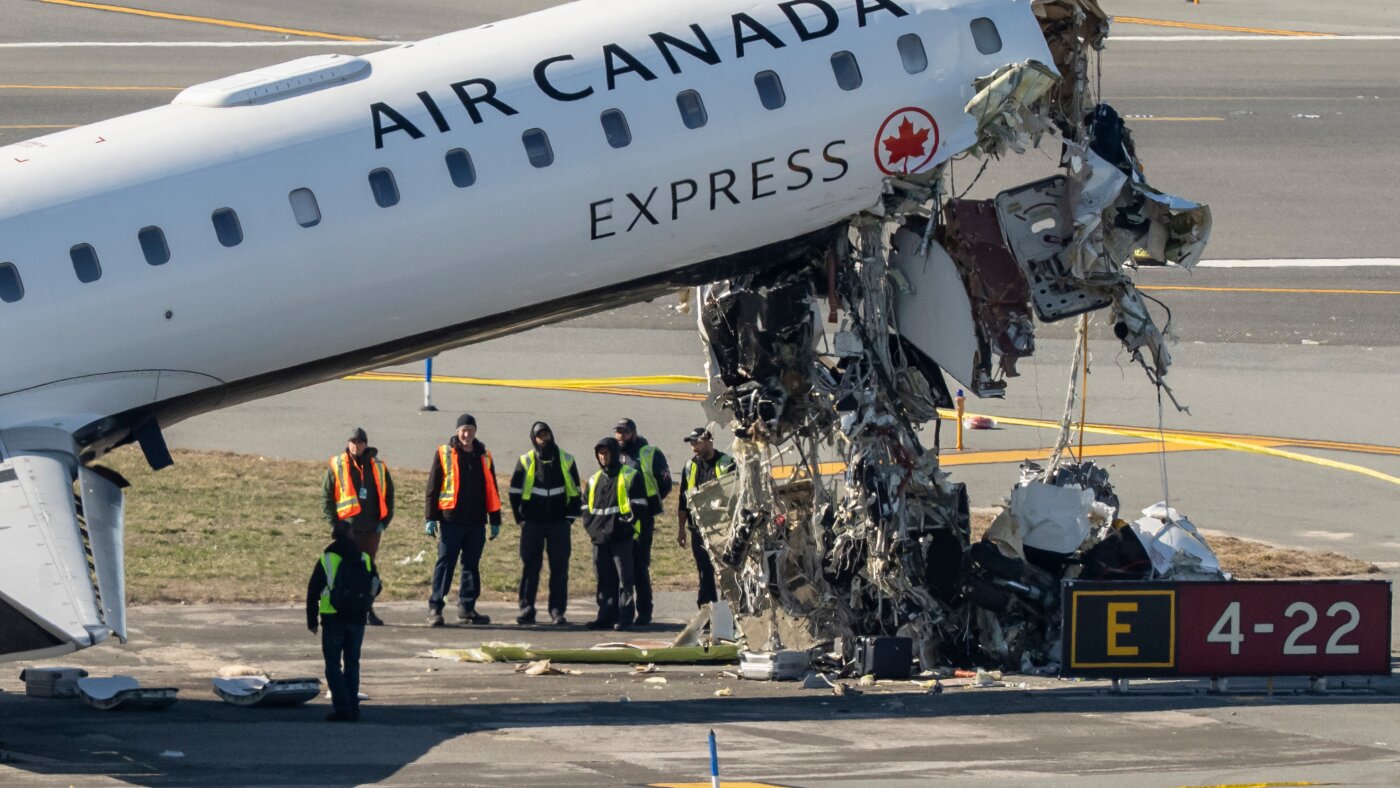
An air traffic controller was juggling extra roles during the LaGuardia plane crash

Iran War: Pentagon set to send thousands of elite 82nd Airborne troops to region | BBC News
-

 Detroit, MI7 days ago
Drummer Brian Pastoria, longtime Detroit music advocate, dies at 68
-

 Georgia1 week ago
How ICE plans for a detention warehouse pushed a Georgia town to fight back | CNN Politics
-

 Movie Reviews6 days ago
‘Youth’ Twitter review: Ken Karunaas impresses audiences; Suraj Venjaramoodu adds charm; music wins praise | – The Times of India
-

 Education1 week ago
Video: Turning Point USA Clubs Expand to High Schools Across America
-

 Sports4 days ago
IOC addresses execution of 19-year-old Iranian wrestler Saleh Mohammadi
-
 Science1 week ago
Industrial chemicals have reached the middle of the oceans, new study shows
-

 Science1 week ago
How a Melting Glacier in Antarctica Could Affect Tens of Millions Around the Globe
-

 Culture1 week ago
Test Your Memory of Great Lines From Classic Irish Poems