Sports
Bryson DeChambeau drills patron with tee shot, can’t escape bunker in rough first round of the Masters


NEWYou can now listen to Fox News articles!
Bryson DeChambeau had a tumultuous first round of the Masters.
DeChambeau, 32, who shot 4 over par on the day, hit a patron with a tee shot on the sixth hole before later struggling to get out of a bunker on the 11th hole, hitting out of the sand three times before escaping the trap.
On the 180-yard, par 3, DeChambeau pulled his tee shot toward the left and hit a patron in the leg. The ball bounced back toward the hole and ended up settling off the green.
Bryson DeChambeau watches his tee shot on the 12th hole during the first round of the Masters at Augusta National Golf Club in Augusta, Ga., April 9, 2026. (Eric Gay/AP Photo)
DeChambeau covered his mouth with his hand when he saw the ball strike the patron. When he walked toward the green, he found the patron, gave him a golf ball and shook his hand.
DeChambeau, who was even par at the time, made an outstanding recovery, chipping the ball to three feet from the hole despite being 24 yards out and eventually saved par by making the ensuing putt.
The Clovis, California, native, remained at even par until the 11th hole, when he had difficulty escaping a greenside bunker.
DeChambeau’s second shot was from the fairway, hitting down toward a green that was flanked by a pond and a bunker. DeChambeau stayed far away from the pond, and his ball ended up rolling in the bunker.
KEVIN HART CADDIES FOR BRYSON DECHAMBEAU IN AUGUSTA NATIONAL DEBUT, DELIVERING HILARIOUS PAR 3 CONTEST MOMENTS
Bryson DeChambeau hits from the bunker on the 11th hole during the first round of the Masters at Augusta National Golf Club in Augusta, Ga., April 9, 2026. (Eric Gay/AP Photo)
The LIV Golf star hit his first bunker shot just three yards, not even nearing the lip of the bunker. His second bunker shot went nowhere, and he appeared to completely miss the ball.
DeChambeau finally escaped the bunker on his third attempt, hitting the ball just over the ledge of the sand trap before letting it roll about 15 feet away. He ended up two-putting for triple bogey, bringing him to three over par for the day.
His struggles continued on the 16th hole, when he three-putted for bogey to bring him to four over par on the day. DeChambeau erased the stroke gained with a birdie on the 17th hole after a great iron shot from the rough left him eight feet from the hole.
CLICK HERE TO DOWNLOAD THE FOX NEWS APP
Bryson DeChambeau hits his tee shot on the 12th hole during the first round of the Masters at Augusta National Golf Club in Augusta, Ga., April 9, 2026. (Eric Gay/AP Photo)
However, DeChambeau bogeyed the 18th hole, finishing with a 4-over 76 for the day.
For DeChambeau, his start to the Masters was similar to last year’s, when he shot an opening-round 73. DeChambeau rallied in the second and third rounds, and he entered the final round in the final pairing with Rory McIlroy before shooting a 75 on Sunday to end in a tie for fifth place.
DeChambeau will look to turn things around Friday, when he tees off at 1:20 p.m. ET.
Follow Fox News Digital’s sports coverage on X, and subscribe to the Fox News Sports Huddle newsletter.



Watch out, Arnold Schwarzenegger — there’s a new champ in the family.
Joseph Baena, the youngest son of the “Terminator” star, made his amateur debut at the National Physique Committee Natural Colorado State Championships last month and swept the competition, winning first place in three categories: Men’s Open Bodybuilding Heavyweight, Men’s Classic Physique True Novice and Men’s Classic Physique Novice.
Then, last week, he won big in Corona at the International Natural Bodybuilding Assn. Iron Gladiator competition, where he came in first in the Classic Physique division and scored his pro card, which paves the way for him to compete in the natural equivalent of his dad’s famous competition, the Professional Natural Bodybuilding Assn. Natural Olympia.
“Moments I’ll never forget!” Baena posted on social media. “What an incredible experience these last 3 months have been. My first prep and my first body building shows. I’ve learned more about myself, training and dieting in these few months than I have since I started lifting weights. Stepping on stage has always been a scary feat for me but creating the goal and actually going for it is one of the best decisions I could have ever made.
“Im grateful for the experience and grateful for all the people in my corner supporting and cheering me on! Cant wait for what’s next. My message to you is to take that chance and chase your goals and dreams!”
Joseph Baena enjoyed a trip to In-N-Out Burger after winning first place at Iron Gladiator.
(Ryan O’Connor)
Schwarzenegger won the Mr. Olympia title seven times with the International Fitness and Bodybuilding Federation, including his six-year streak from 1970 to 1975. He notoriously won again in 1980. While Baena can now compete as a pro in the natural league if he continues, he’ll still need to place highly in forthcoming PNBA shows to land a spot at the Natural Olympia contest, which will be held at the Golden Nugget Hotel & Casino in Las Vegas in November.
Just like his dad, Baena, 28, is a regular at Gold’s Gym in Venice Beach where he has trained leading up to his debut as a competitive bodybuilder. Unlike his dad, who has been candid about his past steroid use, Baena has approached the sport au naturel.
The father and son strongmen have frequently paired up to train together and have been spotted rehearsing the elegant poses that made Schwarzenegger a star. Baena told Entertainment Tonight last summer that his dad is at the gym bright and early and says if he’s not there at 7 a.m., Schwarzenegger won’t hold his tongue.
“I’m there every day, or I try to be there every day,” he said. “We train together. We love working out together. And he’s a great workout partner.”

Joseph Baena won the INBA Iron Gladiator bodybuilding competition, held last Saturday and Sunday, earning his pro card in the process.
(Ryan O’Connor)
Baena, who has been open about struggling with his weight when he was younger, said ahead of the competition that his fitness journey has been a long one. “Started swimming and lost a lot of the fat,” he said. “It wasn’t until my junior year of college, so about eight years ago, that I started lifting weights and fell in love with bodybuilding, seeing the improvement, the muscle gain, the strength gain, and I fell in love with the sport, even watching.
“But this year was the year that I said, enough being afraid, enough overthinking, it’s time to commit. Just do a show.”
Baena, who’s a luxury real estate agent when he’s not at the gym or eating burgers in his Speedo, has shared some of his prep journey online. He frequently posts cooking tutorials that focus on ease and high protein.
In 2022, Baena competed on Season 31 of “Dancing With the Stars” and used his bodybuilding chops to pull off challenging lifts, basically bench-pressing his partner Alexis Warr mid-tango. He was eliminated five weeks into the season, ultimately placing 11th out of 16 contestants.

NEWYou can now listen to Fox News articles!
Bryson DeChambeau is putting together a solid season at LIV Golf, and is looking to carry some of that momentum into the Masters this week in search of the first green jacket of his career.
DeChambeau is second in the LIV Golf standings behind Jon Rahm. But he enters Augusta National with back-to-back wins in Singapore and South Africa. As he heads into the first major of the golf season, DeChambeau is carrying something new in his bag.
Bryson DeChambeau warms up on the driving range before a practice round ahead of the Masters golf tournament at Augusta National Golf Club in Augusta, Ga., on April 7, 2026. (Ashley Landis/AP)
He will use a 5-iron made with a 3D printer. It’s a club he built himself.
“There’s this nature that I have about myself where innovation is a habit of mine, and I really find and take pride in that ability to learn — even through failure, even through making a bad decision or a good decision — what I can get from that,” he told ESPN.
“We’ll see where it goes. We’ll see where it takes me. All I could say now is, if I don’t put them in the bag, it’s my fault now.”
DeChambeau had manufacturing deals with LA Golf and Cobra. According to ESPN, his deal with Cobra ended in February.
Tinkering with his clubs isn’t a new strategy for DeChambeau. He said he had been tinkering with the idea of building his own clubs for a few years and tried a new wedge as he won in South Africa.
Bryson DeChambeau signs autographs during the Par 3 Contest at the Masters Tournament at Augusta National Golf Club in Augusta, Ga., on Apr. 8, 2026. (Michael Madrid/Imagn Images)
BRYSON DECHAMBEAU TALKS RYDER CUP, SQUASHING RIVALRIES WITH PGA PLAYERS AND LACK OF RESOLUTION WITH LIV
DeChambeau has had progressively better finishes at Augusta National since he made his first appearance in 2019. Since missing the cut in 2023, he finished tied for sixth in 2024 and tied for fifth in 2025. He missed the cut in 2022 and 2023.
“I feel like my game’s in the best place of its career, outside of maybe Greenbrier (in 2023) when I shot 58,” he said. “I’m excited to get the week going and see where I can put myself.”
He said his recent performances at the Masters were attributed to a more measured approach.
“More patience, like not as aggressive all the time. Knowing where to be aggressive and when not to be aggressive,” he said. “Making better decisions, having a caddie that reins me in sometimes.”
Bryson DeChambeau tees off on the third hole during a practice round for the Masters Tournament at Augusta National Golf Club in Augusta, Ga., on April 7, 2026. (Kyle Terada/Imagn Images)
CLICK HERE TO DOWNLOAD THE FOX NEWS APP
The Associated Press contributed to this report.
Follow Fox News Digital’s sports coverage on X and subscribe to the Fox News Sports Huddle newsletter.
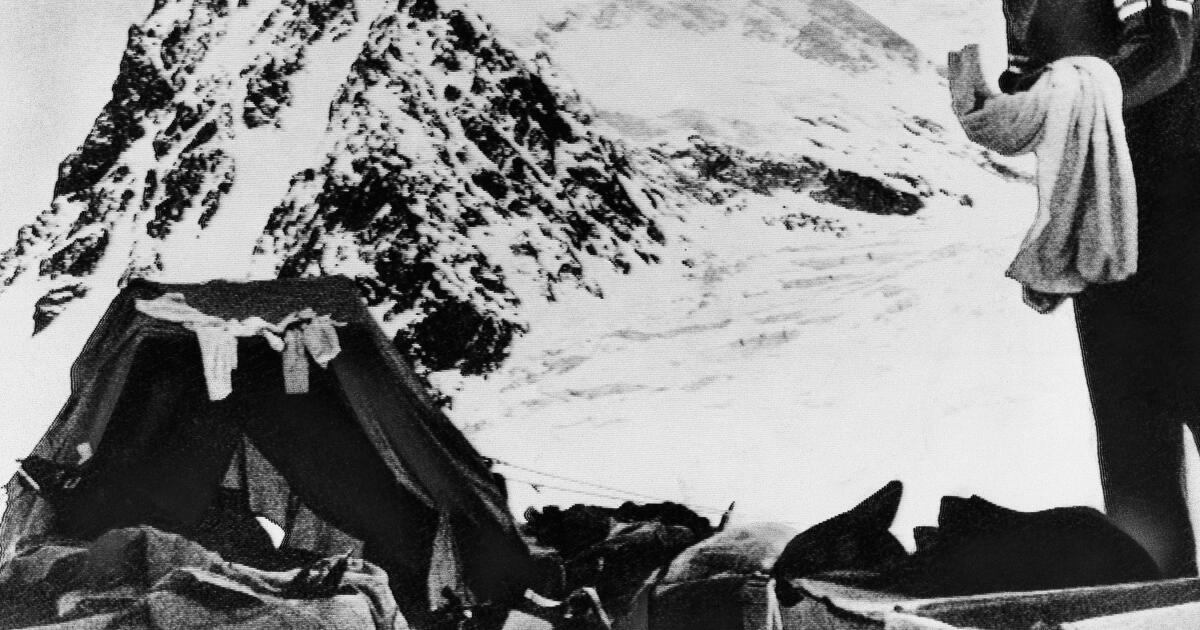
For 20 minutes of his life, Jim Whittaker was on top of the world.
He was the first American to summit Mt. Everest, reaching the highest point on Earth on May 1, 1963, with Sherpa Nawang Gombu.
“We were standing in the jet stream, on the edge of space,” Whittaker wrote in his 1999 memoir, “A Life on the Edge.”
He returned home a hero, with his picture on the cover of Life magazine, a White House fete and unexpected celebrity. And though life off the mountain didn’t always go smoothly, he disdained regret.
“If you stick your neck out, whether it’s by climbing mountains or speaking up for something you believe in, your odds of winning are at least fifty-fifty,” he wrote. “On the other hand, if you never stick your neck out, your odds of losing are pretty close to 100%.”
An adventurer until the end, Whittaker died Tuesday at his home in Port Townsend, Wash., his son Leif confirmed to the New York Times. Whittaker was 97. .
On March 24, 1965, Robert F. Kennedy, left, stands atop Mt. Kennedy in Canada after placing a black flag in memorial to his late brother, President John F. Kennedy. With him were Jim Whittaker; William Allard, a National Geographic Society photographer; and George Senner, a ranger.
(Doug Wilson / Associated Press)
He was 34 when he scaled Everest, a feat that shaped much of the rest of his life. His Washington state license plate read 29028, the generally accepted height of Everest when he climbed it. (GPS surveys later put it at about 29,035 feet.)
He was chosen for the expedition by its leader, Swiss mountaineer Norman Dyhrenfurth, because of his experience in climbing under icy conditions, including numerous summits of Mt. Rainier near his Seattle-area home.
But Everest, first scaled in 1953 by New Zealander Edmund Hillary and Nepalese Sherpa Tenzing Norgay, was a far more formidable and dangerous beast. And even if the Dyhrenfurth expedition was successful, only a chosen few of its 19 team members would reach the top. Still, Whittaker thought his chances were good.
“I’d trained hard, put 60 pounds of bricks in my backpack,” he told National Geographic Adventure magazine in 2003. “I swam in Lake Sammamish in winter to build up to the cold we would encounter.
“I didn’t know anyone who was in better shape.”
On only the second day of the group’s climb from base camp, tragedy struck when a giant section of an icefall — a glacier formation resembling a frozen waterfall — shifted, crushing team member Jake Breitenbach.
“I had told everyone back home that Everest was not a difficult climb technically; the only problem was the lack of oxygen and the weather,” Whittaker wrote in “Life on the Edge.” “Now it had killed one of us, and we’d only just begun.”
Because the only way to get back to base camp was via that icefall, Whittaker chose to stay above it on the mountain for five steady weeks as more camps were established up Everest. He lost 25 pounds and a considerable amount of strength due to the thin air.
Still, he was in better condition than many of the other climbers, and Dyhrenfurth chose him for the final assault. He and Gombu left the last camp in the middle of a windstorm, with a scant supply of oxygen.
How hard was it to breathe? “Put a pillow on your face, run around the block, and try and suck oxygen through that pillow,” he said. It was so cold, one of his eyeballs froze, making it unusable.
Reaching the summit after several hours, they stayed only long enough to take pictures and plant flags as 50-mph winds whipped around them.
“When you are up there, you are not ecstatic, you are not afraid,” he told the Los Angeles Times in 2013. “You’re really not anything. But in the back of your mind, you know one thing: You gotta get off. Half of the climb is getting up, the other half is getting down.”
James Whittaker was born on Feb. 10, 1929, in Seattle, about 10 minutes before the birth of Louie, his twin brother. As the boys grew up, they took to roughhousing around the house, much to the chagrin of their mother.
“I believe that command to ‘Go outside and play’ is what started Louie and me on the path we have taken ever since,” Whittaker wrote.
He was active in Boy Scouts and as a teenager joined a mountaineering club that sponsored climbs on the nearby Olympic and Cascade ranges. He tested himself on increasingly higher peaks, relishing moments such as breaking through cloud layers.
“I think nature is a great teacher,” he told the Seattle Times in 2013. “Being in nature that way is a good way to find out who the hell you are.”
After finishing West Seattle High School, Whittaker went on to Seattle University, graduating in 1952. He was promptly drafted into the Army, but his mountaineering experience led him to be assigned to the Mountain and Cold Weather Training Command in Colorado instead of combat duty in Korea.
In 1955, he became the first full-time employee of the Recreational Equipment Cooperative (later called REI) when it was housed in a 20-by-30-foot space above a Seattle restaurant. In his first year, he expanded the co-op’s offerings into ski equipment and introduced new concepts — such as opening on Saturday mornings so customers could pick up equipment for weekend trips — that boosted sales.

Whittaker, pictured on April 12, 1975, in Seattle, shows some of the gear he would be taking for an expedition to climb K2 on the China-Pakistan border.
(Associated Press)
Because of his connection to the co-op, he was appointed equipment coordinator of the Everest climb, and REI agreed to keep him on the payroll during the expedition.
In July 1963, he and other members of the Everest team, including Gombu, were presented the Hubbard Medal of the National Geographic Society — which partially sponsored the expedition — by President Kennedy, four months before the president was assassinated.
Two years later, Whittaker led a climb up Mt. Kennedy, a nearly 14,000-foot Canadian peak named for JFK, with Sen. Robert F. Kennedy in the climbing party. The two men forged a close friendship that extended to the wider Kennedy clan. In subsequent years, Whittaker went on ski vacations with the Kennedys, was a guest at the family compound in Hyannis Port, Mass., and hosted gatherings in Seattle that included mountain climbing.
Whittaker organized Robert Kennedy’s 1968 presidential campaign efforts in the Pacific Northwest and spoke to him by phone only minutes before the candidate was fatally shot in Los Angeles. Whittaker caught a flight to L.A. and was at the senator’s hospital bedside when he died and then served as a pallbearer at the funeral.
In mountaineering, Whittaker was closely involved in more high-profile ventures. He led a 1975 expedition up the world’s second-highest mountain, K2, that failed to reach the top. His return expedition in 1978 was successful, though he chose not to go to the summit himself.
That same year, he decided to quit REI, partly because of friction with the co-op’s board. He had been president and chief executive since 1971, and when he left, the co-op was a $46-million business with more than 700 employees.

Whittaker throws the ceremonial first pitch before a baseball game between the Mariners and the Angels in 2013.
(Elaine Thompson / Associated Press)
Income from an endorsement agreement helped keep him financially sound, but an investment in a new outdoor gear company proved to be a disaster. The financial irregularities of a partner, who was convicted of felony bank fraud, doomed the venture, and Whittaker was left holding the financial bag.
He was nearly wiped out but got back on his financial footing when a venture capitalist asked him in 1986 to be chairman of the board, with stock options, of a new company called Magellan. It was a pioneer in GPS consumer electronics and holds numerous patents in the field.
Appropriately, Whittaker called one of the chapters midway through his book “Roller Coaster.” But he finished it with “Life Well Lived.”
“If you aren’t living on the edge,” he wrote, “you’re taking up too much space.”
Whittaker is survived by his wife, Dianne Roberts, and children Bobby, Joss and Leif.
Colker is a former Times staff writer.

Wisconsin beats North Dakota 2-1 to reach its first Frozen Four final since 2010

Two Republicans running for Ohio treasurer in the May 5 primary

PORTAL TARGET BREAKDOWN: Oklahoma State guard Amari Whiting

Kotek signs sweeping immigrant justice package expanding school, healthcare protections in Oregon

Pennsylvania lawmakers face deadline to rewrite sentencing law for second-degree murder

Florida High School Football Rankings: Top 25 teams – Oct. 21

How old is Bo Nix? What to know about Oregon quarterback ahead of 2024 NFL Draft

Cleary's 21 help Le Moyne down Central Connecticut State 69-64 in OT

99th annual Pony Swim held in Virginia

Indiana Members Credit Union announced as new anchor tenant at Bottleworks District

Video: How Trump’s Advisers Felt About Going to War With Iran

Unearthed clip exposes shocking claim by Newsom’s wife about inmates at violent California prison

Gaza journalists mourn Al Jazeera’s Wishah, killed by Israel

Exclusive: Trump weighs pulling some US troops from Europe amid NATO strains, official says

Video: The Fragile Cease-Fire in Iran
-

 Atlanta, GA5 days ago
1 teenage girl killed, another injured in shooting at Piedmont Park, police say
-

 Education1 week ago
Video: We Put Dyson’s $600 Vacuum to the Test
-

 Movie Reviews1 week ago
Vaazha 2 first half review: Hashir anchors a lively, chaos-filled teen tale
-

 Georgia2 days ago
Georgia House Special Runoff Election 2026 Live Results
-

 Pennsylvania3 days ago
Parents charged after toddler injured by wolf at Pennsylvania zoo
-
 Milwaukee, WI3 days ago
Potawatomi Casino Hotel evacuated after fire breaks out in rooftop HVAC system
-

 Education1 week ago
Video: YouTube’s C.E.O. on the Rise of Video and the Decline of Reading
-
 Entertainment1 week ago
Inside Ye’s first comeback show at SoFi Stadium