Ohio
Two Republicans running for Ohio treasurer in the May 5 primary


When’s Ohio’s 2026 primary election? Date, candidates, changes to know
See which candidates are conditionally qualified for Ohio’s 2026 primary ballot and key election deadlines.
Ohio primary voters will send one of two Republican state treasurer candidates on to the 2026 general election.
Current Ohio Treasurer Robert Sprague is term-limited and cannot seek reelection for the role. Former southeast Ohio state Rep. Jay Edwards and northeast Ohio state Sen. Kristina Roegner are both seeking the GOP nomination for the general election in November.
The winner of the May primary will face Cincinnati City Council Member Seth Walsh, who is running unopposed as the Democratic candidate.
Ohio’s primary election is May 5, with polls open from 6:30 a.m. to 7:30 p.m. Voters also may cast their ballots early at the Franklin County Board of Elections, 1700 Morse Road.
The information below was supplied by candidates responding to a questionnaire. The Dispatch only edited responses for length or clarity.
Jay Edwards
Age: 36
Campaign Website: edwardsforohio.com
Background: Jay Edwards is a native of Nelsonville, Ohio, and a proud son of Appalachia. He earned a B.S. in mathematics from Ohio University, where he played football on scholarship. After college, he started a successful real estate company that he still manages today. At age 27, he flipped a longtime Democratic seat to become state representative for Ohio’s 94th District (2017–2024). He served as House Majority Whip and later chaired the House Finance Committee, where he helped pass a $3.2 billion tax cut and universal school choice. Term-limited in 2025, Edwards is now a Republican candidate for Ohio State Treasurer, committed to fiscal responsibility, opportunity, and supporting working families and businesses across the state.
Why are you the best candidate?: I combine proven fiscal leadership, hands-on experience managing state budgets, and a commitment to responsible stewardship of taxpayer dollars.
A graduate of Ohio University with a B.S. in mathematics, I was elected to the Ohio House of Representatives at age 27 and served from 2017 to 2024. As House Finance Committee chair, I helped deliver a $3.2 billion tax cut for Ohio families and businesses, advanced universal school choice, and secured critical investments in infrastructure and economic development.
What new initiatives would you bring to the treasurer’s office?: As Ohio treasurer, I will modernize the office and restore taxpayer trust through targeted initiatives.
First, I will upgrade the Treasurer’s office from its outdated 1970s-era ACH system to 21st-century technology. This will improve efficiency, security, and speed while making all state financial transactions more accessible.
I will enhance the Ohio Checkbook program to make it even simpler and more user-friendly, so every Ohioan can easily see exactly where their tax dollars are spent — bringing real transparency and accountability back to government.
To support public safety, I will launch a Link Deposit program that prioritizes state deposits with financial institutions committed to backing first responders. In our largest cities, where respect for police and law enforcement has eroded, this program will strengthen partnerships that keep our communities safe. If cities refuse to support the police and public safety, then it is time for the state to step up.
These practical steps — modernization, transparency, and support for those who protect us — will ensure Ohio’s finances work efficiently and earn the trust of every taxpayer.
What changes, if any, would you make to Ohio’s investment in Israel bonds?: As Ohio treasurer, my decisions on investments, including Israel bonds, will be guided solely by what is best for Ohio taxpayers — prioritizing safety, liquidity, and return.
I am troubled that too many entities are divesting from Israel bonds for purely political reasons. These bonds have a strong track record of low risk, reliable repayments, and competitive returns that benefit Ohio’s portfolio.
Without access to the current detailed portfolio data, I cannot commit to specific adjustments today. However, any changes would be based strictly on financial merit, not politics.
I have long stood as an ally to the Jewish community. The recent dramatic rise in outright hatred toward Israel and Jewish people is sickening and must be rejected. Ohio should continue to make prudent investments that deliver strong value while upholding fiscal responsibility.
What role should AI play in the treasurer’s office?: As Ohio’s next treasurer, I believe AI should serve as a powerful efficiency tool — not a replacement for human oversight or taxpayer accountability. In the treasurer’s office, AI can analyze investment portfolios in real time to maximize returns on state funds, detect fraud in unclaimed property claims, streamline cash-flow forecasting, and automate routine back-office tasks. These applications will cut administrative costs, reduce waste, and deliver better results for Ohio taxpayers without growing government.
Every AI use must include strict human review, ironclad data security, and full transparency so citizens can see exactly how their money is being managed. We embrace innovation to strengthen fiscal responsibility — never to expand bureaucracy. Responsible AI will help us protect and grow Ohio’s financial resources while keeping decision-making firmly in accountable hands.
State Sen. Kristina Roegner
Age: 57
Campaign website: kristinaroegner.com
Background: I’ve built my professional career on financial oversight. After earning a Bachelors of Science in mechanical engineering from Tufts University and a MBA in finance from the Wharton School of Business, I worked for Westinghouse and subsequently McKinsey & Co, where financial discipline and results were paramount. Starting my service in elected office on Hudson City Council, I went on to serve eight years in the Ohio House and am currently completing my eighth year in the Ohio Senate. As the chair of the General Government Committee, I am steadfast and laser-focused on protecting taxpayers and ensuring responsible, conservative decision making.
Why are you the best candidate?: The treasurer is a role where background, expertise, and integrity matter. Having earned my MBA in finance combined with experience in management consulting, I am by far the most prepared candidate for this role. I served with integrity during my 15 years in the legislature, and earned a reputation for being above reproach. I am grateful to have the endorsement of every single member of leadership in the Ohio House and Ohio Senate as well as a supermajority of my Republican colleagues in both chambers. Notice: these leaders from across Ohio – who have worked alongside both me and my opponent – they know us both and endorse my candidacy.
I have been consistently loyal to our Republican principled conservative ideals. I have a reputation for working hard and getting things done. My legislative accomplishments can attest to that. I was always faithful and never censured; never associated with any corruption scandals.
I’m the best choice to be Ohio’s next treasurer because I bring the right mix of real-world experience, proven leadership and financial stewardship. I’m respected by my colleagues in Columbus and voters across Ohio. I am guided by faith and driven to serve.
What new initiatives would you bring to the treasurer’s office?: As treasurer, I will strengthen oversight and internal controls to ensure every dollar is tracked, protected, and used as intended. With cyber-attacks on the rise, I will prioritize best-in-class cybersecurity defenses for the treasurer’s office.
I will also proactively reunite Ohioans with their unclaimed funds by moving administration from the passive Department of Commerce to the Treasurer’s office. Legislation to achieve this (HB480) is already moving forward. Once in place, I will streamline the claims process and proactively match citizens with their money.
Ohioans deserve full transparency with their tax dollars. I proudly supported HB175 in 2013, which created www.ohiocheckbook.com. I will expand this to include municipalities and schools by supporting pending legislation (HB413) and implementing it as treasurer.
As chief investment officer, I will maximize conservative, safe returns to generate additional revenue to help minimize tax burdens on Ohioans.
What changes, if any, would you make to Ohio’s investment in Israel bonds?: The Israel bonds currently held by the Ohio Treasurer’s office are all investment grade, as is required. It is my understanding that they are one of the best returning investments in the portfolio and they have never defaulted on a payment. From a risk-return perspective these assets have performed very well. Every Ohio State Treasurer over the last 30 years – both Republican and Democrat – have invested in Israel bonds. Interestingly, these Israel bonds only mature to the “purchaser of record,” meaning Ohio must hold them to maturity. Going forward, I would consider differing maturities for Israel bonds; shorter maturities would provide Ohio more flexibility with liquidity.
What role should AI play in the treasurer’s office?: AI should be a tool to strengthen sound financial stewardship, but should not replace responsible human supervision of taxpayer dollars. In the treasurer’s office, AI can enhance fraud detection, improve reporting in Ohiocheckbook.com, and enhance cybersecurity by quickly spotting threats. Used responsibly, it can analyze investment data to support better decision-making within conservative guidelines. That being said, any use of AI must prioritize data security, transparency, and accountability, ensuring taxpayer information is protected and decisions remain in the hands of humans.



Ohio State will travel to the Los Angeles Memorial Coliseum on Oct. 31 to face USC in a much-anticipated matchup between the two blue bloods and first as Big Ten opponents.
The Buckeyes present the toughest offensive triplets — consisting of a starting quarterback, lead running back and a top pass catcher, the Trojans are set to face in 2026.
Ohio State Offensive Triplets
It’s a close debate between them and Oregon. The Ducks have the advantage at quarterback with Dante Moore, but the Buckeyes have the edge at running back and wide receiver.
Ohio State quarterback Julian Sayin is the only returning Heisman finalist in college football. The Southern California native was excellent in his first season as the starter in Columbus.
Sayin threw for 3,610 yards and 32 touchdowns last season. His biggest superpower is his accuracy. When he gets in a rhythm, the Buckeyes redshirt sophomore signal-caller is surgical. Sayin’s 77.0 completion percentage set a new is a Big Ten Record. He enters this season high on NFL Draft boards but with something to prove as well after a disappointing two-game stretch to end last season.
Bo Jackson proved very early last season that he was the best running back on the Ohio State roster. He took over as the starter in September and was one of three true freshmen to top 1,000 rushing yards in 2025. The sophomore tailback is underrated pass-catcher out of the backfield and is just scratching the surface of the player he can be.
Jeremiah Smith would have been a top 10 pick two years after a sensational freshman season. For a school that has produced the likes of Jaxon Smith-Njigba, the reigning Offensive Player of the Year, Marvin Harrison Jr., and Garrett Wilson, just to name a few in recent memory, Smith tops all of them in an Ohio State uniform.
The 6-foot-3, 223-pound Smith is a two-time first team All-American. He’s an alien at the position. The junior receiver has his eyes on winning the Biletnikoff Award, after USC’s Makai Lemon brought home the hardware last year, and helping the Buckeyes get back to the national championship.
Ohio State hired former NFL head coach Matt Patricia to be their defensive coordinator and the results was No. 1 defense in the country. They dove back into the NFL ranks again this offseason and hired former head coach Arthur Smith to be their offensive coordinator.
New-Look Defense at USC
USC made a big splash this offseason with the hiring of defensive coordinator Gary Patterson. The former longtime TCU head coach built great defenses for two decades in Fort Worth and a big reason why he’s headed to the College Football Hall of Fame.
He is looking to build similar success in Los Angeles. Except now, Patterson has more talent and resources than he’s ever had in front of him. The question is he can maximize it in year one and build a unit that creates problems for its opponents.
Rutgers receiver KJ Duff will challenge the Trojans secondary in week 3 with his 6-foot-6 and 225-pound frame. And then USC will see the entire offensive package when Oregon rolls into town the following week. Matchups against Washington and Penn State in early October will also test the Trojans new-look defense before they host Ohio State in late October.
Sign up to our free newsletter and follow us on Facebook, and X for the latest news.
Add us as a preferred source on GoogleFollow

YOUNGSTOWN, Ohio (WKBN) — Part of Glenwood Avenue is closed due to a water main break in Youngstown.
Saturday afternoon, water could be seen flowing down Glenwood Avenue near Ravenwood Avenue.
The road is closed between Ravenwood Avenue and Clearmount Drive while crews repair the break.
Dominic O’Brien contributed to this report.

The U.S. Bicentennial in 1976 was a monumental, year-long celebration marking the 200th anniversary of the signing of the Declaration of Independence. Coming in the aftermath of the turbulent 1960s, the political disillusionment of the Watergate scandal and President Richard Nixon’s resignation in 1974, and the capture of Saigon by the North Vietnamese and the end of the Vietnam War in 1975, the Bicentennial served as a crucial moment of national healing.
The festivities culminated on the Fourth of July 1976, with spectacular events staged across the country. The most enduring legacy of the celebration in Columbus is Bicentennial Park, located in the Downtown riverfront area along the Scioto River.
Dedicated on July 4, 1976, this 4.7-acre green space was built to permanently commemorate the nation’s 200th birthday. The park’s initial centerpiece was a massive fountain system featuring four circular pools that could shoot water 60 feet into the air.
From May 22 to June 2, 1975, Columbus served as the 11th official stop for the American Freedom Train. This massive, steam-powered rolling museum carried more than 500 priceless historical artifacts – including copies of the Declaration of Independence and the Constitution – across all 48 contiguous states.
The train was displayed at the Defense Construction Supply Center [DCSC] in Whitehall and drew massive crowds of local families. Columbus held a special distinction during the tour: it was one of only three cities nationwide where the “Splendid Spirit” car was included with the train.
Warren Motts, the founding director of Motts Military Museum in Groveport, traveled with the train for its entire 25,000-mile journey, capturing the official photos that documented this historic event.
Beyond these massive metropolitan events, the true spirit of the Bicentennial thrived at the grassroots level. The American Revolution Bicentennial Administration (ARBA) encouraged local communities to form their own committees, leading to thousands of unique municipal projects.
Towns across the nation hosted local parades, commissioned historical murals, dedicated new parks, and sealed time capsules intended for the tricentennial in 2076.
It also triggered a resurgence of interest in local history and genealogy, as everyday citizens sought to trace their own roots back to the nation’s founding eras.
The civic energy and patriotism generated by the 1976 celebrations also helped pave the way for other major local traditions. Just a few years later, in 1981, Columbus launched its annual Red, White & Boom! celebration, which grew into the largest Independence Day fireworks display in the Midwest—a tradition deeply rooted in the community pride revived during the Bicentennial era.
Get involved in America 250 at your library this year! Visit columbulibrary.org for a full list of America 250 events.
Angela O’Neal is Local History & Genealogy Manager with the Columbus Metropolitan Library.
-

 Illinois3 minutes ago
Our Chicago: Celebrating America’s 250th birthday in Illinois
-

 Indiana6 minutes ago
Fever vs. Aces Prediction, Odds, Best WNBA Prop Bet for Sunday, July 5
-

 Iowa11 minutes ago
2027 Recruiting Class Shaping Up To Be Special One for Iowa State Football
-

 Kansas18 minutes ago
2026 K-State Football Early Opponent Preview, Game 6: Kansas
-

 Kentucky18 minutes ago
Recovery operations underway to find possible drowning victim on Kentucky Lake | NewsRadio 1230 AM/99.3 FM | Hopkinsville’s News Leader
-

 Louisiana26 minutes ago
Man killed, officer injured in shooting in alleyway near Sand Bar in downtown Shreveport
-
Maine33 minutes ago
People We’ve Lost
-
 Maryland36 minutes ago
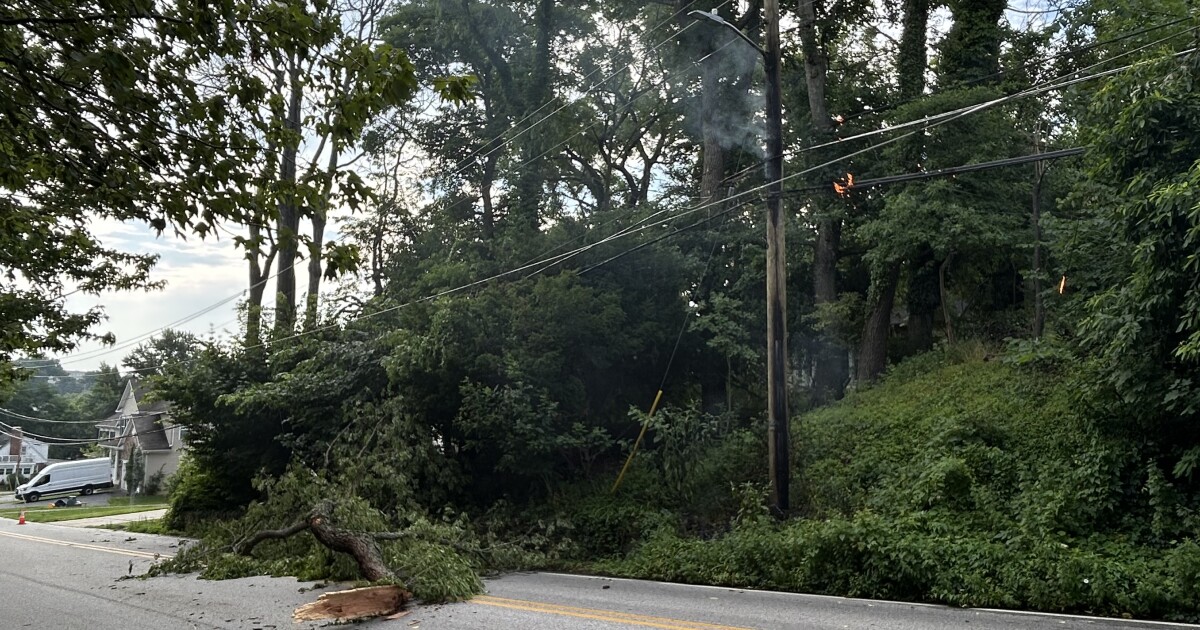
BGE working to restore power to over 40,000 customers after July 4th storms move through central Maryland


