West Virginia
12 Amazing West Virginia Day Trips That Are Worth The Drive


West Virginia offers deep river gorges, Appalachian mountain trails, and museums covering several layers of regional history. Day trips can lead to quirky stops like the legends at the Mothman Museum or haunting tours through a historic asylum. Other stops highlight art and science, with hands-on exhibits at the Clay Center for the Arts & Sciences and wide-ranging collections at the West Virginia State Museum. Places like Beech Fork State Park and Babcock State Park show off the landscapes that make West Virginia a rewarding place to drive through. Below are 12 day trips worth the drive, starting from Charleston and Huntington.
Starting City: Charleston
Clay Center for the Arts & Sciences (Within the City)
This 240,000-square-foot facility opened in 2003 and combines art exhibits with STEM experiences across multiple museums and theaters. The Avampato Discovery Museum is the child-facing centerpiece, with climbing sculptures, a music studio, a Space Lab for designing rockets, and a Wild Kratts Ocean Adventure covering various ocean ecosystems. The Caperton Planetarium & Theater handles night-sky programming. The other two anchors are the Juliet Art Museum with its Interactive Art Space and the Maier Performance Hall, which hosts performances from the West Virginia Symphony Orchestra and visiting jazz ensembles.
West Virginia State Museum (Within the City)

The state museum dates to 1890 and was previously known as the West Virginia Science and Culture Center. It covers history, art, culture, paleontology, and archaeology across its galleries. The Discovery Rooms walk visitors through the prehistory of West Virginia, life on the Appalachian frontier, and John Brown’s 1859 raid on Harpers Ferry, which helped ignite the American Civil War. Additional rooms cover West Virginia’s 1863 statehood (the state was carved from Virginia during the war) and its long heritage as a coal-mining state. Interpretive reconstructions throughout the museum recreate West Virginia landmarks including a classic soda shop, Harpers Ferry, and a coal mine.
Capitol Market (Within the City)
The Capitol Market in the heart of Charleston has been widely recognized as one of the best local shopping centers in the state. Set in a historic train depot, it houses produce merchants both indoors and outdoors. Inside, Johnnie’s Fresh Meat Market handles meat, Mea Cuppa Coffeebar pours coffee, and Bogey’s serves BBQ, fire-roasted corn, and homemade coleslaw. The outdoor section is where shoppers find flowers and greens from greenhouses like Bostic and Evans, along with fresh fruit and vegetables from Robbie’s Produce out of Sissonville, West Virginia.
Kanawha State Forest (15 Minutes)
West Virginia is one of the most heavily forested states in the country, with forest covering roughly 79% of its total land area. That reality is easy to experience 15 minutes south of Charleston at Kanawha State Forest. At 9,300 acres, the forest was once a logging and mining site before the West Virginia Conservation Commission purchased it and converted it to public land. There are more than 60 miles of hiking and biking trails, with strong wildflower viewing in spring and reliable bird sightings, including 19 species of wood warblers during migration. Davis Creek offers fishing opportunities with wheelchair-accessible piers.
Mothman Museum (1 Hour)
West Virginia has its share of cryptid legends, and the state’s most famous is Mothman, first sighted around Point Pleasant in November 1966 and described as a winged figure with glowing red eyes. The Mothman Museum in Point Pleasant calls itself the world’s only museum dedicated to Mothman, with collected newspaper clippings, eyewitness accounts, and props from the 2002 film The Mothman Prophecies. Visitors can take pictures next to the nearby Mothman Statue or pick up Mothman-inspired shirts and souvenirs. The museum also runs the Mothman ’66 Escape Room and a Mothman Blacklight Mini-Golf course, both fit for families willing to lean into the spookier side of the legend.
Hawks Nest State Park (1 Hour)
Hawks Nest State Park covers 270 acres along the cliffs above the New River. The water below produces fast rapids popular with experienced whitewater rafters. Away from the rapids, the park offers a scenic overlook down to the New River Gorge Bridge and 8 miles of hiking trails climbing up into the mountains. Hawks Nest Lake holds bass for anglers, though swimming is not allowed in the lake (the park has a separate pool and splash pad). Like many West Virginia parks, it was initially developed by the Civilian Conservation Corps in the 1930s, and the Hawks Nest Park Museum covers that history.
New River Gorge National Park and Preserve (1 Hour, 15 Minutes)
A few more minutes’ drive from Charleston takes you down into the New River Gorge National Park and Preserve. The gorge was carved by the New River, which, despite its name, is actually one of the oldest rivers in North America at roughly 260 million years old. The gorge is the deepest in the Appalachian Mountains, with 1,000 feet of exposed sandstone and shale cliffs. Those cliffs support more than 1,600 established climbing routes, drawing climbers year-round. Hikers have nearly 100 miles of trails to choose from, along with scenic drives, whitewater rafting, and fishing access.
Babcock State Park (1 Hour, 30 Minutes)
Babcock State Park’s signature landmark is the Glade Creek Grist Mill, a working mill built in 1976 from parts of three historic West Virginia mills, most notably Cooper’s Mill, which had been destroyed by fire decades earlier. The mill is one of the most-photographed spots in the state. Beyond the mill, the park has more than 20 miles of hiking trails winding up into the Appalachian hills, and Boley Lake offers paddle boat, rowboat, and canoe rentals at the marina. Geocachers have left trinkets throughout the park, especially near Glade Creek Waterfall.
Trans-Allegheny Lunatic Asylum (1 Hour, 45 Minutes)
Construction on the Trans-Allegheny Lunatic Asylum began in 1858, and it opened in 1864 during the Civil War to house psychiatric patients. At 1,300 feet long, it remains one of the largest hand-cut stone masonry buildings in the United States. Originally designed to hold up to 250 patients under the 19th-century Kirkbride Plan, which emphasized natural light, air, and space, the asylum eventually housed as many as 2,400 patients at a time, with the crowding leading to documented abuses. It also housed Union and Confederate troops during various Civil War raids. The asylum closed in 1994 and now offers historical tours Tuesday through Sunday, with separate ghost tours available in the evening.
Starting City: Huntington
Huntington Museum of Art (Within the City)
At nearly 60,000 square feet, the Huntington Museum of Art is the largest art museum in West Virginia. The collection is eclectic, spanning fine paintings alongside decorative crafts. The Touma Gallery displays Middle Eastern pottery, metalwork, and woodwork including pieces from Damascus, Syria. The Herman P. Deans Firearms Collection covers early firearms and crossbows as examples of historic craftsmanship. On the grounds, West Virginia’s only plant conservatory showcases tropical and subtropical species, and 6 miles of hiking trails run through forested hills.
Heritage Farm Museum & Village (Within the City)
The Heritage Farm Museum & Village was the first Smithsonian Affiliate in West Virginia, recognized for its hands-on approach to Appalachian pioneer history. A former farmhouse converted into a multi-museum pioneer village, it covers specific aspects of Appalachian life across several buildings. The Progress Museum focuses on 1850s Appalachian settler life, while the Transportation Museum covers the railroad and frontier wagons. The Country Store Museum recreates a 19th-century general store, and the Children’s Hands-On Activity Center lets kids try 19th-century chores. A Treehouse Trek trail on canopy bridges rises 60 feet above the forest and ends at a large treehouse.
Beech Fork State Park (30 Minutes)
Less than half an hour from Huntington, the 3,000-acre Beech Fork State Park sits on Beech Fork Lake, a reservoir built by the U.S. Army Corps of Engineers for flood control on Twelvepole Creek. The park’s 31 miles of shoreline support canoes, kayaks, johnboats, and paddle boards, rentable at the dock. Fishing includes largemouth bass, hybrid striped bass, catfish, and bluegill, with a valid West Virginia fishing license required. Hiking trails wind around the lake and up to overlooks.
There’s A Lot To See On These Country Roads
John Denver’s “Take Me Home, Country Roads” is still the most familiar song about West Virginia’s winding mountain roads, and along those roads are picturesque stops ranging from the Clay Center in Charleston to the Heritage Farm Village near Huntington. For travelers drawn to darker history, the Mothman Museum and the Trans-Allegheny Lunatic Asylum preserve the stranger and more haunting side of the state. All of these sites sit within an easy day-trip radius of Charleston or Huntington, so the drive itself becomes part of the experience.

West Virginia
Repair work on busiest bridge in West Virginia to happen in phases to “minimize disruptions”

CHARLESTON, W.Va. — Traffic in the Capital City will soon have to adjust as the busiest bridge in West Virginia draws closer to undergoing a rehabilitation project.
The West Virginia Division of Highways recently awarded a $74.5 million contract for the rehabilitation of the Eugene A. Carter Bridge to Triton Construction. The bridge, also known as the Fort Hill Bridge, is located in the Capital City and carries Interstate-64 over the Kanawha River.
Around 100,000 vehicles travel across the bridge each day.
Gov. Patrick Morrisey joined state and local officials Thursday at Magic Island to officially announce the contract awarding. DOH officials have told MetroNews that crews will build two median crossovers this August, with the majority of that construction taking place at night and on weekends to minimize its impact on traffic. Official repair work is expected to begin in early 2027, with an anticipated conclusion next December.
DOH officials said everything should be “back to normal” by Spring 2028 under the current timeline.
Del. J.B. Akers, R-Kanawha, was on hand for the news conference. He emphasized that motorists will have to be flexible with their routes.
“We’ll have a little bit of an inconvenience while that’s going on,” Akers said. “This is going to be a huge project that impacts traffic from all over the East Coast, really.”
Issues have popped up at the Carter Bridge in recent years. The state DOH made emergency repairs to fix potholes that had popped up last summer, causing traffic delays. Triton Construction also repaired concrete, installed a waterproof membrane, and added a 2-inch layer of asphalt last October.
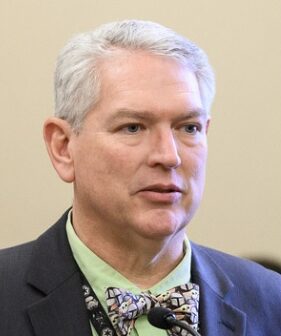
Minimizing the impact on motorists during this project has been a top priority, according to state Transportation Secretary Todd Rumbaugh.
“Our team at the Department of Transportation has worked tirelessly to phase this construction, so we minimize the disruptions on your daily commute and your businesses,” Rumbaugh said.
DOH officials said crews will work on one side of the bridge first, then crews will shift traffic and begin work on the other side. Motorists can stay up to date on the project by visiting the Division of Highways website to see the anticipated construction schedule.
Akers commended Morrisey and Rumbaugh for taking action now.
“For doing the hard thing, on a project like this, which is a maintenance and repair project,” Akers said. “They’re not kicking the can down the road for some other administration to deal with. They’re dealing with a major issue, right now, and this will be a generational project for this bridge. It’s going to prevent us from having to deal with this in the future.”
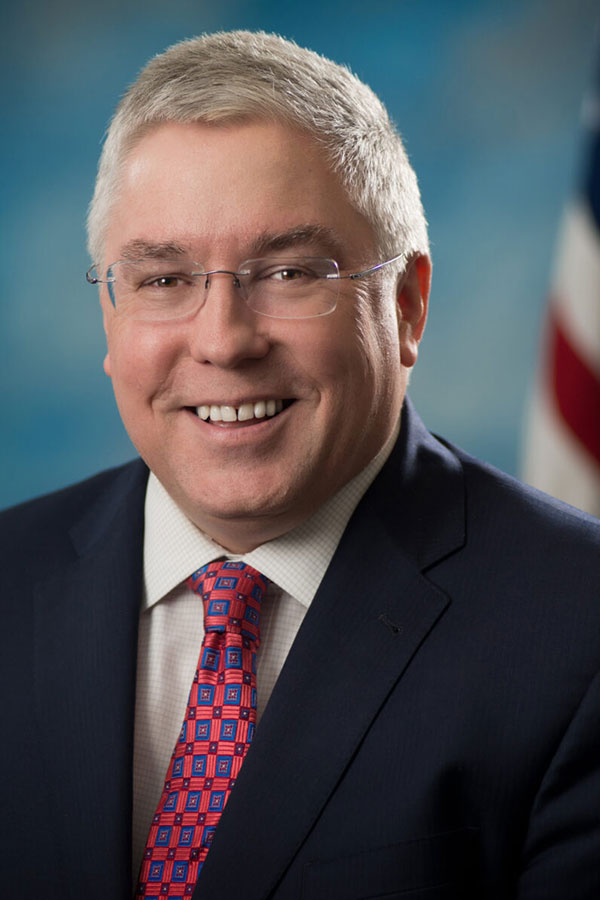
The governor mentioned the state had previously been given poor grades by national surveys on bridge safety. He said his administration is committed to improving bridges all across the state, starting with the heavily trafficked bridge in Charleston.
“This is a signal that we take bridge repair work very seriously,” Morrisey said. “When we inherit being an ‘F’ in bridges, I do not want that to be the case. We need safe bridges for our people, and I’m going to keep working every day to make sure that happens.”
Morrisey said in his year and a half as governor, the administration has been focused on “getting back to the fundamentals.”
“Site-selection and remediation, speed to build; cutting red tape faster, that’s what’s why I’m so excited about our one-stop shop permitting. (That’s) going to make things go even faster, and responsibly.”
Those efforts have been paying off, Morrisey said.
“When you have that kind of economic growth, that level of construction, it’s particularly important to make sure that your infrastructure is strong,” Morrisey said. “That’s really why we’re here today.”
Rumbaugh said the investment signals a commitment to the future of the Mountain State and its travelers.
“This rehab project represents a once-in-a-generation investment in our economic corridor,” Rumbaugh said. “It’s about much more than concrete, structural steels, and orange barrels. It’s about safety, reliability, and planning for the next 50 years.”
West Virginia
Concerned West Virginians speak out against proposed Monongalia County power plant – WV MetroNews

CHARLESTON, W.Va. — Concerned citizens, coal miners, and political candidates made a unified stand against a proposed gas-fired power plant in Monongalia County.
32 people spoke during the state Public Service Commission public comment session Wednesday night in Charleston. Every single one opposed the plant.
The PSC is reviewing a proposal from Mon Power and Potomac Edison for a combined cycle gas plant at the Fort Martin Power Station in Maidsville. There would be three solar arrays as part of the investment as well, one each in Tucker, Preston, and Hancock counties.
The plant would generate 1,200 megawatts of electricity and construction would cost around $2.48 billion. The solar arrays warrant an estimated $182 million cost for installation.
To foot the bill on the investment, Mon Power has proposed an initial surcharge to customers of .9 percent or $1.18 per month.
One speaker, Britta Aguirre, said she had to choose a few months ago between paying her phone or electric bill. She said this struggle is not unique to herself in West Virginia; many residents have lived that experience.
She wondered what’s going to happen going forward as bills continue to rise.
“Can you really call yourself free when you’re working full time, three jobs, and you still can’t pay your electric bills?” Aguirre asked. “Come on. When you have to choose between groceries and your medicines, when your power bills go up and we don’t consent, and y’all (the PSC) still don’t listen. That’s not freedom. That’s survival.”
Nine coal miners, who are also members of the United Mines Workers of America (UMWA), addressed PSC Chairwoman Charlotte Lane during the meeting. They expressed concern over what would become of the coal industry with this investment.
Former UMWA Research Director and coal miner Michael Buckner said there have been mixed messages from Mon Power/First Energy when discussing the Fort Martin property. Buckner said while there have been claims that they won’t replace the existing coal-fired plants, there have been statements suggesting to the contrary.
“The CEO of First Energy, Brian Tierney, was quoted in the press last month saying, “I could see us adding between one and four combined cycles of about 1,000 megawatts each that could ultimately replace Fort Martin and Harrison,”” Buckner said.
Buckner said the coal industry is a critical piece of West Virginia economy, not just providing jobs in the mines. He said there’s a ripple effect with each coal mining job, as he said every single one creates five additional jobs in the community.
Mike Knight, a fourth-generation coal miner and local union president at the Ohio County Mine, said if the PSC approves the Mon Power request, the coal industry will be devastated in the Fort Martin area.
“The new gas plant will replace the coal-fired power plant at Fort Martin, wiping out high-paying coal jobs and pushing more coal companies towards bankruptcy,” Knight said. “When those companies collapse, so do the retirement benefits earned through decades of hard work, and dangerous work.”
Raleigh County native Courtney Vandall said her grandfather and great-grandfather were coal miners. She said her great-grandfather was killed in the mines. Vandall blasted the proposed plant, saying it’s the latest example of West Virginians getting exploited for national gain.
“This isn’t for West Virginians,” Vandall said. “That’s nonsense to pretend like that this is for West Virginians. This is for the companies. This is for the corporation. This is for a CEO that makes over $13 million, and I bet he’s never had to worry about how he’s going to pay his power bill.”
Longtime West Virginia House of Delegates member Barbara Evans-Fleischauer spoke at the meeting. Her main point was that there’s no demand in the Mountain State for this type of investment.
“West Virginia residential consumers did not ask for or demand AI (artificial intelligence),” Evans-Fleischauer said. “We resent being forced into becoming cash cows for giant multinational corporations for something we may not ever want or need.”
Paige Reiring, the Mountain Party’s 79th District candidate for the West Virginia House of Delegates, said this investment is not about helping West Virginians at all. She said it’s all about fueling data centers. For people in the state who already struggle to pay their bills, Reiring said this will continue to be devastating.
“Now we are being asked to bear even more financial burden for a project that will continue to pollute our state, poison our bodies, and leave us on the hook for every cost,” Reiring said. “You can’t enhance the economy unless people actually have money to spend.”
Energy Efficient West Virginia Legal and Policy Director Emmett Pepper attended the meeting. He discussed the proposal on MetroNews “Midday” on Tuesday and said the power plant seems to be for two data centers.
“If those companies want to build their own power plant, they’re free to, and actually, First Energy, the parent company, would be free to build a power plant for those two companies if they wish, but it wouldn’t have to be paid for by a ratepayer,” Pepper said. “But that’s not what they’re asking for. They’re asking for guarantees, money starting to flow immediately, even if it’s never used.”
Another speaker, Michael Attfield, said there’s no guarantee that the power plant will remain successful going forward. He said increased costs to electric bills are tough to take when they’re based on projections.
“The power plant proposal depends on assumptions about future electricity demand, future fuel prices, future construction costs, future market conditions, and what resources will be available years from now,” Attfield said. “If those assumptions are wrong, customers will still have big electricity bills to pay.”
Jim Kotcon, chairman of the citizen advisory group Morgantown Municipal Green Team, sounded the alarm on environmental impacts of the plant. He said it would be a mistake to continue down this path.
“The bottom line is that climate change is real. Mon Power knows that climate change is real,” Kotcon said. “If Mon Power executives and their shareholders had to share the risk for a fossil fuel plant, they would make better decisions.”
The PSC has scheduled evidentiary hearings on the matter to begin Thursday morning. The hearings start at 9:30 a.m. in downtown Charleston and will continue into Friday.
West Virginia
New law allows employers to provide benefits for independent contractors in West Virginia

CHARLESTON, W.Va. (WCHS) — Gov. Patrick Morrisey signed House Bill 4009 Wednesday, authorizing portable benefit accounts in West Virginia.
The Voluntary Portable Benefits Plan Act gives businesses the option to provide benefits for independent contractors without reclassifying those workers as employees.
The measure permits companies to offer insurance and retirement while keeping workers as an independent contractor.
Contributions may be made using funds of the employer or withholding a percentage of payment from employees.
Lawmakers estimate more than 90,000 independent contractors are in West Virginia.
-

 Los Angeles, Ca45 minutes ago
Arrest made in deadly shooting at 4th of July gathering in Compton; search for 2nd suspect continues
-

 Detroit, MI1 hour ago
Detroit crime hits decades-low as Michigan governor candidates debate how to keep progress going
-

 San Francisco, CA1 hour ago
Operator of boat that capsized near Alcatraz mourns brother as search continues
-

 Dallas, TX1 hour ago
Mavericks vs Thunder Game Preview and Injury Update
-

 Miami, FL2 hours ago
Miami Dolphins Fans Vs. The Media
-

 Boston, MA2 hours ago
Man who allegedly shot at Boston Police officers arrested after foot chase in Dorchester
-

 Denver, CO2 hours ago
Swan, dragon and duck boats are back pedaling around City Park
-

 Seattle, WA2 hours ago
Ticket Alert: Thundercat, Michelle Branch, and More Seattle Events Going On Sale This Week – The Stranger

