Practitioners of walking meditation often move at a glacial pace, engaging each step the way a sitting meditator registers every breath. The exercise is usually performed in a quiet room, not the bustling D.C. sites depicted in “Abiding Nowhere,” the 10th installment in Tsai Ming-liang’s “Walker” series and the first shot in the Western Hemisphere. The film was commissioned by the National Museum of Asian Art to mark the 2023 centennial of its Freer Gallery of Art, where the 79-minute movie will screen on March 1.
Washington, D.C
Review | In the galleries: A filmmaker’s latest edition of souls on separate journeys


The red-robed man moving with exquisite deliberation through Georgetown, the Mall and Union Station is not an actual monk. He’s played by Lee Kang-sheng, Tsai’s longtime collaborator and on-screen alter ego. The Malaysian-Taiwanese director largely abandoned narrative filmmaking a decade ago, but has continued to make “Walkers,” inspired by Xuanzang, the 7th-century monk who journeyed to India to acquire Buddhist texts and bring them back to China.
Although “Abiding Nowhere” tells no story, it shares much with Tsai’s earlier fiction films. The director has always employed long takes and leisurely action, thus calling attention to the passing of time. The latest “Walker” alternates the monk’s steps with moments that feature a secondary character (Anong Houngheuangsy, a recent addition to Tsai’s repertory company); in one scene, the latter wears a T-shirt that reads “time to kill.”
In interviews, the director often compares himself to a painter and says that his style has been shaped by exhibiting his films in museums such as the National Museum of Asian Art (long a reliable supporter of his work). The Freer itself appears in “Abiding Nowhere,” but so do scruffier, lesser-known D.C. locations, many of them associated with the local art scene. In a sense, all these places are equal: backdrops for the detached motion of bodies and minutes. Tsai’s latest film is set in Washington, but also in a realm outside place and time.
Tsai Ming-liang: Abiding Nowhere At 7 p.m., March 1 at the Freer Gallery of Art, National Museum of Asian Art, 1050 Independence Ave. SW. asia.si.edu. 202-633-1000.
Many color-field abstractionists have rejected the notion that their pictures look like landscapes, but sometimes the resemblance is hard to deny. Most of the vivid canvases in Hemphill Artworks’ “Willem de Looper: Paintings 1972-1975” were made soon after the Dutch-born D.C. artist’s 1973 trip to the American Southwest. The large pictures sweep horizontally and are usually in the colors of stone, sand and clay. (There are also three heavily blue ones, at least one of which predates the excursion.) The paintings are not literal landscapes, but the inspiration is palpable.
De Looper (1932-2009) was among the second group of Washington colorists to achieve prominence, and he adopted some of the methods of his predecessors. Like Morris Louis and Kenneth Noland, he stained unprimed canvases with acrylic pigments, which had been developed at that time. But the long-unexhibited paintings in this group were not made by brushing or pouring. Instead, de Looper used rollers to sweep bands of color horizontally across the composition.
This technique yielded pictures that suggest a spectator’s movement through vast expanses of tans and browns, or layers of rock built up and worn down by millennia. The arrays of close-colored streaks can also suggest other things, such as unglazed pottery. Whatever the softly striped hues evoke, de Looper used watery washes of diluted paint to conjure something profoundly earthy. These paintings are gauzy and solid at the same time.
Willem de Looper: Paintings 1972-1975 Through March 2 at Hemphill Artworks, 434 K St. NW. hemphillfinearts.com. 202-234-5601.
One piece in “A Corcoran Homecoming: The Art of Carroll Sockwell” seems to encapsulate the life and the work of this acclaimed but conflicted artist. Made when Sockwell was 15, “Hands Off Me/Am I Bad?” is an oil-pastel drawing of a face that combines geometric and expressionist aspects and includes the picture’s title, roughly written in white.
The juxtaposition of spontaneous and calculated lines recurs in the art Sockwell made between the late 1950s and his 1992 suicide, at age 49. A native Washingtonian who grew up in Foggy Bottom — the neighborhood was then predominantly Black — Sockwell showed great artistic promise as a teenager, encouraged by an art therapist who worked with him while he was committed at St. Elizabeths Hospital.
The show includes Sockwell’s collage portrait of one of his patrons, Walter Hopps, who was the Corcoran Gallery’s director from 1967 to 1972. More typical, however, are purely abstract works. All the pieces are on board and paper, sometimes shaped, and feature tones that are mostly dark or muted. “Mirror Composition” is an expanse of black graphite and oil pastel, separated into blocks by silvery lines and framed under glass to reflect the viewer’s face. Gazing into this void is a suitably ambiguous experience. Sockwell assuredly conjured his own uncertainty.
A Corcoran Homecoming: The Art of Carroll Sockwell Through March 9 at Luther W. Brady Art Gallery, Corcoran Flagg Building, 500 17th St. NW. bradygallery.gwu.edu. 202-994-1525.
Brentwood Arts Exchange’s “Chosen Family,” curated by Lauren Davidson, presents work by seven African American artists who constitute three sets of friends: Omari Jesse, Bria Edwards and Olivia Bruce; Wesley Clark and Rodney “Buck!” Herring; Austin “Auz” Miles and Angelique Scott. The standout, as he usually is in group shows that include him, is Clark.
The artist’s two entries are part painting, part sculpture. Screws and nails intrude on planes of thickly applied, partly cracked pigment, set off by wooden shingles or a band of weathered steel. The works evoke making and unmaking simultaneously.
Where Clark’s abstractions have an industrial vibe, most of the other work is at least partly representational, often portraying domestic scenes or private moments. What many of the artists share with Clark is an interest in metamorphosis. In Bruce’s drippy triptych, a nude woman takes on aspects of the water around her. In Miles’s portrait of a woman, the face appears solid but the rest is fluid. In Edwards’s scene of a couple in a kitchen, metal objects rendered in silver leaf add a sculptural quality. The figures and their environments are ordinary, but endowed with an intriguing mutability.
Chosen Family Through March 9 at Brentwood Arts Exchange, 3901 Rhode Island Ave., Brentwood. pgparks.com. 301-277-2863.



4 things to know about the weather:
- Grab the umbrella
- Big temperature ranges
- Thunder possible Thursday night
- Warmer days on the way
Heads up commuters! For Thursday morning, there will be some thick fog in spots with some rain possible, especially around the Mason-Dixon line. The fog should clear out by 10 a.m.
Throughout the day, some sunshine should develop with highs warming into the low 60s. Those in Northern Maryland could see some showers throughout the day but those near the D.C. area will stay relatively dry except for a stray shower or two.
Some rain and evening storms by 8 p.m. will impact the area Thursday night. Although it’s a bit unusual for this time of year, don’t be surprised if you hear thunder Thursday evening.
Warmer temperatures coming this weekend
These next few days will come with some major forecast challenges.
Much, much warmer air is just to our south and cold, high pressure is moving into New England. The front separating the 40s from the 70s will be laying right across our region for the next two to three days.
So keep in mind, when you’re looking at the forecast highs in the text below, that it will be warmest in Fredericksburg, VA and coolest in northern Maryland.
Friday’s weather will be similar as a front system remains just over the area, separating chilly air to the north and warmer air to the south. There might be a stray shower or two, too.
For the weekend, Saturday looks to be the warmer of the two days with highs in the low to mid 70s. Some rain overnight Saturday will lead to cooler temperatures on Sunday.
Download the NBC Washington app on iOS and Android to check the weather radar on the go.
QuickCast
THURSDAY:
Mostly Cloudy
Stray Shower Possible
Big Temperature Range
Wind: Southeast 5 mph
Chance of Rain: 40%
HIGHS: 62° to 72°
THURSDAY NIGHT:
Cloudy And Chilly
Rain Likely
Some Thunder Possible
Wind: Northeast 5 mph
Chance Of Rain: 70%
LOWS: 44° to 54°
FRIDAY:
Mostly Cloudy
Cooler For Most
Isolated Shower Or Two
Wind: East 5-15 mph
Chance of Rain: 20%
HIGHS: 52° to 68°
SATURDAY:
Partly Sunny
Breezy And Warmer
Isolated Shower
Wind: Southwest 10-20 mph
Chance of Rain: 20%
HIGHS: 66° to 78°
SUNDAY:
Mostly Cloudy
Cooler
Few Showers Possible
Wind: Northwest 5-15 mph
Chance of Rain: 20%
HIGHS: 64° to 72°
Sunrise: 6:35 Sunset: 6:05
Average High: 53° Average Low: 36°
Stay with Storm Team4 for the latest forecast. Download the NBC Washington app on iOS and Android to get severe weather alerts on your phone.

WASHINGTON (7News) — D.C. taxpayers may be confused by back-and-forth between the D.C. City Council and Congress over taxprovision. The city’s financial officer sent a letter to Mayor Muriel Bowser and D.C. Council Chair Phil Mendelson, that said the District’s tax laws will not change, despite recent actions by Congress.
7News spoke to director of Tax Policy at the Center for American Progress Corey Husak to explain the complicated tax policy.
“The short answer is, nothing changes. Filing Season can continue as it has been, continue as planned, and according to the laws as we understood them in January,” said Husak.
“If you’ve already filed your taxes, you don’t have to change anything. And if you want to file your taxes, the rules are still the same as they were on the books before,” said Husak.
RELATED | DC Council Chairman talks taxes, budget, bodycams, federal surge
Chief Financial Officer Glen Lee’s revenue estimate issued Friday does not include an estimated $180 million expected this fiscal year from the city’s decoupling law, “due to the uncertainty of the associated revenue as a result of Joint Resolution 142,” according to a released letter.
“The CFO was in a tough spot here. If he agreed with Congress, then businesses and overtime workers will get bigger refunds. But if he agreed with the Mayor and the Attorney General, then families with children and lower income workers would get bigger tax cuts,” said Husak.
SEE MORE | Development of new Commanders stadium scrutinized at DC oversight hearing
“We as District residents can’t control, you know what happens in the courts, what happens in, you know, what Congress does in the future,” said Husak. “But for now, the CFO has said, you know this is, this is a law as it stands, and the law that I’m going to enforce so, you know, file your legally obligated taxes, and maybe in the future, there’ll be a surprise.”
WATCH THE FULL INTERVIEW
7News spoke to director of Tax Policy at the Center for American Progress Corey Husak to explain the complicated tax policy (7News).{ }

WASHINGTON (7News) — The nation’s capital is just about ready to be transformed into a breathtaking pastel landscape of cherry trees in bloom. The famed blossoms around the Tidal Basin are not only a symbol of spring’s arrival, but also of a long-standing friendship — a gift of more than 3,000 trees from Tokyo, Japan, to the United States in 1912.
So what is considered “Peak Bloom”?
The National Park Service (NPS) defines peak bloom as the time when at least 70% of the Yoshino cherry trees around the Tidal Basin have opened their blossoms. This is the period when the blossoms appear most full and spectacular and most ideal for photos, and soaking up spring’s beauty here in DC.
Because cherry trees respond to the cumulative effects of winter and spring weather, especially daily temperatures, it’s very difficult to predict peak bloom more than about 10 days in advance. Warm spells accelerate blooming; cold snaps slow it down.
Average Timing — What History Shows
Since 1921 overall, national data indicate peak bloom typically fell around early April (April 4), based on historical averages.
Average date peak bloom – cherry blossom trees Washington DC Tidal Basin
Since 1990, the average has kept shifting earlier and earlier. In fact, the last 6 years our peak has occurred in late March.
These shifts reflect how warmer springs have nudged peak bloom earlier over the decades.
Earliest & Latest Blooms on Record
Earliest peak bloom: March 15 — recorded in 1990.
Latest peak bloom: April 18 — recorded in 1958.
Of course, most years fall between those dates, with the last week of March to the first week of April historically being the most consistent window for peak bloom.

Earliest Peak Bloom Washington DC
Recent peak blooms show how variable and climate-dependent the timing can be:
2025: The National Park Service predicted peak bloom between March 28–31 (and confirmed the official peak around March 28).
2024: Peak bloom arrived very early, on March 17, several days ahead of NPS projections — tied for one of the earliest peaks in decades.
These examples demonstrate not only how much each season can differ, but also a trend toward earlier spring blossoms in recent years.
What to Expect for Spring 2026
As of early March 2026, the cherry trees are still dormant. The buds haven’t begun significant growth yet. The weather will become more critical in the weeks leading up to the bloom will be the biggest factor in determining when peak bloom happens in 2026.
Heavy winter cold, as experienced this year, tends to delay bloom compared with recent early springs. In contrast, an early warm stretch could push peak bloom earlier — as long as it doesn’t come with subsequent frost.
Look for the green bud stage first. This is when the buds are small, tight, and green, with no sign of petals yet. Trees are still several weeks from blooming.
Tips for Cherry Blossom Visitors
Plan in the “sweet spot” — peak bloom often lasts a few days to about a week, but weather (rain, wind, heat) can shorten that window.
Visit slightly before or after the predicted peak dates for smaller crowds and extended color. Blossoms can be gorgeous even before 70% bloom or as petals begin falling.
Check NPS updates and First Alert Weather forecasts in late March for tweaked peak bloom dates.
The cherry blossoms of Washington, D.C. remain one of the most iconic harbingers of spring in the U.S., and while exact bloom dates vary year-to-year, history and natural patterns point to late March through early April as your best bet for seeing the Tidal Basin in full floral glory.
Lifestyle16 minutes ago
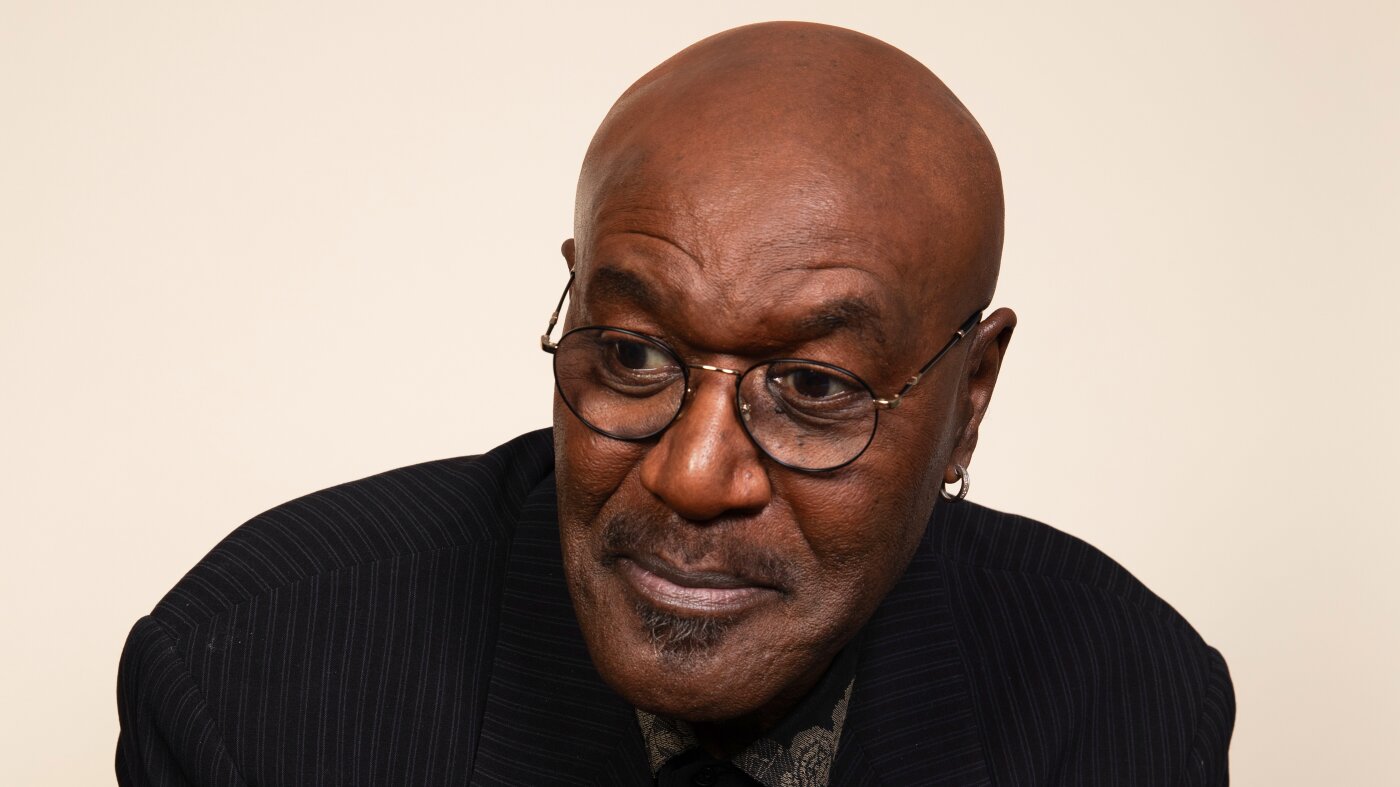
No matter what happens at the Oscars, Delroy Lindo embraces ‘the joy of this moment’

Technology28 minutes ago
Amazon.com says things are fixed after some issues with logging in and checking out

World34 minutes ago
Private flights account for 30% of departures from Oman airport as wealthy evacuate Middle East

Politics40 minutes ago
DOJ continues Biden autopen probe despite former president unlikely to face charges

Health46 minutes ago
Ozempic-style drugs could slash complication risks after heart attacks, research suggests

Florida1 year ago
Florida High School Football Rankings: Top 25 teams – Oct. 21

Connecticut2 years ago
Cleary's 21 help Le Moyne down Central Connecticut State 69-64 in OT

Oregon2 years ago
How old is Bo Nix? What to know about Oregon quarterback ahead of 2024 NFL Draft

Virginia2 years ago
99th annual Pony Swim held in Virginia

Indiana1 year ago
Indiana Members Credit Union announced as new anchor tenant at Bottleworks District
Politics40 minutes ago
DOJ continues Biden autopen probe despite former president unlikely to face charges
World2 hours ago
Fact check: Did French border guards mock influencers returning from Dubai amid Iran war?

News2 hours ago
Iran’s fight for survival / The widening war / Trump’s nebulous goals : Sources & Methods

News12 hours ago
Map: 4.9-Magnitude Earthquake Shakes Louisiana

Politics13 hours ago
Paxton vows he’s ‘staying in this race’ even if Trump backs Cornyn in Texas GOP clash
-

 World1 week ago
Exclusive: DeepSeek withholds latest AI model from US chipmakers including Nvidia, sources say
-

 Wisconsin4 days ago
Setting sail on iceboats across a frozen lake in Wisconsin
-

 Massachusetts1 week ago
Mother and daughter injured in Taunton house explosion
-

 Maryland5 days ago
AM showers Sunday in Maryland
-

 Massachusetts3 days ago
Massachusetts man awaits word from family in Iran after attacks
-

 Florida5 days ago
Florida man rescued after being stuck in shoulder-deep mud for days
-

 Denver, CO1 week ago
10 acres charred, 5 injured in Thornton grass fire, evacuation orders lifted
-

 Oregon6 days ago
2026 OSAA Oregon Wrestling State Championship Results And Brackets – FloWrestling