Washington, D.C
Protests, vandalism after &pizza doubles down on ‘Marion Berry Knots'


Protesters are demanding an apology and a D.C. pizza shop has been vandalized amid the controversy over &pizza’s ad campaign that makes light of the late “Mayor for Life” Marion Barry’s drug use.
D.C.-based &pizza promoted a new menu item Monday called Marion Berry Knots, a dessert with marionberries. The dish is “so good it’s likely a felony,” a press release said.
“For a good time, it’s the powder that’s the ultimate headline grabber. The Marion Berry Knots have enough powdered sugar that will have customers bumping elbows to order and even force the DEA to look twice,” &pizza said in ad copy full of drug references.
Demonstrators gathered Wednesday morning outside the company’s location on U Street, calling for &pizza to remove the dessert from its menu and apologize.
Many people who spoke with News4 Wednesday said the ad was in poor taste. One protester described it as “degrading” to Barry’s legacy.
A campaign by a D.C. business mocking “Mayor for Life” Marion Barry is drawing criticism and sparking calls for a boycott. News4’s Shawn Yancy explains.
“Also, to his family. You have to think about his family, as well. … We have to think about – we’re on U Street right now and this street carries a lot of history,” protester Austin Lee told News4.
Someone vandalized the chain’s location in the Skyland neighborhood of Southeast D.C. Yellow and orange paint was splattered all over the windows of the business Wednesday morning.
Barry got his start in politics as a civil rights activist and remains revered by many Washingtonians. A statue of the four-term mayor stands outside the Wilson Building in downtown D.C., and Southeast D.C. has Marion Barry Avenue SE.
He was arrested in a hotel room in 1990 in a videotaped drug sting by the FBI and D.C. police. Barry famously complained that his ex-girlfriend, an FBI informant, had set him up. Out of 14 charges, a jury convicted him of a single misdemeanor possession charge.
Barry was sentenced to six months in prison, released in 1992 and won the Ward 8 D.C. Council seat. He returned as mayor for a fourth term in 1994 and remained influential until he died in 2014 at 78. Next month marks a decade since his death.
D.C.’s NAACP branch on Tuesday called on &pizza to take the “inflammatory, culturally insensitive and drug-use insinuating” item off the menu and to “issue remuneration to support substance-abuse prevention in all cities within the &Pizza marketing area.”
NAACP DC President Akosua Ali said in a statement Tuesday: “The life, legacy, lineage and name of Marion Barry deserves to be remembered as a pioneer for economic development, real-estate development, black business empowerment, youth employment and as the Mayor of the people. Mayor Barry taught us the power of economics and today, we call on the community to demand &Pizza right this egregious wrong.”
&pizza is “spitting on Marion Barry’s grave,” community activist Ron Moten said on Instagram. “[…] We cannot continue to support people who disrespect us.”
Moten said discussions are underway for a boycott of the chain, which opened its first location on H Street NE in 2012 and now has locations in D.C., Maryland, Virginia, New Jersey and Pennsylvania.
Former D.C. first lady Cora Masters Barry is hurt by the menu item and campaign, a representative told News4. She was flooded with calls from community leaders and residents who “expressed disappointment and outrage by the promotion’s interference,” the representative said. She “requested that the attorneys for the Estate of Marion Barry Jr. look into the matter and act accordingly,” the representative said.
D.C. restaurant owner Peyton Sherwood said on X that &pizza “crossed a line.”
“Barry’s life was about opportunity, dignity, and equality for everyone in Washington, D.C. To reduce that legacy to a crass ad about his darkest moments is not only offensive it’s cruel,” he wrote. “It disregards the immense good Barry did for this city and the battles he fought on behalf of all its people.”
News4 sends breaking news stories by email. Go here to sign up to get breaking news alerts in your inbox.
News4 asked &pizza Tuesday if they wanted to comment on the reaction to their campaign.
CEO Mike Burns said in a statement: “We’re talking about a marionberry, that’s spelled with an ‘e’. We stuff that into a knot, drizzle it with icing and then top it with powdered sugar. It’s delicious – we can’t wait for D.C. to try it.”



Washington, D.C
Community gathers for RFK stadium site open house meeting as Commanders prepare for DC return

WASHINGTON – Community members gathered on Tuesday night to review redevelopment plans for the RFK Stadium site and offer feedback as the Washington Commanders prepare for a return to the District.
The steel structure of the old stadium has now been removed, and officials say comments on the project’s environmental impact statement are due at the end of April. The final master plan is taking shape with input from residents.

Community gathers for RFK stadium site open house meeting as Commanders prepare for DC return
FOX 5’s Melanie Alnwick said a strong crowd gathered in D.C. Tuesday to speak with developers and city planners. The RFK site is divided into six districts, including the Plaza District, Riverfront District and Stadium District, each with proposed features for residents to evaluate. Members of the community viewed design concepts, asked questions and used green and red stickers to mark what they supported or opposed.
In the Kingman Park District, a primarily residential area, residents raised concerns about preserving green space and the placement of parking garages.
Groundbreaking for the Plaza District is scheduled for 2029, with the stadium targeted to open in 2030. The Commanders are investing $2.7 billion in the project, the largest private investment in city history, with another $1 billion coming from D.C. taxpayers.
City leaders say the redevelopment could create up to 6,500 housing units, 30,000 construction jobs, 2,000 permanent jobs and generate an estimated $5.1 billion in tax revenue.
Community gathers for RFK stadium site open house meeting as Commanders prepare for DC return
Another community meeting is set for Saturday at St. Coletta Church, with a site walk planned in April. More online.
St. Coletta Meeting Details
- When: Saturday, March 28, 10 am to 12 pm
- Where: St. Coletta of Greater Washington, 1901 Independence Avenue SE (Closest Metro: Stadium-Armory)
Online Survey
For those unable to attend an in-person event, the District will offer an online survey where residents can provide feedback on the master plan. The survey will request input on topics similar to those discussed at the events. The Office of Planning will combine this feedback with comments received at the in-person events, via email, and at the community visioning meetings that were held from October 2025 through February 2026.
- The survey link will be available from March 30-April 10 at OurRFK.dc.gov.
Community Site Walk
On Saturday, April 18, neighbors of the RFK Stadium campus are invited to join a walking tour led by staff from the Office of Planning. The walk will include visits to areas that are important to the redevelopment and stopping points for discussion. This interactive outdoor workshop will allow stakeholders to step into the shoes of a planner and share their ideas for the site’s future.
- When: Saturday, April 18, 10 am
- Where: Stadium-Armory Metro Station, 192 19th Street SE
- RSVP: A registration link will be available soon at OurRFK.dc.gov.
The Source: Information in this article comes from The Office of DC Mayor Muriel Bowser and previous FOX 5 reporting.

‘No Kings’ protests across DC
Thousands of people took to the streets of Washington, D.C., and across the U.S. on Saturday to protest President Donald Trump’s administration as part of massive “No Kings” protests.
WASHINGTON – Washington, D.C., and the surrounding DMV area are set to host the third major “No Kings” march and rally this Saturday, March 28, 2026, as part of a wave of nationwide demonstrations planned for the same day.
Event details:
Organized locally by area chapters of Indivisible and allied grassroots groups, the event aims to draw protesters to downtown Washington and surrounding counties to oppose policies of the Trump administration and to voice broader concerns about civil rights and democratic norms.
The march will kick off at 10 a.m., with participants gathering at Memorial Circle near Arlington Cemetery, with additional access from the Blue Line or nearby parking at the Fashion Centre at Pentagon City, according to the event organizers. There is no public parking in the immediate area, but participants can be dropped off at the circle.
People take part in a “No Kings” protest in Washington, D.C., the United States, on Oct. 18, 2025. (Photo by Li Rui/Xinhua via Getty Images)
From there, the procession will head across the Memorial Bridge into Washington, D.C., passing the Lincoln Memorial and continuing on to the Washington Monument.
At the conclusion of the march, participants can walk to a downtown rally, from 1:30 p.m. to 4 p.m.
A broader movement
Big picture view:
A nationwide series of “No Kings” protests is set for March 28—over 3,000 events are scheduled.
These protests are organized by groups including Indivisible and the broader 50501 Movement, which have coordinated previous actions in June and October 2025 that drew millions of participants nationwide, including in Washington, D.C.
Other ‘No Kings’ rallies in the DMV
Dig deeper:
In addition to the main rally in downtown D.C., several other demonstrations tied to “No Kings 3” are scheduled around the DMV this Saturday.
In Arlington, Virginia, activists are organizing a march across the Memorial Bridge beginning at 10 a.m., with protesters expected to continue into West Potomac Park before joining larger crowds in the District proper, for example.
There are hundreds of “No Kings” events scheduled to take place this Saturday throughout the DMV. You can click here to find a list of all of them.
The Source: Information from “No Kings” organizers, Indivisible, Mobilize and previous FOX 5 DC reporting.

ASHEVILLE, N.C. (FOX Carolina) – The Great Mother March has begun a 500-mile pilgrimage from Asheville, North Carolina, to Washington, D.C.
Organizers said the 32-day journey is a women’s empowerment pilgrimage inspired by the Buddhist monks’ Walk for Peace.
“This is a universal movement,” founder Whitney Freya, an artist, author and sacred activist, said. “Everyone has a mother. Every tradition reveres a Great Mother. And we all depend on Mother Earth. This march is a call to honor those truths while reminding us what is possible when we move together, with intention, hope, and love.”
The march is expected to end April 22, Earth Day, when participants reach the steps of the U.S. Capitol.

Here’s a look at the group’s route:

Organizers said the group will walk alongside the Appalachian Mountains through rural communities in North Carolina and Virginia, with planned stops including Black Mountain, Old Fort, Marion, Linville and Boone, North Carolina.
From there, the group plans to travel via Todd and West Jefferson, North Carolina, and the River Country Campground along the New River, to the Peace Pentagon near Independence, Virginia.
The marchers are expected to arrive in Galax, Virginia, on April 1, then continue to Hillsville, Floyd, Ferrum and Rocky Mount, arriving in Rocky Mount on April 5.
The group is expected to reach Lynchburg on April 9 and travel up U.S. 29 to Waynesboro, arriving April 12.
Organizers said the marchers plan to arrive in Charlottesville on April 13 and spend April 14 at IX Art Park to rest and prepare for the final leg to Washington.
From Charlottesville, the group plans overnight stops in Barboursville, Orange, Culpeper and Warrenton, Virginia, before arriving in Manassas on April 19. Additional stops include the Workhouse Arts Center in Lorton, Virginia, and Alexandria, Virginia, ahead of the group’s arrival in Washington on April 22.
Feel more informed, prepared, and connected with FOX Carolina. For more free content like this, download our apps.
Copyright 2026 WHNS. All rights reserved.

Risk of severe storms across SE Michigan on Thursday — here’s what to know

1 dead in house fire in San Francisco’s Portola neighborhood

Convicted SMU Stalker Sues Dallas County For 183-Day Jail Overstay

TSA wait times hit

More record breaking temperatures across the Denver metro area

Florida High School Football Rankings: Top 25 teams – Oct. 21

How old is Bo Nix? What to know about Oregon quarterback ahead of 2024 NFL Draft

Cleary's 21 help Le Moyne down Central Connecticut State 69-64 in OT

99th annual Pony Swim held in Virginia

Indiana Members Credit Union announced as new anchor tenant at Bottleworks District

LaGuardia Crash Timeline: Moments Before Air Canada Plane Collided With Fire Truck

Chicago alderwoman apologizes for ‘wrong place at the wrong time’ comment on slain student

Fake Euronews website targets Hungary election with false claims
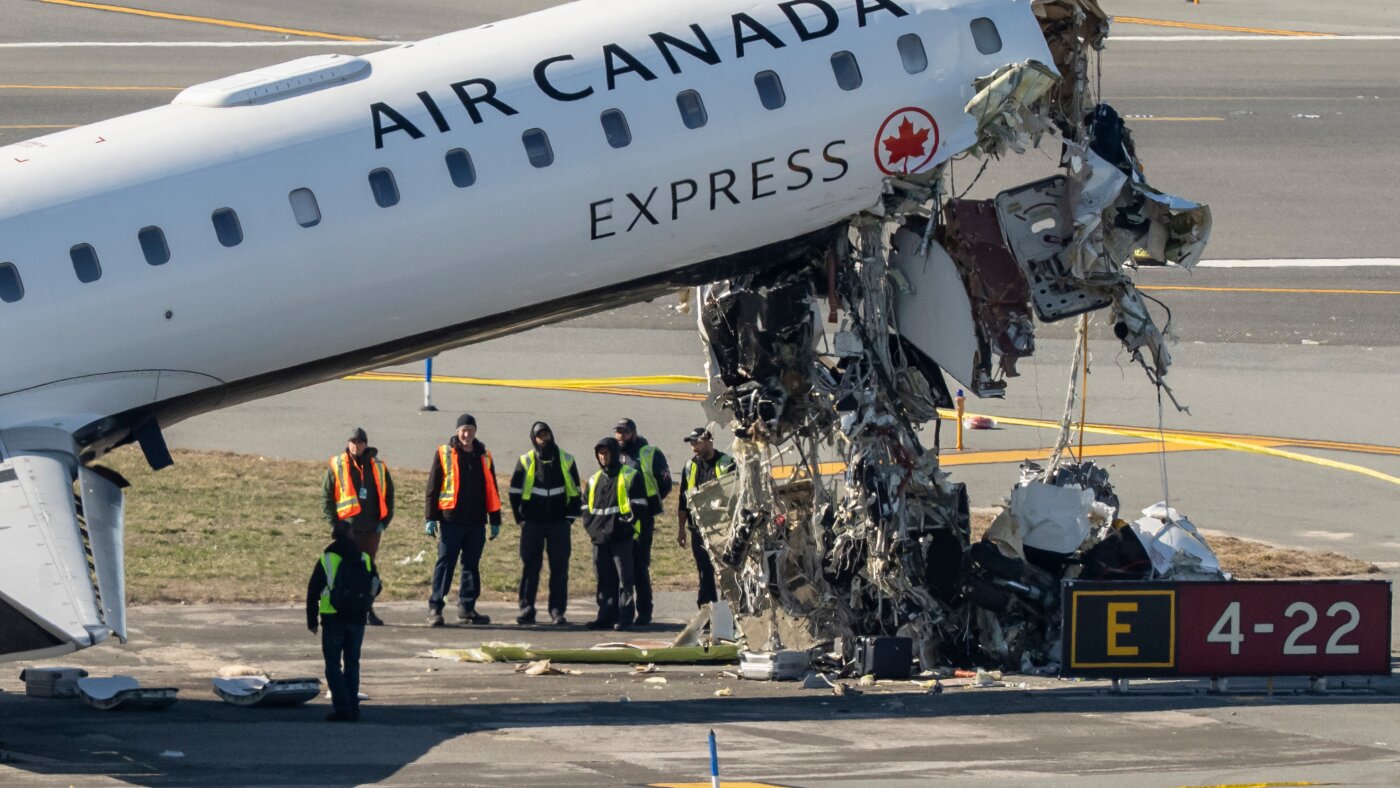
An air traffic controller was juggling extra roles during the LaGuardia plane crash

Iran War: Pentagon set to send thousands of elite 82nd Airborne troops to region | BBC News
-

 Detroit, MI7 days ago
Drummer Brian Pastoria, longtime Detroit music advocate, dies at 68
-

 Georgia1 week ago
How ICE plans for a detention warehouse pushed a Georgia town to fight back | CNN Politics
-

 Movie Reviews6 days ago
‘Youth’ Twitter review: Ken Karunaas impresses audiences; Suraj Venjaramoodu adds charm; music wins praise | – The Times of India
-

 Education1 week ago
Video: Turning Point USA Clubs Expand to High Schools Across America
-

 Sports4 days ago
IOC addresses execution of 19-year-old Iranian wrestler Saleh Mohammadi
-
 Science1 week ago
Industrial chemicals have reached the middle of the oceans, new study shows
-

 Science1 week ago
How a Melting Glacier in Antarctica Could Affect Tens of Millions Around the Globe
-

 Culture1 week ago
Test Your Memory of Great Lines From Classic Irish Poems