Virginia
Virginia might end ‘loophole’ in child marriage law


When Judy Wiegand was 13 years old, she got married in a church in Clintwood — near the Kentucky border. She felt she didn’t have a choice; it was the expectation for pregnant women in her community. At the time — around 40 years ago — it was legal in Virginia for an underage and pregnant teenager to get married with parental consent.
In an interview last week, she said she wasn’t compatible with her husband, who allegedly became violent, but because of Kentucky law couldn’t divorce him until she turned 18. Wiegand said she doesn’t blame her family or community for what happened.
“I blame the legal bodies that were supposed to protect me and did not,” said Wiegand, who went on to get a doctorate in physical therapy and now specializes in working with youth.
Wiegand is now part of an effort to tighten Virginia’s laws to ban all underage marriage. While that’s already largely the case after a series of bipartisan reforms passed in 2016, the current law carves out an exception for emancipated minors between the ages of 16 and 18.
Legislation from Del. Karen Keys-Gamarra (D–Fairfax) would end that exemption. On Feb. 2, the full Courts of Justice committee voted to send it back to a subcommittee that had previously voted in favor of the bill.
Subcommittee chair Del. Marcus Simon (D–Fairfax) said last week he’d heard a member of Democratic caucus leadership had concerns that the bill needed more work. Simon said he wasn’t sure who the person was or what they wanted to change.
“Sometimes, these things just happen on the fly,” Simon said.
Neither Keys-Gamarra nor the spokesperson for the House Democratic caucus responded to emails seeking clarity.
In the subcommittee meeting last week, Keys-Gamarra said the change would bring the commonwealth into alignment with international norms established by groups like the United Nations, which seeks to end child marriages by 2030.
Keys-Gamarra’s bill is backed by a range of advocacy groups, including the Virginia chapter of the National Organization for Women, Equality Now, Zonta USA, Tahirih Justice Center, Unchained at Last and Ultraviolet.
I could not hire an attorney or enter into a lease, because I was a minor. I couldn’t even drive, because I wasn’t old enough, and he controlled my entire life.
–Sara, who said she was married at 16 to a 29-year-old
At the meeting, representatives from those groups shared first- and secondhand accounts of child marriages they said involved abuse and coercion.
Aliya Abbas, a self-described child marriage survivor, said she was forced into a marriage with a stranger when she was 17, and alleged she was raped repeatedly and threatened with death when she sought a divorce.
“This emancipation loophole does not save children who are going to be coerced into this human rights abuse,” Abbas said.
Another woman, who identified herself only as Sara, said she was married at 16 to a man 13 years her senior after she became pregnant. She also described being raped and abused.
“I could not escape to a domestic violence shelter, because I was a minor,” Sara said. “I could not hire an attorney or enter into a lease, because I was a minor. I couldn’t even drive, because I wasn’t old enough, and he controlled my entire life.”
Before the General Assembly passed legislation in 2016 that then-Gov. Terry McAuliffe signed into law, Virginia allowed marriages for youth under 16 if the relationship involved a pregnancy and the parents of anyone underage consented. Marriages were also allowed from age 16-18 with parental consent.
The 2016 legislation allowed people between the ages of 16 and 18 to petition the court for emancipation provided a judge found that is “in the best interests of the minor to be emancipated.”
The judge must determine that the underage person is making the decision freely, is “mature enough to make a decision to marry” and wouldn’t have their safety jeopardized by the marriage.
Joshua Hetzler, legislative counsel for The Family Foundation, said the current process has sufficient safeguards and emancipated minors should be treated as adults.
“If somebody is deemed to be a legal adult, and otherwise has all the rights of an adult, and of course, they should have the right to marry as well,” Hetzler said. “Many of us have grandparents where it was common to get married at 16 or 17. And many of them are still married today.”
That logic irked Wiegand, who said women in that era “were basically told what to do.”
“This isn’t about entering into a marriage that is a loving, consenting marriage,” Wiegand said.
It’s unclear how many people in Virginia might be impacted by the change. The advocacy group Unchained at Last estimated nearly 8,000 underage people in Virginia were married between 2000 and 2018.


A skydiver crashed into the Lane Stadium scoreboard before Virginia Tech’s spring football game Saturday.
Virginia Tech officials said on X that the skydiver “was safely secured and is currently stable” following rescue efforts. The incident caused a delay in the start of the spring game.
“Thankful for game days with Hokie Nation and for the Blacksburg and Virginia Tech first responders whose quick actions safely returned today’s parachuter to the ground without injury,” the university said.
The name of the skydiver wasn’t released.
“Our primary focus remains on their well-being,” Virginia Tech officials said in a statement. “We extend our sincere appreciation to the first responders, event staff, and medical personnel for their swift, coordinated and professional response.”
Video footage showed the skydiver’s parachute landing between the “C” and the “H” on the Virginia Tech lettering on top of the scoreboard before first responders rescued him.
CBS News has reached out to the Blacksburg Fire Department for details on the incident.

A much cleaner performance carried Clemson baseball on Friday, as it answered the previous night’s loss with a 5-1 win over No. 9 Virginia.
Michael Sharman set the tone from the start. He kept Virginia off balance all night, working eight innings while giving up just a single run. There weren’t many free passes, and he consistently pitched ahead, which allowed him to stay in control deep into the game. Hayden Simmerson wrapped things up in the ninth without any trouble.
At the plate, Nate Savoie was the difference. He delivered two home runs, including a go-ahead shot later in the game that put Clemson in front for good. His first long ball gave the Tigers an early edge, and he finished with three RBIs on the night.
Virginia managed to pull even midway through, but Clemson quickly responded. The offense strung together quality at-bats, with Bryce Clavon driving in a run and Luke Gaffney continuing his strong weekend with multiple hits. The Tigers created more separation late, adding another run after working a bases-loaded situation.
Clemson moves to 25-15 overall and 6-11 in conference play with the win. The series now comes down to Saturday’s matchup in Charlottesville.
Contact us @Clemson_Wire on X, and like our page on Facebook for ongoing coverage of Clemson Tigers news and notes, plus opinions.
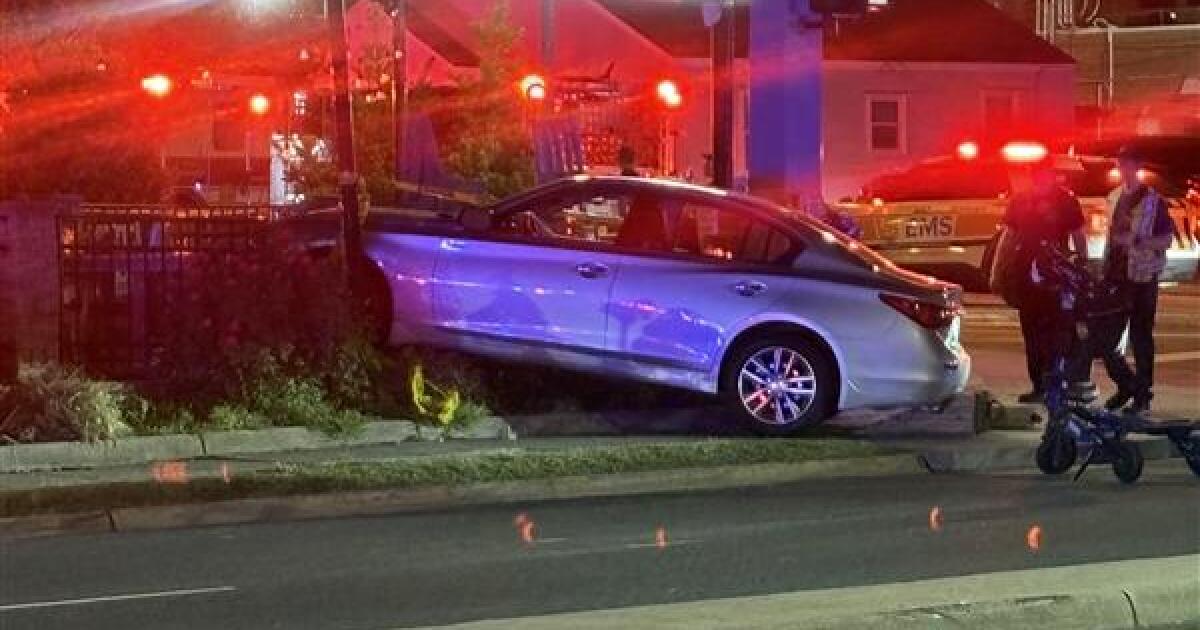
VIRGINIA BEACH, Va. — A car crashed into the patio at Murphy’s Irish Pub on the Oceanfront on Friday night.
Virginia Beach medics arrived at the scene around 7:54 p.m. at Murphy’s Irish Pub and found several victims, according to police. All were taken to the hospital with injuries ranging from non-life-threatening to very severe.
Medics are still on the scene, according to News 3’s team onsite.
This is an active scene and an ongoing investigation; News 3’s team will continue providing updates.
-

 Culture13 minutes ago
Famous Authors’ Less Famous Books
-

 Lifestyle19 minutes ago
Sunday Puzzle: For Mimi
-

 Technology31 minutes ago
The future of local TV news has taken a Trumpian turn
-

 World37 minutes ago
Pope Leo says remarks about world being ‘ravaged by a handful of tyrants’ were not aimed at Trump: report
-

 Politics43 minutes ago
Trump renews bridge, power plant threat against Iran in push for deal, mocks ‘tough guy’ IRGC
-

 Health49 minutes ago
Loneliness may be silently eroding your memory, new research reveals
-

 Sports55 minutes ago
ESPN’s Stephen A Smith hears boos from WrestleMania 42 crowd
-

 Technology1 hour ago
Chinese robot breaks human world record in Beijing half-marathon