Virginia
Virginia ACA enrollment drops by more than 44,000 as federal tax credits expire


RICHMOND, Va. — Virginia state Democrats are proposing using state funds to help Virginians afford health insurance premiums after federal tax credits expired at the end of last year.
The director of Virginia’s Insurance Marketplace said that expiration has led to tens of thousands of Virginians losing health insurance coverage through the state’s Affordable Care Act marketplace this year and warns it could grow to 100,000 without intervention.
“Our customers are Virginians who don’t have another option for health insurance coverage,” said director Keven Patchett.
Patchett said when open enrollment closed on Jan. 30, 2026, 19,000 fewer Virginians had signed up compared to the previous year (389,000 compared to 370,000).
He added since then an additional 25,000 have lost coverage — which is three times more than the number who lost coverage during the same time period last year.
When asked if the loss in federal tax credits was the reason behind the drop, Patchett said, “It’s the only factor that has changed.”
Patchett made those remarks Wednesday at a press conference focused on options for helping Virginians impacted by the credits ending.
Among those feeling the impact is Lester Johnson, who owns Mama J’s restaurant in Richmond.
Johnson still has his marketplace coverage, but his monthly premiums for his family of 3 have risen from $650 to around $1,000 — an increase of nearly 54%.
“This is really affecting people’s ability to, kind of, manage their budgets and their families livelihoods,” Johnson said.
Johnson attended Wednesday’s State of the Union address as the guest of Congresswoman Jennifer McClellan, a Democrat who represents Richmond. His presence was intended to highlight the need for Congress to reinstate the tax credits.
“It needs to be definitely as much energy and conversation around it as some of these other policy decisions that have been made recently,” Johnson said.
The U.S. House has voted to extend the credits for 3 years, with 17 Republicans joining Democrats in support of the measure, including Virginia Republican Congressman Rob Wittman (VA-01). The U.S. Senate has not passed the extension.
“I have heard from Virginians about the cost of healthcare and the importance of expanding access for hardworking families,” Wittman said in a statement. “In January, I voted for a short-term extension of the enhanced premium tax credits not as an endorsement of the current system, but as a bridge to give Congress the time to pursue meaningful reforms. I will continue to work with my colleagues in both chambers and across the aisle to address the cost of healthcare and push for reforms that put patients back in charge.”
With federal action still uncertain, Virginia Democrats are proposing to use state budget funds to replace the tax credits for at least one year.
The House has put forward an $79 million proposal, while the state Senate is proposing $200 million.
“It’s our responsibility as Democrats to step up and this is what our budget amendments do,” Del. Rodney Willett, a Democrat representing Henrico County, said of the House proposal.
“Both budgets emphasized the need to fill gaps in healthcare. So how we go about that and what the numbers actually end up being still a few weeks away,” Sen. Barbara Favola, a Democrat representing Fairfax, said.
Patchett said that the number of Virginians who could loss coverage on the state marketplace without help could reach 100,000, which he based off of the increase that was seen when the federal tax credits were expanded in 2021.
“And that was nearly 100,000 Virginians who benefited from that expansion. And so our concern has been that we’re going to see a number very close to that 100,000 drop coverage. And the indicator suggests that that may still happen,” Patchett said.
Patchett said that regardless of the amount lawmakers agree on, the exchange has the authority to create a special enrollment period to help Virginians who have lost or dropped their coverage.
CBS 6 is committed to sharing community voices on this important topic. Email your thoughts to the CBS 6 Newsroom.
📲: CONNECT WITH US
Blue Sky | Facebook | Instagram | X | Threads | TikTok | YouTube
This story was initially reported by a journalist and has been converted to this platform with the assistance of AI. Our editorial team verifies all reporting on all platforms for fairness and accuracy. To learn more about how we use AI in our newsroom, click here.



Top of the 6th
Bottom of the 5th
Miami adds a run via sac fly and leads 7-1 heading to the 6th
Top of the 5th
Scoreless 1-2-3 inning for VT. Miami leads 6-1 heading to the bottom of the 5th
Bottom of the 4th
A pair of one out singles put two runners on and after VT got the second out, Miami got the lead on an RBI single. The Hurricanes were not done either, with a 2-RBI triple made it 4-1 and then a two-run home run made it a five run lead for the Hurricanes. Miami got a double after that, but VT got the final out. Hurricanes lead 6-1 heading to the 5th
Top of the 4th
Scoreless 1-2-3 inning for VT. Game is tied 1-1 heading to the bottom of the 4th
Bottom of the 3rd
A one out triple led to a sac fly from Miami that tied the game 1-1. Hokies got the final out, but no longer have the lead going to the 4th
Top of the 3rd
Cooke gets a two out double, but nothing else for the Hokies. VT leads 1-0 heading to the bottom of the 3rd
Bottom of the 2nd
Miami gets a one out single, but no runs. VT leads 1-0 heading to the 3rd
Top of the 2nd
A one out double from Daniel led to an RBI double from Gates to make it 1-0 in favor of the Hokies. They could not add on to it and VT leads 1-0 heading to the bottom of the 2nd
Bottom of the 1st
A leadoff triple and and two out walk put two on for Miami, but Virginia Tech keeps them off the board. Game is tied 0-0 heading to the 2nd
Top of the 1st
A single and two walks loaded the bases, but VT produced zero runs. Game is tied 0-0 heading to the bottom of the 1st
Pregame
Brett Renfrow is on the mound for the Hokies and here is how Virginia Tech is lining up for today’s game:
1. LF Nick Locurto
2. Ethan Ball – 2B
3. Sam Grube – RF
4. Henry Cooke – C
5. DH Hudson Lutterman
6. 3B Willie Hurt
7. SS Pete Daniel
8. CF Sam Gates
9. 1B Ethan Gates
After an embarrassing first game, Virginia Tech is hoping to bounce back and get the victory tonight against the Hurricanes. Miami was able to put up 19 runs on Virginia Tech last night in what ended up being as lopsided of a baseball game that you will ever see.

LOUISA, Va. — Michael Shull never imagined that a Democrat from the wealthy suburbs of Washington would represent his community in Congress. His corner of Virginia, with its sprawling farms and winding country roads, has been electing Republicans for more than three decades.
Then came an unusual nationwide redistricting battle, with Democrats and Republicans redrawing congressional lines to boost their chances in November’s midterm elections. Virginia could be next as voters consider a new map that would pair conservative rural areas with liberal suburbs, diluting Republicans’ electoral clout.
“Politicians should be elected to be their people’s voice,” said Shull, a Republican member of Augusta County’s board of supervisors. “Not their party’s voice.”
The vote on the constitutional amendment is on April 21, and early balloting has begun. If voters pass the referendum and it survives a court challenge, Shull’s area within the county would be split between the 7th and 9th Congressional Districts. While the 9th District would be the state’s lone Republican stronghold, the 7th District would resemble a lobster with the long tail beginning in Democrat-dominated Arlington and two claws reaching south into rural communities.
Congressional districts are usually redrawn once a decade, but President Donald Trump started a chain reaction last year by encouraging Texas Republicans to devise a new map to help the party in November. After a cascade of redistricting efforts, Republicans believe they can win a combined nine more U.S. House seats in Texas, Missouri, North Carolina and Ohio, while Democrats think they can win a total of six more seats in California and Utah. Virginia could give Democrats an extra four seats — enough to overturn the GOP’s slim majority, at least as things stand now.
“It’s about making sure that we fight back to what Trump’s done,” said U.S. Rep. Don Beyer, D-Va., He said the party needs to persuade voters that the referendum is “not about embracing gerrymandering.”
“I feel optimistic, but it’s close,” he said.
A print edition of the Goochland Gazette, with a front page story on the Virginia redistricting referendum, lies on a table at GG’s Pizza as members of the Goochland Democratic Committee Jen Strozier, Doug Mock, Chris Svoboda, Richard Grebe and Judi Sheppard hold a lunch meeting on future get-out-the-vote efforts, Thursday, April 2, 2026, in Maiden, Va. Credit: AP/Julia Demaree Nikhinson
A rural-urban divide
The referendum comes at a moment when Virginia Democrats have tried to make up ground in rural areas. Last year, Democrat Abigail Spanberger campaigned for governor in oyster towns and agrarian hamlets to engage with more conservative voters. Before that winning campaign, she had represented a congressional district that mixed city suburbs, exurbs and adjacent rural communities.
“Anyone who’s doing their job will be responsive to the communities that they seek to represent,” Spanberger said.
But her results were mixed. In counties where fewer people lived in rural areas, she outperformed Democrat Kamala Harris’ Virginia showing in the 2024 presidential race by an average of 6 percentage points or 7 percentage points. In more rural counties, Spanberger gained about 2 percentage points to 4 percentage points.
Democrat Anthony Flaccavento, former congressional candidate and co-founder of the nonprofit Rural Urban Bridge Initiative, is torn over the referendum.
Members of the Goochland Democratic Committee Jen Strozier, Doug Mock, Chris Svoboda, Richard Grebe and Judi Sheppard hold a lunch meeting on future get-out-the-vote efforts for the Virginia redistricting referendum, Thursday, April 2, 2026, at GG’s Pizza in Maiden, Va. Credit: AP/Julia Demaree Nikhinson

“At some level, it feels like kicking the can down the road -– which is something that my party has done for a long time –- when it comes to winning back rural and working-class voters,” Flaccavento said.
A welcome change for some
Democrats in rural areas who are tired of being outnumbered by their Republican neighbors are embracing the redistricting plan.
“Fight Back, Vote Yes,” said a sign at a No Kings protest in Louisa County. A second said, “Vote Yes. Stop ICE. No Kings.”
State Del. Dan Helmer, who helped spearhead the redistricting effort, greeted protesters and spoke to the cheering crowd. Helmer is now one of at least four Democrats running in the 7th District.
Helmer said Republicans “think that in red areas like Louisa and in rural areas, that people don’t know what’s going on. But I’m looking around right now, I see strong, proud patriots who know exactly what is going on, who know that we have an aspiring dictator who is trying to take away our democracy.”
Jennifer Lee, who has lived in Louisa for 33 years, said she was eager to support the new district lines. Lee said she felt Republicans were perpetuating a double standard, falsely claiming the 2020 presidential election won by Democrat Joe Biden was stolen from Trump but accepting his push to eliminate Democratic seats through gerrymandering.
“That’s their slogan, right? ‘Stop the steal,’” Lee said. “But they started ‘the steal.’ They’re stealing the seats now in all these districts.”
Democrats see a fight for survival
At a town hall hosted by Democrats at a rural Goochland County recreation center, voters nibbled on finger foods and passed around bottled water as they debated whether redistricting violated some kind of moral code.
“I’m sorry, morality just goes out the door right now. We have to do what it takes for us to survive,” said Bruce Silverman, a local nephrologist. He was voting “yes.”
At one point, Roberta Thacker-Oliver stood up to talk. She votes in the rural 9th District, which would become even more Republican with the new map.
“In the redistricting, the 9th is going to become bigger and redder,” she said, adding, “I need to know what to tell my community about why they need to take one for the team.”
“What do we tell them?” she said.
_

PDF Box
#17 Notre Dame (19-5, 8-3) – 1 | #4 Virginia (18-3, 10-1) – 4
DOUBLES – 3, 2
1. Dominko/Gregg (ND) vs. #5 Dahlberg/Dietrich (UVA), 2-4, 4-4, 5-4, 6-5, unfinished
2. Rice/Brockett (UVA) def. #47 Llorens Saracho/Nad (ND), 7-5
3. Santamarta/Kim (UVA) def. Lee/Patrick (ND), 6-0
SINGLES – 2, 4, 6
1. #2 Dylan Dietrich (UVA) def. #15 Sebastian Dominko (ND), 6-2, 2-6, 6-2
2. #14 Keegan Rice (UVA) def. #72 Perry Gregg (ND), 6-3, 6-3
3. #40 Andres Santamarta Roig (UVA) vs. Giuseppe Cerasuolo (ND), 6-3, 6-5, unfinished
4. Peter Nad (ND) def. #102 Jangjun Kim (UVA), 1-6, 6-1, 6-3
5. Kyran Magimay (ND) vs. Stiles Brockett (UVA), 6-1, 5-7, 1-1, unfinished
6. Douglas Yaffa (UVA) def. Luis Llorens Saracho (ND), 6-3, 0-6, 6-1

Hawaii’s Kilauea volcano is brewing yet again, preparing to put on a show for it’s 44th episode

Braylon Mullins elevated UConn’s offense. What’s next is ‘a blessing in itself’

2 charged with murder after Indiana toddler’s death

Former TJ Otzelberger Assistant From UNLV Would Be Perfect for Iowa State

Kansas State adds linebacker Colton McComb

Florida High School Football Rankings: Top 25 teams – Oct. 21

How old is Bo Nix? What to know about Oregon quarterback ahead of 2024 NFL Draft

Cleary's 21 help Le Moyne down Central Connecticut State 69-64 in OT

99th annual Pony Swim held in Virginia

Indiana Members Credit Union announced as new anchor tenant at Bottleworks District

FBI’s Patel delivers blunt warning to law enforcement attackers: ‘We’re going to put you down’

Indonesia receives bodies of peacekeepers killed in southern Lebanon
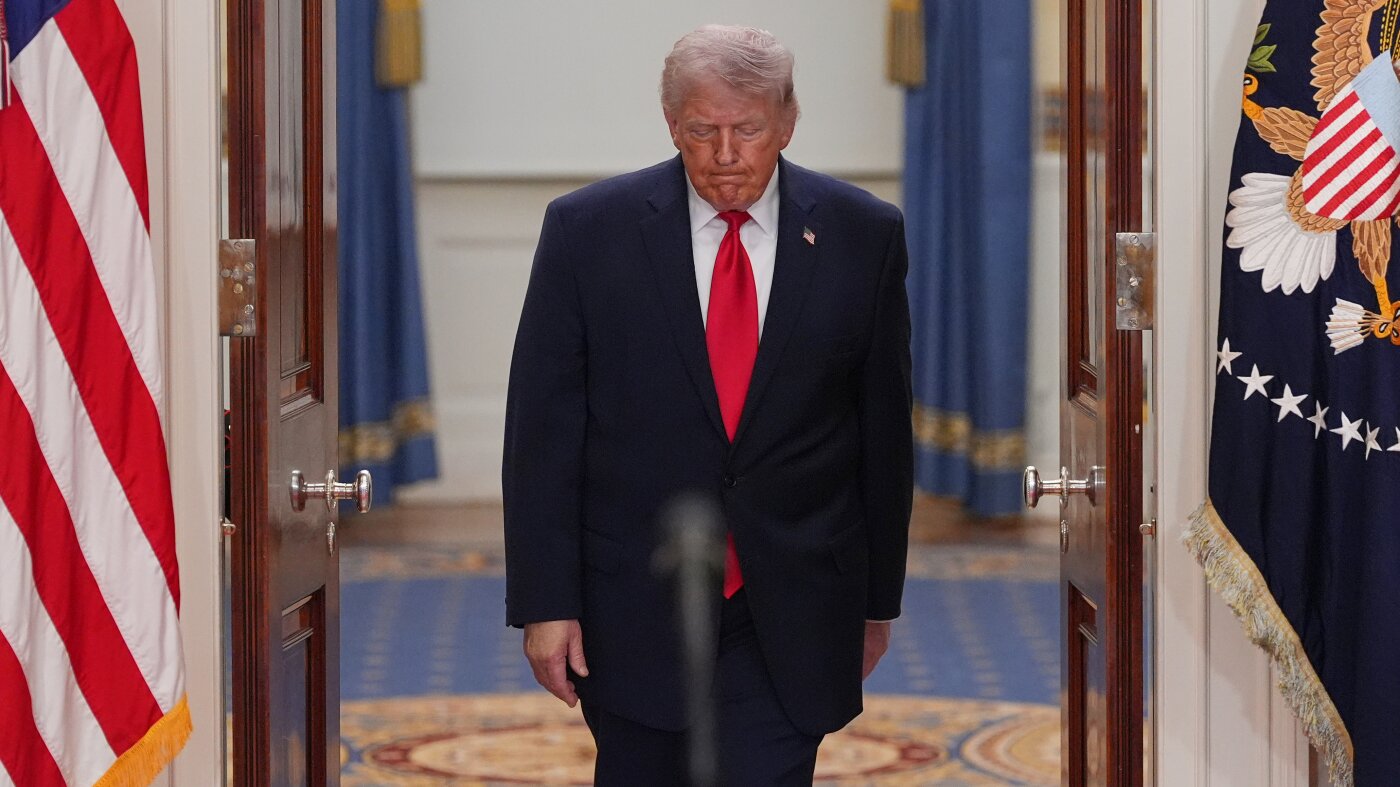
Judge halts Trump effort requiring colleges to show they don’t consider race in admissions

Trump says ‘America needs God’ in Good Friday message touting ‘resurgence of religion’
Fact check: How can a country actually withdraw from NATO?
-

 South-Carolina7 days ago
South Carolina vs TCU predictions for Elite Eight game in March Madness
-

 Miami, FL1 week ago
Jannik Sinner’s Girlfriend Laila Hasanovic Stuns in Ab-Revealing Post Amid Miami Open
-

 Education1 week ago
Video: Transgender Athletes Barred From Women’s Olympic Events
-

 Minneapolis, MN1 week ago
Boy who shielded classmate during school shooting receives Medal of Honor
-

 Vermont7 days ago
Skier dies after fall at Sugarbush Resort
-

 Politics7 days ago
Trump’s Ballroom Design Has Barely Been Scrutinized
-

 Atlanta, GA6 days ago
Fetishist ‘No Kings’ protester in mask drags ‘Trump’ and ‘JD Vance’ behind her wheelchair
-
 Entertainment3 days ago
Inside Ye’s first comeback show at SoFi Stadium