Virginia
‘Crazy’ mysterious black ring appears in the sky above Virginia: ‘What the…?’


They’re going in circles over what it could be.
A mysterious black ring appeared in the sky above a highway in Williamsburg, Virginia — prompting scores of baffled bystanders to snap photos of the floating phenomena.
Onlookers captured nearly a dozen photos of the ominous dark circle from multiple angles hovering in the north section of the city starting at around 11 a.m. Tuesday, according to WAVY TV 10.
But the ring of possible “smoke” completely faded within 10 minutes, according to Ron Stepp, one of several people who sent the footage to the local station.
Witnesses suspected a fire or explosion had created the spooky sight — but there were none reported in the area at the time the ring appeared, James City County Fire Department officials told the outlet.
Ricky Mathews, a meteorologist for the station, suspects the strange circle stemmed from concentrated fire rising — possibly pyrotechnics staged for a film.
A second meteorologist, Steve Fundaroindustrial, said it may have been created by industrial work or an intentional explosion.
Residents have since called the sight “crazy” and wondered “WHAT THE…?” on social media.



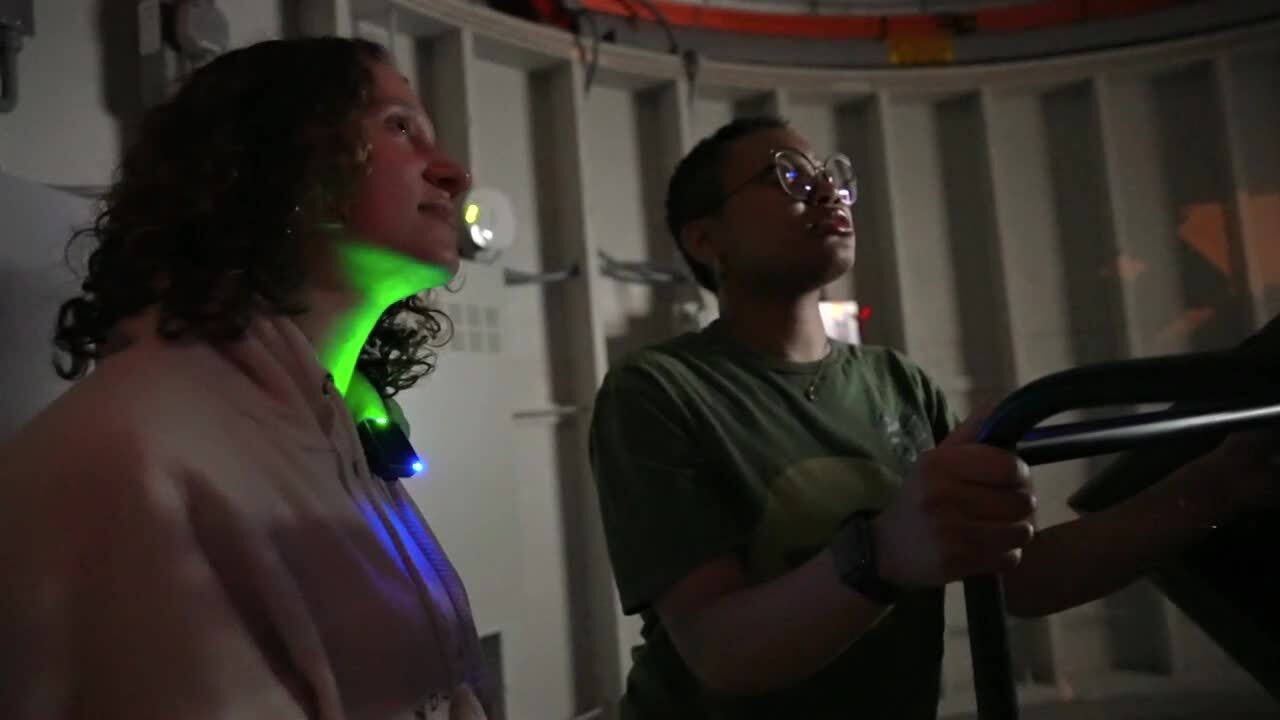
ASHLAND, Va. — Eighth-grade students from Richmond Public Schools are getting a hands-on look at the stars at the Keeble Observatory at Randolph-Macon College.
The observatory, located on the campus in Ashland, is a research, outreach, and teaching telescope for the college’s Department of Physics, Engineering, and Astrophysics.
WTVR
It is the largest telescope of its kind between Washington, D.C., and the Blue Ridge Mountains.
Earth Science teacher Chloe Tremper brought her class from Boushall Middle School to the observatory to learn about celestial objects.
“I think more people should know about it, especially when they have public nights on Thursdays. I’ll definitely be coming back with some folks,” Tremper said.
Randolph-Macon engineering and astrophysics students Brielle Baughman and Kamaya Wilson helped guide the middle schoolers during their visit.
“It never gets old. It’s beautiful looking at it every time. And then seeing others see how beautiful it is, and their reactions, it’s amazing,” Baughman said.
“We usually have something already up. Something cool, shocking. Typically, a planet. We can look at Saturn. That’s a really popular one. I personally think Saturn’s my favorite,” Wilson said.
WTVR
The telescope and lab provide hands-on learning for students of all ages.
The campus hosts weekly public stargazing sessions on Thursdays during the academic semester, weather permitting.
Visitors can even play a form of cosmic bingo, marking off cards with everything they see.
Physics professor Michael Rodruck knows not all the middle school students will become astrophysicists, but he hopes they all find an interest in discovering new things.
“I hope they just get amazed by the night sky. Usually when kids look through that telescope, it’s always ‘Wow, that’s so cool!’ And seeing that spark of curiosity. Seeing that spark of interest, that really is making it worth it,” Rodruck said.
CBS 6 is committed to sharing community voices on this important topic. Email your thoughts to the CBS 6 Newsroom.
📲: CONNECT WITH US
Blue Sky | Facebook | Instagram | X | Threads | TikTok | YouTube

This story was initially reported by a journalist and has been converted to this platform with the assistance of AI. Our editorial team verifies all reporting on all platforms for fairness and accuracy. To learn more about how we use AI in our newsroom, click here.

RICHMOND, Va. — Virginia Gov. Abigail Spanberger defended her administration’s policies and approach Wednesday during a question-and-answer session at Capital Square. She addressed Virginia’s budget negotiations, immigration enforcement and her approval ratings.
Legislative Action and Special Session
Spanberger said she has signed hundreds of bills in recent days, with many new laws addressing student and school safety as well as the high cost of housing, healthcare and utilities.
She has called a special session for April 23 to finalize the commonwealth’s budget.
The governor reiterated her support for public sector collective bargaining, saying it would give public employees the same choice to join or not join a union that private employees have.
‘Bumpy’ Budget Process
Gov. Abigail Spanberger addresses Virginia’s ‘bumpy’ budget impasse
Spanberger described ongoing budget negotiations between House and Senate Democrats as challenging but progressing toward the April 23 special session deadline.
“It’s a bumpy road, certainly, but in speaking with the chairwoman of the Senate Finance Committee [Sen. Louise Lucas] today, she assures me that we are on path towards getting that budget to me on the 23rd,” Spanberger said.
A key point of contention involves data center tax policy.
The Senate version of the budget eliminates the current sales and use tax exemption that data centers enjoy, which costs Virginia $1.6 billion in lost revenue annually even as the state has become the data center capital of the world. The House version keeps the exemption, creating a significant gap that must be resolved.
The governor said she maintains regular contact with House Appropriations Chair Del. Luke Torian and Sen. Lucas while respecting the legislative process.
“I am endeavoring to be very engaged. But I still need them to a conclusion of the bill that they want to send to my desk,” she said. “They both know where I stand on a variety of issues and certainly what my priorities are.”
Immigration Clarification
Gov. Abigail Spanberger on immigration: ‘Virginia is not a sanctuary state’
Spanberger pushed back against characterizations of Virginia as a “sanctuary state.” She said her executive orders on immigration enforcement maintain levels of cooperation between Virginia State Police and federal immigration officials.
“Virginia is not a sanctuary state. Full stop,” she said. “My executive orders [are that] Virginia state agencies would no longer and principally state police, as the largest of the state law enforcement agencies, would no longer put their police officers, their troopers, under the supervision and direction of ICE agents.”
The governor said Virginia State Police continue coordinating with Immigration and Customs Enforcement on warrant-related activities.
“If ICE comes to [Virginia State Police] and says, ‘Here’s a warrant. We need your support on something.’ Yes, they’re going to support them,” she said.
Polling and Cost-of-Living Concerns
Gov. Abigail Spanberger addresses recent approval poll numbers in Virginia
Addressing a recent Washington Post poll showing her 47% approval rating trailing the average Virginia governor’s approval by 13 points, Spanberger emphasized her 2025 election victory margin.
“When I was elected, really, frankly, that’s the only poll that mattered. My election, a 17-point swing,” she said.
On cost-of-living issues, Spanberger said the many bills that will address the high cost of housing, healthcare and utilities will become law and take effect on July 1. She also blamed federal policies for rising gas prices above $4 per gallon, criticizing what the Trump administration’s war against Iran.
CBS 6 is committed to sharing community voices on this important topic. Email your thoughts to the CBS 6 Newsroom.
📲: CONNECT WITH US
Blue Sky | Facebook | Instagram | X | Threads | TikTok | YouTube
This story was initially reported by a journalist and has been converted to this platform with the assistance of AI. Our editorial team verifies all reporting on all platforms for fairness and accuracy. To learn more about how we use AI in our newsroom, click here.

Jay Sullivan came to Virginia Tech as a newly minted Ph.D. He found a university with a strong forestry program, a passionate faculty, and motivated students. The forests and mountains of southwestern Virginia were a great place to make a home and raise a family, so he stayed here and made a career, a career that drew to a close when Sullivan retired in December after 36 years.
Sullivan joined the Department of Forestry before there was a College of Natural Resources and Environment. Through the changes, the expansions, and the promotions to full professor and former department head, Sullivan remained true to the primary mission of teaching and helping students reach their potential.
In 2015, Sullivan was selected as head of the Department of Forest Resources and Environmental Conservation. He served in that role until opting to step back into a full-time faculty position in January 2025.
Sullivan was asked to reflect on his long and distinguished career at Virginia Tech.
When did you come to Virginia Tech?
I arrived in fall 1988, shortly after completing my Ph.D. at the University of California-Berkeley.
What made you choose the field of forestry?
I grew up camping, fishing, and backpacking, and I wanted a career that promoted conservation of the resources I loved. Initially, my interests were forest biology and ecology, but an influential professor and co-student (to whom I’ve now been married for almost 45 years) got me interested in forest economics as a direction that might have the greatest impact on decision-making and policy formulation that would make a difference.
What have been your central areas of research?
As a grad student, I had the opportunity with the U.S. Forest Service to help build an economic impact analysis system known as IMPLAN. My role was to develop analysis procedures, and that experience was formative in my career. Interestingly, IMPLAN is still used today, though long-since privatized. I noticed the current version of that system was even used recently to examine the economic contributions of Virginia Tech in the Commonwealth.
At Virginia Tech my research focus has been on economic incentives for forest conservation and restoration, that is: how do we keep forests as forests? Projects have examined forest landowner challenges in Virginia and beyond, including threats of insects, ice damage, and others: afforestation of frequently flooded lands in the Mississippi River Delta, Appalachian hardwood reforestation of surface-mined lands, and establishment of gum plantations in West Africa. Of course, there have been numerous other studies over the years and all have been challenging, but having the opportunity to work alongside other faculty and students to solve the challenges we faced has been enormously satisfying, even if sometimes stressful in the moment.
How has the field of forestry changed in the years you’ve been a researcher and educator?
Technological advances in data acquisition like GPS, remote sensing, drones, and field equipment get a lot of deserved press, but, for me, in forest economics I am amazed at how the questions we address have evolved over the years.
As a student or new facility member, I never would have dreamed about some of the issues and products that have emerged, such as forest carbon as a valuable commodity, or a millennia-old product like barrel staves would be in such demand, or that we would be talking about aviation fuel as a viable forest product. It would have seemed like science fiction that solar facilities or data centers would become pressing land use concerns. The level of interest in all aspects of forests and forestry for their role in solving global challenges facing society is pretty amazing, too.
What has stayed constant in your time here?
The quality and passion of the students and faculty over the years in pursuing their careers and answering the fundamental issues in forestry.
What were the campus and university like when you arrived Virginia Tech?
You could see mountains from every window on the third floor of Cheatham Hall!
What meaning have you found in your career at Virginia Tech?
The most rewarding aspect has been seeing the success of our students in their careers, with so many in influential positions in industry, agencies, and academia. With many, those successes were expected, but some who you weren’t sure how they would even graduate turned up in amazing places with incredible responsibilities and important roles!
What advice would you offer to younger faculty members who are just entering their careers?
Pour into our students, as I think they always will be the greatest impact that we can have in our short careers.
What’s next for you?
I will be chasing my wife and grandchildren around the mountains of Southwest Virginia and across the globe, continue teaching the Bible to college students at my local church, do a little rock climbing and mountain biking, and promoting forestry education with the Virginia Forestry Education Foundation.

Connor Smillie Named to SEC Community Service Team

California Candidate Offers Donors Money-Back Guarantee

Colorado health officials identify 2 additional measles cases in Weld County, possible exposure in El Paso County

UGA student dies after fall while hiking in Connecticut

17-year-old girl hospitalized after shooting in Wilmington, Delaware: Police

Florida High School Football Rankings: Top 25 teams – Oct. 21

How old is Bo Nix? What to know about Oregon quarterback ahead of 2024 NFL Draft

Cleary's 21 help Le Moyne down Central Connecticut State 69-64 in OT

99th annual Pony Swim held in Virginia

Indiana Members Credit Union announced as new anchor tenant at Bottleworks District

Video: The Fragile Cease-Fire in Iran

Spanberger ripped after taking credit for billions in investments secured under GOP predecessor: ‘Pathetic’

Newsletter: NATO holds amid fragile Iran ceasefire
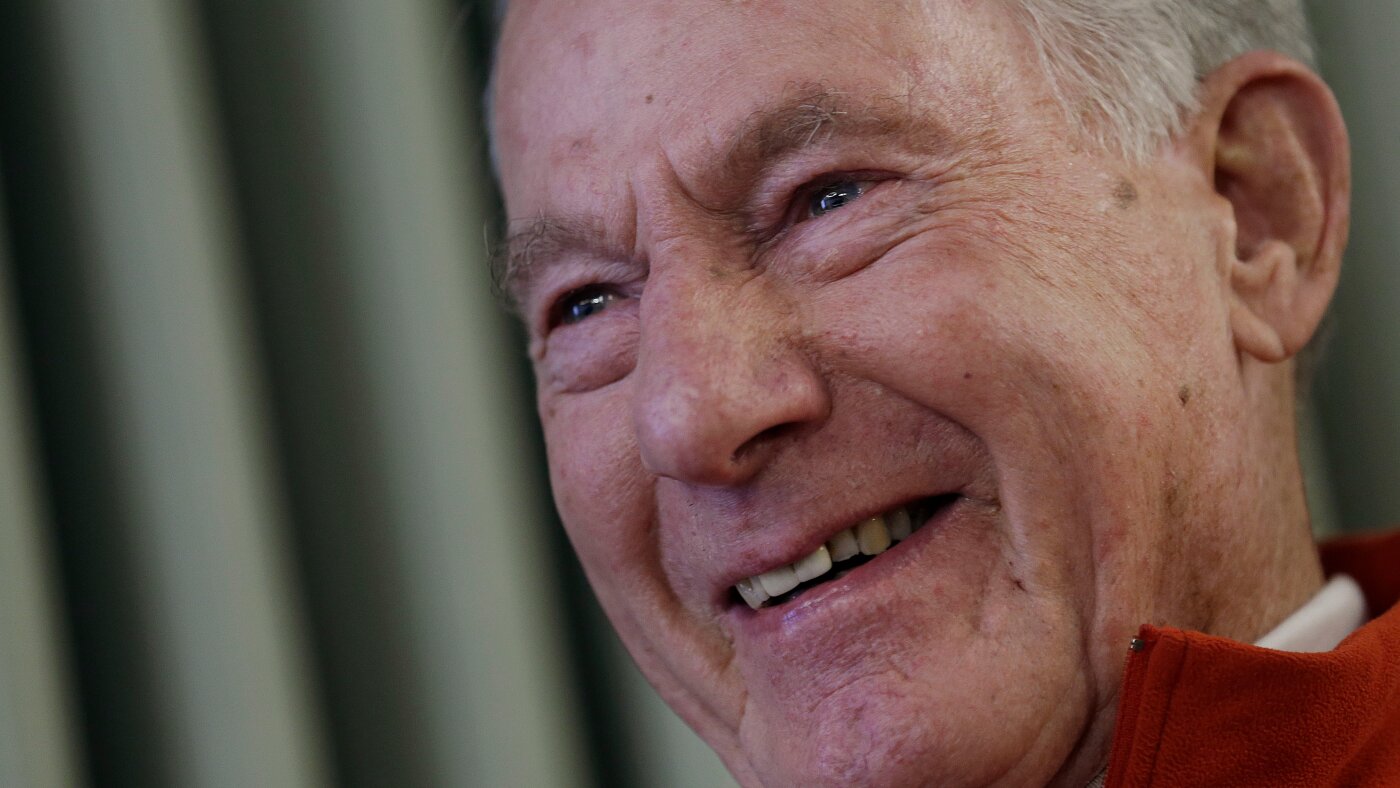
Jim Whittaker, the first American to summit Mount Everest, dies at 97

Video: Military Families Bear the Burden of War, Again
-

 Atlanta, GA4 days ago
1 teenage girl killed, another injured in shooting at Piedmont Park, police say
-

 Culture1 week ago
Do You Know Where These Famous Authors Are Buried?
-

 Movie Reviews1 week ago
Vaazha 2 first half review: Hashir anchors a lively, chaos-filled teen tale
-

 Georgia2 days ago
Georgia House Special Runoff Election 2026 Live Results
-

 Education1 week ago
Video: We Put Dyson’s $600 Vacuum to the Test
-

 Pennsylvania3 days ago
Parents charged after toddler injured by wolf at Pennsylvania zoo
-
 Milwaukee, WI3 days ago
Potawatomi Casino Hotel evacuated after fire breaks out in rooftop HVAC system
-
 Entertainment1 week ago
Inside Ye’s first comeback show at SoFi Stadium