Texas
The Growing Financial Strain of Charter School Expansion on Texas Public Schools


Every year, the State Board of Education (SBOE) approves new charter schools following a comprehensive application, review, and public hearing process that culminates in late June. The commissioner of education also approves dozens of new charter schools through the charter expansion amendment process each year, a process which lacks SBOE input and involves minimal accountability and transparency with no public notice or hearings.
To support SBOE members in making informed decisions about approving or vetoing new charter applications, Texas AFT collaborates with a broad coalition of public education advocates to analyze Texas Education Agency (TEA) data on school districts’ finances, enrollment, transfers, and cost of recapture. The rigorous analysis we provide to SBOE members aims to:
- Estimate the current revenue loss experienced by school districts within new charters’ proposed geographic boundaries due to students transferring from their home school districts to charter schools (“charter transfers out” or “charter transfers”).
- Project the additional estimated revenue loss these districts would face if new charters were approved based on their requested maximum enrollment.
- Connect charter expansion with other relevant fiscal impacts, such as districts’ costs of recapture. Every new charter student increases districts’ recapture payments to the state that fund charter schools.
This data-driven approach not only aids SBOE decision-making but also supports local advocacy efforts. School district officials, parents, educators, and community organizations use this information to voice their concerns to the SBOE, especially in districts facing rapid charter school expansion and its negative fiscal impacts. Across Texas, charter expansion is contributing to growing budget deficits, forcing many districts to consider closing neighborhood schools and holding Voter Approval Tax Rate Elections (VATREs) to balance their budgets.
In response to public education stakeholders from across the state voicing their concerns, the SBOE vetoed two of the five Generation 29 charter applications in its preliminary vote on Wednesday, June 26, including two of the three new charters that our union has been most concerned about. One of the proposed charters was to be located within Arlington ISD, the school district with the ninth highest total estimated loss of revenue to charter transfers from the 2019-2020 through the 2023-2024 school year. These results were upheld in the final vote on Friday, June 28.
Texas AFT extends the use of this district-level data to our legislative advocacy. During legislative sessions and the interims between them, we meet with current and prospective Texas Legislature members to discuss public education advocates’ concerns about charter school expansion and share data on how expansion affects the school districts they represent. This data-driven approach is effective to demonstrate the fiscal impact of charter schools even among legislators who were initially unconcerned about charter expansion. These hard facts help counter misleading claims made by charter school marketing campaigns and the many well-funded lobbyists employed by the charter industry.
Detailed analyses of charter expansion’s fiscal impact on affected school districts can be found on our website. The results of our updated analysis on estimated revenue loss due to charter transfers are alarming. School districts statewide are experiencing a large and growing drain on their resources due directly to charter expansion, as charters enrolled about 8 percent of Texas students (ADA) in FY 2023 but received about 20% of Foundation School Program state aid for public education.

Major urban districts like Houston ISD and Dallas ISD continue to experience significant fiscal impacts due to unlimited charter expansion, while smaller school districts have seen a comparatively small number of charter transfers translate into a large impact on their budgets. School districts in the Rio Grande Valley and the Houston, Dallas-Fort Worth, San Antonio, El Paso, and Austin areas have seen the most charter expansion over the past several years. Charter schools are rapidly expanding into rural Texas as well.
These figures represent a significant financial burden, diverting resources that could otherwise enhance educational services and student experiences in public schools. The scope of this issue is expanding, as evidenced by the increasing number of affected districts and the rising total estimated revenue losses:
- 2019-2020: $2.82 billion (at least 297 districts affected)
- 2020-2021: $3.25 billion (at least 309 districts affected)
- 2021-2022: $3.32 billion (at least 312 districts affected)
- 2022-2023: $3.56 billion (at least 322 districts affected)
- 2023-2024: $3.60 billion (at least 325 districts affected)
When considering these figures, it is also important to realize that the number of charter transfers, total estimated revenue loss, and tally of affected districts are undercounts because the number of charter transfers out from a school district are sometimes not available (i.e. masked) to comply with the Family Educational Rights and Privacy Act (FERPA). Masked numbers are typically small although larger numbers may be masked to prevent imputation.
However, the available data reveals a growing financial strain on public education resources:
- The number of districts experiencing revenue loss due to charter transfers increased from at least 297 in 2019-2020 to at least 325 in 2023-2024.
- At least 377 districts have faced some level of revenue loss due to charter transfers over the five-year period.
The implications of these findings extend beyond district finances to the communities they serve. The growing financial pressure could lead to:
- Increased class sizes, layoffs, and cuts to pay and benefits as districts struggle to balance budgets without necessary funding.
- Reductions in extracurricular and academic programs, particularly those serving economically disadvantaged communities where charter expansion has been most prevalent.
- Potential school closures, which have devastating effects on local communities and economies, leading to longer commutes for students and job losses for educators and support staff.
The trends of increasing revenue losses and the broadening impact across more districts are unsustainable and demand immediate attention from policymakers. Action is needed to mitigate further adverse effects on public schools and ensure a more equitable approach to public and charter school funding. The data clearly shows that the financial viability of many districts is at risk, which has severe implications for educational quality and equity across the state.
These stark realities underscore the need for robust, data-driven discussions among policymakers, educators, and community stakeholders. As we advocate for a more equitable approach, we must consider:
- Implementing a more rigorous approval process for new charter schools and expansions, with greater emphasis on their potential impact on existing public schools and taxpayers.
- Developing funding mechanisms that do not disproportionately disadvantage public school districts when students transfer to charter schools or create a funding advantage for charters.
- Increasing transparency in charter school operations and finances to ensure they are held to the same standards of accountability as public schools.
- Investing in public schools to enhance their ability to meet diverse student needs, reducing the perceived need for inefficient, parallel systems such as charter schools or private school vouchers.
- Establishing a moratorium on new charter schools and on the expansion of existing charter school networks through charter expansion amendments.
- Conducting a comprehensive study of charter school impact on public education, including the fiscal impact on public school districts, the state budget, students, school employees, and taxpayers.
Texas AFT remains committed to using data-driven advocacy to protect and strengthen our public education system. We call on all stakeholders – legislators, educators, parents, and community members – to engage in this critical conversation about the future of public education in Texas. By working together and making informed decisions based on comprehensive data, we can ensure that all Texas students have access to high-quality education without compromising the financial stability of our public school districts.
The challenge before us is significant, but with continued advocacy and collaboration, we can work towards a more equitable and sustainable educational landscape for all Texas students to thrive.



Dallas weather: July 8 morning forecast
High pressure starts to build back into North Texas, which lowers our rain chances and brings triple digit temperatures to parts of the region. Expect partly to mostly sunny skies today, with highs near 100.
DALLAS – A building system of high pressure is bringing triple-digit temperatures back to North Texas, though the intense heat will be short-lived before a weekend weather shift brings relief and renewed chances of rain.
Wednesday forecast
We expect partly to mostly sunny skies Wednesday, with high temperatures reaching near 100 degrees across much of the region. While hot and dry conditions will dominate, a low chance of scattered rain showers remains possible, primarily in areas east of the Dallas-Fort Worth metroplex.
The heat is expected to solidify Thursday as the upper-level ridge settles firmly over the area. We have removed all chances of precipitation from Thursday’s forecast, locking in dry conditions and an afternoon high temperature of 100 degrees.
However, relief is on the horizon for the upcoming weekend. The high-pressure ridge will lose its grip on North Texas as it begins to shift westward toward the desert southwest.
Weekend forecast
By late Saturday and continuing into Sunday, the atmospheric shift will establish a northerly flow aloft. This pattern change is expected to funnel a series of weather disturbances into the region, triggering a return of widespread rain and thunderstorm opportunities.
The unsettled weather pattern is forecast to linger well into next week. The persistent cloud cover and moisture associated with the continuing rain chances will successfully suppress the heat, keeping afternoon highs closer to historical norms for this time of year.
7-Day forecast
The Source: Information in this article is from the FOX 4 weather team.

Man, identified as Lorenzo Salgado Araujo, is latest to be killed by ICE officers since President Trump took power.
Published On 8 Jul 2026
A United States immigration agent fatally shot a man in Houston, Texas, while officers were attempting to stop his vehicle, US Immigration and Customs Enforcement (ICE) said.
The man killed on Tuesday was identified as Lorenzo Salgado Araujo, described by ICE as a Mexican national and “illegal alien” who attempted to evade arrest during a “targeted enforcement operation” by federal immigration officers.
Recommended Stories
list of 3 itemsend of list
Ronaldo Salgado, who identified himself as Salgado Araujo’s son, told the Spanish-language television station Telemundo Houston that his father was shot while he was looking for workers to hire in the area.
The Department of Homeland Security (DHS), which oversees ICE, said Salgado Araujo ignored commands to stop his vehicle, saying he “rammed an ICE law enforcement vehicle, refused to follow multiple verbal commands, and weaponized his vehicle in an attempt to run over an ICE law enforcement officer”.
In past shooting incidents, including the January killings of Renee Good and Alex Pretti, immigration officials had said that their officers were being attacked when the two were shot, claims vigorously disputed in both incidents.
Video footage captured on Tuesday by a surveillance camera from a nearby business and reviewed by the Reuters news agency showed a person lying on the ground beside a white van and surrounded by officers, in what appeared to be the aftermath of the shooting.
Salgado Araujo was targeted in an operation because he was living in the country without legal permission, according to DHS.
Democratic US Representative Sylvia Garcia called for an independent and thorough investigation of ICE’s claims about the fatal shooting.
“All available footage, communications, and other evidence should be preserved and reviewed as part of a full and impartial investigation,” Garcia posted on social media.
Juan Proano, CEO of the League of United Latin American Citizens, echoed Garcia’s calls for a transparent investigation into ICE’s actions.
“We don’t take DHS at their word at all,” Proano told The Associated Press news agency. “There should be an independent investigation, and they should release all the videos.”
There have been at least six fatal shootings by federal immigration officers since the start of President Donald Trump’s intensified immigration enforcement crackdown.
Good, a 37-year-old US citizen, was shot in the head by a federal immigration agent during a crackdown in Minneapolis. DHS also said Good was trying to hit the agent with her vehicle, which local officials and witnesses disputed, saying she was only trying to drive away.
The backlash from Good’s killing and other similar incidents led ICE to step back from some of its more controversial operations.
However, Tuesday’s deadly confrontation in Houston came amid a recent increase in the number of ICE arrests nationwide, with immigration officers picking up about 2,000 migrants a day last week, Reuters reported.
Texas
Trump takes credit for Toyota moving some truck production from Mexico to Texas: ‘That’s what tariffs do’

Toyota is planning a $3.6 billion expansion of its Texas truck assembly plant. President Donald Trump took credit for the investment.
On Monday, the automaker announced the multibillion-dollar investment to add a second vehicle assembly line at its San Antonio manufacturing campus to support production of the Tacoma pickup. Toyota said the expansion project would shift some of the midsize truck’s production from its Mexico plants to San Antonio over roughly 4 years. Toyota will still build some Tacoma models and the Corolla in Mexico.
While Toyota did not attribute the expansion to tariffs in its announcement and the company is not fully exiting production in Mexico, Trump said the fresh investment was a sign that his tariffs were working.
“It came over the wires that Toyota is moving out of Mexico into the United States, and building one of the biggest truck and car plants ever built,” Trump said on Tuesday during a visit to Ankara, Turkey. “It’s amazing. That’s what tariffs do, properly used.”
Toyota said the investment will create 2,000 jobs and add 2.5 million square feet to the site, doubling the company’s Texas footprint by 2030.
Toyota
On Monday, Ted Ogawa, president and CEO of Toyota Motor North America, said the investment reflected the company’s “confidence in the region’s workforce, innovation, and long-term growth potential.”
The move gives Trump a high-profile example of a well-recognized company creating manufacturing jobs. His administration has argued that tariffs incentivize companies — particularly automakers — to reshore manufacturing in America and reduce reliance on foreign production.
Toyota’s announcement also comes amid major uncertainty for automakers with plants in North America. The USMCA — the trilateral free trade pact between the US, Canada, and Mexico struck during Trump’s first term — is under review after the US declined to renew the treaty in its current form on July 1. The Trump administration is reportedly pushing to change the agreement so 50% of all automotive parts and manufacturing would happen in the US.
Toyota also nodded to that trade uncertainty in its release, saying it remained committed to operations in all three countries while encouraging “a quick resolution to USMCA” to keep North America globally competitive.
-
 Alabama4 minutes ago
Mac Jones asked who was his craziest teammate at Alabama
-

 Alaska11 minutes ago
Climate Change Is Helping an Invasive Predator Wreak Havoc on Iconic Alaskan Fish
-

 Arizona14 minutes ago
Arizona man pleads guilty after illegally living in forest for years among ‘1,000lbs of trash’
-

 Arkansas19 minutes ago
Army names intelligence facility for Arkansas Tech graduate
-

 California26 minutes ago
How California Effectively Legalized an Open-Air Sex Market
-

 Colorado29 minutes ago
Julian Lewis Says Deion Sanders’ Colorado ‘Wasn’t Really Looking at Defenses Much’ Last Season
-
 Idaho34 minutes ago
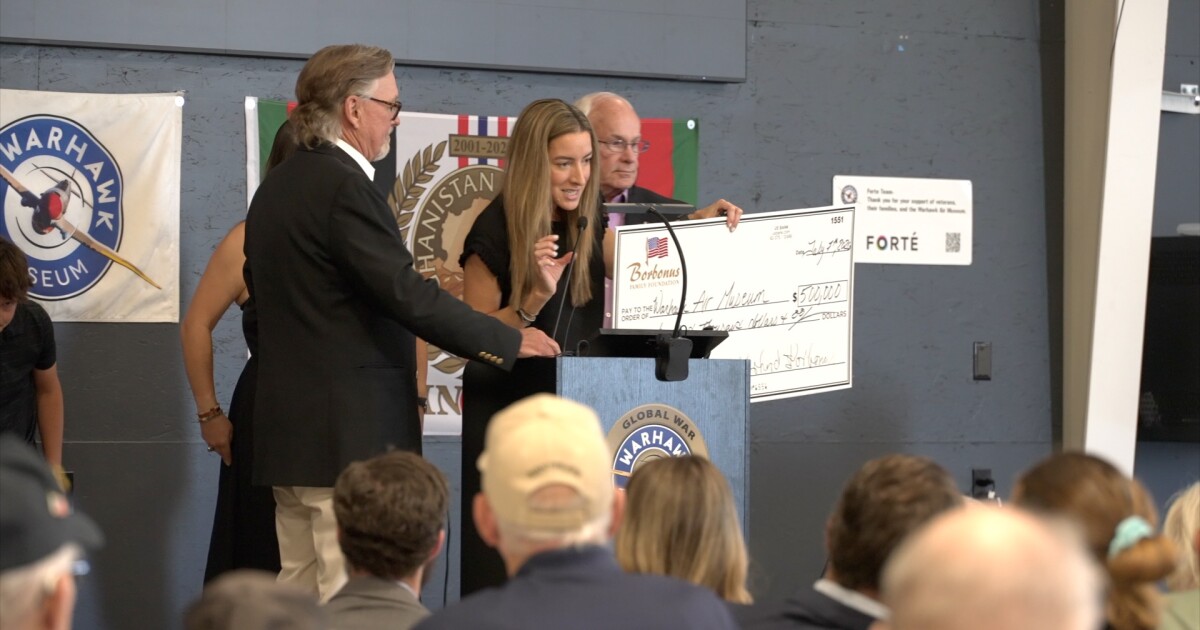
Warhawk Air Museum receives $500K grant honoring fallen Idaho soldier
-

 Connecticut34 minutes ago
Several beaches closed to swimming due to potential bacteria in the water

