Tennessee
Just how diverse is Tennessee? See how the Volunteer State ranks compared to other U.S. states


Population in southern states grew by 1.4 million in 2023
The population growth was measured between July 1, 2022 and 2023 and considered factors like birth and death rates and international migration.
unbranded – Newsworthy
A new report has just revealed the most and least diverse states in the country. According to WalletHub, California, Texas and Florida rank as the nation’s most diverse states, while New Hampshire, West Virginia and Maine rank as the least diverse. Tennessee landed among the middle, ranking as the 27th (65.11/100) most diverse state.
While Tennessee did rank in the top or bottom, the state has experienced an over 10% increase in diversity between 2010-2020, according to the latest data from the United States Census Bureau. In 2020, the Volunteer State’s Diversity Index reached 46.6%, a 17.1% increase from 39.8% in 2010.
That figure is only expected to rise, as the state is projected to become even more racially and ethnically diverse by 2040 when the state is projected to be home to eight million residents, according to research from the University of Tennessee Knoxville.
Beyond racial diversity, WalletHub also analyzed states’ economic, religious and political diversity.
“Race and gender are probably the first things that come to mind when people think about diversity, but there’s plenty more that makes this nation diverse,” said WalletHub analyst Chip Lupo. “The most diverse states have above-average variety when it comes to people’s ages, birthplaces, languages, jobs, family structures and more. Moving to a diverse state can be an extremely enriching experience as it exposes you to new ideas and new ways of living.”
Which Tennessee cities grew the most? See how population shifted according to the U.S. Census
How has Tennessee’s diversity changed within a decade?
Between 2010 and 2020, Tennessee experienced an 8.9% increase in population, or an additional 564,735 more residents. During that same time frame, the following groups experienced the highest population increases:
- Some other race alone or in combination (260,000)
- Hispanic or Latino (189,128)
- American Indian or Alaska Native alone or in combination (106,562)
- Black/African American alone or in combination (88,936)
The white alone (68,990), Asian alone (65,285) and Native Hawaiian or other Pacific Islander alone or in combination (3,233) populations experienced the lowest increases.
The most diverse states in the country, according to WalletHub
- California (70.77/100)
- Texas (70.48/100)
- Florida (69.88/100)
- New Mexico (69.83/100)
- Hawaii (69.77/100)
- Nevada (69.72/100)
- New Jersey (69.71/100)
- New York (69.62/100
- Maryland (69.12/100)
- Arizona (69.10/100)
The least diverse states in the country, according to WalletHub
- Wisconsin (63.45/100)
- North Dakota (63.42/100)
- Utah (63.27/100)
- Iowa (62.88)
- Wyoming (62.81/100)
- Kentucky (62.63/100)
- Montana (62.15/100)
- Vermont (61.51/100)
- New Hampshire (60.42/100)
- Maine (60.10/100)
- West Virginia (59.72/100)
Methodology
In order to determine the most and least diverse states in the country, WalletHub compared the 50 states across six dimensions: socio-economic diversity (20 total points), cultural diversity (20 total points), economic diversity (20 total points), household diversity (20 total points), religious diversity (10 total points), and political diversity (10 total points).
WalletHub then evaluated those dimensions using 14 metrics, which include:
- Household-income diversity (13.33 points)
- Educational-attainment diversity (6.67 points)
- Racial and ethnic diversity (10 points)
- Linguistic diversity (6.67 points)
- Birthplace diversity (3.33 points)
- Industry diversity (12 points)
- Occupational diversity (4 points)
- Worker-class diversity (4 points)
- Marital-status diversity (5 points)
- Generational diversity (5 points)
- Household-type diversity (5 points)
- Household size diversity (5 points)
- Religious diversity (10 points)
- Political diversity (10 points)
Each metric was graded on a 100-point scale. Each state’s weighted average was then determined across all metrics to calculate its overall score and the resulting scores were used to rank-order the states. A total score of 100 represents the most diverse state.
Diana Leyva covers trending news and service journalism for The Tennessean. Contact her at Dleyva@gannett.com or follow her on X, the platform formerly known as Twitter, at @_leyvadiana



Tennessee
Former Tennessee Football Position Coach Beats Out Vols For Commitment of Elite Recruit | Rocky Top Insider

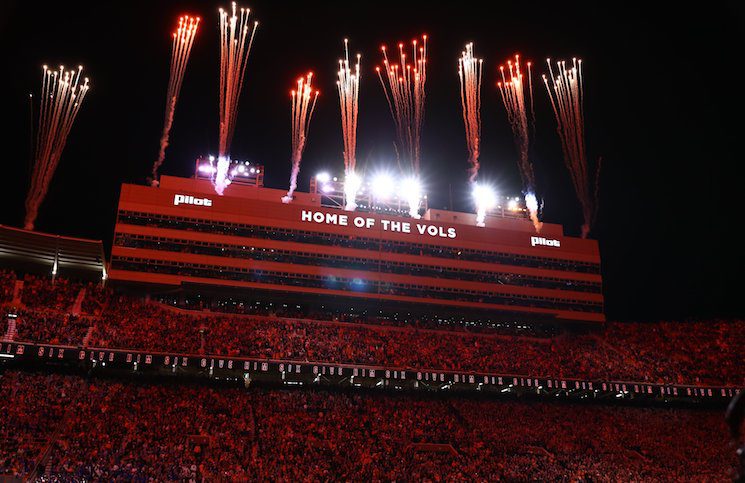
Tennessee football made the final cut for one of the top linebackers in the class of 2027, Roman Igwebuike, but couldn’t seal the deal. Instead, he’s taking his talents to Notre Dame as he announced his commitment to the Irish on Saturday evening.
It was a former Josh Heupel Era UT position coach who led the charge for Igwebuike, as well. Brian Jean-Mary, the Vols’ linebackers coach from 2021-23, now leads the linebacker room at Notre Dame and was the primary recruiter for Igwebuike.
Jean-Mary left Tennessee for a position at Michigan as defensive run game coordinator/linebackers coach. However, with the coaching change in Ann Arbor this offseason, he landed on his feet and joined the Irish’s staff as Marcus Freeman’s run game coordinator/linebackers coach.
More From RTI: Nike Reportedly Not Willing to Help Ohio State’s Recruitment of David Gabriel Georges
Igwebuike is one of the top linebackers in the class of 2027. On 247 Composite, he ranks as the No. 123 player in the country, No. 9 linebacker and No. 8 player from the state of Illinois. He is from Chicago, where he plays for Mount Carmel.
“Well-rounded linebacker that has a chance to be a linchpin in the middle for a College Football Playoff hopeful after a productive prep career outside of Chicago,” 247 director of scouting Andrew Ivins wrote. “Looks the part with a muscular 6-foot-3, 225-pound frame. Sees it well from the shelf as he reads his keys and flows to the football. Navigates busy intersections at a higher level and can slip underneath blocks. Comfortable dropping into space and is rather effective as a spy…”
Igwebuike’s primary recruiter at Tennessee was linebackers coach William Inge. He has made trips to Knoxville to see the Vols, including the Orange and White Game this past April, but never announced an official visit to UT.
Tennessee currently holds 16 commitments in the 2027 class, which ranks 43rd in the country on 247. This features two linebackers, both legacies, in four-star Kenneth Simon II and three-star JP Peace.

Tennessee freshman forward Chris Washington Jr met with the local media earlier this week in his first press conference after committing and signing with the Vols back in the spring.
Washington discussed why he chose Tennessee, what position he has mostly been working at this summer and much more. Here’s everything Washington said.
More From RTI: What Director of Sports Performance Garrett Medenwald Said About Tennessee Basketball Offseason
On what led to him de-committing from Alabama, eventually committing to Tennessee
“Honestly, I just felt like that for me and my family, that was just the best decision for me. And I found my right school, I feel like.”
On his first impressions of the team
“Like I said, me and the guys, we came a long way just from this first month, you know, getting help from DeWayne, and the team, it’s just been a blessing.”
On what the first month has been like for him personally
“Honestly, just getting better day by day. Coach Barnes, he’s coaching me hard. So honestly, just stacking days, just getting better day by day.”
On what Rick Barnes is harping on with him right now
“My defense. The whole country know I can score the ball, so just me, just working on my rotations, being right in the gaps. Defense.”
On what position he is working at.
“Right now, they got me playing four.”
On if they sold development based on his film or Tennessee’s track record
“I mean, honestly, just the track record of like guys he did put in the league, you know what I’m saying? I want to be pro, so like I said, I came to Tennessee, I felt like they’re gonna get me there, he’s gonna get me there.”
On who have been the verbal leaders on the team
“My boy DeWayne and my boy Kenbell (Duncan Campball), them two. They’ve been kind of really helping me.”
On how Tennessee sophomore forward DeWayne Brown has helped the newcomers understand what it’s like to play for the Vols
“I be in practice sometimes, I’ll get lost and he’ll kind of just help me a little bit. I mean, honestly, him just guiding us when we mess up.”
On his relationship with the rest of his freshman class: Manny Green, Ralph Scott and Marquis Clark; if he knew about them on the AAU circuit
“It’s been a great relationship. I didn’t play those guys on the circuit, so for us to be all on the same team, it’s a good thing.”
On playing AAU basketball in Knoxville; if that helped his decision
“It’s great, you know? It’s just amazing, honestly. I’m just glad to be here.”
On how he is liking the new Adidas uniforms
“I’m loving it. We’re in Adidas gear. I’m liking it, I’m loving it.”
On his strengths on offense
“I’d say getting to the rim, getting to my spots, and my (ability) to catch and shoot.”
On where his spots are
“Really just getting to the mid-range, getting down hill.”
On watching last year’s Vols get drafted
“Coach Barnes, him getting those guys there, I know my time’s gonna come.”
On his freshman class
“Oh, we got the best class, I feel like, honestly. We got a good class.”
Why he feels Tennessee has the best freshman class
“Shoot, we all can score, honestly. (Barnes) recruited a lot of scores this year. Even our freshman class, we can all get a bucket.”
Tennessee
Where Tennessee Baseball Players, Commits Land In Final MLB Mock Drafts, Rankings | Rocky Top Insider

The 2026 MLB Draft gets underway on Saturday afternoon to jump start MLB All-Star game festivities in Philadelphia. The two-day, 20-round draft is a highly important once for Tennessee baseball. While there are fewer current Vols projected to be selected, there will be no shortage of Tennessee prep signees and transfer commits who are draft risks.
We’ve compiled a number of both mock drafts and overall draft prospect rankings from a multitude of outlets that give us a look at where Tennessee players, transfers and commits could go. There’s a handful of Tennessee transfer commits who are not listed but are also draft risks including Wright State outfielder Andrew Duncan, Baylor shortstop Travis Sanders, FIU infielder Mario Trivella and Clemson right-handed pitcher Hayden Simmerson.
Taking a look at the mock drafts and draft rankings here.
More From RTI: Clemson Transfer Pitcher Commits To Tennessee Baseball
Current Tennessee player. Tennessee transfer commit. Tennessee high school signee
Mock Drafts
ESPN Two-Round Mock Draft
- LHP/OF Jared Grindlinger — No. 11 to Kansas City
- OF Trevor Condon — No. 14 to Miami
- RHP Tegan Kuhns — No. 34 to Pittsburgh
- RHP Kaiden McCarthy — No. 51 to Pittsburgh
The Athletic One-Round Mock Draft
- LHP/OF Jared Grindlinger — No. 11 to Baltimore
- RHP Tegan Kuhns — No. 24 to Seattle
CBS One-Round Mock Draft
- LHP/OF Jared Grindlinger — No. 18 to Cincinnati
Prospect Rankings
MLB Pipeline Top 250
- OF Trevor Condon — No. 13
- LHP/OF Jared Grindlinger — No. 16
- RHP Tegan Kuhns — No. 25
- RHP Kaiden McCarthy — No. 61
- RHP/SS Cole Koeninger — No. 99
- SS Jack Dugan — No. 106
- C Sean Dunlap — No. 124
- RHP Shawn Sullivan — No. 132
- RHP Tyler Putnam — No. 139
- RHP Gary Morse — No. 141
- 3B/OF Henry Ford — No. 148
- LHP Jake McCoy — No. 152
- C/OF Garrett Wright — No. 190
- RHP Cannon Grant — No. 212
- RHP Bo Rhudy — No. 219
- LHP Ricky Ojeda — No. 243
ESPN Top 250
- LHP/OF Jared Grindlinger — No. 11
- OF Trevor Condon — No. 16
- RHP Tegan Kuhns — No. 32
- C Sean Dunlap — No. 49
- RHP Kaiden McCarthy — No. 52
- RHP Gary Morse — No. 98
- RHP/SS Cole Koeninger — No. 107
- SS Jack Dugan — No. 109
- RHP Tyler Putnam — No. 112
- RHP Cannon Grant — No. 125
- 1B Cody Boshell — No. 142
- LHP Jake McCoy — No. 156
- C/OF Garrett Wright — No. 162
- 3B/OF Henry Ford — No. 183
- RHP Bo Rhudy — No. 201
Perfect Game Top 400
- LHP/OF Jared Grindlinger — No. 16
- OF Trevor Condon — No. 29
- RHP Tegan Kuhns — No. 50
- RHP Kaiden McCarthy — No. 51
- RHP/SS Cole Koeninger — No. 62
- C Sean Dunlap — No. 68
- 3B/OF Henry Ford — No. 134
- 1B/OF AJ Curry — No. 153
- RHP Cannon Grant — No. 176
- RHP Tyler Putnam — No. 190
- SS Jack Dugan — No. 201
- LHP Jake McCoy — No. 227
- RHP Shawn Sullivan — No. 231
- RHP Gary Morse — No. 241
- LHP Ricky Ojeda — No. 251
- RHP Bo Rhudy 255
- SS Jaxson Wood — No. 262
- C/OF Garrett Wright — No. 269
- LHP Brandon Arvidson — No. 274
- SS Manny Marin — No. 375
- OF Reese Chapman — No. 386
- LHP Drew Christine — No. 387
-

 Illinois2 minutes ago
Woman in custody after breaking into home in Aurora, Illinois, police say
-

 Indiana5 minutes ago
Maximum Offer Relishes Stakes in Indiana Oaks
-

 Iowa10 minutes ago
Iowa State Football Predicted for Tough First Season Under Jimmy Rogers
-
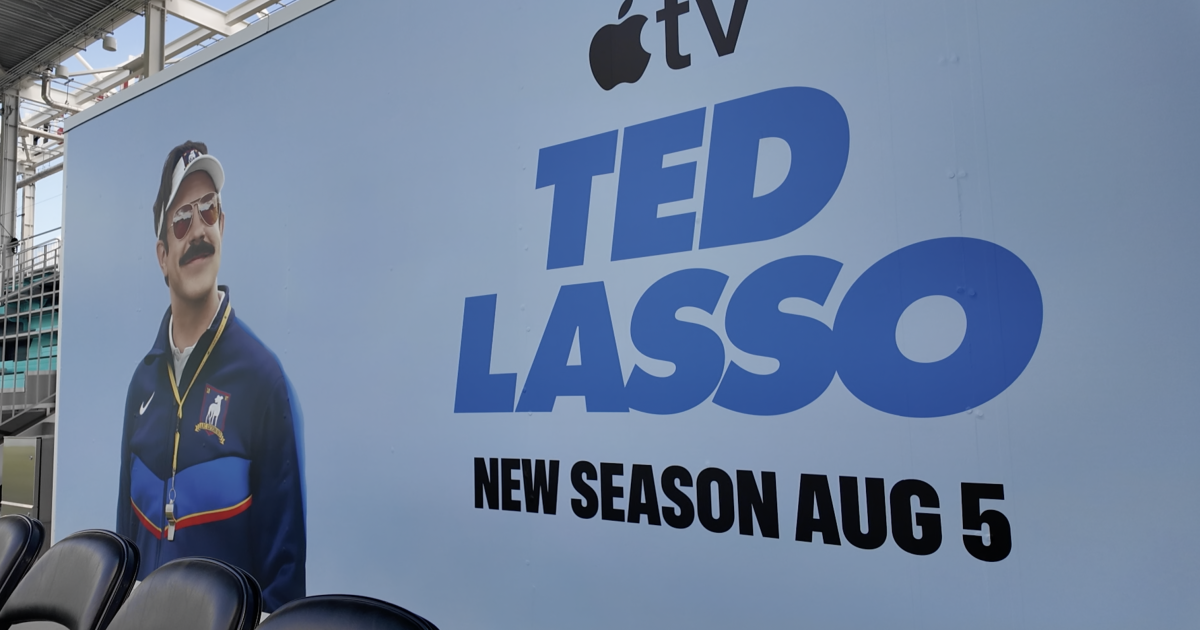 Kansas17 minutes ago
New season of ‘Ted Lasso’ brings Kansas City back into global spotlight
-
Kentucky20 minutes ago
Lucas Glover hangs onto lead in ISCO Championship in Kentucky
-

 Louisiana25 minutes ago
LSP: Ascension Parish resident dies in two-vehicle crash
-

 Maine32 minutes ago
Collins confident as Maine Democrats move to replace Platner
-

 Maryland34 minutes ago
The Final Stretch for Maryland’s 2027 Class: Identifying the Remaining Must‑Gets


