Mississippi
Lessons from 1964’s Mississippi Freedom Summer


The recent arson that destroyed Beth Israel, Jackson, Miss.’s only synagogue, evokes that state’s dark legacy of violence toward those supporting racial equality — one stretching back more than 60 years.
In spring 1964, a Duke University sophomore from Connecticut, Dick Landerman, and a Harvard senior from New York, Nick Fels, joined the civil rights movement in Mississippi. As idealistic foot soldiers, they were unwittingly marching into history.
Landerman’s family was apolitical. His civil commitment was more interpersonal than ideological — a function of friendships made at a racially mixed YMCA summer camp and on Hartford basketball courts.
But casual campus racism repelled and incited him. What prompted his activism, he told me in an interview, was “my shame at not speaking up in response to a racist incident at the start of my freshman year.”
Fels recalled to me that his civil rights interest preceded the summer of 1964. “Among other things, growing up in New York as a rabid Brooklyn Dodgers fan, I idolized Jackie Robinson — and still do,” he said.
So, Landerman, 19, and Fels, 21, joined the Mississippi Freedom Summer, a joint effort involving the Student Nonviolent Coordinating Committee and the Council of Federated Organizations, which included the Congress of Racial Equality and Martin Luther King Jr.’s Southern Christian Leadership Conference, plus the NAACP and its Legal Defense Fund.
In 1961, Student Nonviolent Coordinating Committee organizers moved into Mississippi cities and towns to register local Blacks to vote. Poll taxes and literacy tests stymied registration, as did widespread racist violence and intimidation.
In 1963, a Liberty, Miss., politician shot and killed Herbert Lee, a Black farmer working with the the organization. A white sniper murdered NAACP state field secretary Medgar Evers, and local activist Fannie Lou Hamer and Lawrence Guyot were arrested and beaten in jail. Activists faced church bombings, house burnings and economic retaliation.
Yet the national media virtually ignored this terror and intimidation. No government protection or voting rights action came.
Student Nonviolent Coordinating Committee strategist Robert Moses concluded, “It is not possible for us to register Negroes in Mississippi. … There is reason to believe that authorities in Mississippi will force a showdown over the right to vote in large numbers.”
Moses and local leaders decided on recruiting mostly white, Northern middle-class volunteers for national media attention, and to serve as a tripwire against local white terrorism.
Like many Mississippi volunteers, Landerman and Fels are Jewish. But white and Black, Christians and Jews, the same missionary zeal fired them as embodied in the Civil War era Battle Hymn of the Republic: As Jesus “died to make us holy, let us die to make men free.”
And so, they did, a century later.
On June 21, 1964, Black Mississippi activist James Chaney and two white volunteers, Andrew Goodman and Michael Schwerner, disappeared while driving from Philadelphia, Miss., to Jackson. Neshoba County and Philadelphia City police officers, most Ku Klux Klan-affiliated, arrested the trio on speeding charges. After they were released, Klan and law enforcement officers followed them, beat Chaney, shot all three, and buried the bodies in an earthen dam.
Fels recalls riding in a car with two other volunteers one night after the murders. “Our car was stopped by the local sheriff, who was notorious for harassing” civil rights organizations’ volunteers. “After directing us to get out of the car and show our IDs, he paused for a moment and then let us go. I have never forgotten the sense of panic.”
Later, he and other volunteers saw the dam site where Schwerner, Chaney and Goodman’s bodies had been buried. “The visit brought home the depth of the hostility we faced and triggered a strong sense of anxiety, particularly because of our own recent encounter with the sheriff in Hattiesburg,” Fels said.
The deaths galvanized the nation and influenced passage of the Voting Rights Act of 1965, which eliminated poll taxes and literacy tests, exploding Mississippi and southern Black voter registration.
Although the summer also deeply affected other volunteers, many remained in Mississippi, despite the trauma.
Motivated by his experience, Fels joined Friends of Student Nonviolent Coordinating Committee and was active in the Berkeley free speech movement. After graduating from Harvard Law School, he clerked for U.S. Circuit Judge John Minor Wisdom — a staunch foe of racial segregation — and worked in legal aid.
That December, Landerman returned to Duke, becoming active in a campus civil rights organization. He stood up to racism in late-night dorm arguments with segregationist students about sit-in arrests at local segregated restaurants. Following graduation, Landerman spent several years community organizing in a white Durham, N.C working-class neighborhood.
At 81, he reflects on his Mississippi experience’s relevance today.
“When Bob Moses entered Mississippi in 1961,” Landerman said, “Black people had lived for decades under a brutal and oppressive system where change seemed inconceivable, and opposition brought economic retribution, beatings, jailings, and death. Together with local Black people, a [Student Nonviolent Coordinating Committee] staff of 41 built a movement capable of making Freedom Summer happen and bringing voting rights to Black people across the South.”
Fels, now 82, says Mississippi Freedom Summer also deeply affected him. Retired from his Washington law firm, he’s on the board of Lawyers Defending American Democracy. The group filed an amicus brief challenging President Trump’s executive order restricting the number of citizens who could register to vote in federal elections.
“The repression of rights and violence we faced in Mississippi obviously differs from what the current federal government seeks to impose today,” he says. “I think, however, that the lesson from Freedom Summer applies: Resistance is necessary and may, in the long run, succeed.”
Mark I. Pinsky is a journalist and author based in Durham, N.C.
Copyright 2026 Nexstar Media Inc. All rights reserved. This material may not be published, broadcast, rewritten, or redistributed.



Think tank proposes capping Social Security benefits at $100,000
A Washington think tank proposed capping annual Social Security benefits at $100,000 for couples as a way to shrink a looming deficit in the retirement trust fund.
People who get Supplemental Security Income checks will get paid on Wednesday, April 1.
The payments sometimes go out early. It happens when the first falls on a weekend or a holiday. Checks get sent on the last weekday before the normal send date.
Social Security recipients also will get their regular checks as scheduled in April. Benefits are typically disbursed to almost 74 million people on Wednesdays later in the month. Your payment date depends on the day of the month you were born.
Here’s what you should know about the April payment schedule, when the next time SSI checks will go out early and where to find a Social Security Office near you in Mississippi.
March 2026 Social Security payment schedule
The Social Security Administration’s 2026 payment schedules are online to help beneficiaries plan their budgets.
Regular Social Security retirement benefits will be issued according to the SSA’s standard payment schedule in March:
- March 11: Birthdates between the first and 10th of the month
- March 18: Birthdates between the 11th and the 20th of the month
- March 25: Birthdates between the 21st and the 31st of the month
When will SSI checks be sent early in 2026?
The next time checks will be sent early is Friday, July 31. August 1 is a Saturday this year.
SSI checks also will be sent out early for November because the first is over a weekend.
And the first check of the new year always gets sent on New Year’s Eve because of the holiday conflict.
SSI payment schedule for 2026
Supplemental Security Income checks will be sent out on the following dates in 2026, according to the SSA calendar.
It’s usually sent on the first of the month, but they are disbursed early if the first falls on a weekend or holiday.
- Wednesday, April 1 (check for April)
- Friday, May 1 (check for May)
- Monday, June 1 (check for June)
- Wednesday, July 1 (check for July)
- Friday, July 31 (check for August)
- Tuesday, Sept. 1 (check for September)
- Thursday, Oct. 1 (check for October)
- Friday, Oct. 30 (check for November)
- Tuesday, Dec. 1 (check for December)
- Thursday, Dec. 31 (check for January 2027)
➤ Most Americans think Social Security won’t be there for them. Are they right?
Why will some people get paid 3 times in certain months?
People who get both SSI and regular Social Security will be paid three times in October and December.
The regular SSI payment will come on the first. The Social Security check will be paid on its usual date. Then the SSI funds for the following month will be sent near the end of the month because the next SSI disbursement date falls on a weekend or holiday.
See the full 2026 Social Security Payment schedule
Social Security offices in Mississippi
There are almost two dozen Social Security offices in Mississippi. To find the one nearest you, visit ssa.gov/locator.
- Brookhaven
- Clarksdale
- Cleveland
- Columbus
- Corinth
- Forest
- Greenville
- Greenwood
- Grenada
- Gulfport
- Hattiesburg
- Hernando
- Jackson
- Kosciusko
- Laurel
- McComb
- Meridian
- Moss Point
- Natchez
- Philadelphia
- Starkville
- Tupelo
- Vicksburg
Contributing: Mike Snider and Laura Daniella Sepulveda
Bonnie Bolden covers money issues that matter to people in Mississippi for USA TODAY Network. Email her at bbolden@gannett.com.
Mississippi
Lawmakers signal K-12 teachers will get $2,000 raise, first pay increase since 2022 – SuperTalk Mississippi

A back-and-forth affair over teacher pay raises inside the Mississippi capitol – a debate that technically died before being revived – is expected to end with K-12 educators statewide receiving a $2,000 bump to their salaries.
The Senate on Sunday unanimously voted to fund the pay increase for teachers in the state’s public school system while conversations in the House affirmed the chamber will follow suit. Special education teachers, assistant teachers, speech therapists, and school psychologists will receive the same pay increase.
Notably, lawmakers are also working to budget for a $5,000 raise for school attendance officers and funding to hire nine more. The plan would ensure one attendance officer for every 4,000 students statewide. Attendance officers are responsible for investigating unexcused absences, making home visits, and coordinating with families and courts to improve dropout rates.
The anticipated investment comes as Mississippi continues to grapple with chronic absenteeism. According to an October report from the Mississippi Department of Education, more than a quarter of public-school students missed over 10% of the 2024-25 school year.
The raises will be immediate if a conference report approved by both chambers goes into law. It is expected to be passed by both chambers as early as Monday with Republican Speaker Jason White telling the House he expects the session to end “no later than Thursday.”
The deal to give teachers a $2,000 raise follows months of different numbers bouncing around the capitol. The Senate initially proposed a $2,000 immediate raise, while the House pushed for a $5,000 immediate raise. After missing a key deadline earlier this month, both chambers found alternative routes to revive the measures. The House maintained its $5,000 proposal, while the Senate advanced a plan to phase in a $6,000 raise over three years.
Despite recent academic gains that have drawn national praise – including a No. 16 national ranking after decades at the bottom – Mississippi teachers remain among the lowest paid in the country. A 2025 report from the National Education Association found the state’s starting salary of $41,500 ranks near the bottom nationwide, even when accounting for cost of living.
Sunday’s budgeting work is part of a broader education appropriation expected to round out at approximately $3.3 billion. If the numbers stand, it will make way for the first teacher pay raise since 2022.
Sen. Dennis DeBar, a Republican from Leakesville and chair of the Senate Education Committee, said lawmakers settled on the $2,000 figure due to competing budget demands, including Medicaid and the Public Employees’ Retirement System. The state’s total budget for Fiscal Year 2027 is expected to be around $7.4 billion.
“There’s nothing that says we can’t do a (teacher) pay raise again next year,” DeBar said. “However, we didn’t want to lock ourselves in somewhere we couldn’t pay.”

OXFORD — Tomas Valincius struck out top Ole Miss baseball batter Tristan Bissetta looking on his last pitch of the game.
There was no emotion from the Mississippi State starting pitcher as he walked back to the dugout after Bissetta was the fourth straight Ole Miss batter to strike out.
It was another instance of Valincius, the left-handed Virginia transfer, showing a trait that’s made him such a dominant pitcher for the No. 4 Bulldogs. The longer Valincius pitches, the better he gets.
The sophomore pitched another five shutout innings as MSU (23-4, 5-2 SEC) took down No. 18 Ole Miss, 6-1, at Swayze Field on March 28 to win the series.
“It’s all mental,” Valincius said. “Just going out there and just kind of trusting yourself and all the work you put in throughout the week. And even when you don’t have your stuff, it’s still a war between every battle in every inning. It’s kind of like finding a way to do what you can do with what you got.”
The win clinched the Bulldogs’ ninth series against the Rebels (19-9, 3-5) in the last 10 meetings. Another win March 29 (3 p.m., SEC Network) would make Brian O’Connor the third straight first-year MSU coach to sweep Ole Miss.
Valincius (6-0) hasn’t allowed an earned run in 19 SEC innings and his season ERA dropped to 0.91.
Against the Rebels, one game after striking out a career-high 14 batters against Vanderbilt, Valincius recorded nine strikeouts with three hits, two walks and one hit by pitch in 90 pitches.
“He buckled down when runners were in scoring position,” O’Connor said. “He’s always best in his middle innings. You see him just rise his game up.”
Why Tomas Valincius could’ve done even better against Ole Miss
While the Ole Miss game was Valincius’ third SEC start without allowing an earned run, it was his shortest outing of the three. The other two against Arkansas and Vanderbilt both lasted seven innings.
Valincius stranded six Ole Miss batters on base in his five innings.
“Early on, I didn’t really feel like I had anything going,” Valincius said. “I was kind of just finding a way to win. That was kind of my whole approach throughout the whole game. I couldn’t really figure out the slider and fastball command. It wasn’t working a lot. I just found a way to win.”
Sam Sklar is the Mississippi State beat reporter for The Clarion Ledger. Email him at ssklar@usatodayco.com and follow him on X @sklarsam_.

How a Database Manager Lives on $118,000 in Inwood

Detroit Lions ‘Ready’ for All-Pro Moving to Left Tackle

This Week: Bike Ambassador, Lake Merritt Loop, Cayuga Street – Streetsblog San Francisco

How FC Dallas Can Unlock Santiago Moreno Alongside Musa, Valiente, and Farrington

Could Miami Dolphins trade up in first round of 2026 NFL Draft?

Florida High School Football Rankings: Top 25 teams – Oct. 21

How old is Bo Nix? What to know about Oregon quarterback ahead of 2024 NFL Draft

Cleary's 21 help Le Moyne down Central Connecticut State 69-64 in OT

99th annual Pony Swim held in Virginia

Indiana Members Credit Union announced as new anchor tenant at Bottleworks District

Video: Iran to Allow More Oil Ships Through Strait of Hormuz, Trump Says

Dem senator warns deportation could let Virginia woman’s illegal immigrant killer ‘escape accountability’

Newsletter: G7 ministers to hold talks on war’s economic fallout
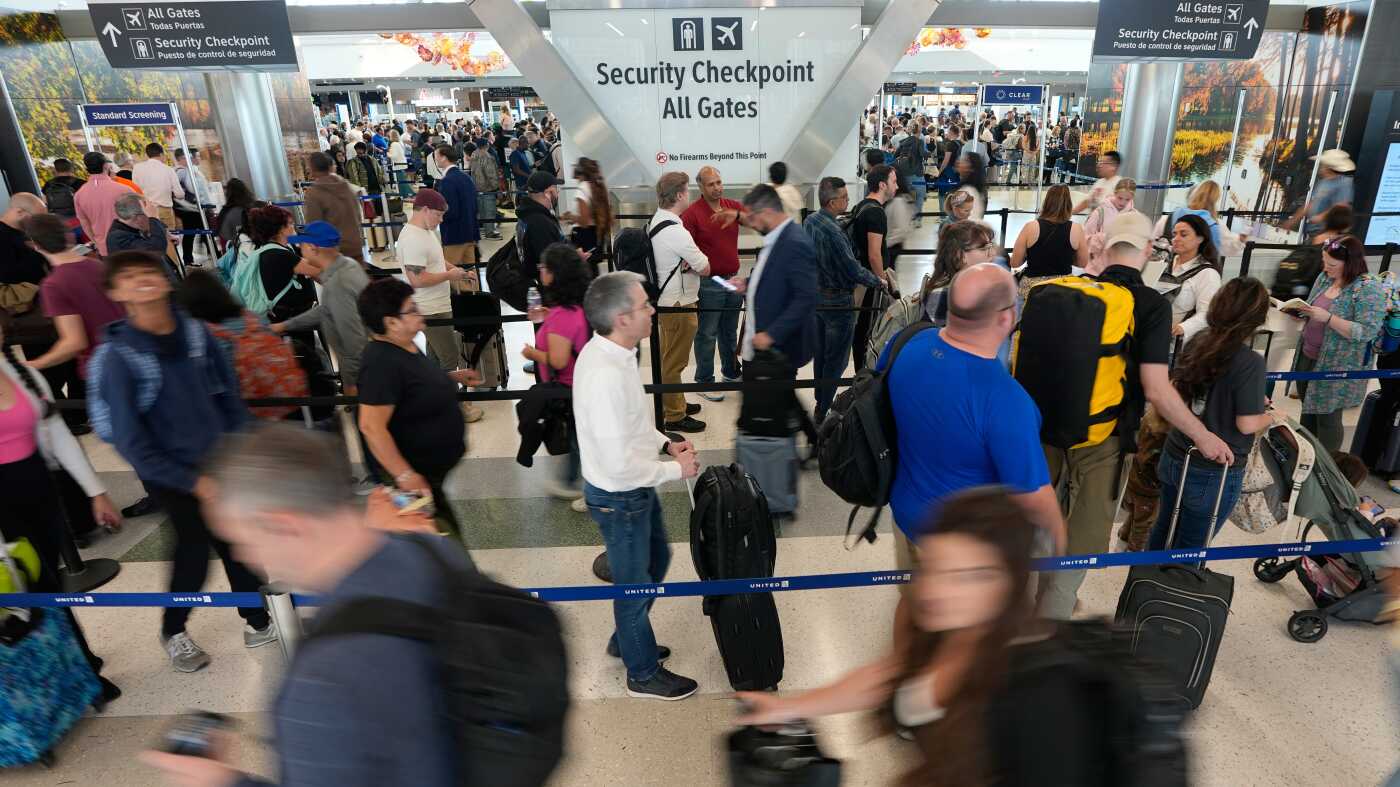
ICE officers could remain at airports after TSA workers are paid

Scathing report claims nation’s oldest labor union ‘betrayed’ MAGA members through ‘shocking’ spending
-

 Sports1 week ago
IOC addresses execution of 19-year-old Iranian wrestler Saleh Mohammadi
-

 Miami, FL4 days ago
Jannik Sinner’s Girlfriend Laila Hasanovic Stuns in Ab-Revealing Post Amid Miami Open
-

 New Mexico1 week ago
Clovis shooting leaves one dead, four injured
-

 Politics1 week ago
Schumer gambit fails as DHS shutdown hits 36 days and airport lines grow
-

 Tennessee7 days ago
Tennessee Police Investigating Alleged Assault Involving ‘Reacher’ Star Alan Ritchson
-

 Minneapolis, MN4 days ago
Boy who shielded classmate during school shooting receives Medal of Honor
-

 Science1 week ago
Record Heat Meets a Major Snow Drought Across the West
-

 South-Carolina1 day ago
South Carolina vs TCU predictions for Elite Eight game in March Madness