Mississippi
Largest MS Bat Working Group nets dozen bats in Adams County, surrounding area – Mississippi's Best Community Newspaper


Largest MS Bat Working Group nets dozen bats in Adams County, surrounding area
Published 10:00 am Saturday, August 10, 2024
NATCHEZ — The largest group of bat surveyors in Mississippi’s Bat Working Group in 21 years recently paid a visit to Adams County and the surrounding area to document, learn and share information about the various bat species living here.
The 21st annual event brought 50 participants here on July 25 and 26 from eight states and featured a training focused on the identification of Mississippi’s bat species and guidance on listed species and the survey guidelines provided by the US Fish and Wildlife Service.
The first night, nets were set up on the Natchez Trace Parkway and Canemount Wildlife Management Area in Port Gibson. On night two, surveyors netted at the Homochitto National Forest and participants toured St. Catherine’s Creek National Wildlife Refuge, visiting artificial roosts with Rafinesque’s big-eared bats and birding around the refuge’s wetlands.
Participants also took a field trip to a culvert roost in Claiborne County, north of Natchez, to see over a dozen northern long-eared bats.
Bats have an unfortunate un-earned bad reputation for carrying rabies, which is carried in less than 1 percent of the population but is “a serious, fatal disease so you definitely don’t want to pick them up,” said Alison McCartney of the U.S. Department of Wildlife Fisheries and Parks and Chair of Mississippi Bat Working Group.
But a large surveying team recently visited Adams County and the surrounding area to learn and educate people on the various species and learn the helpful benefits of having them.
“People are just now beginning to realize the benefits,” McCartney said. “All Mississippi bats are insectivores and eat mosquitoes and agricultural pests. Organic farmers will sometimes put up bat houses to attract bats as a natural pesticide. Vampire bats in Texas have an anticoagulant protein in their saliva used in medicine to help heart and stroke patients. Fruit-eating bats in Asia and Australia act as seed dispersers and help to reforest. Their diet alone provides a lot of benefits to us.”
This year brought a diverse team to Natchez that included private organizations, consultants, government agencies and a few students interested in learning about bats.
“It’s the biggest event that we’ve had in the 21 years we’ve been doing it and the most states represented. We were able to visit 11 sites in two nights, which would take a lot longer without a group as big,” McCartney said.
The surveying lasted from around 6 p.m. to midnight each night. “It wasn’t quite as fruitful as we were hoping” but not a total loss either, McCartney said.
The group managed to capture four red bats and five evening bats — both of which are common species here — as well as one Seminole bat, one big brown bat and one tri-colored bat for a total of 12 captured. All were released safely and unharmed.
The tri-colored bat is proposed for federal listing as endangered, McCartney said.
“The more information we can get on all bat species, the better we can protect them and educate others about them,” McCartney said. “The main goal of these events is to create and outreach educational opportunity and also to collect data. … We invited everyone to come, including folks new to bat work, as a teaching opportunity.”
The Bat Working Group visits a different part of the state every year but were particularly interested in surveying the Natchez-Adams County area this year because of the possibility of finding a northern long-eared bat, which was recently listed as endangered because of the deadly white-nose syndrome.
While native to the northeastern United States, these bats were documented further south and thought to be migrating here, which could hypothetically give them a better chance of survival with a shorter hibernation period than their northern relatives.
“White-nose syndrome has decimated populations in cold climates where they go into true hibernation,” McCartney said. “There has been a 99 percent decline.”
While they didn’t find or document any northern long-ear roosts this time, more of these bats were documented in last year with extensive surveying efforts, McCartney said.
“From the 1930s to last August, we only had three records. Last August, we found two new roosts. We started doing intensive survey efforts around that area and came up with 32 new records.”
McCartney encouraged anyone interested to participate in future bat surveying and conservation efforts of the Mississippi Bat Working Group.
“You don’’ have to be a bat person to get involved,” she said, adding anyone interested can contact the MDWFP Jackson Field office at 601-432-2400 or email msbats@hotmail.com.



WARREN COUNTY, Miss. (WJTV) – Deputies in Warren County, Mississippi, arrested a 14-year-old girl for allegedly shooting an 8-year-old.
Warren County Sheriff Martin Pace said the shooting happened on Abraham Drive just before 4:00 p.m. on April 13, 2026.
According to the sheriff, the female victim was transported to a Jackson hospital for treatment. He said deputies recovered a handgun at the scene.
There’s no motive for the shooting, and the investigation is ongoing.

A follow-up on high car tag costs in Mississippi shows major differences in what drivers pay depending on where they live, even across the street, according to new data from the Mississippi State Auditor’s Office.The data highlights large price gaps across the metro area, with some residents paying hundreds of dollars more based solely on location and county lines.The State Auditor’s Office data shows that at Ridgeland Ranch Apartments, a car tag costs $571.64. At Trails at Northpointe Apartments directly across the street, the same tag rises to $1,490.48.The highest cost in the region is $1,676.30 at Yazoo Estates, while the lowest is $343.30 in the Oakfield neighborhood.Resident Keith Bush said he has experienced the difference firsthand.“When I lived in Hinds County, my car tag started at $1,500,” Bush said. Now living at Ridgeland Ranch Apartments, Bush said his cost is significantly lower.Bush said, “I don’t want to tell you the exact price, but it is under $200.”State Rep. Ronnie Crudup Jr. of District 71 says the high costs in Hinds County are an ongoing issue tied to local financial obligations, including school infrastructure.Crudup said, “We all know that we got the highest tags. I think even in Hans County, and uh, you know, a lot of that is due to, I guess, our, our, our population in, in our school building.”He added that part of the cost comes from maintaining unused school buildings in the Jackson Public Schools system.Crudup said, “You know, some of the schools are closed. The schools are still on their books right now, because they’re still responsible for the buildings and the maintenance and all that type of thing. I think as they come off their books. I think there’s a chance then that we’ll be able to reduce the price of the car tags.”Bush said, “That would be great. I think a lot of people will have some ideas of where they want to move.”Lawmakers are considering House Bill 1395, which has already passed both chambers. The bill would speed up the sale of unused school buildings, which supporters say could reduce costs, limit delays, and open the door for redevelopment.In a statement, Jackson Public Schools said, “Jackson Public Schools is committed to the strategic repurposing of surplus properties to strengthen communities and improve the district’s financial position, guided by thoughtful planning, stakeholder engagement, and a focus on long-term impact for our scholars and families.We are also grateful to the Mississippi Legislature, and especially the Hinds County Delegation, for their advocacy and support of this legislative change, which provides school districts with greater flexibility to better serve our scholars and community.”Officials said if the bill is signed into law, it could help reduce long-term costs. For now, the data shows that where you live still plays a major role in how much you pay for a car tag.
A follow-up on high car tag costs in Mississippi shows major differences in what drivers pay depending on where they live, even across the street, according to new data from the Mississippi State Auditor’s Office.
The data highlights large price gaps across the metro area, with some residents paying hundreds of dollars more based solely on location and county lines.
The State Auditor’s Office data shows that at Ridgeland Ranch Apartments, a car tag costs $571.64. At Trails at Northpointe Apartments directly across the street, the same tag rises to $1,490.48.
The highest cost in the region is $1,676.30 at Yazoo Estates, while the lowest is $343.30 in the Oakfield neighborhood.
Resident Keith Bush said he has experienced the difference firsthand.
“When I lived in Hinds County, my car tag started at $1,500,” Bush said.
Now living at Ridgeland Ranch Apartments, Bush said his cost is significantly lower.
Bush said, “I don’t want to tell you the exact price, but it is under $200.”
State Rep. Ronnie Crudup Jr. of District 71 says the high costs in Hinds County are an ongoing issue tied to local financial obligations, including school infrastructure.
Crudup said, “We all know that we got the highest tags. I think even in Hans County, and uh, you know, a lot of that is due to, I guess, our, our, our population in, in our school building.”
He added that part of the cost comes from maintaining unused school buildings in the Jackson Public Schools system.
Crudup said, “You know, some of the schools are closed. The schools are still on their books right now, because they’re still responsible for the buildings and the maintenance and all that type of thing. I think as they come off their books. I think there’s a chance then that we’ll be able to reduce the price of the car tags.”
Bush said, “That would be great. I think a lot of people will have some ideas of where they want to move.”
Lawmakers are considering House Bill 1395, which has already passed both chambers. The bill would speed up the sale of unused school buildings, which supporters say could reduce costs, limit delays, and open the door for redevelopment.
In a statement, Jackson Public Schools said, “Jackson Public Schools is committed to the strategic repurposing of surplus properties to strengthen communities and improve the district’s financial position, guided by thoughtful planning, stakeholder engagement, and a focus on long-term impact for our scholars and families.
We are also grateful to the Mississippi Legislature, and especially the Hinds County Delegation, for their advocacy and support of this legislative change, which provides school districts with greater flexibility to better serve our scholars and community.”
Officials said if the bill is signed into law, it could help reduce long-term costs. For now, the data shows that where you live still plays a major role in how much you pay for a car tag.


2026 tax filing dates, forms to use and more tips this tax season
A comprehensive guide to the 2026 tax season, featuring filing deadlines, tax document checklists, and new deduction rules.
Are you missing out on free money? The IRS estimates that 1.3 million Americans are missing out on their 2022 income tax refunds because they haven’t filed their taxes. That totals about $1.2 billion in unclaimed money.
Many taxpayers are missing out on income tax returns because they haven’t filed. Some are years late.
The final deadline to be eligible is April 15. If people miss it, the money becomes property of the U.S. Treasury.
How many people in Mississippi could get a check?
According to the IRS, Mississippi taxpayers are owed about $9.9 million.
Approximately 11,800 people who haven’t filed their 2022 taxes could get a refund. The median amount is $635, so half of refunds could be more than that.
What if I didn’t file my 2022 taxes? When is the deadline?
You have until April 15, 2026, to file back-year returns.
The IRS said you might still be eligible for the check, but only people who have filed their taxes will get one.
If you owe money or haven’t filed for 2023 or 2024 tax years, your check could be held. The money could also be garnished for unpaid child support or federal student loans.
People also have to file their 2025 taxes to get any refunds that might be owed.
Bonnie Bolden is the Deep South Connect reporter for Mississippi with USA TODAY NETWORK. Email her at bbolden@gannett.com.

Are tornadoes in Iowa possible today? Here’s what forecasters say

Kansas City murder suspect added to FBI’s Ten Most Wanted Fugitives list

New Roster Numbers to Monitor at the Kentucky Spring Game

Louisiana’s public universities could break with longstanding accreditor. Here’s why.

Program doubles enrollment, expands to more Maine schools

Florida High School Football Rankings: Top 25 teams – Oct. 21

How old is Bo Nix? What to know about Oregon quarterback ahead of 2024 NFL Draft

Cleary's 21 help Le Moyne down Central Connecticut State 69-64 in OT

99th annual Pony Swim held in Virginia

Indiana Members Credit Union announced as new anchor tenant at Bottleworks District

Video: How Stephen Miller Is Adjusting Trump’s Immigration Agenda

Biden DOJ weaponized FACE Act against pro-life Americans, 882-report alleges

Mass drone warfare is Europe’s rising security threat
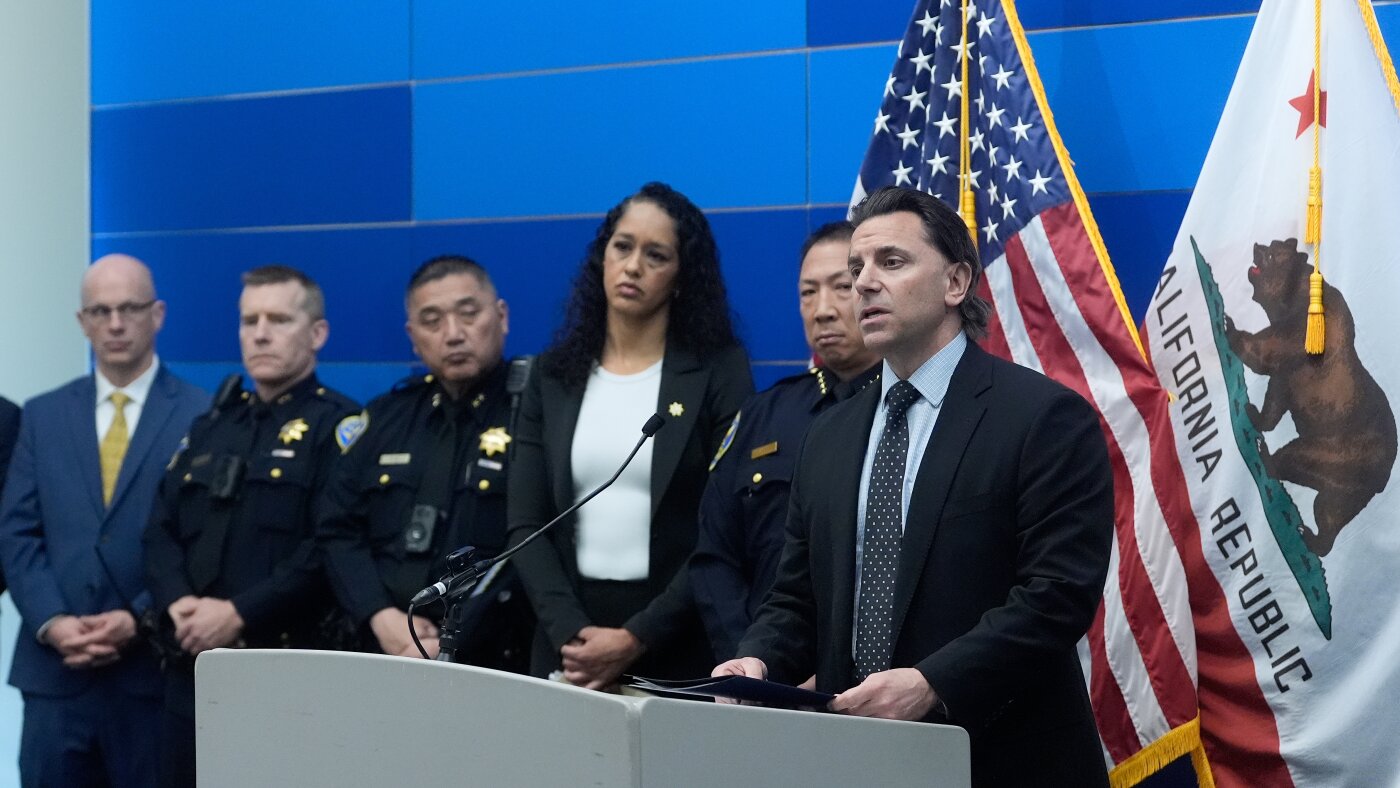
Man accused in Molotov cocktail attack of OpenAI CEO’s home charged with attempted murder

Embattled Rep Tony Gonzales announces plans to resign amid sexual misconduct allegations
-

 Atlanta, GA1 week ago
1 teenage girl killed, another injured in shooting at Piedmont Park, police say
-

 Georgia1 week ago
Georgia House Special Runoff Election 2026 Live Results
-

 Arkansas4 days ago
Arkansas TV meteorologist Melinda Mayo retires after nearly four decades on air
-

 Pennsylvania1 week ago
Parents charged after toddler injured by wolf at Pennsylvania zoo
-
 Milwaukee, WI1 week ago
Potawatomi Casino Hotel evacuated after fire breaks out in rooftop HVAC system
-

 Austin, TX6 days ago
ABC Kite Fest Returns to Austin for Annual Celebration – Austin Today
-

 World1 week ago
Zelenskyy warns US-Iran war could divert critical aid from Ukraine
-

 World1 week ago
Indonesia receives bodies of peacekeepers killed in southern Lebanon