Miami, FL
Miami Dolphins 2024 draft grades: Solid marks roll in after NFL Draft


Grading an NFL team’s draft class takes years, with players needing time to adjust to the speed of the game, what they are being asked to do as professionals, and to grow into the potential that led them to be selected. Getting a true grade for a player or draft class is not an overnight thing – see Miami Dolphins tackle Austin Jackson and how many people had written him off before last year – but immediately grading a draft class overnight is definitely a thing.
Analysts from all around the web start comparing what a team did to what their expectations for the team were, as well as to how they ranked the prospects pre-draft. Did you “reach” for a player that was ranked 10 spots after your draft position? Did you get a steal because you selected a “first-round talent” in the third round?
Prior to the draft, fans and analysts explain how the best method for selections is to take the “best player available” regardless of the position. During the draft, fans and analysts react pick by pick to whether the player selected was “at a position of need” for the team. After the draft, teams are graded for how well they filled their needs – despite the “BPA” approach – as well as for the players they did not select.
It is confusing, but it does lead to some fun looks at the draft class. How do the fans and analysts feel about the Dolphins’ 2024 draft class? It is time to take a look.
Dolphins 2024 draft picks
21: Chop Robinson, Edge, Penn State
55: Patrick Paul, T, Houston
120*: Jaylen Wright, RB, Tennessee
158: Mohamed Kamara, Edge, Colorado State
184: Malik Washington, WR, Virginia
198: Patrick McMorris, S, Cal
241: Tahj Washington, WR, USC
*The Dolphins traded a 2025 third-round pick to the Philadelphia Eagles to jump into the fourth round of this year’s draft, picking up the 120th overall selection.
The Phinsider Readers: B
The poll, which is below allowing you a chance to weigh in, had received just over 2,500 votes at the time of publication, with 50 percent of them coming in with a “B” grade. Seems like a solid grade from the fans of the team.
Poll
How do you grade the Miami Dolphins’ 2024 draft?
Associated Press – Rob Maaddi: B-
Edge Chop Robinson (21) has AP Defensive Rookie of the Year potential. OT Patrick Paul (55) doesn’t seem to fit the team’s preferred style of athletic tackles. WR Malik Washington is a sleeper in the sixth.
Bleacher Report – BR NFL Scouting Department: C+
The Miami Dolphins have no shortage of offensive playmakers. However, they were a candidate to take an interior lineman in Round 1 after losing Connor Williams to an ACL injury in 2023 and Robert Hunt in free agency this offseason.
However, the Dolphins instead took Penn State edge-rusher Chop Robinson with the 21st pick. It was a sensible choice considering Miami ranked 22nd in points allowed last season. Robinson may need some seasoning, but he has the baseline tools to become a major difference-maker.
“He’s a top-tier athlete which, combined with how well he sets up his pass-rush moves, gives him a ton of potential as an edge-rusher in the NFL,” Holder wrote.
Getting Robinson was a solid value, even if it didn’t address Miami’s top need.
Second-round pick Patrick Paul is a bit of a developmental tackle, and he won’t address Miami’s need on the interior. However, he has the size (6’8”, 331 lbs) and physical tools to develop into a solid starter and will give Miami insurance behind Terron Armstead. The 32-year-old Armstead will be back in 2024, but he hinted earlier this offseason that retirement could be on the not-too-distant horizon.
Miami kicked off its Day 3 by trading a 2025 third-round pick to move to 120th overall and grab Tennessee running back Jaylen Wright. While running back wasn’t a major need for the Dolphins, Wright’s speed and breakaway ability fits perfectly with returning ball-carriers De’Von Achane and Raheem Mostert.
Wideout Malik Washington might not possess the same game-changing speed of other Dolphins receivers, but his ability to move in traffic, separate and high-point the football should add a new dynamic to Miami’s passing attack sooner than later.
General manager Chris Grier added some fine players who should bolster all three phases. However, he may have prioritized value over need too much, and the Dolphins still have question marks along the offensive interior and in their secondary.
CBS Sports – Chris Trapasso: B-
I like many of the prospects the Dolphins picked, but their plan was somewhat confusing. Robinson was my EDGE1. Sensible. Paul is the opposite of a scheme fit for what McDaniel asks of his blockers. Wright is a rocket when given space, which is fun, but now the running back room is super crowded.
I’m all about adding more weapons at receiver today, but two slot types? Although Malik Washington was a second-round talent on my board, which is why I gave that a perfect grade.
ESPN – Mel Kiper, Jr.: B
Miami was hit hard in free agency as a result of a salary-cap crunch, losing guard Robert Hunt, defensive tackle Christian Wilkins, linebackers Andrew Van Ginkel and Jerome Baker and cornerback Xavien Howard, among other players. And while I liked the Dolphins’ additions of linebacker Jordyn Brooks, cornerback Kendall Fuller and tight end Jonnu Smith, they have big holes to plug. Plus, they came into this draft with six picks, tied for the second fewest in the league.
Chop Robinson (21) has elite upside if he can reach his ceiling, but when you turn on his Penn State tape, you wonder why he didn’t dominate. He had just four sacks last season. If I were running this team, I would have taken tweener defensive end/tackle Darius Robinson or center Graham Barton instead. Patrick Paul (55) is a selection for the future — he played left tackle in college and could replace Terron Armstead there down the line. But I’m not sure he’s ready to start as a rookie for a team that really had to get instant-impact players.
I’m a huge fan of speedy running back Jaylen Wright (120), but Miami gave up its 2025 third-rounder to get him. That’s not great value, especially for a team that doesn’t necessarily have a need at the position. I had Mohamed Kamara (158) at No. 67 overall in my rankings, so this is a fantastic pick. He had 13 sacks last season. GM Chris Grier tried to hit his void at wideout with Malik Washington (184) and Tahj Washington (241) on Day 3; Malik is the guy to watch, as he had 110 catches last season.
I like a bunch of these players, but it’s a small class and giving up the 2025 third-rounder means it can’t make it to B+.
Fox Sports – Fox Sports NFL Staff: A-
You had to laugh when the Dolphins took Jaylen Wright, the draft’s second-fastest running back. Last year, they took Devon Achane, one of the fastest players in the NFL. But that didn’t stop them from bringing more speed into the offense in the fourth round. Wright followed a good get in the first round in Chop Robinson, an edge rusher who’ll help the team manage snaps for Jaelan Phillips and Bradley Chubb, who both ended last year with major injuries. They also managed to snap up a tackle in Patrick Paul, who will develop behind Terron Armstead. It was a great draft, one that matched value with need. —Henry McKenna
New York Post – Ryan Dunleavy: C+
Of course, the blazing fast Wright went to the speed-obsessed Dolphins. Add some more 40-yard touchdowns. Paul thought he was going to be a first-rounder — few agreed, so that could leave a chip on his shoulder. The athletic Robinson gets pressures, not sacks.
NFL.com – Chad Reuter: B-
Miami needed another edge rusher, especially with Jaelan Phillips coming off an Achilles injury and Bradley Chubb coming off a torn ACL, but Robinson must show he can be a factor in the run game and convert pressures into sacks more regularly in the NFL. Left tackle Terron Armstead’s difficulty staying on the field made Paul a good pick in the second round. The teams’ forfeiture of its third-round pick dragged down its grade.
Trading a future third-round pick for a fourth in the current draft is usually not wise, and Miami has a few backs in the stable already, but finding a potential star in Wright waiting around made it easier to swallow. It would not surprise me if the relentless Kamara is as productive as Robinson early in his career. Both pass-catchers with the surname Washington (not related) will flourish as tough-minded slot receivers in Mike McDaniel’s offense.
Pro Football Focus – Trevor Sikkema: B-
Robinson — Robinson, ranked 40th on the PFF big board, could be considered a bit of a reach, but his potential is undeniable. He has dimensions of power and speed in his pass-rush arsenal. He also earned a 93.9 pass-rush grade over the past two seasons, which ranks second among FBS edge defenders — behind the Colts’ Laiatu Latu. Miami’s edge group could be a dominant unit if Robinson achieves his potential and Bradley Chubb and Jaelan Phillips recover from their injuries.
Paul — Miami selected a potential heir to Terron Armstead in Houston‘s Patrick Paul. Paul has terrific length and movement skills. He led all FBS tackles in 2023 with a 91.5 PFF pass-blocking grade. Pass protection is at a premium with Tua Tagovailoa at quarterback, so this is a significant move for the Dolphins’ offense.
Wright — Speed is the name of the game in Miami, and Wright supplies plenty of burst. His career-best 91.0 PFF grade in 2023 paced all backs in the SEC after racking up over 7.4 yards per carry, the second-highest rate among Power-Five backs.
Kamara — The Dolphins continue to add speed to their roster, regardless of position. Kamara is explosive — he recorded a 4.57-second 40 and a 10-foot-3 broad jump — but has a limited frame at 6-foot-2 and 249 pounds. He’s been a productive pass-rusher for Colorado State over the last few seasons, though. Over the last three years, he ranks in the 94th percentile of qualifying edge rushers in pass-rush grade on true pass sets.
Washington — The second-highest-graded receiver in 2023, behind only Malik Nabers, Washington led the FBS in receptions over the past two seasons. Despite his stature, he has some impressive movement skills and solid ability at the catch point to contribute in the receiving game while providing value on special teams in the meantime.
McMorris — McMorris wasn’t ranked on the PFF big board or the consensus board this year, though he did earn PFF grades above 70.0 in each of the past two seasons. He earned a 73.3 PFF coverage grade last year and finished the campaign with 21 defensive stops.
Washington — Washington is small but was really productive at the college level. He averaged 3.06 yards per route run in his final year at USC, dropped just 1.7% of the catchable passes thrown his way and earned an 80.4 PFF grade against man coverage.
Pro Football Network – Cam Mellor: B-
It was an interesting 2024 NFL Draft for the Miami Dolphins that might not be immediate dividends. Their first two picks, Chop Robinson and Patrick Paul have some high-end athletic traits and measurables that, if they can be developed, could turn them into excellent selections.
However, if you want to see an immediate return on your early-round investments, that’s not likely to happen in Miami.
Although EDGE was considered a need coming into the draft, selecting two pass rushers in the first four picks can be considered excessive, even if the latter selection was great value at pick 158.
Given the rumors circulating before the draft that Miami would take a receiver early, it was somewhat poetic that their biggest wins from a draft spot vs. PFN Big Board ranking perspective were with Malik Washington and Tahj Washington, who should compete to start in the slot in 2024.
The Ringer – Danny Kelly: B+
In true Dolphins style, Miami prioritized speed and explosiveness in building its 2024 draft class. The team rolled the dice on a high-upside pass rusher in Chop Robinson on Day 1, grabbing a raw but super twitchy pass rusher who has the best first-step burst in the class. Robinson has to develop more moves and get stronger against the run, but he has the foundation from which to build an excellent pass-rush plan. Fourth-round running back Jaylen Wright fits a similar high-upside mold as a deliciously explosive running back with elite top-end speed. I compared him to Raheem Mostert prior to the draft, and now the Tennessee standout has a chance to be Mostert’s long-term replacement. The team had a couple other Day 3 picks that I really liked, too: Colorado State’s Mohamed Kamara brings an explosive element off the edge to complement Robinson, and receiver Malik Washington was one of my favorite pass catchers in this class, period. My 56th ranked player, Miami got an absolute bargain by grabbing him in the sixth round. The former Virginia playmaker has strong hands, excellent burst, and elite tackle-breaking ability out of the slot. It wouldn’t surprise me much if he ended up getting on the field as the team’s no. 3 receiver early on. This is a class of high-variance players, but I’m excited about its potential.
The Sporting News – Vinnie Iyer: C
This seemed like the biggest “forced hand” of a draft class, as the Dolphins had to be dedicated to depth with some injury edge concerns up front (Bradley Chubb, Jaelan Phillips). Paul was thinking beyond Terron Armstead, while they hope Washington can give them a key No. 3. Wright is a fine talent, but for them, he’s just a Mike McDaniel luxury pick to a position of strength.
Sports Illustrated – Matt Verderame: C+
The Dolphins were predictable but effective. They built along the offensive and defensive lines with their first two picks, grabbing Robinson and then Paul, who should eventually replace Terron Armstead when he retires. For Miami, Robinson’s early maturation will be key with Jaelan Phillips and Bradley Chubb working back from injuries.
USA Today – Nate Davis: B-
Taking Penn State pass rusher Chop Robinson in the first round was probably a good call given the injuries to veteran OLB Bradley Chubb (ACL) and Jaelan Phillips (Achilles) and fact a surplus of edge players is never a bad thing. Choosing OT Patrick Paul in Round 2 was a defensible hedge given the appearance that LT Terron Armstead seems to be coming to the end of the line – though Miami seems to remain quite vulnerable up the middle. Mid-round RB Jaylen Wright (Tennessee) and OLB Mohamed Kamara (Colorado State) could add bonus juice. Miami’s third-rounder was forfeited due to owner Stephen Ross’ tampering violation, and the fourth-rounder was used in the acquisition of Chubb two years ago.
The Washington Post – Mark Maske: B-
The Dolphins focused on their lines in the draft’s early stages, getting edge rusher Chop Robinson in Round 1 and offensive tackle Patrick Paul in Round 2. But they still managed to add to their collection of speedsters by trading up for a fourth-round selection to use on big-play RB Jaylen Wright. Getting pass rusher Mohamed Kamara in the fifth round was a great value. Sixth-round WR Malik Washington also could fill a role
Yahoo! Sports – Charles McDonald: B+
It’s a strong draft haul for the Dolphins. They found a potential 10-sack edge rusher with Chop Robinson in the first round and grabbed a future starter at offensive tackle with Patrick Paul. Their trade-up for Jaylen Wright in the fourth was perplexing. Overall this is still a good group of players. Malik Washington and Tahj Washington are two wide receivers who had a lot of buzz in college and could compete for reps behind Tyreek Hill and Jaylen Waddle.
Favorite pick: Patrick Paul, OT, Houston (55th overall)
Loved this one. Paul is scratching the surface of how good he can be and comes with supreme athleticism in a 6-7, 330-pound body. He’s raw, but being a consistent NFL tackle is certainly within reach for him and he’ll make some incredible highlight-reel blocks in head coach Mike McDaniel’s offense. This is one of those prospect-to-team matches that seems destined to work out.
Least Favorite pick: Jaylen Wright, RB, Tennessee (120th overall)
Head coach Mike McDaniel is always going to place a premium on speed, but this might not be the back they’re looking for to spell De’Von Achane once Raheem Mostert eventually moves on. Wright is a blazer with inconsistent vision and ability to run between the tackles. Perhaps that’s less of a concern with McDaniel, but they may learn that not all fast backs are created equal.



The Oregon Ducks come off a chaotic recruiting period in the 2027 cycle, where they hosted official visitors and added to their list of commitments. Coach Dan Lanning and the Oregon staff are simultaneously looking ahead to future recruiting classes.
As the 2027 cycle starts to wind down and the 2028 cycle begins to pick up, the Ducks entered the recruiting sweepstakes for four-star edge rusher Elijah Tillman.
Oregon Ducks in the Mix for Four-Star EDGE Elijah Tillman
Tillman is a 6-7, 210-pound edge rusher from Loganville, Georgia. He’s listed as a consensus four-star recruit and is ranked as high as No. 152 in the class by Rivals.
In a recent interview with Rivals’ Chad Simmons, Tillman revealed that Oregon and the Miami Hurricanes are among the schools that he wants to visit. According to 247Sports, the Ducks offered him back on April 30, 2026, while the Hurricanes extended an offer all the way on January 25, 2025.
Tillman told Rivals that the different schools in the mix are even at the moment, but that Oregon and Miami were two of the schools that he wants to go out and see.
Four-Star Elijah Tillman’s Potential Oregon Ducks Fit
Sports Spring Football | USA TODAY Network via Reuters Connect
With Tillman’s large frame, which still has the opportunity to grow, he would provide the Ducks with size on the edge right away.
The 2027 recruiting class currently features five-star edge rusher Rashad Streets, three-star Achilles Reyna and three-star Josh Christensen at the position. The program prepares for current starters Matayo Uiagelelei and Teitum Tuioti to head to the NFL Draft at the conclusion of the 2026 season, leaving opportunities for the next couple of recruiting classes.
Additionally, the Ducks haven’t earned any commitments from the state of Georgia in their 2027 recruiting class. The last commit Lanning landed from Georgia was Dayton Raiola in the 2026 class, who made his decision on February 4, 2026. Making a big push for Tillman could possibly reignite the program’s recruiting in the Peach State.
Miami Hurricanes vs. Oregon Ducks Recruiting Battle
Miami is the other program that appears to be making a big push early for Tillman. Oregon fans are very familiar with former Ducks coach Mario Cristobal, who took Oregon recruiting to a different level before leading the Hurricanes to the National Championship game last season.
Cristobal and the Hurricanes have battled Lanning and the Ducks for blue-chip recruits more and more over the recent recruiting cycles. Most notably, Miami flipped four-star cornerback Ai’King Hall’s commitment from Oregon earlier in the 2027 cycle.
The two rivals also emerged as finalists for linebacker recruit Jalaythan Mayfield, who ended up choosing the Indiana Hoosiers. Oregon got the best of the Hurricanes once in the 2027 cycle when four-star offensive lineman Gus Corsair committed to the Pacific Northwest program over the Vanderbilt Commodores and Miami.
While the Hurricanes aren’t a Big Ten rival that the Ducks commonly go toe-to-toe with on the field and in the recruiting realm, Cristobal’s role in the recruiting rivalry adds a little bit more fuel to battles for recruits like Tillman.
Sign up to our free newsletter and follow us on Facebook, X and Instagram for the latest news.
 Add us as a preferred source on Google
Follow

The Miami Dolphins will have new starters at their cornerback positions since both Jack Jones and Rasul Douglas are not back with the team. The team drafted Chris Johnson in the first round and it’s pretty likely he’ll have a large role and should claim the one starting spot. The other starting spot should be up for grabs among the rest of the group. Jason Marshall is one of those players who has a better chance of claiming that starting spot after showing some flashes his rookie season. Jeff Hafley has already said he envision Marshall playing on the outside and the second-year corner should get plenty of chances to prove himself during the preseason.
You can check out that story here, and the rest of the day’s round-up below.
Phinsider News You May Have Missed

With Miami-Dade Superintendent Jose Dotres’ contract ending in February 2027, school board members are now looking to have his replacement by August.
Dotres has served as the superintendent for the third-largest school district since 2022. The school board started the search for his replacement in April.
More than 20 people applied for the position, but now only six have secured spots as semifinalists.
Here’s a closer look at who Miami-Dade’s superintendent might be:
Jose Bueno
With roughly 33 years of experience within Miami-Dade County Public Schools, Bueno currently serves as Dotres’ Chief of Staff.
According to his LinkedIn profile, Bueno’s tasks include coordinating and implementing major projects “that have significant district-wide impact on the goals of the district and involve coordination of other divisions and offices.”
He started as a teacher within the country back in 1993 and is a Florida International University and Nova Southeastern University graduate.
Ernie Lozano
Lozano is currently Broward County’s Public Schools Chief Human Resources Officer.
His passion is creating a safe and secure environment for both students and staff.
“He has been recognized for his contributions to the District’s safety and security initiatives, receiving accolades for his exceptional leadership and commitment to student and staff well-being,” according to a bio on the site for the National Student Safety and Security Conference & Workshop.
Before his career in human resources, Lozano served within education as a teacher, assistant principal and more.
Sylvia Mitchell
Hope builder, executive leadership coach and seasoned superintendent are all descriptions Mitchell has on her LinkedIn.
Living in Houston, Texas, Mitchell is familiar with the Sunshine State since she was a principal at Charter Schools USA in Fort Lauderdale back in 2012.
She has also served as superintendent twice in Texas and is currently Executive Vice President, Curriculum, Design & Development for Per Scholars.
Carlos Perez
Perez is a charter school principal in West Palm Beach and the former executive director of the Education Reform Project, a nonprofit organization based in Miami Beach.
According to the nonprofit, Perez has over 25 years of experience within education, mainly in New York, but now in Florida.
Perez has also been an assistant superintendent in the past, as well as taking part as an Executive Board Member for the New York State Association of School Personnel Administrators.
Christopher Ruszkowski
Currently based in South Carolina as CEO of South Carolina’s Children’s Fund, Ruszkowski has moved all over the country, and Florida will be no exception.
According to his LinkedIn, he served as New Mexico’s Secretary of Education back in 2019. Before living in South Carolina, he was a conservator for the Texas Education Agency. A conservator oversees the state’s takeovers of large school districts and charter school networks.
Getting his master’s at Stanford, Ruszkowski was a Distinguished Policy Fellow at the Hoover Institute located within the university.
Rafael Villalobos
Since 2022, Villalobos has been the South Region Superintendent of Miami-Dade County Public Schools. Before that, he was a principal for over ten years.
The Nova Southeastern alum has been in Miami for most of his life, even graduating from South Miami Senior High School in 1990.
-

 San Francisco, CA10 minutes ago
Classical music series helps reconnect downtown San Francisco community
-

 Dallas, TX15 minutes ago
Dallas police officers, paramedics recall saving woman stuck in a ravine for days;
-

 Boston, MA25 minutes ago
Red Sox win 7th straight game just hours after landing in New York
-
 Denver, CO30 minutes ago
One tree at a time: Denver nonprofit works to close shade gap as heat dome threatens neighborhoods
-

 Seattle, WA37 minutes ago
VIDEO: West Seattle Summer Fest 2026 day 1, evening report
-

 San Diego, CA40 minutes ago
The World’s Number One Wellness Retreat is Right in Our Backyard
-
 Milwaukee, WI45 minutes ago
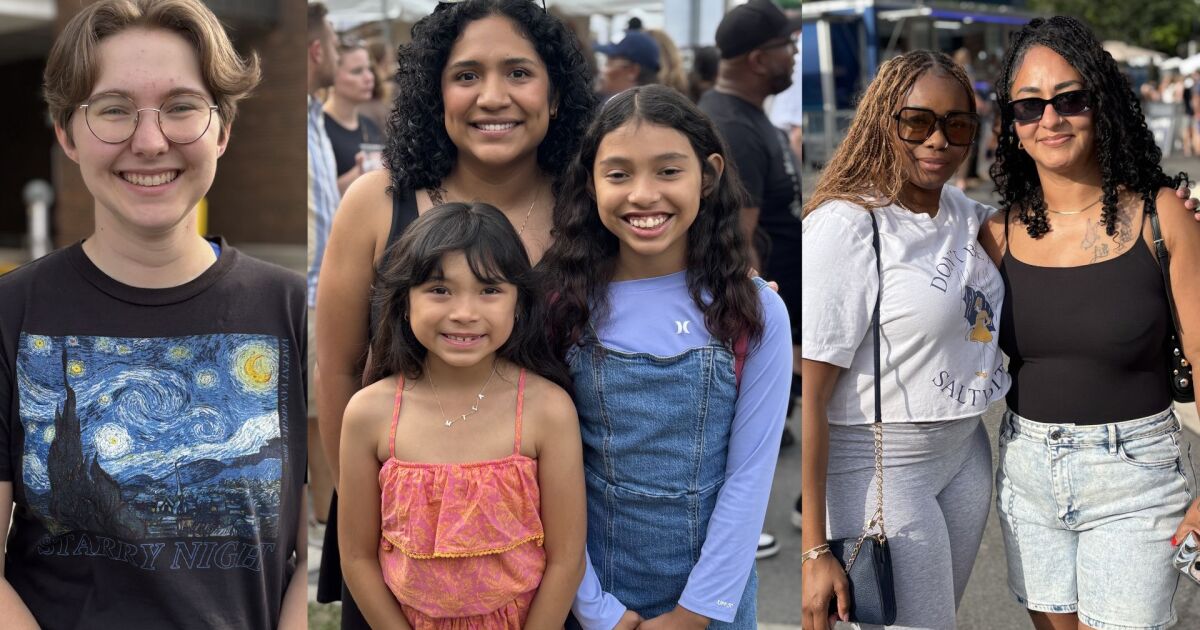
Festivalgoers say Milwaukee’s summer events fill a gap in downtown entertainment
-

 Atlanta, GA52 minutes ago
Atlanta mentoring program brings ‘Save Our Sons Tour’ to Jacksonville’s Duval Day

