Kentucky
A look at biggest greenhouse gas polluters in Kentucky, Indiana and nearby states

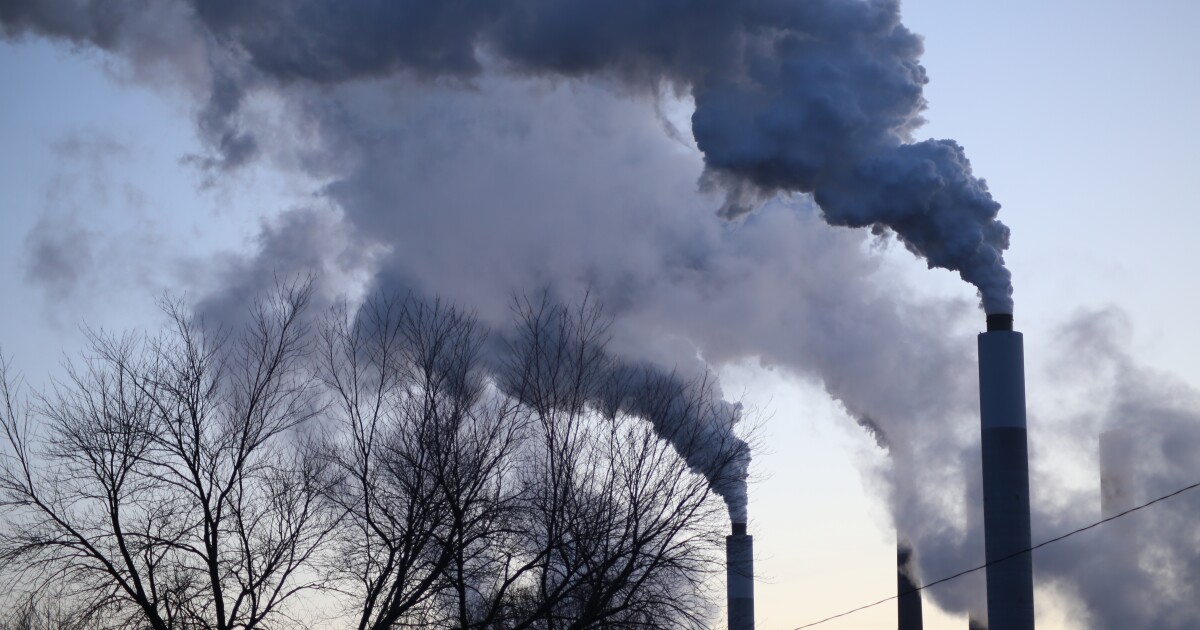
The Kentucky Center for Investigative Reporting analyzed a federal dataset to find the industrial facilities that directly released the most greenhouse gases – mainly carbon dioxide – in each of the following states: Kentucky, Illinois, Indiana, Iowa, Missouri, Ohio, Oklahoma, Tennessee and West Virginia.
More than two-thirds of the facilities are power plants and most — more than 70% — burn coal to make electricity, while more than a third use natural gas. Several plants burn both fuels.
Oil refineries, chemical manufacturers and steel mills are also among the region’s largest individual sources of greenhouse gas emissions.
Extensive scientific research shows climate change poses long-term threats to air, food and water quality. It makes extreme weather more frequent and dangerous, worsens the spread of some infectious diseases and endangers public health in many more ways.
The data KyCIR analyzed came from the U.S. Environmental Protection Agency’s Greenhouse Gas Reporting Program, which tracks about 7,500 facilities that collectively account for about half of America’s annual greenhouse gas emissions. The agency released its 2023 report in October.
In 2023, facilities tracked by the federal program directly released about 2.6 billion metric tons of carbon dioxide equivalent, which is a standard used to measure gas emissions based on their global warming potential.
KyCIR, in partnership with Side Effects Public Media and NPR’s Appalachia + Mid-South Newsroom, analyzed EPA data for nine states that are part of their news coverage areas.
The top 10 facilities in each of the states KyCIR analyzed, considered altogether, accounted for 14.5% of the facility emissions tracked by the EPA.
“The interesting part about greenhouse gas emissions is … it’s not a local pollutant, it’s a global pollutant,” said Daniel Zimmerle, director of Colorado State University’s Methane Emissions Program. “So those CO2 emissions by themselves, you know, don’t affect your neighborhood any more than CO2 emissions in China.”
He said there is often overlap between operations that emit a lot of carbon dioxide and those that release toxic pollutants that can hurt local residents’ health and environment more immediately.
Greenhouse gases hold in heat near Earth’s surface, and humans are changing the global climate by pumping too much of these gases into the atmosphere.
The connections between industrial facilities like power plants, climate change and community conditions within inland states can seem obscure, but the harm is already happening across the Midwest and South, said Tim Darst, who directs Earth literacy programs at the Passionist Earth and Spirit Center in Louisville.
For example, Tornado Alley is shifting east, hitting Western Kentucky more often, he said. Just last September, Hurricane Helene caused devastating flooding in Tennessee and North Carolina, far from the Florida coastline where the storm made landfall.
“It’s impacting us more and more,” Darst said of climate change. “And as long as we keep burning fossil fuels, we’re going to contribute to that.”
Who owns the facilities?
For the nine states KyCIR analyzed, EPA data list parent companies that, as of 2023, owned a stake in each industrial facility included in the states’ top 10 greenhouse gas polluters.
The three organizations with the most facilities on the states’ top 10 lists are:
- The U.S. government, via the Tennessee Valley Authority, owns nine facilities – two in Kentucky and seven in Tennessee.
- American Electric Power Co. Inc. owns six facilities – three in West Virginia and one each in Indiana, Ohio and Oklahoma.
- Vistra Corp. owns six facilities – four in Illinois and two in Ohio.
Tennessee Valley Authority spokesperson Scott Fiedler told KyCIR it makes sense the TVA has plants on these high-emissions lists because it provides power to seven Southeastern states.
He said the TVA is taking many steps to reduce its carbon emissions, with plans to close its remaining coal plants – all were among Tennessee and Kentucky’s top greenhouse gas polluters in 2023 – by 2035 or sooner. Its Bull Run Fossil Plant, which also was among Tennessee’s top 10 for emissions, shut down in late 2023.
Fiedler told KyCIR the TVA is working to hit net-zero carbon emissions by 2050 through a mix of strategies, including investing more in solar power and researching other emerging technologies.
“As energy demand grows due to greater reliance on electricity, new residents moving to this region and new economic investment, we need a diverse fleet that leverages multiple generation sources. The answer to keeping our energy secure, affordable and reliable is a well-rounded portfolio that is increasingly carbon-free and substantially expandable,” he said.
American Electric Power spokesperson Scott Blake told KyCIR the company is one of the nation’s largest electricity producers and its facilities listed among these states’ top greenhouse gas polluters are “capable of providing 24/7/365 generation.”
“Our nation’s power grid relies on these critical resources to keep power flowing,” Blake said via email. “Recently we’ve taken steps that could add a small modular nuclear reactor, wind, and solar facilities to our fleet. Additionally, we are looking for approvals to convert two coal plants in Texas to natural gas. Our diverse mix of resources allows us to provide customers with affordable, reliable power.”
KyCIR requested a comment from Vistra Corp. but did not receive a response by deadline.
Recent trends in industrial operations’ greenhouse gas pollution
Burning fossil fuels like coal and natural gas has powered the economies of the U.S. and other countries for more than 200 years. But doing so generates greenhouse gases. Scientific research shows the environmental tradeoffs are becoming catastrophic on a global scale.
Extensive research, including a recent United Nations Environment Programme report, indicate the world will likely surpass 1.5 degrees Celsius of average warming compared with the preindustrial era, unless countries like the U.S. greatly reduce their use of fossil fuels and drastically lower carbon emissions by 2030. Above that threshold, various effects of climate change will become more dangerous and potentially irreversible.
Still, scientists say many lives can be saved with each fraction of a degree of increased warming society avoids.
Greenhouse gas pollution varies from year to year, but EPA data show a 22% decrease in emissions by large industrial facilities from 2011 to 2023, primarily due to emissions reductions at power plants.
In the nine Midwestern and Southern states analyzed by KyCIR, large facilities tracked by the EPA program altogether released 36% less greenhouse gas pollution in 2023 than they did in 2011.
Facility emissions in Illinois and Kentucky showed the biggest drop when comparing those years, with 48% and 47% less emissions, respectively, in 2023 versus 2011, according to KyCIR’s analysis.
With power plants, in particular, Zimmerle, the Colorado State University researcher, said there are regional differences in how much that sector has shifted from fossil fuels to renewable energy.
“But the power industry has been steadily greening up because solar and wind are quite competitive in price now relative to other energy sources,” he said.
Lowering carbon emissions is a more complicated shift in technology for other operations, like cement production, he said, due to various factors.
Across industries, he said customer demand is a key factor in business decisions on clean energy investments.
“Your customers better be concerned about what’s happening to the planet because the corporate entity is only going to do what their stakeholders are pushing them to do,” he said.
Local clusters
Northwest Indiana is home to a cluster of operations that are counted among the state’s top 10 greenhouse gas polluters.
U.S. Steel’s Gary Works, Cleveland-Cliffs’s Burns Harbor and Indiana Harbor steel mills and BP’s Whiting oil refinery all are situated along a 30-mile stretch near Lake Michigan.
Lisa Vallee lives a couple miles from the BP refinery and is the organizing director for an environmental justice organization called Just Transition Northwest Indiana.
“It would come as no surprise to most people that the communities that are most affected – the frontline communities – are mostly working-class poor and communities of color, especially Gary, which has a really big population of those industry giants,” Vallee said.
She estimates the majority of residents aren’t necessarily worried about the carbon footprint of local industry “as much as I would be, (as) someone who’s working in this field and every day is faced with hearing stories from all across the globe on what is happening with our climate.”
What they do worry about, she said, is toxic chemicals released into their communities by big industrial facilities. In early 2024, for example, leaks in tanks at the BP refinery sent benzene and hydrogen sulfide airborne.
“That’s when people, I think, get really up in arms and get a little bit more scared and distrustful of the facilities,” Vallee said.
In Louisville, Kentucky, a pair of power plants under the same ownership that were among the state’s top 10 facilities for greenhouse gas pollution for 2023, Mill Creek Generating Station and Cane Run Generating Station, are just 11 miles apart on the banks of the Ohio River.
Louisville Gas and Electric and Kentucky Utilities, which are owned by Pennsylvania-based PPL Corp., run two other power plants ranked among Kentucky’s top 10 greenhouse gas polluters — the Ghent Generating Station and Trimble County Generating Station — both located roughly an hour northeast of Louisville.
“We’re proud of the progress we’ve made over the years to significantly improve air quality and reduce greenhouse gas emissions associated with our power plants,” LG&E/KU spokesperson Liz Pratt told KyCIR via email. “Our plan includes steps toward net-zero carbon emissions by 2050, while preserving reliability and affordability for our 1.3 million customers.”
Overall, Pratt said, LG&E/KU reduced greenhouse gas emissions at their plants by 19% since 2010. And more changes are on the way.
The Cane Run operation once ran on coal but switched to natural gas in 2015. Meanwhile, at Mill Creek, LG&E/KU broke ground in November on a new natural gas power-generating unit and made plans to retire two coal-fired units – one at the end of 2024 and one in 2027.
Transitioning to different power sources – whether from coal to natural gas or from natural gas to solar – generally requires substantial planning, financial investment and regulatory approval.
Pratt said “simply ceasing existing operations of power generating units would result in reliability and affordability concerns for customers.”
“As a regulated utility, we have an obligation to provide our customers with reliable electricity at the lowest reasonable costs,” she said. “Generation capacity can transition to lower emitting resources on a timeline that is supported by the regulatory process.”
The Cane Run facility is a stop on a local environmental justice tour led by Darst, the educator who works at Louisville’s Passionist Earth and Spirit Center.
“They used to burn a trainload of coal every single day in the summer in Cane Run,” Darst said.
Industrial facilities lower their greenhouse gas emissions by switching from coal to natural gas, like LG&E/KU did with Cane Run, Darst said. But that won’t halt climate change because natural gas is still a fossil fuel.
Scientific research shows a massive, global shift to renewable energy sources is necessary to drastically slow the pace of climate change. That’s because using renewable energy emits little, if any, greenhouse gases.
“Internationally, the plan is: Electrify everything. So move away from gas furnaces, gas stoves … gasoline-powered cars,” Darst said. “And then fuel-switch on the grid. The grid needs to keep moving toward 100% renewables – wind, water and sun.”
Growth in renewable energy is underway and supported by economic headwinds. However, research indicates the shift is happening too slowly to avoid crossing dangerous thresholds like the 1.5-degrees Celsius target.
A lot of coal power plants have closed in recent years and more are slated for retirement. Such closures could ramp up under federal regulations President Joe Biden finalized this year, tightening restrictions on greenhouse gas emissions for some coal and natural gas power plants.
However, President-Elect Donald Trump has rejected the well-established scientific evidence on climate change and wants to expand fossil fuel production and roll back environmental regulations. His administration’s decisions could change the calculus for businesses.
In the meantime, research makes it clear society is running out of time to stop climate change from becoming a runaway train, with catastrophic impacts on people and their planet.



Gen. Caine honors Sgt. Benjamin Pennington
Chairman of the Joint Chiefs of Staff Gen. Dan Caine spoke to reporters about the seventh soldier killed in the Iran war, Sgt. Benjamin Pennington.
GLENDALE, Ky. – The text message arrived on Mike Bell’s phone early on March 1. It was brief: Benjamin Pennington, the son of Bell’s close friend Tim Pennington, had been seriously injured in an attack at a U.S. air base in Saudi Arabia.
Bell hadn’t seen Benjamin Pennington in a while, but the executive minister and retired pastor of Glendale Christian Church clearly remembered the bright, ambitious boy who attended church every Sunday with his parents before enlisting in the U.S. Army.
Bell asked the Sunday school students gathered before him to pray for the 26-year-old Glendale native. Over the following week, he and Tim talked or texted daily, praying and hoping for the best.
There were signs of hope on March 5. Pennington asked the medical staff for a Pepsi, which his family saw as a positive sign. But by March 7, Pennington’s condition had worsened.
That night, after calling a basketball game at Central Hardin High School, Bell received a call from Tim. Benjamin had died from his injuries.
Bell said Benjamin was about to be moved from Saudi Arabia to Germany when his blood pressure dropped.
Bell ached thinking about Pennington’s family not being able to be with Benjamin in his final moments.
“Their hurt is so real and so powerful. I can’t fathom the loss of their son,” Bell said. “That distance made a real difference.”
As the conflict between the U.S., Israel and Iran enters its second week, Glendale and the larger Hardin County community are now mourning one of their own. According to those who knew him best, Pennington was a well-liked, confident young man who made friends easily.
An Eagle Scout and high school athlete, Pennington was enrolled in an automotive technology career pathway at his alma mater, Central Hardin High School. However, he changed his career plans and joined the Army in 2017 right after graduating.
At the time of his death, Pennington was a sergeant assigned to the 1st Space Brigade at Fort Carson, Colorado. The U.S. Army said in a news release that Pennington will be posthumously promoted to staff sergeant.
Glendale is a typical small town — a Mayberry of today, as Bell likes to say. It’s quiet, with plenty of antique shops and family-owned restaurants lining its historic boulevard. Residents here take pride in how long they’ve lived here, and many have never dreamed of leaving the community they’ve built.
“I moved here 20 years ago, and I’m considered a young-in,” said Sherry Creek, owner of The Mercantile, a home goods store on East Main Street.
Some, like Eddie Best, trace their roots back to the 1800s. On March 10, Best was inside The Whistle Stop, a southern-style family restaurant that has only changed hands twice in its 50-year history. It was a Tuesday, which meant he was picking up his family’s regular order of two open-faced roast beef sandwiches, a side of greens and baked apples.
“Family, that’s why I stayed all these years,” said Best, 45.
The ties that bind this close-knit community make Pennington’s death even more impactful for the town of about 2,000 residents, located about an hour south of Louisville. In the few days since the news broke, Bell said his and others’ phones have been ringing nonstop.
“The people are wanting to know what to do, how to do,” Bell said. “Everybody is struggling in darkness, trying to figure out how to bring a little light to the Pennington family in their struggle and transition.”
The Penningtons, by all accounts, are active and involved community members. Tim Pennington has been a long-standing member of the town’s Lions Club and coaches cross country and track at Central Hardin High School.
Pennington was on the team while his father was the coach. Contrary to what some might expect, Pennington showed at least no outward annoyance at his dad being coach, said Jonathan Ratliff, who was also on the school’s team. If anything, he put twice as much effort into his sport, showing he wasn’t going to get favorable treatment, Ratliff said.
Ratliff, who was a few years ahead of Pennington at Central Hardin, said Pennington was friendly and funny, someone who quickly made friends with teammates and even athletes on different teams.
“As soon as I joined the team, it felt like I had been with him forever,” Ratliff, a part-time actor in the Glendale community, said. “It didn’t matter if you knew Ben for a minute or two years. He just had a positive energy to be around. Very fun guy, great teammate to have.”
Pennington’s death marks a second blow to Glendale in recent months. In December, Ford and the South Korean company SK On dissolved their partnership to manufacture electric vehicle batteries at a plant just outside of the town. Although Ford plans to retool the factory and hire 2,100 workers for its second phase, the immediate impact resulted in termination notices to 1,500 people.
“Nobody was indifferent on it,” Bell said of the plant. “And then you have this, and everybody hurts. … It’s a family.”
Pennington is the seventh U.S. service member to die in the conflict that began Feb. 28. The other six soldiers died in an Iranian missile strike at a civilian port in Kuwait one day after the war began. Military officials are investigating the circumstances of the March 1 attack at Prince Sultan Air Base in Saudi Arabia.
Pennington received the Army Commendation Medal three times and the Army Good Conduct Medal twice during his military career, according to the U.S. Army Space and Missile Defense Command. He also received the Army Achievement Medal, National Defense Service Medal, Global War on Terrorism Service Medal, Overseas Service Ribbon, Noncommissioned Officer Professional Development Ribbon, Korea Defense Service Medal and the Army Service Ribbon.
On March 9, Pennington’s body was returned to U.S. soil. Vice President JD Vance and Secretary of Defense Peter Hegseth attended the dignified transfer ceremony at Dover Air Force Base in Delaware, a military tradition.
It’s unclear when Pennington’s remains will return to Glendale, but the community is ready to welcome him home.
Hardin County Judge Executive Keith Taul has ordered all flags at Hardin County government buildings to be lowered from March 9 to sunset March 11 in honor of Pennington.
The Glendale community “will get through this, together,” Taul said. “They will. They’ll reach out and put their arms around the Pennington family for sure.”
Monroe Trombly covers public safety. He can be reached at mtrombly@gannett.com.

WASHINGTON — President Trump will use his stop in Kentucky on Wednesday to try to get his congressional nemesis out of office.
His target is Rep. Thomas Massie, a seven-term congressman who the White House has named the “Democrats’ favorite member.”
Trump endorsed Massie’s primary opponent, Ed Gallrein, who will be at the event in Hebron, Ky., per his campaign. The president will also be making a stop in Ohio.
Hebron is located in Boone County, Ky., just south of Cincinnati.
The White House made its feelings on Massie clear.
“You can have differences, but you have to be constructive. He is not constructive. In fact, he’s the Democrats’ favorite member,” a senior administration official told The Post.
Massie has outraged the White House on multiple occasions: he refused to support Trump’s “Big Beautiful Bill,” which was the president’s signature domestic policy agenda; he criticized Trump’s foreign policy and accused him of executive overreach on the attacks on drug boats and Iran; and he led the charge on demanding the Justice Department release all its files in the Jeffrey Epstein case.
Now Trump is going to Massie’s district along the Ohio River to campaign against him, with the primary election just a little more than two months away, on May 19th.
Massie won’t be there.

“Congressman Massie will not be attending as he has a previously scheduled official event,” his campaign told The Post.
Trump has railed against Massie as “the worst Republican.”
He took a swipe at his biggest naysayer when he spoke to House Republicans at their retreat at Trump Doral on Monday.
“The Republican Party has fantastic spirit, the level I don’t think has been seen before,” Trump said. “We have to get a couple of people on board, which at least one case is virtually impossible. I wonder who that might be, sick person.”
It’s believed he was talking about Massie, who was not seen in the audience.
In contrast, Gallrein, a former Navy SEAL, has praised Trump, his policies and his handling of the war in Iran.
For his part, Massie has been posting Trump’s videos and comments attacking him, hoping to turn the criticism from the president into support from voters.
The May primary will be a test of Trump’s power with Republican voters. It’ll also be seen as a barometer of Trump’s messaging on the economy.
The White House has argued the cost of living is down but rising gas prices – from the attack on Iran – have dominated the news. Still, the president will tout his work on the issue.
“President Trump will visit the great states of Ohio and Kentucky on Wednesday to tout his economic victories and detail his administration’s aggressive, ongoing efforts to lower prices and make America more affordable,” White House spokesperson Liz Huston told The Post.

Northern Kentucky brought home the Kentucky High School Hockey league state championship once again.
The Northern Kentucky Norsemen defeated Owensboro in dominant 5-0 fashion on March 8 to hoist the trophy. The Norsemen, comprised of players from schools across Northern Kentucky, earned their fourth state title since 2017. The Norsemen previously won in 2017, 2019 and 2023.
After entering the tournament as the top-seeded team, two wins brought the Norsemen to a 27-12-2 final record.
The Norsemen’s defense was in peak performance in the finals. Despite Owensboro getting off over 30 shots, senior goalkeeper Chase Bender kept a clean sheet.
On offense, junior Trevor Bauwens led the Norse, finishing the season with 35 goals and 12 assists. Other key offensive performers were seniors Mitchell Kirby and Samuel Mouser. Kirby ended the year with 19 goals and 22 assists, while Mouser had 16 goals and a team-best 30 assists.
Northern Kentucky is now set to represent the state in the USA Hockey High School National Championships. The tournament be held March 18-22 in Plymouth, Minnesota.

Severe storm risk into tonight through early Wednesday morning

NCAA Wrestling Championships at-large bids announced

Glendale, KY, residents mourn death of solider killed in Iran conflict

Officials confirm Pensacola Beach residue is algae, not oil from Louisiana spill

Maryland parents push to hold drug dealers accountable in overdose deaths

Florida High School Football Rankings: Top 25 teams – Oct. 21

Cleary's 21 help Le Moyne down Central Connecticut State 69-64 in OT

How old is Bo Nix? What to know about Oregon quarterback ahead of 2024 NFL Draft

99th annual Pony Swim held in Virginia

Indiana Members Credit Union announced as new anchor tenant at Bottleworks District

Map: 2.3-Magnitude Earthquake Reported North of New York City

Trump stirs GOP primary drama with visit to Massie’s Kentucky home turf

Israeli air strike targets building in south Lebanon

Ed Martin, outspoken Justice Department lawyer, is formally accused of ethical violations | CNN Politics

Trump reveals top issues GOP should focus on to secure midterms victory: ‘I’ve never been more confident’
-

 Wisconsin1 week ago
Setting sail on iceboats across a frozen lake in Wisconsin
-

 Massachusetts1 week ago
Massachusetts man awaits word from family in Iran after attacks
-

 Maryland1 week ago
AM showers Sunday in Maryland
-

 Pennsylvania5 days ago
Pa. man found guilty of raping teen girl who he took to Mexico
-

 Florida1 week ago
Florida man rescued after being stuck in shoulder-deep mud for days
-

 Sports6 days ago
Keith Olbermann under fire for calling Lou Holtz a ‘scumbag’ after legendary coach’s death
-

 Detroit, MI4 days ago
U.S. Postal Service could run out of money within a year
-

 Miami, FL6 days ago
City of Miami celebrates reopening of Flagler Street as part of beautification project