Midwest
‘Schemes stacked upon schemes’: $1B public benefits fraud fuels scrutiny of Minnesota’s Somali community

NEWYou can now listen to Fox News articles!
A series of sprawling fraud schemes involving hundreds of millions of dollars stolen from Minnesota taxpayers — from COVID-relief programs to housing and autism services — have placed the state’s Somali community under a renewed, intense spotlight, raising uncomfortable questions about whether some who found refuge here are robbing their new neighbors blind.
These swirling fraud cases — and claims that some ill-gotten gains were diverted to the Somali terrorist organization Al-Shabaab — have now prompted a House investigation, a Treasury Department probe and mounting political pressure on state leaders, including Democrat Gov. Tim Walz, over why Minnesota failed to safeguard taxpayer money.
The fraud revelations, combined with a string of violent crimes and revived terror concerns involving Somali-linked defendants, have shaken public confidence and raised urgent questions about why Minnesota failed to stop the schemes sooner. The developments have also deepened public unease and revived long-standing questions about assimilation, oversight and public safety in Minnesota.
INSIDE ‘LITTLE MOGADISHU’: MINNESOTA’S BELEAGUERED SOMALI COMMUNITY UNDER A CLOUD OF FRAUD AND TRUMP ATTACKS
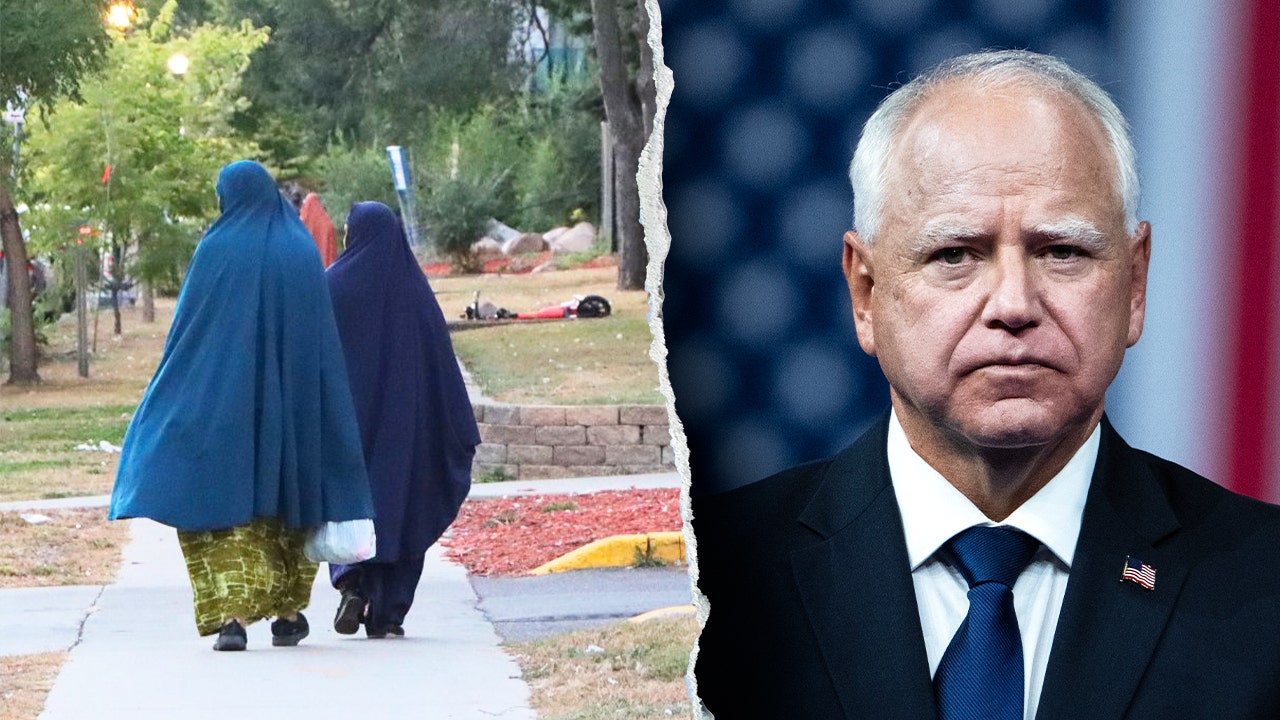
Two Somali women walk through a Minneapolis neighborhood as Minnesota Gov. Tim Walz appears in a split image. Lawmakers say the state’s oversight failures and political sensitivity around Somali-run nonprofits helped fuel the $1 billion welfare fraud scandal now under federal investigation. (Williams/CQ-Roll Call, Inc via Getty Images; Michael Dorgan/Fox News Digital)
House Majority Whip Tom Emmer, R-Minn., told Fox News Digital that the fraud scandal represents “a catastrophic failure of oversight” under Walz and characterized some of the culprits involved as a “Somali criminal enterprise crew.”
“People can focus on an ethnic group if they want, but the real issue is the lack of leadership and accountability in the state of Minnesota with Tim Walz and his administration. This wasn’t about Somalis; this was about government incompetence and lack of accountability,” Emmer said.
“We have been trying to sound the alarm on this fraud… for more than three years.”
‘Schemes stacked upon schemes’
The centerpiece scandal is the Feeding Our Future case, where approximately $300 million intended to feed low-income children during the pandemic was siphoned away in what federal prosecutors describe as the largest pandemic-relief fraud scheme charged in U.S. history. Some of the shell companies and meal sites were operated by Somali Minnesotans, prosecutors say, though the alleged ringleader — Aimee Bock — is a White American.
That sprawling case has now grown to at least 78 defendants, according to the U.S. Attorney’s Office in Minnesota.
U.S. Attorney Andrew Luge, pictured in 2022, outlines federal charges against people accused of participating in the Feeding Our Future fraud scheme that diverted child-nutrition funds into luxury spending, real estate and kickbacks. (Glen Stubbe/Star Tribune via Getty Images)
Prosecutors say criminals also bilked millions of dollars from Minnesota’s Housing Stabilization Services program — which pays for help finding and keeping housing — as well as the state’s autism-services program by billing for appointments, therapy and casework that never took place.
Former Acting U.S. Attorney Joseph Thompson described the scams as “schemes stacked upon schemes” that drained tens of millions of dollars from Medicaid. At least some of those defendants also have ties to the Somali community.
“It feels never-ending,” Thompson said in September, when announcing that eight people had been charged with defrauding the housing stabilization services program of around $8.4 million in total. “I have spent my career as a fraud prosecutor and the depth of the fraud in Minnesota takes my breath away. The fraud must be stopped.”
Thompson said the eight were part of the “first wave” of prosecutions in the case. The fraudsters, in many instances, spent the cash on luxury cars, lavish lifestyles and purchasing property at home and in places like Kenya.
Riverside Plaza looms over the Cedar Cultural Center in Minneapolis’ Cedar–Riverside neighborhood, a hub of Somali immigrants. Minnesota fraud schemes from COVID relief and social programs have intensified scrutiny of the state’s Somali community. (Michael Dorgan/Fox News Digital)
State Sen. Jordan Rasmusson, the lead Republican on the state Senate’s Human Services Committee, told Fox News Digital he believes the Feeding Our Future scandal grew to historic levels because state leaders were afraid to investigate Somali-run nonprofits and unwilling to confront obvious fraud.
“Concerns of political correctness halted the Walz administration from doing the investigations they needed to protect Minnesota’s tax dollars,” Rasmusson said.
He said state DHS dysfunction “from the time that Gov. Walz took office” created an environment where criminals were able to exploit human-services programs for years.
“The administration has been asleep at the wheel,” he said.
A widely circulated DHS whistleblower account alleged that staff who raised internal fraud concerns were ignored, reassigned or sidelined — which tracks with Rasmusson’s account.
House Majority Whip Tom Emmer criticized Minnesota Gov. Tim Walz for his handling of the widespread fraud. (Getty Images)
Feeding Our Future swindle unravels
Bock, the founder and executive director of Feeding Our Future, and Salim Said, a local restaurant owner, were found guilty of their roles in the scheme, with prosecutors stating that they splashed their cash on luxury homes and cars, as well as their lavish lifestyles.
They claimed to have served 91 million meals, for which they fraudulently received nearly $250 million in federal funds, according to the U.S. Attorney’s Office in Minnesota. It’s unclear how many Somalis were involved in the scheme, as prosecutors don’t release the nationalities of defendants.
One witness reportedly claimed that Said disclosed a gang affiliation and threatened to kill that person if they reported the fraud to authorities, Thompson said.
Additionally, five people were also charged with offering a cash bribe to a juror and preparing written arguments for the juror. One argument read, “We are immigrants: they don’t respect or care about us.”
In 2021, when the Minnesota Department of Education grew suspicious and tried to stop the flow of funds, Feeding Our Future sued, alleging racial discrimination. A judge ordered the state to restart reimbursements — a ruling prosecutors said enabled the scheme to escalate.
Prosecutors say Aimee Bock, founder of Feeding Our Future, and Salim Said helped orchestrate one of the largest pandemic-relief fraud schemes in U.S. history. Both were found guilty of diverting federal child-nutrition funds into luxury homes, vehicles and other personal spending, according to the U.S. Attorney’s Office. (Sherburne County Sheriff’s Office)
The lawsuit drew political support from Somali-American State Sen. Omar Fateh, who appeared at a community celebration of the ruling and later acknowledged receiving — and returning — campaign donations from individuals indicted in the case.
While investigating the scandal, federal agents discovered that one scammer, Asha Farhan Hassan, had pocketed about $465,000 but was also operating a much larger scheme: defrauding the state’s autism-treatment program of roughly $14 million. Hassan billed Medicaid for fake therapy sessions, used untrained staff and paid parents $300 to $1,500 a month to keep their kids in the program. She sent hundreds of thousands of dollars abroad, including to purchase real estate in Kenya, prosecutors said.
The scale of program growth stunned federal officials. The Housing Stabilization Services program was projected to cost $2.6 million annually but paid out more than $100 million last year. The autism program’s budget jumped from $3 million in 2018 to nearly $400 million in 2023, according to Dr. Mehmet Oz, the administrator of the federal Centers for Medicare and Medicaid Services.
The unraveling fraud schemes intensified scrutiny of Walz’s administration, with critics arguing basic safeguards were ignored even as theft ballooned.
Crime and terror
A recent City Journal article claimed some stolen welfare money has flowed to Al-Shabaab in Somalia through informal “hawala” networks. That report has intensified scrutiny and stirred old fears, given that about 20 young Somali-Americans left Minnesota in the late 2000s to join the terrorist group, with one, Shirwa Ahmed, becoming the first known American Islamist suicide bomber when he detonated a car bomb in Somalia in October 2008.
Rasmusson said he was concerned about money ending up with terrorists.
“Because there’s more than a billion dollars that’s been stolen and a significant portion of those dollars have been directed overseas, there are concerns this money could be either directly or indirectly funding terrorist organizations like al-Shabaab,” Rasmusson told Fox News Digital.
Newly trained al-Shabab fighters perform military exercises south of Mogadishu, in Somalia, Feb. 17, 2011. (AP Photo/Farah Abdi Warsameh, File)
Former Hennepin County Sheriff Rich Stanek, who testified before Congress about Somali-American radicalization, said Minnesota ignored early warning signs once before.
“We really got a wake-up call in 2010-11,” Stanek said. “Young people were going back to Somalia to participate in terrorist training camps and terrorist actions when they had no clear ties back to their culture. They were born here in the U.S. but felt a need or were radicalized to go back.”
“Minnesotans had no idea what was even going on until the FBI and Joint Terrorism Task Force stepped in.”
He said the threat has declined but not disappeared.
“I’m not saying it still doesn’t happen, because I know it does,” he said.
Last year, Abdisatar Ahmed Hassan, 23, pleaded guilty to attempting to provide material support to ISIS after twice trying to travel to Somalia.
Crime cases shaking public confidence
For many Minnesotans, the fraud cases are only the latest chapter in a longer pattern of violence and instability tied to small pockets of the Somali community. Public unease has also grown recently in response to a string of recent violent crimes tied to the community in the Twin Cities.
Somali national Abdimahat Bille Mohamedis, a man with two previous sex crime convictions, was charged this week with kidnapping and raping a woman at a hotel while on probation.
In July, Qalinle Ibrahim Dirie, a Somali migrant, was jailed for 12 years for sexually assaulting a child. The case sparked fury when a local mosque gave a character-reference letter praising the pedophile’s “good conduct” and urged leniency.
During a two-week stretch over the summer, a 15-year-old was killed in a mall shooting, while two high-school graduation ceremonies left a 49-year-old father with a head wound and a 19-year-old man injured. All three incidents involved members of the Somali-American community, according to reports, while Emmer said the incidents were gang-related.
Qalinle Ibrahim Dirie, who was jailed for sexual assault of a 12-year-old girl, and Michael Lual Nhial, who was charged with second-degree intentional murder in the death of David Stuart Chant. (Minnesota Department of Corrections; Dakota County Sheriff’s Office)
In May, Michael Lual Nhial, who had a history of erratic and aggressive behavior, was charged with killing David Chant, a 59-year-old man who used walking sticks to get around and was found beaten to death at a park in Burnsville, a city 15 miles south of downtown Minneapolis.
Stanek said Somali-related violence began surfacing between 2005 and 2010, initially involving first-generation immigrants but later drawing in U.S.-born youth, with most shootings traced back to a small network of repeat offenders — young men cycling through probation and short jail terms.
Groups such as the Somali Outlaws and 10th Street Gang were never tightly organized criminal syndicates but loose crews of young men whose crimes stemmed more from personal rivalries than organized criminal enterprises, he said.
Minnesota does not track crime by ethnicity, and violent crime statewide has fallen, but the visibility of Somali suspects in these cases has amplified and revived old narratives about crime within Minnesota’s Somali community.
DEMOCRAT MAYOR BLASTED FOR VOWING TO MAKE MAJOR CITY ‘SAFE HAVEN’ FOR ILLEGAL IMMIGRANTS
A woman selling bottles of water near a street sign for “Somali St” with the Riverside Plaza towers in the background in Cedar-Riverside, Minneapolis. (Michael Dorgan/Fox News Digital)
Leadership and oversight failures
Rasmusson said Walz has “lost the confidence of Minnesotans and the legislature in his ability to lead,” given the size of the fraud and the administration’s repeated failure to intervene when irregularities were clearly visible.
He pointed to one glaring example investigators missed.
“They were claiming to feed 6,000 kids a day, seven days a week, in a community of only 2,500 people,” he said. “And so you don’t need to be an FBI analyst to figure out that there’s probably fraud occurring.”
But community leaders are pushing back, saying Minnesota’s Somali population is overwhelmingly law-abiding and hardworking — and that a handful of offenders are being used to smear an entire community. They say the above incidents do not define them and that most Somali immigrants in the state are hardworking and deeply patriotic toward the United States.
Jaylani Hussein, executive director of CAIR–Minnesota, told Fox News Digital that while the crimes are real and serious, he rejects the idea of collective blame for criminal activity. Hussein did not defend the crimes but placed their actions in the broader context of American immigrant history — drawing parallels to Irish and Italian communities once linked to organized crime.
“We have a history in this nation of identifying crime and associating it with communities — whether it’s the Italian mafia or Irish gangs,” Hussein said. “Crime is an individual act. It’s an act of betrayal of our trust. When someone steals money from food at a school, they’re not stealing from anybody else — they’re stealing from their own community, from children who need it. Especially in the Somali-American community, which is still a poor community.”
A woman in a maroon abaya crosses the street near a mosque in Minneapolis’ Cedar–Riverside neighborhood. (Michael Dorgan/Fox News Digital)
Rasmusson said the failures were so significant that Walz, who intends to run for a third term in 2026, may no longer be able to lead the state.
“The Walz administration has failed and they’ve utterly failed to protect Minnesota taxpayers,” he said. “And I think he’s lost the confidence of Minnesotans and the legislature in his ability to lead as governor of this state.
“And I think that he should recognize the position that he’s in and that it will be very challenging for him to have the confidence of Minnesotans again.”
Read the full article from Here



Every seat in the Michigan Senate is up for election this year, and eight of those districts are in Wayne County.
In the 4th, 5th and 8th Districts, only one Republican and one Democrat filed for election, meaning those candidates will automatically be nominated and move on to the November ballot. Here are The Detroit News endorsements in the five contested Senate primaries in Wayne County:
1st District (Southwest Detroit and parts of Downriver, including Taylor, Melvindale and Lincoln Park): Two Detroit Democrats are competing for this seat: Abraham Aiyash and Justin Onwenu.
Aiyash is a former state representative who is hoping to return to the Legislature after a two-year absence. He is a progressive whose policy positions align with Democratic socialists.
Onwenu is an attorney who served the Mike Duggan administration as Detroit’s first Director of Entrepreneurship and Economic Opportunity, helping small businesses get a start in the city. Before attending Columbia Law School, where he was president of the student body from 2023 to 2024, Onwenu worked to combat air and water pollution in Detroit, Ecorse and River Rouge.
In the Senate, he promises to be a supporter of legislation to strengthen neighborhoods by lowering property taxes and investing in infrastructure.
He also supports stronger transparency and ethics rules for lawmakers. Justin Onwenu gets our endorsement in the 1st District Democratic primary.
Patrick O’Connell of Ecorse is unopposed in the Republican primary.
2nd District (Northwest Detroit, Dearborn Heights and part of Dearborn): The district is currently represented by Sylvia Santana, who made an unsuccessful bid to be nominated for the Michigan State University board.
The Democratic primary features two Dearborn residents who are hoping to replace Santana: Erin Byrnes and Abbas Alawieh.
Alawieh describes himself as a political strategist, community organizer and pro-peace advocate. He is supported by the Michigan Democratic Party’s Progressive Caucus and aligns with many of its anti-growth positions.
Byrnes is currently a state representative in her second term. Like her opponent, she is well to the left of center on the political spectrum. In the Legislature, she has pushed for utility rate controls.
The two Democrats are similarly positioned. Our choice in the 2nd District is Erin Byrnes, based on her legislative experience.
Harry Sawicki of Dearborn Heights is unopposed in the Republican primary.
3rd District (Detroit, Warren and Madison Heights): The contest to replace incumbent Stephanie Chang has drawn a long list of candidates. The 3rd District starts near Downtown Detroit and stretches north through the center of the city into southern Oakland and Macomb counties.
Eleven Democrats, all from Detroit, are competing in the primary. They are: Mohammad Alam, a Bangladeshi immigrant and Army veteran; LeJuan Council, a property manager and small business owner; John Conyers III, son of the late congressman; LaTanya Garrett, a former state representative; Korey Hall, a former director of community affairs in the Whitmer administration; Adam Hollier, a former state senator; Gary Hunter, a former candidate for Detroit City Council; Kimberly Hill-Knott, former head of the Detroit Climate Action Collaborative; Toinu Reeves, an economist, Abraham Shaw, who owns an auto repair shop, and Eboni Taylor, a community advocate.
There are several interesting and impressive candidates in this race, including Conyers, who just wrote about his father. Garrett has legislative experience, as does Hollier, whom we’ve endorsed in his previous runs for public office.
But we are most impressed with Reeves, a newcomer to politics who brings top-notch credentials to the race. Reeves grew up on Detroit’s east side and is an economist who attended Wayne State University and Dartmouth College.
He serves as chair of the Economic Development Workgroup for Detroit’s District 4 Community Advisory Committee and on the Jefferson-Chalmers Community District Council. He is a former school teacher and autoworker.
Toinu Reeves offers fresh ideas and much-needed skills, and gets our endorsement in the 3rd District Democratic Primary.
Mark Ashley Price is unopposed in the Republican primary.
6th District (Redford Township, Farmington and Farmington Hills): Incumbent Mary Cavanaugh is defending her seat from a challenge from fellow Democrat Stephen Jensen, who shows no signs of a campaign. Both are from Redford.
Mary Cavanaugh, granddaughter of the late Detroit Mayor Jerome Cavanaugh, has served her district well and should be renominated for a second term.
Joi Pokerwinski of Redford Township is unopposed in the Republican Party.
12th District (Parts of Wayne, Macomb and St. Clair counties, including Algonac, the Grosse Pointes, St. Clair Shores, Harper Woods, Mount Clemens and New Baltimore): Incumbent Sen. Kevin Hertel of St. Clair Shores is unopposed in the Democratic primary. Five Republicans are competing in their primary to face him in November.
They are: Joseph Backus of St. Clair Shores, a prolific community volunteer who has run unsuccessfully for other offices; Patrick Biange of St. Clair Shores; John Goldwater of New Baltimore, an oil and gas entrepreneur; Eileen Tesch, the former mayor of Algonac who faced recall efforts, and Shelley Wright, a former general contractor and owner of a process serving company who says Donald Trump inspired her to politics.
John Goldwater has experience growing a business and creating jobs. He would also prioritize improving skilled trades training. The father of six is a conservative who describes himself as pro-life and a defender of the Second Amendment.
Our endorsement in the 12th District Republican primary goes to John Goldwater.

MILWAUKEE, Wis. – Several Milwaukee leaders are condemning recent Immigrations and Customs Enforcement activity in the city, though questions remain whether actions meant to limit the agency within city limits can be enforced.
The group led by U.S. Congresswoman Gwen Moore expressed anger at the nature of the at least 57 confirmed arrests made by ICE agents across Wisconsin during “targeted operations” that began in late June.
“They’re being kidnapped. They’re being disappeared. They’re being rushed through a judicial process without due process because they don’t have any money. And we’re here to decry that,” said Moore during a press conference July 9.
Back in April, Milwaukee Common Council members unanimously passed one of the key pieces of their “ICE Out MKE” package: an ordinance that prohibited ICE agents from wearing masks while working in the city. But the Department of Homeland Security has indicated they will not adhere to the ordinance, with representatives asserting the US Constitution’s Supremacy Clause allows for federal laws to supersede any local ordinance.
“State and local sanctuary politicians attempting to ban our federal law enforcement from wearing masks is despicable and a flagrant attempt to endanger our officers,” said an ICE spokesperson in a statement to WTMJ. “To be crystal clear: we will not abide by unconstitutional bans. The Supremacy Clause makes it clear that state and local sanctuary politicians do not control federal law enforcement.”
During the recent arrests, ICE agents were spotted by groups like Voces de la Frontera wearing masks despite the ordinance. Agents also used the Milwaukee Police Department District 2 parking lot for staging purposes, which is against another “ICE Out” city ordinance. A statement from MPD said they were not told in advance that ICE intended to use the parking lot, and then asked them to leave.
No citations have been written by Milwaukee Police against any agents who have violated the mask ban, with the department citing the need for legal clarity from City Attorney Evan Goyke.
“We’re waiting to see what the city attorney’s advice will be on that,” said Milwaukee Mayor Cavalier Johnson July 9 when asked by WTMJ if any of the “ICE Out” package is enforceable.
ICE says those arrested will remain in custody pending removal proceedings.
TOP STORIES FROM THE WTMJ NEWSROOM:
Minneapolis, MN
Minneapolis chief communications officer Adam Fetcher out amid possible criminal charges

MINNEAPOLIS (FOX 9) – Minneapolis’ chief communications officer, Adam Fetcher, is out of his job and now faces possible legal trouble.
Adam Fetcher’s departure from city hall
What we know:
City officials say Adam Fetcher’s last day as chief communications officer was Monday, July 1.
Fetcher, who previously worked in the Obama administration, started his role with the City of Minneapolis last year. The city has not shared any further details about the circumstances surrounding Fetcher’s departure.
Legal questions for the former official
What they’re saying:
The Hennepin County Attorney’s Office says it has received a case involving Fetcher and added that charges are possible. Fetcher’s attorney had no comment.
The nature of the case has not been made clear by officials.
What we don’t know:
It is not clear what the case involving Fetcher is about or what specific charges, if any, might be filed.
The Source: Information from the City of Minneapolis and the Hennepin County Attorney’s Office.
-

 Technology7 minutes ago
Microsoft’s carbon emissions went up 25 percent last year
-

 World10 minutes ago
Jailed Catholic woman’s hunger strike highlights Iran religious persecution — US demands action
-

 Politics15 minutes ago
Israel shares intelligence warning Iran plotted new assassination attempt against Trump: report
-

 Health22 minutes ago
Parasitic infection causing ‘explosive’ stomach illness exceeds 1,000 cases in northern state
-

 Sports25 minutes ago
London descends into disorder as Morocco fans flood streets after World Cup elimination by France
-

 Technology30 minutes ago
Google turns old phones into cloud servers
-
 Business37 minutes ago
Waymo is starting robotaxi service in San Diego
-
 Entertainment40 minutes ago
‘Children of Blood and Bone’ author won’t see film after feud with star Amandla Stenberg

