Science
They boarded a luxury Antarctic cruise. Then hantavirus took a deadly toll

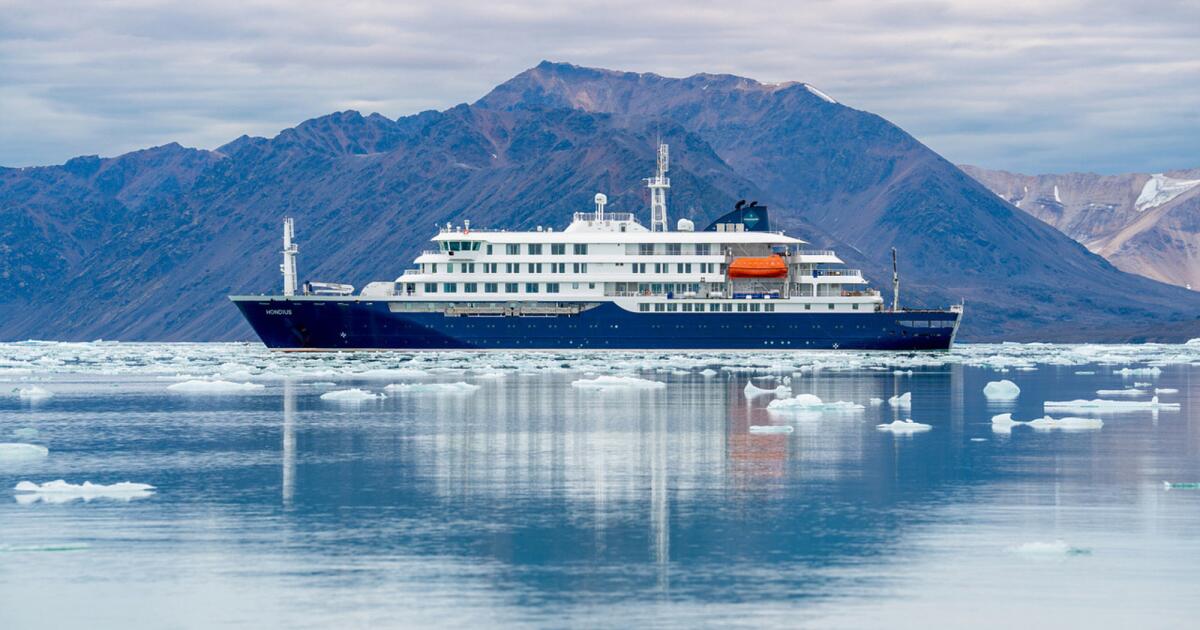
Hantavirus is suspected of spreading aboard a luxury cruise ship, killing three passengers and sparking new concerns as a once obscure disease, with an extraordinarily high death rate, rises amid changing climate conditions.
Officials are still trying to determine what happened aboard the ship, which commands fares of up to $28,845 for a 46-day journey that includes a tour of the Antarctica Peninsula and stops in Tierra del Fuego on the southern edge of Argentina.
In addition to the three deaths, a fourth passenger was evacuated to a South African hospital and was in intensive care, and two crew members fell ill. The Dutch-flagged ship remained off the coast of Cape Verde, an island nation about 400 miles west of Senegal, where it was scheduled to have docked Monday.
Hantavirus is fairly rare in the Americas, but its high case fatality rate makes it a disease of major public health concern, the World Health Organization says. Hantavirus is more common in Asia and Europe, where the strains that circulate are less deadly, with a case fatality rate that ranges from less than 1% to 15%.
Hantavirus is most commonly spread by inhaling particles contaminated with the virus — such as dried mouse urine, saliva or droppings.
But there is one strain of hantavirus — known as the Andes virus — that can be transmitted from human to human, and has been transmitted in Thailand and Argentina.
It’s unclear what strain of hantavirus hit the ship.
The first death on the ship occurred April 11 somewhere in the Atlantic Ocean, and the man’s cause of death couldn’t be determined on board, the ship operator said. The body was transported off the ship April 24 as the vessel docked on Saint Helena Island, about 1,100 miles off Africa, and the man’s wife accompanied his remains.
The wife became unwell on the trip home and later died. The cruise ship operator was notified of the woman’s death April 27. The couple were Dutch nationals. On the same day, another passenger, a British national, became seriously ill on the ship and was medically evacuated to South Africa. That patient was confirmed to have hantavirus.
A German passenger died aboard the ship Saturday. And on Monday, the ship operator said two crew members — one British, one Dutch — had acute respiratory symptoms, one mild and one severe but both requiring urgent medical care.
Among the possibilities that could explain the suspected outbreak, according to Dr. Peter Chin-Hong, a UC San Francisco infectious diseases expert, are rodents getting on board the ship and exposing people to the virus, or person-to-person transmission.
“Could a cruise member have been cleaning up an area and incidentally aerosolized some rodent droppings?” said Dr. Elizabeth Hudson, regional chief of infectious diseases at Kaiser Permanente Southern California. “Was there a shore excursion that the passengers and crew attended where they were exposed to aerosolized rodent droppings?”
Because hantavirus is so rare, it’s hard to say what effect these deaths might have on the cruise industry. COVID-19 hit the industry hard, but that was a global pandemic with a virus spreading rapidly with human-to-human contact. A key question for investigators is how the virus spread.
The MV Hondius is operated by Oceanwide Expeditions, which has a fleet of four ships and bills itself as a cruise ship eco-tour operator with trips to the Arctic and Antarctica. The MV Hondius can hold 170 passengers in 80 cabins.
As of Monday, there were 148 people on board, including 17 U.S. passengers. One deceased passenger remained on board.
The MV Hondius sailed March 20 from Ushuaia, the capital of Tierra del Fuego on the southern edge of Argentina, on a round trip to the Antarctica Peninsula, returning to port 11 days later. On April 1, the ship left Argentina and headed back to Cape Verde, with stops on the Atlantic Ocean islands of South Georgia, Tristan de Cunha and St. Helena.
The strains of hantavirus in the Americas are attracted to the small blood vessels of the lungs and make the blood vessels leaky — which is bad, because the lungs need air, Chin-Hong said.
“So people can’t breathe,” he said. “It’s like you’re drowning. The lungs are leaky, so the fluid fills up in the lungs.”
There are 50 species of hantavirus. The virus that’s found in the Americas tends to cause a cardiopulmonary syndrome, a condition that affects both the heart and the lungs, said Dr. Gaby Frank, director of Johns Hopkins Special Pathogens Center.
Hantavirus is associated with a case fatality rate of up to 50% in the Americas. It was the cause of death of Gene Hackman’s 65-year-old wife, Betsy Arakawa, in their Santa Fe, N.M., home. Arakawa died days before Hackman, 95, died as a result of heart disease. There were signs of rodent entry in some structures on the couple’s property. Last year, three people in Mammoth Lakes died after contracting hantavirus. There was evidence of mice where all three of the deceased had worked, and one person had numerous mice in their home, according to the public health office for Mono County, home to Mammoth Lakes.
There is no vaccine or specific antiviral medicine for hantavirus. In the Americas, doctors can help infected people by putting them on a life-support machine known as ECMO, for extracorporeal membrane oxygenation, which breathes for the patient by oxygenating the blood. “It’s very, very intensive, and that’s why the fatality rate is so high,” Chin-Hong said.
Some experts expect hantavirus to be more of a concern in the future in some parts of the world due to climate change as rising temperatures are favorable to animals and insects that carry diseases, such as the increase in Lyme disease as the climate becomes more hospitable to the ticks that transmit it.
With rainfall patterns changing as global temperatures warm, “then you would expect that the rodent population will increase with time,” Chin-Hong said. Examples include people being sickened with, and dying from, rat-borne diseases such as leptospirosis after Hurricane Maria hit Puerto Rico in 2017.
In the U.S., there’s an average of 30 hantavirus cases reported a year, a figure that has remained relatively steady. But “there has been more media attention to it,” Hudson said.
Times staff writer Karen Garcia contributed to this report.

Science
July Fourth fireworks may bring ‘hazardous’ air quality to Southern California. What you need to know

L.A.’s love of fireworks makes for a colorful Fourth of July, with dozens of official celebrations and countless illicit explosions expected for the holiday.
But as each sparkler, Roman candle, palm and peony dissipates, it leaves behind a cloud of noxious gases, soot and finely ground toxic metals — some of which ends up in the lungs of revelers and passersby below.
Hazardous levels of air pollution are expected across central and southern Los Angeles County, northern Orange County, and Riverside and San Bernardino counties from 5 p.m. Saturday evening through 3 p.m. Sunday, according to the South Coast Air Quality Management District. Unhealthy air quality is also expected in northern Los Angeles County and southern Orange County.
Pollution levels are expected to build from dusk onward Saturday, as light winds and increased firework activity lead to an increase in smoke, a South Coast AQMD advisory said. Soot and particulates will likely linger through Sunday afternoon before being dispersed by the wind.
Firework-related pollution can trigger coughs, breathing problems, asthma flares and heart attacks, according to Los Angeles County Public Health, and anyone experiencing severe or worsening cardiovascular symptoms like chest pain or difficulty breathing should seek medical attention immediately.
Pyrotechnics set off at home are even more likely to trigger cardiovascular problems, the American Lung Assn. says, as the burst of pollutants takes place closer to the ground.
July 4 and 5 are traditionally two of the worst days of the year for the region’s air quality, according to South Coast AQMD. This year’s celebration comes on the heels of a late June warehouse fire in Boyle Heights that released extraordinary amounts of soot and smoke across the county, on par with pollution generated by the previous year’s wildfires.
To limit negative health effects, the L.A. County public health department recommends avoiding strenuous physical activity and keeping doors and windows closed. As whole house fans and swamp coolers can suck additional pollutants inside, the department recommends using air purifiers or air conditioners as alternatives when possible.

Few substances are as deeply woven into everyday life as alcohol. It is a fixture at holiday celebrations, work-related social gatherings, sporting events, airports, and brunch or dinner tables. All demonstrate how deeply alcohol has become embedded in social customs and cultural traditions.
Yet alcohol contributes to millions of deaths globally each year and is linked to cancer, liver disease, unintentional accidents, violence and, importantly, dependence and addiction. Despite this, the disconnect between alcohol’s cultural role and its serious health burden is striking. An estimated 2.3 billion people worldwide consume alcohol.
As a physician working in addiction medicine, I regularly care for patients whose alcohol use affects nearly every organ system. It is often not until these patients end up admitted to the hospital that they learn the effects of alcohol on various parts of their body besides their liver.
Newer evidence challenges assumptions about what was long considered “safe drinking.” Even moderate drinking carries risk and is not as harmless as people, including experts, once thought.
Many people associate alcohol risk primarily with addiction or dangerous behaviors such as driving while intoxicated. However, its effects extend far beyond this, into nearly every aspect of a person’s well-being.
While alcohol may transiently improve mood and ease social anxiety, long-term alcohol use can lead to a worsening of mood, cognition and sleep, which can further compound use.
A 2021 literature review found that consuming approximately two standard drinks roughly doubles the odds of sustaining injuries — with or without a vehicle involved. The review also found that heavy episodic (binge) drinking can increase the risk of injury by 50-fold, depending on the amount of alcohol consumed and the type of injury. While alcohol’s effects on the liver are well known, it can also lead to gastrointestinal complications and heart disease
The World Health Organization estimates that 2.6 million deaths each year are attributable to alcohol, accounting for nearly 1 in every 20 deaths worldwide.
While many people recognize the risks of alcohol addiction, people are generally much less aware of the links between alcohol use and cancer risk.
The World Health Organization classifies alcohol as a Group 1 carcinogen — the same category as tobacco and asbestos. In 2025, the U.S. surgeon general emphasized that alcohol increases the risk of at least seven cancers, including cancers of the breast, colorectal, liver, oral, esophagus and larynx. An advisory called for updated warning labels.
Yet fewer than half of Americans recognize alcohol as a risk factor for cancer, particularly for cancers such as breast cancer that are not commonly associated with alcohol use.
Throughout the 1990s and early 2000s, observational studies suggested that moderate alcohol consumption might offer cardiovascular benefits. Over the past decade, however, higher-quality studies have challenged these findings, suggesting that much of the apparent benefit may have reflected differences in the health and lifestyles of moderate drinkers rather than a protective effect of alcohol itself.
Current evidence increasingly suggests that even low levels of alcohol may increase cancer risk.
Federal guidelines acknowledge that adults should “consume less alcohol for better overall health.” However, the most recent version of the “Dietary Guidelines for Americans,” updated in January, removed the previous recommendation to limit intake to no more than one drink per day for women and two for men. It also omitted explicit discussion of alcohol’s links to cancer.
These changes have drawn criticism from public health experts, who argue that the revised language plays down the growing evidence of alcohol-related harms and provides less specific guidance to consumers. The current administrator of the Centers for Medicare & Medicaid Services characterized alcohol as a “social lubricant” that brings people together, rather than emphasizing its well-established health risks.
This may be true physiologically, at least temporarily, but obscures the fact that relying on it as a social lubricant can lead to chemical and psychological dependency. In my view, statements to that effect are shortsighted, prioritizing short-term social effects over more insidious and long-term issues, including addiction.
While many dangerous mind-altering substances are hidden from public perception, alcohol is often placed at the center of it – a trend that shows no sign of changing imminently.
Further, large companies often profit from ads that appeal to young people.
Looking back at the history of tobacco smoking provides some helpful insights. In 1965, 42.4% of the U.S. population smoked. By 2022, that figure had dropped to 11.6%.
This steep decline did not happen because of a single intervention, but through decades of accumulating scientific evidence, public education campaigns, warning labels, restrictions on advertising, smoke-free policies, higher tobacco taxes and shifts in social norms. Together, these efforts transformed smoking from a widely accepted social behavior into one broadly recognized as a major health risk and correspondingly, less socially accepted.
Although alcohol consumption has modestly declined in recent years, it remains deeply embedded in social life in ways cigarette smoking no longer is.
People often assume that if a substance is legal, common and widely socially accepted — even encouraged — it must also be safe. But public health history suggests those assumptions can and should change.
Emma Fenske is an addiction medicine fellow and internal medicine physician at Oregon Health & Science University. This article was produced in partnership with the Conversation.
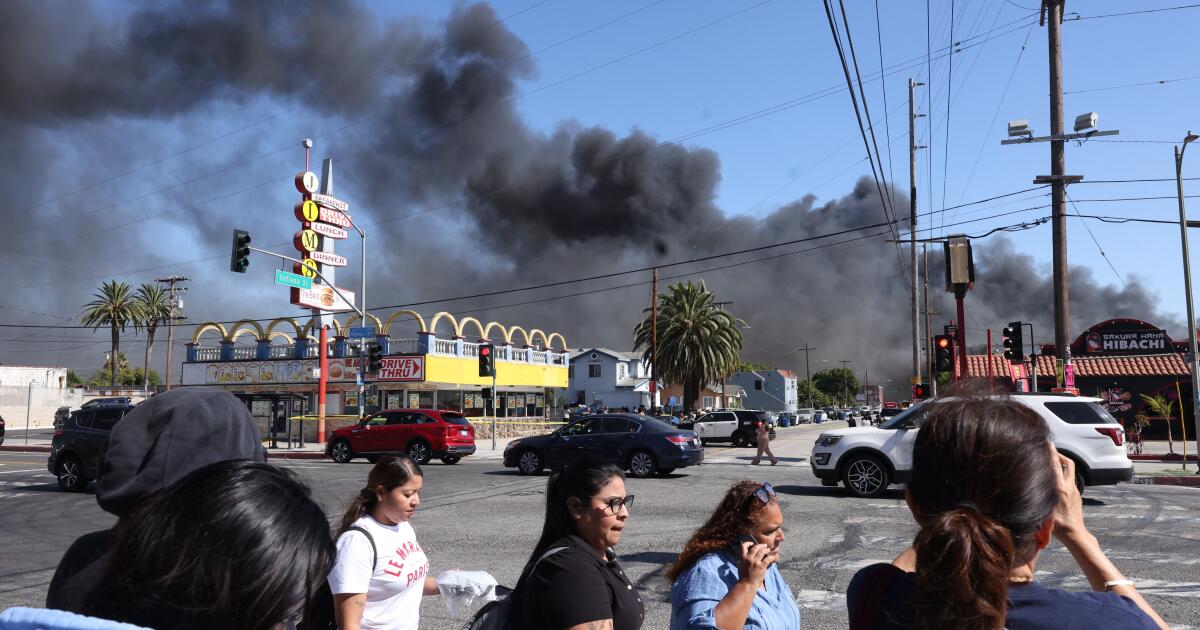
The air near the Lineage refrigerated warehouse fire in Boyle Heights carried astronomically high levels of smoke and soot, surpassing some of the worst air pollution during the Los Angeles County fires in January 2025, according to preliminary data from air officials.
The fire spewed thick black smoke for days. From downtown Los Angeles to the San Gabriel Valley, tens of thousands were enveloped in unhealthful levels of smoke, even as some local officials told residents that the air posed no danger.
As the days wore on, worst off were communities nearest the blaze. On June 19, three days after the facility ignited, a temporary air quality monitoring station at Eastman Elementary in unincorporated East Los Angeles measured an extremely hazardous 755 micrograms per cubic meter of fine particles for more than an hour, according to the South Coast Air Quality Management District.
For comparison, a Caltech air monitor in Pasadena recorded about 650 micrograms per cubic meter during the Eaton fire.
These high levels of fine particles, known as PM 2.5, probably resulted in the surge of residents into local emergency rooms during the fire, according to local health officials. But even now with the smoke gone, people still have not been told what chemicals they were breathing in during the weeklong ordeal.
Michael Jerrett, an environmental health professor at the UCLA Fielding School of Public Health, said his concern is the composition of materials emitted when the building burned.
“These contain many particularly toxic components,” Jerrett said, “and we know little about how these mixtures affect health.”
There is no completely safe level of fine particulate pollution, he noted, meaning higher concentrations are always worse.
During the 2025 L.A. County fires, local air officials announced that several monitors downwind had detected elevated levels of brain-damaging lead and cancer-causing arsenic from toxic paint and construction materials used in older homes.
The Lineage warehouse, built in 2018, is likely to contain different materials of concern. Thick insulation foam required for a massive refrigeration operation, solar panels and refrigerants were burned, leaving many residents on edge.
Even though three public agencies conducted air monitoring, the picture is still murky.
“[Public officials] are speaking with a lot of confidence but not a lot of information,” said mark! Lopez, a community organizer with East Yard Communities for Environmental Justice. “We’ve gotten in the room with folks to discuss where the gaps lie and where assumptions are being made. And I think they are realizing these agencies supposed to protect our air and our health aren’t as reliable as they thought they were.”
In response to the Boyle Heights fire, the South Coast air district deployed a mobile monitoring vehicle to screen for toxic substances in the community near the fire, according to Nahal Mogharabi, a spokesperson for the air district. It found increased levels of bromine, a chemical commonly found in fire retardant, and chlorine, often released from burning plastic. Both were below short-term health-based exposure thresholds.
Toxic metals, including lead and arsenic, were not elevated, according to air district data.
“That was the reassuring piece, that they were not picking up any of the metals,” said Dr. Nichole Quick, chief medical advisor for the Los Angeles County Department of Public Health. “But … that smoke is unhealthy. “You don’t want to be breathing it, regardless.”
The U.S. Environmental Protection Agency set up air monitors around the perimeter of the facility to test for toxic air contaminants, has the results and has not made them public. Julia Giarmoleo, an EPA spokesperson, said the monitors did not detect elevated metals, but would not provide a copy of the data without a federal records request.
The Los Angeles Fire Department’s hazardous material team also tested for ammonia, which is used in refrigeration, and hydrogen fluoride, a toxic chemical that could be released by burning lithium-ion batteries and solar panels.
Fire officials previously said they measured low levels of hydrogen fluoride on the second day of the fire. But the department would not answer questions about its air monitoring. It also told a reporter to submit a public records request.
It remains unclear whether any agency has tested for hydrogen cyanide or isocyanates, highly toxic gases that could be released from burning chemical-laden insulating foam inside the building.
“The real issue is what monitoring has not been done to protect the fence-line community from the air toxics,” said Jane Williams, executive director of California Communities Against Toxics.
Without the EPA or LAFD data, what is known of the smoke’s toxicity rests on the air district’s mobile monitoring.
Jerrett, the UCLA researcher, said that is not ideal for understanding the kind of plume released by the Boyle Heights fire, which rapidly changed direction with the wind.
“This can in some instances lead to levels that look low, but they are resulting from a mismatch between the location of the vehicle and the plume,” he said.
The Boyle Heights blaze, similar to the Eaton and Palisades fires, has revealed the region’s air monitoring can’t always tell people what they’ve been exposed to in a disaster.
“We do need a better monitoring system in place,” he said.
Local officials are now shifting their focus to the rancid odors from millions of pounds of rotting food in the ruined wing of the warehouse. Decomposing food can release hydrogen sulfide, a toxic gas synonymous with landfills and garbage. Lineage hired contractors who are measuring this noxious gas and other pollution. Their data indicate they have not detected hydrogen sulfide.
As Lineage workers haul the rotting food to local landfills, they are using deodorizing mist and have discussed using shrink wrapping to suppress the stench and minimize issues for nearby homes.
At this point, the odors are believed to be an inconvenience rather than a public health threat, according to Quick, the county medical advisor. She said running air purifiers may help to reduce odors indoors.
“It’s very important for folks to understand that the odors themselves do not indicate any dangerous levels of toxins, mold, bacteria, and so forth,” Quick said. “But the odors are a public nuisance.”
The air district is still encouraging residents to report odors to its online complaint system or by calling (800) 288-7664.
-
 Milwaukee, WI9 minutes ago
29-year-old motorcyclist dies in Milwaukee collision; charges pending
-

 Atlanta, GA12 minutes ago
Braves vs. Mets rain delay chat and discussion
-

 Minneapolis, MN17 minutes ago
Minneapolis shooting on Wilson Street leaves man dead
-

 Indianapolis, IN24 minutes ago
Mortgage expert warns of rising home prices while interest rates lower
-

 Pittsburg, PA27 minutes ago
Pirates Secure Pitcher With 40-Man Roster Move
-

 Augusta, GA32 minutes ago
86-year-old Augusta woman dies in Walton Way crash
-

 Washington, D.C39 minutes ago
Trump’s administration won’t seek new bids to repair the Lincoln Memorial Reflecting Pool
-

 Cleveland, OH42 minutes ago
MLB Rain Delay Watch Today (July 5): Weather Outlook for All 15 MLB Games

