Science
Q&A: The FDA says the abortion pill mifepristone is safe. Here's the evidence

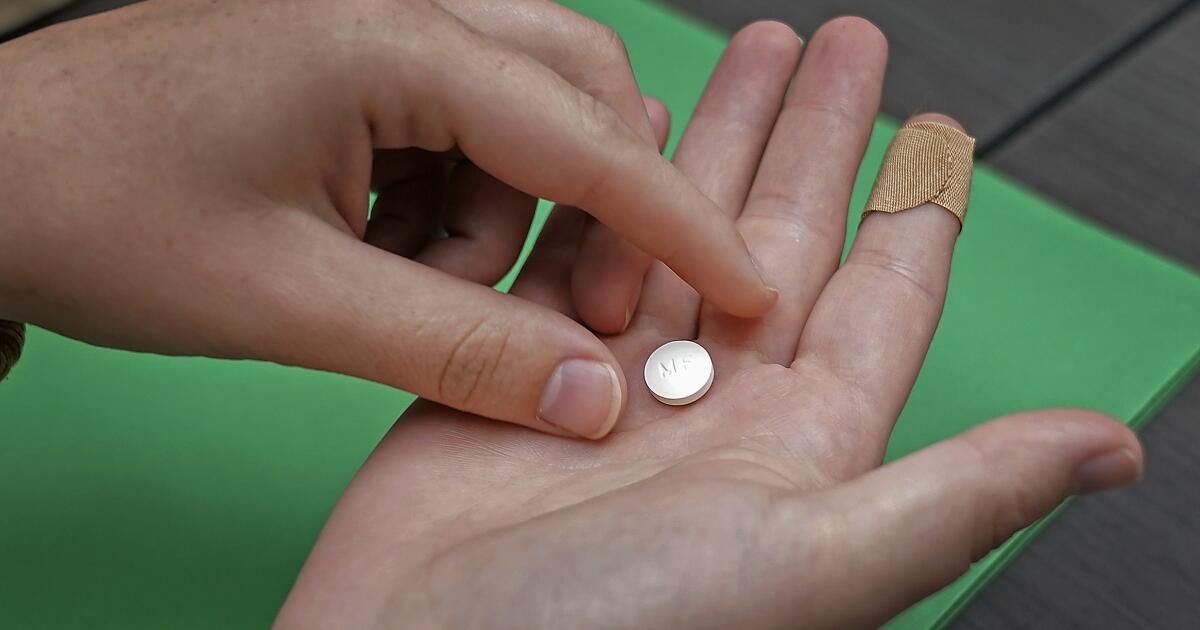
Abortion is back on the docket at the U.S. Supreme Court, with the justices hearing arguments Tuesday about whether a pill used to terminate early pregnancies was properly evaluated by the Food and Drug Administration.
The medication, mifepristone, has been used in the United States more than 5 million times since it was approved for use in 2000, according to Danco Laboratories, the company that sells it under the brand name Mifeprex. Fewer than 0.5% of women who take it experience “serious adverse reactions,” and deaths are exceedingly rare, the FDA says in its prescribing information for doctors.
Mifepristone debuted in France, its home country, and China in 1988. It is now approved in 96 countries, from Albania to Zimbabwe, according to Gynuity Health Projects, a nonprofit that advocates for women’s reproductive rights.
Here’s a closer look at the safety of mifepristone.
What is mifepristone?
Mifepristone is the generic name of a pill that makes up half of the two-drug regimen used in medication abortions in the United States. When used in conjunction with a drug called misoprostol, it can terminate a pregnancy that is in the first 10 weeks of gestation.
The synthetic steroid was originally known as RU-486 (the “RU” stands for Roussel-Uclaf, the French company that developed the pill). It is also sold under the brand name Mifeprex.
How does mifepristone work?
It prevents a natural steroid hormone called progesterone from doing its job, which is to get the inner lining of the uterus ready for an embryo to implant about a week or so after an egg is fertilized.
Mifepristone gets in the way of this process by blocking the receptors that progesterone would normally bind with.
How do we know it is safe?
As with other medications, the Food and Drug Administration has monitored mifepristone’s safety profile in the decades since it went on the market. If problems cropped up that weren’t evident during clinical trials, the agency could have revoked its approval.
Instead, it has expanded access to mifepristone. For example, it was initially approved for use during the first seven weeks of pregnancy; in 2016, that window was extended to 10 weeks. Likewise, after the COVID-19 pandemic accelerated acceptance of telemedicine, the FDA in 2021 stopped requiring patients to see a healthcare provider in person in order to get a mifepristone prescription.
Those two decisions are at issue in the cases going before the court Tuesday.
“Hundreds of medical studies and vast amounts of data have confirmed its safety and efficacy as part of this two-drug regimen,” the American College of Obstetricians & Gynecologists, the American Medical Assn., and other medical societies wrote in a friend-of-the court brief filed on behalf of the FDA and Danco. The brief noted that “major adverse events occur in less than 0.32% of patients” and that “the risk of death is almost non-existent.”
Another sign of the drug’s safety is the fact that medication abortions have overtaken surgical abortions in the United States. Last year, 63% of abortions nationwide were carried out with mifepristone, according to the Guttmacher Institute, a nonprofit research group that supports reproductive rights.
Are there side effects to taking mifepristone?
There can be. According to the FDA, the most common ones include headaches, weakness, dizziness, nausea, vomiting, diarrhea, fever and chills.
The serious side effects to watch out for after using both drugs in the regimen are heavy bleeding (which the FDA describes as “enough to soak through two thick full-size sanitary pads per hour for two consecutive hours”), abdominal pain, a fever above 100.4 degrees Fahrenheit that lasts for at least four hours, and “feeling sick” more than a day after taking misoprostol.
Symptoms like these could be signs of a life-threatening infection, an ectopic pregnancy or another serious problem. Anyone experiencing them should contact a healthcare provider right away.
Can mifepristone be fatal?
The FDA says it is aware of 32 women who died after taking mifepristone between September 2000 (when it was first approved in the United States) and the end of 2022.
However, it’s not clear that mifepristone was responsible for any of these deaths. Two of them were definitely caused by ruptured ectopic pregnancies, several died of drug intoxication or overdoses, and at least two women who took the pill were victims of homicides, the FDA said. As for the remaining cases, patients were taking other medications or undergoing treatments at the same time, making it difficult to pin the blame on mifepristone, according to the agency.
In their legal brief, the medical groups said that in the worst-case scenario, the drug could have caused no more than 13 of the 32 deaths. That makes the drug less dangerous than using “Viagra or getting one’s wisdom teeth removed.”



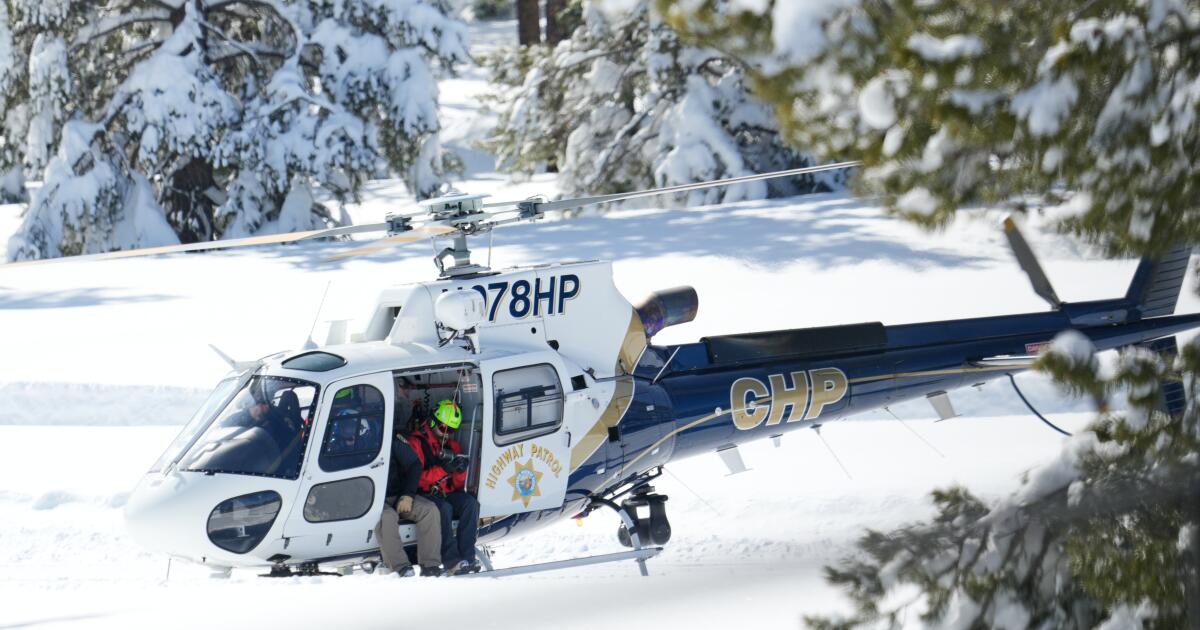
California search-and-rescue teams have recovered the bodies of all nine missing skiers killed Tuesday in a devastating avalanche in a remote region of Sierra Nevada north of Lake Tahoe.
When a catastrophic avalanche rumbled over a stretch of the High Sierra, dozens of law enforcement officers scoured the mountainside for a group of 15 skiers, including four mountain guides.
Within hours, crews rescued six survivors and discovered eight deceased skiers near the Frog Lake Backcountry Huts. Another skier was still missing, but was presumed dead.
After five days of navigating deep snowpack and treacherous weather conditions, authorities announced they had found the body of the ninth victim.
During a press conference on Saturday afternoon, Nevada County identified the victims as six skiers and three professional mountain guides:
- Andrew Alissandratos, 34, of Verdi, Nev., a Blackbird Mountain Guide
- Carrie Atkin, 46, of Soda Springs, Calif.
- Nicole Choo, 42, of South Lake Tahoe, Calif., Blackbird Mountain Guide
- Lizabeth Clabaugh, 52, of Boise, Idaho
- Michael Henry, 30, from Soda Springs, Calif., a Blackbird Mountain Guide
- Danielle Keatley, 44, of Soda Springs and Larkspur, Calif.
- Kate Morse, 45, of Soda Springs and Tiburon, Calif.
- Caroline Sekar, 45, of Soda Springs and San Francisco, Calif.
- Katherine Vitt, 43, of Greenbrae, Calif.
Authorities lamented the fast-moving disaster as the deadliest avalanche in modern California history.
“There are no words that truly capture the significance of this loss and our hearts mourn alongside the families of those affected by this catastrophic event,” Nevada County Sheriff Shannan Moon said in a statement on Saturday. “The weight of this event is felt across many families, friends, and colleagues, and we stand together with them during this difficult time.” Moon said.
The avalanche occurred amid a powerful atmospheric river storm that unleashed several feet of snow onto the Sierra Nevada mountains. First responders maneuvered through the blizzard on snowcats and skis to rescue the survivors.
But the unstable snowpack, high winds and whiteout conditions made search-and-recovery efforts too perilous, prompting first responders to leave behind the bodies of deceased skiers and suspend operations on Wednesday and Thursday.
Authorities carved paths through the deep snow to eventually continue the search, and California Highway Patrol officers found the ninth victim.
The Nevada County Sheriff‘s Office was also assisted by California National Guard, California State Parks, Placer County Sheriff’s Office, Washoe County Sheriff’s Office, California Governor’s Office of Emergency Services, Truckee Police Department and the United States Forest Service.

new video loaded: ‘Very Successful Day’: NASA Completes Artemis II Launchpad Test
transcript
transcript
‘Very Successful Day’: NASA Completes Artemis II Launchpad Test
NASA successfully completed a rehearsal to launch the Artemis II rocket on Thursday. The mission would send astronauts around the Moon’s orbit for the first time in more than 50 years.
-
“Very successful day. I’m very proud of this team and all that they accomplished to get us to yesterday, and then to go execute with such precision.” “Following that successful wet dress yesterday, we’re now targeting March 6 as our earliest launch attempt. I am going to caveat that — I want to be open, transparent with all of you, that there is still pending work.”

By Jorge Mitssunaga
February 20, 2026
Science
Fourth measles case confirmed in L.A. County; person visited LAX, restaurants while infectious
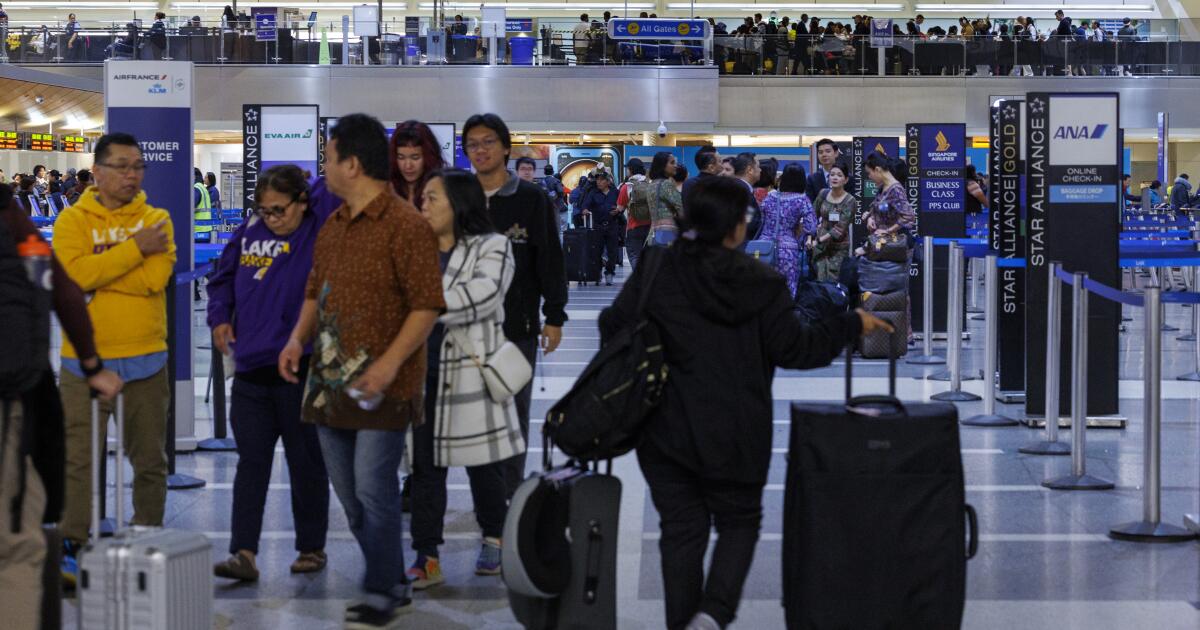
A fourth measles case has been confirmed in Los Angeles County, prompting renewed calls from health officials for residents to ensure they are protected against the highly contagious virus.
The infected individual flew from Singapore to Los Angeles International Airport on Feb. 9 aboard Singapore Airlines Flight 38. The plane landed at about 7 p.m. following a 14-hour journey, according to the L.A. County Department of Public Health.
Over the following days, the individual visited a few San Gabriel Valley fast food restaurants, potentially exposing others to the measles virus.
“As measles cases increase, it is important that residents take steps to make sure they are fully protected,” L.A. County Health Officer Dr. Muntu Davis said in a statement. “The [measles-mumps-rubella] vaccine is the safest and most reliable way to prevent measles and protect yourself, your family, and your community.”
The health department did not respond to questions from The Times regarding the sex or age of the infected individual, who was described in a statement as “a resident who recently traveled internationally.”
After arriving at and leaving the Tom Bradley International Terminal, the individual visited restaurants and convenience stores throughout Whittier and Montebello.
The individual ate at a Burger King in Montebello, 1212 West Beverly Blvd., on Feb. 10 between 5:30 and 7 p.m. The next day, the person dined at Taqueria El Atacor, 11156 1/2 Whittier Blvd. in Whittier, between 3 and 5 p.m.
The final two stops in Montebello were at Domino’s Pizza, 803 West Whittier Blvd., between 4 p.m. and 5:15 p.m. on Feb. 12; and 7-Eleven, 1106 West Beverly Blvd., on Feb. 13 between 4:30 p.m. and 5:45 p.m.
Those who were in the Bradley Terminal (Terminal B) on Feb. 9 from 7:30 p.m. to 9:40 p.m., or in the eateries above during the aforementioned time windows, may have been exposed to the measles virus.
Symptoms typically develop anywhere from seven to 21 days after exposure, according to the health department.
Concerned individuals should confirm whether they have protection against the virus, either through past measles vaccinations or infections.
Those who are not immunized or are unsure of their status should monitor themselves closely for signs of infection. Common symptoms include fever, cough, runny nose or red eyes, as well as a rash.
Those with such symptoms are encouraged to stay home and avoid school, work and any gatherings. They should also call a healthcare provider immediately, but not go into a healthcare facility without informing them.
The monitoring deadline for symptoms ranges from March 2 at LAX until March 6 at 7-Eleven for individuals who visited those spaces around the same time as the infected person.
Davis said the most effective way to protect against measles is to take the MMR vaccine. Children age 1 year and older are considered fully immunized after receiving two doses.
“Measles spreads easily and can lead to serious complications, including pneumonia, brain swelling, and even death,” Davis said. “We urge everyone to confirm their immunity and get the MMR vaccine if needed, especially before traveling. Taking this simple step helps safeguard your health and strengthens protection for our entire community.”
Previous cases confirmed in L.A. County so far this year also involved individuals who had traveled internationally. One of those individuals ventured to Sherman Oaks on Jan. 24, another to Woodland Hills on Jan. 30. The first case had no identified public exposure locations in L.A. County.
Measles cases have increased in the United States as vaccination rates have fallen in recent years, allowing the highly contagious virus to spread in communities with lower vaccine coverage.
According to the U.S. Centers for Disease Control and Prevention, there were 2,280 confirmed measles cases in the U.S. last year, the highest annual total since 1991. As of Feb. 12, 910 cases had already been confirmed nationwide this year — including 15 in California.

Milwaukee Friendsgiving shooting; jury finds man guilty, family responds

Esteemed Atlanta chef Shaun Doty brings culinary cred to Barnsley Resort in northwest Georgia

I-394 commute changes start this weekend
Up and down week of temperatures as we round out the month

Rascal Flatts, BBGuns, Chris Tomlin and more Pittsburgh concerts this weekend

Florida High School Football Rankings: Top 25 teams – Oct. 21

Cleary's 21 help Le Moyne down Central Connecticut State 69-64 in OT

How old is Bo Nix? What to know about Oregon quarterback ahead of 2024 NFL Draft

99th annual Pony Swim held in Virginia

Indiana Members Credit Union announced as new anchor tenant at Bottleworks District

Video: Armed Man Is Shot and Killed at Mar-a-Lago, Authorities Say

Suspect identified after fatal shooting at Trump’s Mar-a-Lago estate: officials
Most Europeans don't know what the ECHR does, but do they want to leave it?

Northeast readies for a major winter storm, with blizzard warnings in effect

Armed man shot and killed after ‘unauthorized entry’ into Mar-a-Lago: Secret Service
-

 Montana3 days ago
2026 MHSA Montana Wrestling State Championship Brackets And Results – FloWrestling
-

 Oklahoma5 days ago
Wildfires rage in Oklahoma as thousands urged to evacuate a small city
-

 Science1 week ago
What a Speech Reveals About Trump’s Plans for Nuclear Weapons
-

 Culture1 week ago
Video: How Much Do You Know About Romance Books?
-
News1 week ago
Second US aircraft carrier is being sent to the Middle East, AP source says, as Iran tensions high
-

 Politics1 week ago
Schumer’s ‘E. coli’ burger photo resurfaces after another Dem’s grilling skills get torched: ‘What is that?’
-

 Technology2 days ago
YouTube TV billing scam emails are hitting inboxes
-

 Movie Reviews1 week ago
‘Pennum Porattum’ movie review: An absurdist satire that just escapes getting lost in its chaos

