Politics
Trump Made English the Official Language. What Does It Mean for the Country?


President Trump’s executive order making English the official language of the United States reached into history to argue its case, noting that the country’s founding documents were written in English.
But it turns out, not only in English. After the Constitution was drafted in 1787, supporters of ratification printed translations for Dutch speakers in New York and German speakers in Pennsylvania, so they could understand the arguments for a “vollkommenere Vereinigung” — a more perfect union.
The push and pull over whether America should have one national language or embrace its polyglot spirit has generated fierce debate for more than a century, raising deeper questions about belonging and assimilation in a country whose people speak more than 350 languages.
Now, Mr. Trump’s executive order puts an “America first” stamp onto the nation’s speech.
His order gave a long-sought victory to the English-only movement, which has ties to efforts to curb immigration and bilingual education. Supporters said it recognized the reality of English’s primacy in American life. Nearly 80 percent of the population speaks only English, and immigrants have long been required to demonstrate English proficiency before becoming citizens.
Senator Eric Schmitt, Republican of Missouri, called it a “long, long overdue” official acknowledgment that “in this country, we speak English.” Senator Mike Lee, Republican of Utah, wrote a social-media post in Spanish saying that English should be the country’s “idioma oficial.”
But immigrant-rights groups and congressional Democrats warned that the order could alienate immigrants and make it harder for non-English speakers to get government services, fill out health care forms or vote. The Congressional Asian Pacific American Caucus called it a “thinly veiled attempt to allow federal agencies to discriminate against immigrants.”
Some critics compared Mr. Trump’s order to Indian boarding schools that forbade Native languages, World War I laws that banned the German language and state-level efforts to outlaw bilingual education.
Legal experts said the order’s effects might be muted at first.
It rescinds a mandate signed by then President Bill Clinton in 2000 that required government agencies and anyone who received federal money to provide translated documents and other language services to people who speak limited English.
But unlike some restrictive English-only state laws that have been struck down by courts, Mr. Trump’s order does not require agencies to operate solely in English. They can continue to offer documents and services in other languages.
“It’s not nearly as punitive as it could be,” said Mary Carol Combs, an education professor at the University of Arizona.
Early American history is full of examples of bilingual government, experts said. In the 19th century, Midwestern states translated laws and messages from their governors into Norwegian, German and Welsh. California’s 1849 Constitution required laws and decrees to be published in both English and Spanish.
“There have always been diverse linguistic populations,” said Christina Mulligan, a professor at Brooklyn Law School who wrote about the translated Constitutions.
An influx of immigrants from Asia and Latin America in the second half of the 20th century helped galvanize the modern English-only movement. More than 30 states have designated English as their official language, including heavily Democratic California.
Mr. Trump seized on the issue as one of American identity when he first ran for president. He told Jeb Bush, the bilingual former governor of Florida, “This is a country where we speak English, not Spanish.” During his campaign last year, Mr. Trump said American classrooms were being overwhelmed by students “from countries where they don’t even know what the language is.”
His executive order said that designating English as the official language would streamline communication, “reinforce shared national values, and create a more cohesive and efficient society.”
The order got a mixed reaction from some voters in Arizona, a state with a large Mexican American electorate that went for Mr. Trump in 2016, flipped to Democrats four years later, and swung back to Mr. Trump in 2024. The state is also a battlefield over language in classrooms, where the Republican state school superintendent unsuccessfully sued several schools over their dual-language programs.
David Ramos, 36, who works in the aerospace industry in the Phoenix area, said he had thought that English was already the country’s official language. He grew up hearing his Puerto Rican father speak Spanish, and said he regretted never having learned it.
Mr. Ramos, who voted for Mr. Trump, said the designation would have little effect on his life, but he took it as a sign that Mr. Trump was bulldozing ahead to fulfill campaign promises.
“I would rather have a leader who’s assertive and spoke up for us, even if I didn’t agree with it 100 percent of the time, versus somebody who’s a doormat,” he said.
But Jorge Marquez, 39, was torn. He spent years working in construction, saving up to open English 4 U, a storefront school in Phoenix where he teaches immigrants about irregular English verbs and how to order a McDonald’s cheeseburger. Like Mr. Trump, he wants more people to speak English.
As a Friday evening class wrapped up, though, he and his students were worried. They saw learning English as a bridge to better jobs and being able to communicate with doctors, bosses and their children’s teachers. But they worried that Mr. Trump’s edict would stigmatize people who spoke other languages, had accents or were still struggling to learn English.
“He’s not wrong,” Mr. Marquez said of Mr. Trump. “English is beautiful, but teach it in a good way. Have a little empathy.”



NEWYou can now listen to Fox News articles!
Democratic Gov. Wes Moore of Maryland, whom pundits consider a potential 2028 presidential contender, is one step closer to winning re-election this year.
Moore on Tuesday captured the Democratic gubernatorial nomination in the solidly blue Mid-Atlantic state, the Associated Press reports.
Moore and his running mate, Lt. Gov. Aruna Miller, easily dispatched a primary challenge from Eric Felber and his running mate, LaTrece Hawkins Lytes. Felber, a physician, unsuccessfully challenged Democratic Rep. Jamie Raskin in the 2024 primary in the state’s 8th Congressional District.
DEMOCRACY ’26: STAY UP TO DATE WITH THE FOX NEWS ELECTION HUB
Maryland Gov. Wes Moore speaks during an announcement at the South Court Auditorium of the Eisenhower Executive Office Building at the White House in Washington, D.C., on Jan. 16, 2026. (Valerie Plesch/Bloomberg via Getty Images)
Candidates for governor and lieutenant governor run on the same ticket in Maryland.
The Democratic ticket will face the winners of a nine-way Republican primary field.
Moore is running for re-election this year amid speculation that he also is eyeing a run for the White House in 2028, in the race to succeed term-limited President Donald Trump. Democrats are expected to field a large and competitive field in the race for their party’s presidential nomination.
The governor has consistently ruled out running for the White House in 2028, saying that his political focus is on his home state and his 2026 re-election.
But regardless, Moore remains a top Democratic Party surrogate in national politics. And Moore, a 47-year-old Army veteran, who is also a Rhodes Scholar and was CEO of the charitable organization the Robin Hood Foundation during the coronavirus pandemic, is viewed as a rising star in the party.
Maryland Gov. Wes Moore and President Donald Trump are pictured together in a split image. (Nathan Howard/Getty Images; Anna Moneymaker/Getty Images)
Moore, the nation’s only Black governor, has had a combustible relationship with Trump, which has included very public feuds and verbal sparring, and clashes over policy.
CLICK HERE TO DOWNLOAD THE FOX NEWS APP
Earlier this year, Trump initially excluded Moore from a National Governors Association dinner at the White House, charging that the governor was “not worthy” of attending.
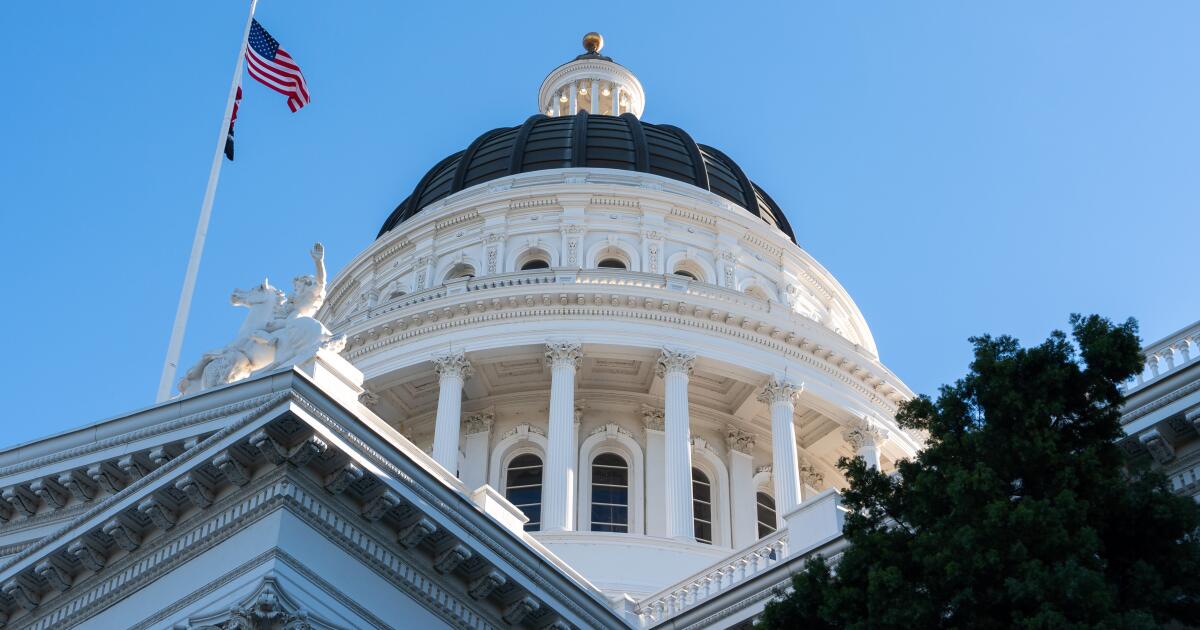
SACRAMENTO — Gov. Gavin Newsom and Democratic leaders of the California Legislature plan to approve a proposed constitutional amendment this week that would ask voters to give them more flexibility over state spending and allow them to save money that could otherwise go back to taxpayers.
The proposal seeks to exempt deposits into state savings accounts from a spending limit that voters adopted through a series of ballot measures dating back to the late 1970s and to increase the share of tax revenue that can be put into the rainy day fund.
“Putting money aside to protect ourselves from future uncertainties isn’t just good government; it’s common sense,” Newsom said in a statement. “California is strong and resilient, but we’re not immune to economic headwinds. At a time when our essential services are under pressure, we have a responsibility to safeguard the programs and investments that Californians rely on.”
Assembly Constitutional Amendment 20, which Democrats are calling the “Save for California’s Future Act,” could receive push back from taxpayer advocates.
Under an existing state appropriations restraint, also known as the Gann limit, lawmakers cannot spend more than an amount determined by a formula that takes into consideration annual tax proceeds and changes to the population and cost of living. Tax revenue above the limit must be divided between schools and refunds to taxpayers.
With few exceptions, the limit applies to most appropriations of tax revenue, including money that lawmakers tuck away into the rainy day fund and other reserves. California voters have also capped the amount of money lawmakers can set aside in the rainy day fund to 10% of general fund proceeds in a given year.
Since taking office, Newsom has argued that it doesn’t make sense for savings to count as spending under state law.
State budget revenue is subject to dramatic swings from year to year based on stock market activity. The law, Newsom has said, prevents the state from saving more money in good years to stave off cuts to programs in bad years.
The proposed changes would exempt deposits into the rainy day fund and a short term reserve, called the “Projected Surplus Temporary Holding Account,” from the state appropriations limit. The cap on the rainy day fund would grow from 10% of general fund tax revenue to 20%.
“Californians live by a simple, bipartisan truth: set money aside when times are good so you’re ready when they’re not,” Assembly Speaker Robert Rivas (D-Hollister) said in a statement. “The Save For California’s Future Act is what responsible leadership looks like — and future taxpayers will thank us for it.”
The measure could incentivize Democrats to save more money because funds tucked away in the rainy day fund would no longer be considered expenditures counted toward the spending limit. By allowing lawmakers to set aside more money that is not subjected to state spending limits, it could also allow them to hold onto money that would be returned to taxpayers under current law.
The measure is slated for a vote Thursday. If approved by two-thirds of lawmakers, voters will consider the proposal on the November ballot.
Politics
Social media erupts over Mamdani’s silence after Brooklyn coffee shop bans Jewish congressman

Socialists push progressive agenda in NYC primaries
Fox News national correspondent Bryan Llenas reports on the New York City primary, highlighting the influence of socialists. Candidates backed by Zohran Mamdani advocate for abolishing ICE and all deportations, even for convicted murderers.
NEWYou can now listen to Fox News articles!
New York City Mayor Zohran Mamdani is facing swift backlash after declining to condemn a local coffee chain that told a Jewish congressman with pro-Israel views that he was not welcome.
Mamdani has remained silent after the Williamsburg, Brooklyn-based Poetica coffee shop posted — and later deleted — a message on social media telling Rep. Dan Goldman, D-N.Y., not to return after he stopped by the shop with his daughter Monday. The mayor declined to comment through a spokesman when contacted by The New York Times on Monday.
“Shameful,” Fox News Radio analyst Josh Kraushaar wrote on social media in response to a section of The Times story detailing that Mamdani declined to comment.
“Well folks, we’ve reached the stage of antisemitism where Jews are being publicly barred from businesses,” the CEO and co-founder of the antisemitism-focused nonprofit Boundless Israel said on X. “A coffee shop in Mamdani’s New York City told Jewish Congressman Dan Goldman he wasn’t welcome in their store.”
Zohran Mamdani announces new members of his team at the Brooklyn Public Library Greenpoint Branch in Brooklyn on Dec. 17, 2025. (Shawn Inglima/New York Daily News/Tribune News Service via Getty Images)
MAMDANI SKIPS ISRAEL DAY PARADE DESPITE JOINING OTHER CULTURAL CELEBRATIONS
“The café is implementing Mamdani’s wishes,” journalist Melissa Braunstein said.
Fox News Digital reached out to Mamdani’s office for comment but did not immediately hear back.
In a since-deleted social media post, Poetica Coffee said it would have declined to serve Goldman had staff recognized him in the store. Goldman has notably declined to characterize Israel’s war in Gaza as a genocide and has received financial contributions from the pro-Israel lobby AIPAC, drawing criticism from some on the progressive left.
“Hey Congressman Dan Goldman, we see that you stopped by our shop today for a coffee. Do you see how it doesn’t taste like genocide juice? Or are you still having a hard time telling the difference?” the post said.
“See, here at Poetica, we don’t serve racists, fascists, homophobes, genocide enablers, or anyone in between,” the post continued. “Too bad we didn’t recognize you right away, or we would have turned you away. We issued you a refund—we don’t need your money (it’s probably coming from AIPAC anyways). Enjoy your loss on Tuesday. Don’t ever come to Poetica.”
The coffee chain has since deleted its Instagram page amid social media backlash.
Mamdani’s silence comes as he is working to unseat Goldman, despite the incumbent lawmaker being a leading Trump critic and embracing an array of leftist legislative proposals. Goldman notably did not endorse Mamdani’s mayoral campaign, citing concerns about how his administration would approach Jewish New Yorkers.
A Brooklyn, N.Y., coffee shop refunded a purchase made by Rep. Dan Goldman, D-N.Y., over the weekend over his support for Israel, saying the company doesn’t serve “genocide enablers.” (Getty Images; Google Maps)
The mayor publicly backed former New York City Comptroller Brad Lander to represent Goldman’s district, which spans Lower Manhattan and deep-blue, wealthy pockets of Brooklyn.
Democratic voters will decide whether to hand Goldman a third House term during the Empire State’s primary elections on Tuesday.
NY DEM WOULDN’T BACK MAMDANI FOR MAYOR — NOW MAMDANI IS BACKING HIS CHALLENGER
Since both men largely hold the same policy stances, the bruising primary battle has revolved around support for Israel — with Lander vowing to elevate the Palestinian cause if elected to the House.
Goldman has notably supported military aid to Israel following Hamas’ Oct. 7, 2023, attacks and distanced himself from inflammatory rhetoric used by some on the left to criticize Israel.
Goldman offered a tempered response after the coffee chain effectively banned him from their storefronts.
“I’m sorry to see this post,” he said. “The barista could not have been nicer to my 7-year-old daughter and me—allowing her to use the bathroom even though we had not purchased anything. I made sure to buy a coffee in return for her kindness. I hope you at least make sure she gets the tip that she deserved.”
New York City Mayor Zohran Mamdani speaks in support of Brad Lander, Democratic candidate for Congress in New York’s 10th Congressional District, in Carroll Park in the Carroll Gardens neighborhood of Brooklyn on June 14, 2026. (Shuran Huang/For The Washington Post via Getty Images)
CLICK HERE TO DOWNLOAD THE FOX NEWS APP
Assistant Attorney General for Civil Rights Harmeet Dhillon said Tuesday her office has opened an investigation into the matter.
“Federal law prohibits public accommodations such as coffee shops from discriminating against patrons based on their race, religion, or national origin,” Dhillon wrote. “These actions are not only reprehensible, they’re potentially illegal.”
-

 Alaska3 minutes ago
Smokejumpers, aircraft responding to new fire near Ambler
-

 Arizona6 minutes ago
Arizona creates task force to crack down on cargo thefts
-

 Arkansas18 minutes ago
Razorbacks’ Guard Darius Acuff Selected No. Overall in 2026 NBA Draft
-

 California21 minutes ago
DOJ charges 10 Southern California defendants in largest federal healthcare fraud crackdown in US history
-

 Colorado26 minutes ago
Erie Town Council approves sale of Colorado mineral rights for major oil and gas development
-

 Connecticut33 minutes ago
Man charged with murder in death of Duxbury, Massachusetts woman in Connecticut home
-

 Delaware36 minutes ago
Vigil held for 2 teens killed in hit-and-run in New Castle County; driver in custody
-

 Florida41 minutes ago
Meet the Florida Democrats running for governor against David Jolly

