Politics
How Biden – and Trump – helped make the pardon go haywire


The pardon debate – individual, group, partisan, preemptive – is spinning out of control.
In his “Meet the Press” interview, Donald Trump mocked Joe Biden’s repeated assurances about Hunter: “‘I’m not going to give my son a pardon. I will not under any circumstances give him a pardon.’ I watch this and I always knew he was going to give him a pardon.”
In a portion of that interview that did not air but was posted online, the president-elect complained to Kristen Welker:
“The press was obviously unfair to me. The press, no president has ever gotten treated by the press like I was.”
BIDEN’S PARDONING OF HUNTER INDICATES HE HAS ‘A LOT MORE TO HIDE’: LARA TRUMP
Why did he appear on “Meet the Press”? “You’re very hostile,” Trump said. Her response: “Well, hopefully, you thought it was a fair interview. We covered a lot of policy grounds.”
“It’s fair only in that you allowed me to say what I say. But you know, the answers to questions are, you know, pretty nasty. But look, because I’ve seen you interview other people like Biden.”
“I’ve never interviewed President Biden,” Welker responded. Trump said he was speaking “metaphorically.”
The pardon debate has been re-invigorated by President Biden’s decision to issue one to his son, Hunter, despite repeated assurances of the contrary. (Reuters/Getty/AP Images)
“I’ve seen George Stephanopoulos interview. And he’s a tough interviewer. It’s the softest interview I’ve seen. CNN interview. They give these soft, you know, what’s your favorite ice cream? It’s a whole different deal. I don’t understand why.”
The strength of Welker’s approach is that she asked as many as half a dozen follow-ups on major topics, making more news. When she asked, for instance, whether he would actually deport 11 million illegal immigrants, as he’d said constantly on the campaign trail, he answered yes – which for some reason lots of news outlets led with. But a subsequent question got Trump to say he didn’t think the Dreamers should be expelled and would work it out with the Democrats.
As for Trump, he reminded me of the candidate I interviewed twice this year. He was sharp and serious, connecting on each pitch, fouling a few off. This was not the candidate talking about sharks at rallies.
BIDEN, TRUMP BOTH RIP DOJ AFTER PRESIDENT PARDONS HUNTER
With one significant misstep, he made the case that he was not seeking retribution – even backing off a campaign pledge that he would appoint a special prosecutor to investigate Biden.
That misstep, when Trump couldn’t hold back, was in saying of the House Jan. 6 Committee members, including Liz Cheney: “For what they did, honestly, they should go to jail.”
He did add the caveat that he would let his attorney general and FBI chief make that decision, but it allowed media outlets to lead with Trump wanting his political opponents behind bars. For what it’s worth, there’s no crime in lawmakers holding hearings, and this business about them withholding information seems like a real stretch.
Now back to the pardons. This mushrooming debate was obviously triggered by the president breaking his repeated promise with a sweeping, decade-long pardon of his son, a 54-year-old convicted criminal.
But then, as first reported by Politico, we learned that the Biden White House is debating whether to issue a whole bunch of preemptive pardons to people perceived to be potential targets of Trumpian retaliation.
But the inconvenient truth is that anyone accepting such a pardon would essentially admit to the appearance of being guilty. That’s why Sen.-elect Adam Schiff says he doesn’t want a pardon and won’t accept one.
MEDIA ADMITS THE DEMOCRATIC PARTY IS TOO ‘WOKE’ AFTER KAMALA HARRIS’ 2024 LOSS
But many of those potential recipients don’t even know they’re under consideration for sweeping pardons covering anything they may or may not have done.
It is a truly awful idea, and with Biden and Trump both agreeing that DOJ engages in unfair and selective prosecutions – which in the Republican’s case made his numbers go up – the stage is set for endless rounds of payback against each previous administration.
I remember first thinking about the unchecked power of presidential pardons when Bill Clinton delivered a last-minute one to ally and super-wealthy Marc Rich.
Former President Bill Clinton used his pardoning power to let off Marc Rich, an uber-wealthy ally of his. (Photo by Julia Beverly/Getty Images)
So it’s time to hear from Alexander Hamilton, who pushed it into the Constitution. Keep in mind that in that horse-and-buggy era, there were very few federal offenses because most law enforcement was done by the states.
In Federalist 74, published in 1788, Hamilton said a single person was better equipped than an unwieldy group, and such decisions should be broadly applied to help those in need.
“In seasons of insurrection or rebellion,” the future Treasury secretary wrote, “there are often critical moments, when a welltimed offer of pardon to the insurgents or rebels may restore the tranquillity of the commonwealth.”
SUBSCRIBE TO HOWIE’S MEDIA BUZZMETER PODCAST, A RIFF ON THE DAY’S HOTTEST STORIES
Otherwise, it might be too late.
But another founding father, George Mason, opposed him, saying a president “may frequently pardon crimes which were advised by himself. It may happen, at some future day, that he will establish a monarchy, and destroy the republic. If he has the power of granting pardons before indictment, or conviction, may he not stop inquiry and prevent detection?”
An excellent argument, but Hamilton won out.
As Hamilton envisioned, George Washington, in 1794, granted clemency to leaders of the Whiskey Rebellion to calm a fraught situation.
Something tells me that Biden, Trump and their allies aren’t poring over the Federalist papers. But it’s still an awful lot of sweeping power to place in the hands of one chief executive, for which the only remedy is impeachment.


NEWYou can now listen to Fox News articles!
Sen. Lindsey Graham, R-S.C., died Saturday evening following a “brief and sudden” illness, according to a statement from his office.
“On the evening of Saturday, July 11, U.S. Senator Lindsey Graham passed away from a brief and sudden illness,” his office said.
“Senator Graham’s family appreciates prayers at this time and asks for privacy during this incredibly difficult period,” it continued.
CLICK HERE TO DOWNLOAD THE FOX NEWS APP
Sen. Lindsey Graham, R-S.C., speaks with reporters about aid to Ukraine, on Capitol Hill, Wednesday, March 10, 2022, in Washington. (AP Photo/Alex Brandon)
This is a breaking story; check back for updates.
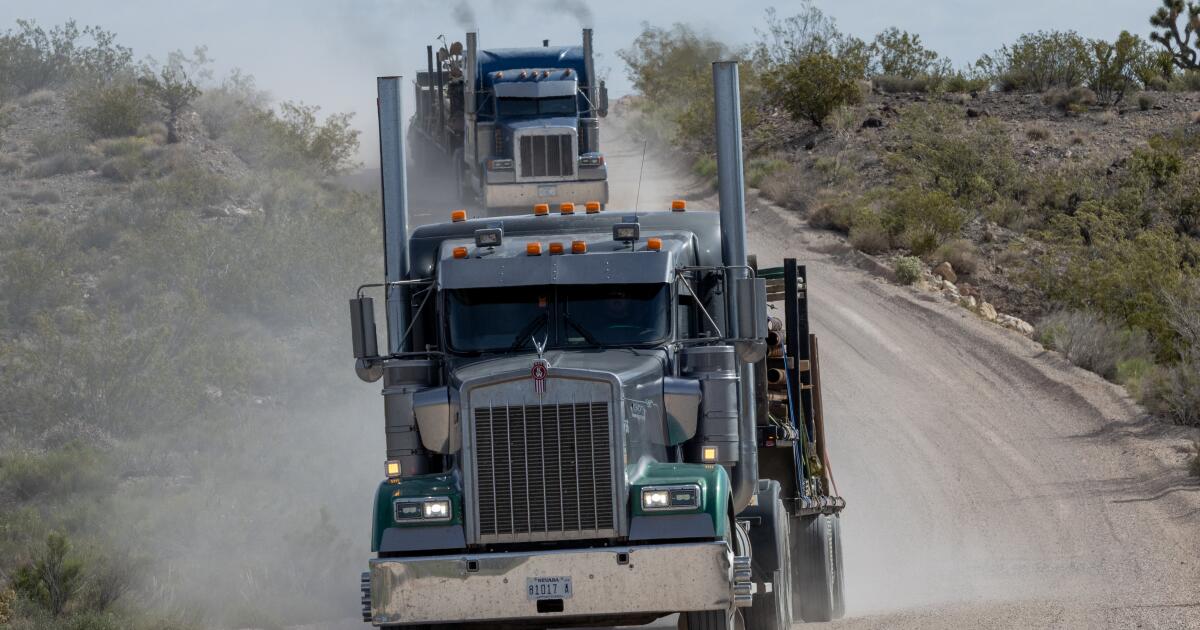
The Trump administration finalized a rollback of the Endangered Species Act on Friday, paving the way for drilling, mining and other human development across protected wildlife habitats.
The move redefines “harm” under the Endangered Species Act, the landmark conservation law that protects threatened and endangered plants and animals. For years, “harm” meant actions that injure or kill wildlife, as well as actions that destroy protected habitats.
Under the new rule, destroying those habitats is no longer illegal.
The decision aligns with the Trump administration’s ongoing effort to slash regulations in the name of economic growth. Interior Secretary Doug Burgum, whose department finalized the move, said the prior definition of harm “interfered with private property rights” and “turned routine activity into a regulatory trap.”
Environmental groups called the decision a disaster, saying it puts protected species on a path to extinction.
The move seems especially poised to hit California, the most biodiverse state in the country, where more than 6,700 species are spread across mountains, forests, deserts and oceans. Of the roughly 2,300 species protected by the Endangered Species Act, nearly 300 are found in California.
These species include amphibians such as tiger salamanders and Yosemite toads; birds such as California condors and northern spotted owls; fish such as Little Kern golden trout and Santa Ana suckers; insects such as Franklin’s bumble bees and Mission blue butterflies; mammals such as gray wolves and Santa Catalina Island foxes; and reptiles such as desert tortoises and green sea turtles.
The Endangered Species Act is widely credited with saving the California condor, which almost went extinct in the 1980s due to several factors, including habitat destruction. Thanks to a recovery program under the act, the condor population has since soared to several hundred. But under the new law, the logging and human development that led to their near demise is now allowed.
A handful of California species recoveries have been championed as success stories under the Endangered Species Act, including southern sea otters, peregrine falcons, humpback whales, bald eagles and green sea turtles.
According to a report from the Center for Biological Diversity, the El Segundo blue butterfly lost 90% of its oceanside habitat due to the construction of LAX and beachfront housing developments. The population dwindled to about 1,000 butterflies in the 1970s, when it was named an endangered species. Now, the population has climbed above 120,000.
In California, the rollback could pave the way for more farming, mining, logging and drilling in areas that were once forbidden due to the potential for wildlife habitat destruction. A report from Earthjustice estimates that expanded oil drilling in California could threaten five marine species including humpback whales, sea otters, leatherback sea turtles, marbled murrelets and wild salmon.
Several environmental groups are planning legal challenges to the ruling.
“For the first time ever, a presidential administration now claims that species protected by the Endangered Species Act shouldn’t be safe from habitat modification that destroys where they live, raise their young, or search for food,” Kristen Boyles, attorney for the environmental nonprofit Earthjustice, said in a statement. “Let’s be clear: there is no support for the Trump administration’s rule — no scientific support, no legal support, no public support. We will see the Trump administration in court.”
Ben Greuel, wildlife campaign manager at the Sierra Club, called the decision “an unlawful attempt to open the door for corporate polluters to degrade vitally important habitats.”
“For more than four decades, the definition of ‘harm’ recognized a simple truth: if you destroy the places wildlife need to survive, you are putting species on a path to extinction,” Greuel said in a statement.
It’s not the first time Trump has taken aim at California environmental regulation.
Earlier this year, Gov. Gavin Newsom, along with the governors of Washington and Oregon, submitted a formal opposition to the Trump administration’s plans to expand drilling off the Pacific Coast, with Newsom saying it leads to “dead wildlife.” In June, the Trump administration ordered a review of the California Coastal Commission, claiming the state’s “environmental extremism” obstructs spaceport development and offshore oil production.
A day before the Endangered Species Act decision, the Trump administration signed off on a controversial plan to use an old oil pipeline to pump water from the Mojave Desert into cities. Environmental groups said the plan threatens springs and local wildlife, since six pumps would need to be built in desert tortoise habitats.
Politics
Trump-aligned House holdouts accused of holding ‘life-saving’ veterans bill ‘hostage’ over SAVE America Act

NEWYou can now listen to Fox News articles!
A sweeping veterans package supporters describe as the largest expansion of veterans’ health care and benefits in more than a decade is expected to return to the House floor when lawmakers come back from the July recess, but backers warn the legislation could once again become collateral damage in the Republican standoff over the SAVE America Act.
The Take Care of America’s Veterans Act rolls roughly 60 veterans bills into a package that would dramatically expand veterans’ health care and benefits. At its core, the legislation would cement veterans’ access to community care outside the VA while increasing benefits for combat-wounded veterans, caregivers and Gold Star families, expanding mental health services and enacting dozens of additional reforms.
House Veterans’ Affairs Committee Chairman Mike Bost, R-Ill., told Fox News Digital he intends to bring the Take Care of America’s Veterans Act back for a vote as soon as the House reconvenes next week.
WASHINGTON, D.C. – MARCH 17: Eugene Simpson, 29, from Dale City, Virginia goes through physical therapy at the Veterans Affairs Medical Center in Washington, D.C. with Michael Minor, a kinesiotherapist with the United States Department of Veterans Affairs on March 17, 2006 in Washington, D.C., USA. (Photo by Jeff Hutchens/Getty Images) (Jeff Hutchens/Getty Images)
HOUSE CONSERVATIVES DERAIL GOP AGENDA IN SAVE AMERICA ACT SHOWDOWN
The legislation was held up last month after a group of House Republicans joined Democrats to defeat a procedural vote, stopping the House from taking up the bill.
“I’m feeling good as long as my members stay with us on the rule,” Bost said. “Right now, there’s some politics being played, not about this bill, but just in general.”
The bill became entangled in a broader House Republican fight over the SAVE America Act, legislation championed by President Donald Trump that would require proof of U.S. citizenship to register to vote in federal elections.
On June 30, the House voted on H. Res. 1398, the procedural rule governing floor consideration of several bills, including the National Defense Authorization Act and the Take Care of America’s Veterans Act. The rule failed after 14 Republicans joined Democrats in opposition, preventing the House from taking up the veterans package and bringing floor business to a standstill. Rep. Anna Paulina Luna, R-Fla., claimed to have voted against the rules vote in protest against House leadership’s handling of the SAVE America Act. As a result, Speaker of the House Mike Johnson sent the members home early.
Bost accused the holdouts of effectively putting veterans legislation on hold.
The US Department of Veterans Affairs building is seen in Washington, DC, on July 22, 2019. (Photo by Alastair Pike / AFP) (Photo credit should read ALASTAIR PIKE/AFP via Getty Images) (Photo credit should read ALASTAIR PIKE/AFP via Getty Image)
‘IT’S A MESS’: GOP TURNS ON HOUSE CONSERVATIVES AS VOTER ID BLOCKADE STALLS TRUMP’S AGENDA
“They’re holding all bills hostage,” Bost said. “They’re not voting for any rule. Any bill that has to pass a rule before it comes to the floor—which this bill does because of its size—can’t move.”
Although Bost said he supports the SAVE America Act and has voted for it three times, he argued the Senate’s failure to act should not stop the House from advancing unrelated legislation.
“I agree with that bill,” Bost said. “But the Senate still has to do their work. We don’t stop our work because the Senate isn’t doing it.”
With 23 legislative days left in the Congressional session, Concerned Veterans for America Strategic Director John Byrnes, a supporter of the bill, said time is of the essence.
“There are lots and lots of things that have to get done,” Byrnes told Fox News Digital. “There’s also the National Defense Authorization Act, which is a must pass every year, so these things eat up time. There’s requirements to have debate on these, which eat up session time.”
Byrnes argued that every procedural delay pushes other legislation further down the calendar.
“This bill will save lives in 2027,” Byrnes said. “If we lose veterans because they could have had faster, better access to health care, we’re never going to get those veterans back.”
Rep. Mike Bost, R-Ill. ( )
TRUMP’S SAVE AMERICA ACT SHOWS SIGNS OF LIFE IN THE SENATE DESPITE REPUBLICAN REVOLT
But Rep. Chip Roy, R-Texas, who also voted no on the procedural vote, told Fox News Digital that he has concerns about how the bill is financed.
“I appreciate what the chairman’s trying to do in some respects, but there’s a few issues,” Roy said.
Among them, Roy pointed to provisions offsetting new spending through changes affecting other veterans.
“You’re taxing certain veterans to provide some sort of benefits and changes to other veterans,” Roy said. “There are concerns about some of the pay-fors.”
Veterans of Foreign Wars has also taken issue with Section 108 of the bill, warning that it would codify changes to future disability ratings for tinnitus and sleep apnea to help finance other veterans priorities.
But Bost said this is inaccurate.
“No veteran is going to have their benefits reduced,” Bost said. “If you’re receiving a benefit right now, that’s not going to be reduced at all.”
Roy, who previously served two years on the House Veterans’ Affairs Committee, said he supported a lot of what the bill was seeking to accomplish; but said other pieces of legislation are priorities, too.
CLICK HERE TO DOWNLOAD THE FOX NEWS APP
“There is a block of us for whom border security, the SAVE Act and demonstrating our leadership on major issues is critical,” Roy said. “Some of these other bills may or may not get hung up based on a desire of many in the conference to see movement on other things.”
Fox News Digital reached out to Luna’s office and the White House for comment.
-
 Lifestyle12 minutes ago
Love Island and Pre-Teen Punks with Jason Narducy : Wait Wait… Don’t Tell Me!
-

 Technology24 minutes ago
Oregon’s Attorney General withdraws effort to delay Paramount and Warner Bros. merger
-

 World27 minutes ago
Gunfire shatters Toronto Latin street festival, leaving at least 2 dead and multiple wounded
-

 Politics32 minutes ago
Sen. Lindsey Graham dead at 71 after ‘brief and sudden’ illness, office says
-

 Health39 minutes ago
Last American to use an iron lung dies at 78 years old after childhood polio diagnosis
-

 Sports42 minutes ago
Conor McGregor’s long-awaited Octagon return cut short by apparent knee injury seconds into UFC 329
-

 Technology47 minutes ago
Robotaxi pit stops could pop up near you
-
 Business54 minutes ago
‘Moana’ debuted just 10 years ago. Why Disney is remaking it as a live-action movie

