Politics
F.D.A. Nominee to Face Grilling Over Cutbacks and Policy Shifts


Dr. Marty Makary may face sharp questions from senators about whether he will defend the Food and Drug Administration against staff cutbacks and industry pressure on Thursday, although he is still expected to sail through his confirmation hearing to become the agency’s commissioner.
Dr. Makary built his reputation as a contrarian in the medical field, gaining widespread notice by speaking out about medical errors. Those close to him have remarked on his willingness to agree with Robert F. Kennedy Jr., the nation’s health secretary, on a variety of issues.
As a pancreatic cancer surgeon and health policy researcher at Johns Hopkins University, Dr. Makary has been viewed by some as a study in contrasts. He has written several books criticizing what he considers flaws in medical orthodoxy that result in recommendations backed by scant evidence.
Yet he also drew attention from the Trump team as a Fox News personality with more controversial views, like his relatively early predictions that Covid would fade as a concern and that widespread immunity would take hold long before it did.
Dr. Reshma Ramachandran, an assistant professor at the Yale School of Medicine, said that it was not clear which is the “true Marty Makary.”
She said that was an important question, given some of Mr. Kennedy’s pronouncements. The health secretary has suggested that the F.D.A. should lift constraints on risky products like raw milk, which can be rife with bacteria, and had embraced hydroxychloroquine, a drug briefly used as a Covid therapy before its risks were deemed to exceed any benefit.
“I’m hoping, and kind of desperately hoping,” she said, “that just a top-line overall priority for him is to maintain the integrity and independence of the agency.”
Mr. Kennedy has already begun to signal shifts in vaccine policy, an area Dr. Makary would also oversee at the F.D.A. Mr. Kennedy has expressed an interest in examining the safety of vaccines that have been on the market for decades and that protect millions of American children and adults against debilitating diseases.
The agency has vast regulatory authority over products including prescription and over-the-counter drugs, medical devices, tobacco and about 80 percent of the food supply.
The F.D.A. has a staff of about 18,000 and a budget of about $7.2 billion. Among its many oversight roles, the agency regulates artificial intelligence software used to scan medical images, an area where the agency has been dismissed as too permissive in its approvals.
If confirmed, Dr. Makary would first encounter tensions among staff members, who have been whipsawed by the Trump administration’s aggressive cost-cutting measures in recent weeks.
The staff endured an initial round of about 700 layoffs, decimating some product-review teams that ensure the safety of medical devices such as surgical robots and systems that deliver insulin to people with diabetes. Those firings were followed by some job reinstatements.
On Tuesday, panic swept through some quarters of the agency when the Trump administration put about two million square feet of the agency’s Maryland office space up for possible sale before backing off. Concern also spread when the lease to a key drug-safety lab in St. Louis was posted as savings on the “Wall of Receipts” advertised by Elon Musk’s so-called Department of Government Efficiency. (The agency said on Wednesday that the lab would remain open.)
Further staff cuts are expected.
“What are the F.D.A. resources going to look like in an environment where it seems like the current approach is slashing and burning, without any kind of thoughtful deliberation?” asked Dr. Aaron S. Kesselheim, a Harvard professor of medicine who has studied the F.D.A.
In documents filed with the Office of Government Ethics, Dr. Makary pledged to step away from millions of dollars in financial interests. Those steps include resigning from his role as co-owner of Global Appropriateness Measures, a company that scans health data for signs of inappropriate medical care with clients including health plans and physician groups. He also said he resigned from positions at Sesame, a telehealth company that provides weight-loss medications, and from MedRegen, a pharmaceutical company, and others.
There are many other issues that Dr. Makary would face, including a new review that Mr. Kennedy pledged to undertake on the safety of abortion pills. Tobacco companies could emerge emboldened after the Biden administration failed to advance cigarette restrictions, and after having heavily contributed to President Trump’s campaign. The president’s decision to impose tariffs could affect the supply of essential medicines from overseas.
He will also be expected to advance Mr. Kennedy’s goal of ending what he has described as corruption in public health agencies, closing the revolving door between the F.D.A. and the industries it regulates. Dr. Makary will be expected to work with the Make American Healthy Again coalition, which is banking on the administration to identify and remove unhealthy food additives.
Those priorities are already appearing to clash, though: The new acting chief of the F.D.A. food division, Kyle Diamantas, comes directly from a law firm where he was defending the maker of infant formula, a regulated product, against claims that it harmed premature babies.



NEWYou can now listen to Fox News articles!
A progressive Chicago lawmaker issued an apology Tuesday after facing backlash for suggesting a slain college student was in the “wrong place at the wrong time.”
Last Thursday, Sheridan Gorman, 18, of Westchester County, New York, was gunned down while taking a walk with friends around 1:30 a.m. along Chicago’s lakefront.
Alderwoman Maria Hadden sparked outrage on social media after she suggested in an interview with Fox 32 Chicago that the Loyola University Chicago student was in the “wrong place at the wrong time” and that she may have “startled” the individual who shot and killed her.
The local Democrat’s comments were slammed as insensitive and also prompted a response from Gorman’s family, who referenced her remarks.
PRITZKER BREAKS SILENCE ON MIGRANT CHARGED IN STUDENT’S MURDER, BLAMES TRUMP FOR ‘POLITICIZING’ CASE
Chicago Alderwoman Maria Hadden was blasted online over her response to the killing of Sheridan Gorman. (End Wokeness via X/Sheridan G. Gorman via Instagram)
Hadden, a progressive ally of Chicago Mayor Brandon Johnson, released a statement Tuesday saying her interview on Fox 32 had “gone viral on conservative media,” and that her comments were in response to a question comparing Gorman’s murder to a separate 2018 case.
“In an effort to make sense of a senseless situation, I said things that landed wrong with some people,” she said. “My comments were never intended to blame the victim or to imply that Sheridan should not have been out enjoying the park or that it was her fault that she was shot.
“In the interview, I tried my best to share what limited information I had with our community as fast as possible while helping to address the fears people had about the shooting,” Hadden continued. “I sincerely apologize for any additional pain that my comments may have caused.”
MASKED GUNMAN KILLS LOYOLA CHICAGO COLLEGE STUDENT IN SHOOTING NEAR CAMPUS; POLICE HUNT FOR SUSPECT
Loyola University student Sheridan Gorman was killed in Chicago on March 19, 2026. (Sheridan G. Gorman via Instagram))
She added, “The fact that some media outlets are intentionally creating sound bites to misconstrue my words during this tragedy is also unfortunate.”
Gorman’s family referenced Hadden’s remarks from the Fox 32 interview, saying the slain college student “deserved the future that was stolen from her.”
“What happened to Sheridan cannot be reduced to the idea of someone being in the wrong place at the wrong time. This is not an abstraction. This is the loss of a daughter. The loss of a sister. The loss of a future filled with milestones that will now never come. Our family is forever changed.”
CHICAGO LAWMAKER RIPPED OVER ‘DISGUSTING’ RESPONSE TO COLLEGE STUDENT KILLED BY ALLEGED ILLEGAL IMMIGRANT
Sheridan Gorman, a New York native, was reportedly only a few months away from completing her freshman year at Loyola University Chicago in Illinois. (Sheridan G. Gorman via Instagram)
The family added: “We cannot accept a world where moments like this become something people grow used to. We cannot allow ourselves to become desensitized to violence. When we begin to accept these tragedies as inevitable, we all become vulnerable to them. Apathy is not harmless—it allows these moments to repeat.”
Jose Medina-Medina was arrested and charged with Gorman’s murder.
According to the Department of Homeland Security (DHS), Medina is an illegal immigrant who entered the U.S. during the Biden administration before being apprehended and released into the country.
CLICK HERE TO DOWNLOAD THE FOX NEWS APP
DHS said the 25-year-old Venezuelan national was previously arrested for shoplifting in Chicago.
Fox News Digital’s Andrew Mark Miller contributed to this report.
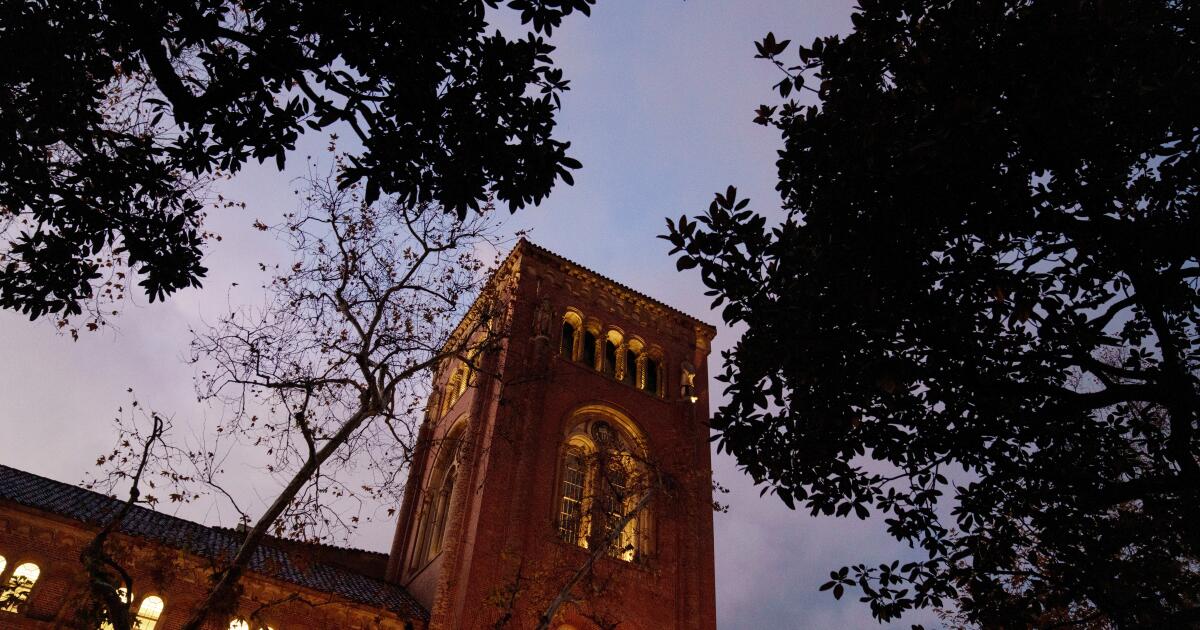
A proposed gubernatorial forum hastily cobbled together in the hours after USC canceled its Tuesday debate fell apart because the candidates of color who were excluded from the previously planned event were unable to show up in person at KNBC-TV’s studio in Universal City, according to multiple sources.
Facing mounting pressure that its debate selection criteria excluded every candidate of color, the university canceled its debate late Monday. On Tuesday morning, billionaire Tom Steyer — a Democrat — proposed holding an alternative face-off, with KNBC moderating. But the candidates who had not been invited to the USC debate had already made other commitments.
“A lot of this came out of nowhere — there’s a debate and you’re not invited, followed by there’s no debate, and then maybe we should all hang out and have a conversation,” said Kyle Layman, a strategist advising former U.S. Health and Human Services Secretary Xavier Becerra.
USC officials declined to comment on Tuesday’s developments — as did KABC-TV, one of the broadcast partners of the canceled debate. KNBC did not respond to a request for comment, but someone involved with planning a potential debate there said pulling together such an event in just a few hours was impossible, and also unfair to the candidates who had made other plans after initially being excluded from the USC debate.
“We looked into the possibility of doing something. It just wasn’t possible because of the last-minute logistics. It was not feasible,” said the person, who asked for anonymity to speak candidly. “We couldn’t get everybody here.”
The fact that the candidates excluded from the USC debate couldn’t find a way to participate in Tuesday evening’s alternative forum irritated some people involved in the planning, however. Becerra, state Supt. of Public Instruction Tony Thurmond, former Los Angeles Mayor Antonio Villaraigosa and former state Controller Betty Yee had loudly protested not being invited to the USC event.
“This is like probably one of the last opportunities they have to be with other leading contenders of the race, so why not take this opportunity?” said someone who took part in conversations about the proposed last-minute debate, who asked for anonymity to speak openly. “If the whole thing is about bringing your message to the voters, making sure voters have as much information as possible, talking about the issues that matter, wouldn’t you want to take every opportunity to do that?
“If you’re going to talk a big game about taking your message to voters, the importance of debates, why not do it?” this person said.
Becerra, Thurmond, Villaraigosa and Yee have reportedly formed an informal pact not to participate in any debate that does not include all of them, which Yee referenced in a Tuesday afternoon news conference.
“The idea that none of the candidates of color are going to be joining a debate is just inappropriate for a state like California,” Yee said. “We also need to have a commitment from all of the debate sponsors that they will include all of us going forward.”
Yee and Thurmond were not invited to the next major televised debate, which will take place April 1 at Fresno State University. Becerra and Villaraigosa had previously confirmed their attendance, according to a news release from the Western Growers Assn., one of the event’s sponsors.
And all four candidates of color, along with San José Mayor Matt Mahan, were not invited to a debate on April 22 in San Francisco that will be hosted by KRON-TV and broadcast on Nexstar Media Group stations throughout California.
“We don’t need gatekeepers,” Mahan said in a statement Tuesday evening. “I’m calling on my fellow candidates to work together to organize our own debates — so we can take our ideas for a better California to every corner of California. Let’s let the voters truly decide.”
The scrapped USC debate was going to be hosted by the institution’s Dornsife Center for the Political Future and co-sponsored by KABC and Univision. Six candidates had been invited to participate: Democrats Rep. Eric Swalwell (D-Dublin), former Orange County Rep. Katie Porter, Mahan and Steyer; along with the leading Republicans, conservative commentator Steve Hilton and Riverside County Sheriff Chad Bianco.
Candidates and elected officials called the criteria used to determine participation in the debate biased because it included Mahan, a white candidate who is polling near the bottom of the pack but is supported by notable names in the USC community. Hours after the debate was canceled, Steyer’s campaign sought to create an alternate event that would include all of the candidates.
“We were trying to do the right thing upon learning that the debate was canceled at USC,” said a member of Steyer’s campaign who asked for anonymity to speak candidly. “Tom immediately was like, ‘We can do something alternative.’ People want to hear from the gubernatorial candidates. It was on the table. It was offered.
“NBC couldn’t get all the candidates here, but we tried,” this person said. “Given the short amount of time we were trying to put this together, it ultimately could not happen because not all the candidates could get to the studio.”
Thurmond, who was in Sacramento and Richmond on Tuesday, joined a political influencer on YouTube Tuesday evening, while Yee attended previously scheduled events with the East Area Progressive Democrats and a women’s group in the L.A. area. Villaraigosa had lined up other interviews at his Wilshire campaign office, Becerra was traveling, and Porter was scheduled to host a livestream on her Instagram account Tuesday evening.

NEWYou can now listen to Fox News articles!
England’s King Charles III will visit Washington next month, his first state visit since taking over the throne in the United Kingdom.
The king will address congress in the last week of April, Fox News has learned. No date and time has been confirmed.
The visit will be the first time a British monarch will address Congress since 1991, when Charles’ mother, Queen Elizabeth II, became the first British royal to speak before American lawmakers.
KING CHARLES TO ADDRESS ‘INCREASING PRESSURES OF CONFLICT’ IN SPEECH AS TRUMP CRITICIZES BRITISH PM ON IRAN
King Charles and Camilla at the Sovereign’s Parade in 2006. Charles will address congress in April in his first state visit to Washington. (Anwar Hussein Collection/ROTA/FilmMagic)
President Donald Trump visited London in September in which he attended a state dinner hosted by Charles at Windsor Castle.
House Speaker Mike Johnson addressed the UK parliament in honor of America’s 250th anniversary where he addressed the special relationship between the U.S. and the U.K.
Charles’ visit will come as the Trump administration pressures British Prime Minister Keir Starmer to provide assistance in the U.S.-Israel war with Iran.
UK DEPLOYING WARSHIP, HELICOPTERS TO CYPRUS AFTER DRONE STRIKE
President Donald Trump meets with Britain’s Prime Minister Keir Starmer, left, and his wife Victoria Starmer at Trump Turnberry golf club on Monday, July 28, 2025, in Turnberry, Scotland. (Christopher Furlong/Pool Photo via AP)
Starmer has distanced himself from the conflict, prompting Trump to publicly call him out and mock him by saying the British leader is “no Winston Churchill.”
Meanwhile, Starmer has said he remains focused on securing British interests.
“I’m the British prime minister and my job is to be absolutely focused on what’s in the British national interest,” he recently said.
TOPSHOT – Britain’s King Charles III arrives to visit the University College Hospital Macmillan Cancer Centre in London on April 30, 2024. Charles is making his first official public appearance since being diagnosed with cancer, after doctors said they were “very encouraged” by the progress of his treatment. (Photo by HENRY NICHOLLS / AFP) (Photo by HENRY NICHOLLS/AFP via Getty Images) ( HENRY NICHOLLS/AFP via Getty Images)
CLICK HERE TO DOWNLOAD THE FOX NEWS APP
“That has served me well, in recent weeks,” he added. “And that is the principle that I’ll continue to adhere to as we go forward, taking difficult decisions, notwithstanding the pressure that comes from me from a number of different places.”

Risk of severe storms across SE Michigan on Thursday — here’s what to know

1 dead in house fire in San Francisco’s Portola neighborhood

Convicted SMU Stalker Sues Dallas County For 183-Day Jail Overstay

TSA wait times hit

More record breaking temperatures across the Denver metro area

Florida High School Football Rankings: Top 25 teams – Oct. 21

How old is Bo Nix? What to know about Oregon quarterback ahead of 2024 NFL Draft

Cleary's 21 help Le Moyne down Central Connecticut State 69-64 in OT

99th annual Pony Swim held in Virginia

Indiana Members Credit Union announced as new anchor tenant at Bottleworks District

LaGuardia Crash Timeline: Moments Before Air Canada Plane Collided With Fire Truck

Chicago alderwoman apologizes for ‘wrong place at the wrong time’ comment on slain student

Fake Euronews website targets Hungary election with false claims

An air traffic controller was juggling extra roles during the LaGuardia plane crash

Iran War: Pentagon set to send thousands of elite 82nd Airborne troops to region | BBC News
-

 Detroit, MI7 days ago
Drummer Brian Pastoria, longtime Detroit music advocate, dies at 68
-

 Georgia1 week ago
How ICE plans for a detention warehouse pushed a Georgia town to fight back | CNN Politics
-

 Movie Reviews6 days ago
‘Youth’ Twitter review: Ken Karunaas impresses audiences; Suraj Venjaramoodu adds charm; music wins praise | – The Times of India
-

 Education1 week ago
Video: Turning Point USA Clubs Expand to High Schools Across America
-

 Sports4 days ago
IOC addresses execution of 19-year-old Iranian wrestler Saleh Mohammadi
-
 Science1 week ago
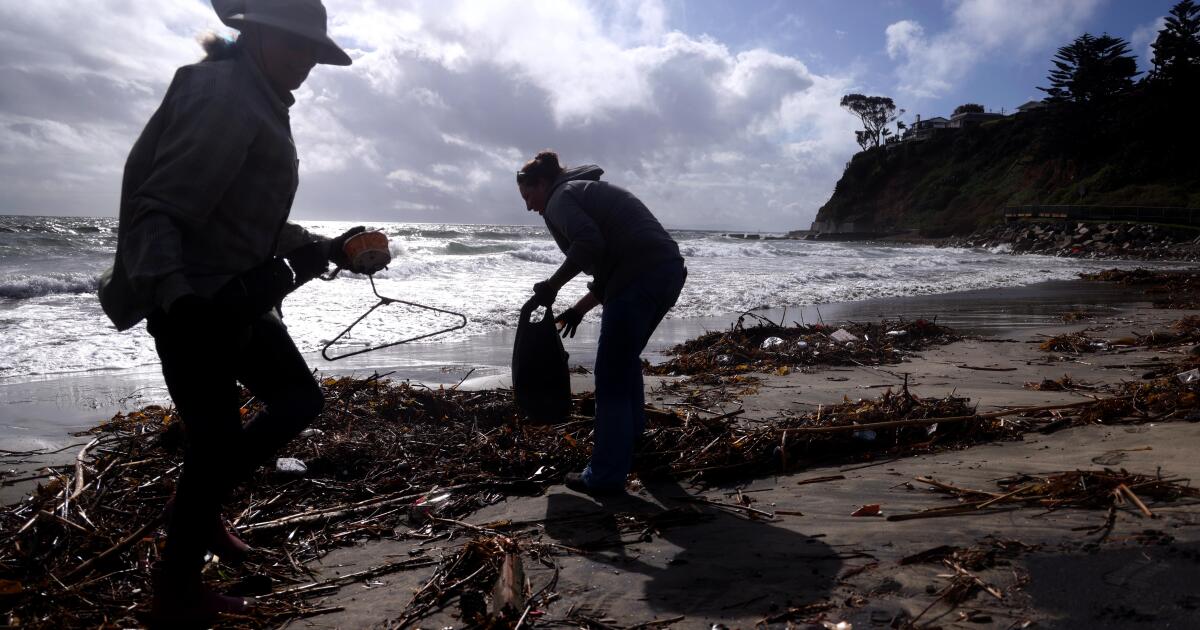
Industrial chemicals have reached the middle of the oceans, new study shows
-

 Science1 week ago
How a Melting Glacier in Antarctica Could Affect Tens of Millions Around the Globe
-

 Culture1 week ago
Test Your Memory of Great Lines From Classic Irish Poems