Northeast
Pregnant New York special education teacher found dead in classroom: 'Gift for teaching'

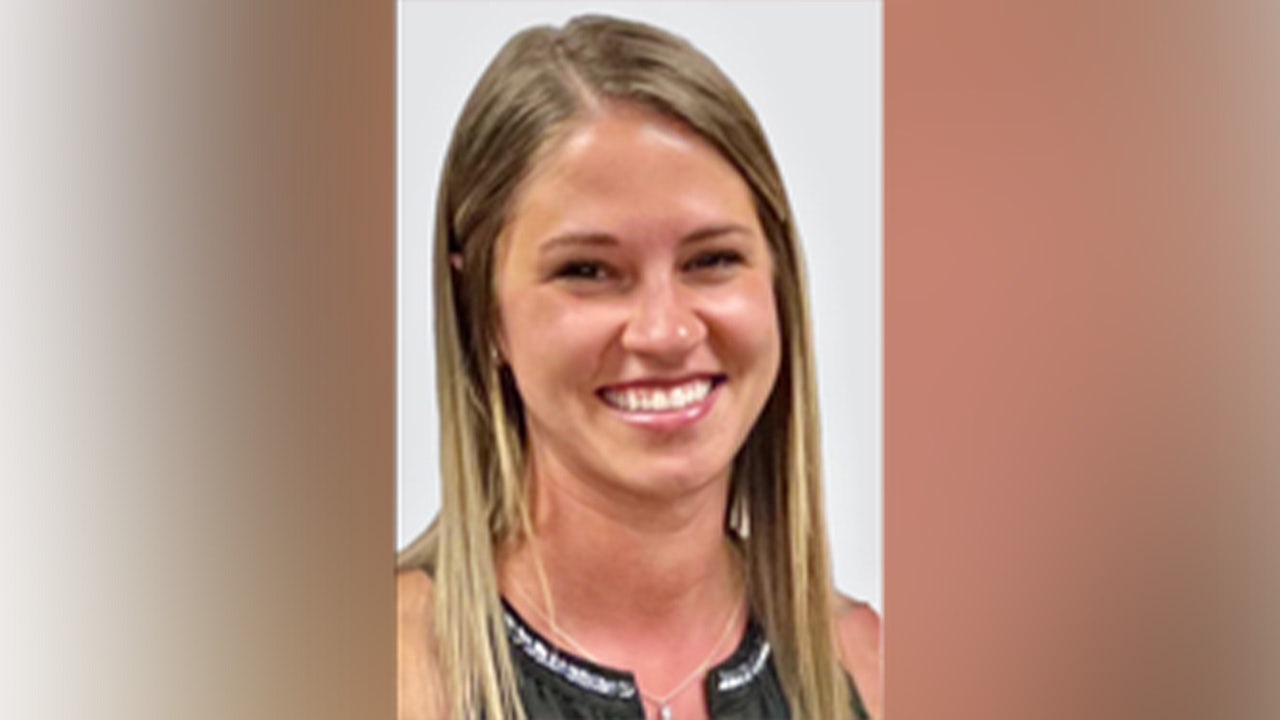
An upstate New York special education teacher tragically died in her classroom, along with her unborn baby, the school announced.
A news release from Kendall Elementary School stated that 29-year-old Courtney Fannon was found unresponsive in her empty classroom after school hours on Friday, March 8.
Despite life-saving measures, both Fannon and her unborn baby were declared dead at 6:30 p.m.
A cause of death has not been released.
FATHER AND SON PAY TRIBUTE TO LATE MOTHER’S MEMORY BY COACHING IN BASKETBALL STATE SEMIFINALS
Courtney Fannon, 29, was found unresponsive in her special education classroom at Kendall Elementary School in Kendall, New York. (Kendall Central School)
According to a GoFundMe page, Fannon was pregnant with her daughter, Hadley Jaye, and was about four weeks away from her expected arrival.
‘LACROSSE MY HEART’: HIGH SCHOOLERS BAND TOGETHER TO MAKE SPORTS ACCESSIBLE FOR PEOPLE WITH DISABILITIES
“For those who did not have the wonderful opportunity to meet or get to know Courtney, there is an endless amount of positive and good things that can only be said about her,” the GoFundMe stated. “She was loving, genuine and organized in a way that always placed her students ahead of herself, ultimately changing the lives of her students and caregivers, always for the positive.”
“As we mourn, we also ask that you hold your loved ones just a little tighter over the next few days, you never know if you will have a tomorrow with them,” the post read.
Kendall Elementary School said that counselors would be available for students following the death of Fannon. (Google Maps)
The school said that Fannon had a “passion” for teaching special needs students and always had a friendly smile on her face.
“Courtney was a special education teacher who served her students with passion and joy each day,” the school said. “When she wasn’t in her classroom sharing her love and gift for teaching with her students, she could be found walking our halls with a smile and a friendly hello.”
Mental health counselors will be available to support students, the school said.
The GoFundMe has raised more than $70,000 as of Thursday afternoon.
Fox News has reached out to Kendall Elementary School for comment.
Read the full article from Here

Pennsylvania
1-on-1 interview | U.S. Sen. Dave McCormick discusses the effects of the Iran war on Pa.

Gas prices in Pennsylvania have risen sharply due to the Iran war, with the state average now at $4.18 per gallon — an increase of $1.06 since the conflict began. McCormick says rising prices are a concernU.S. Sen. Dave McCormick acknowledged the financial strain on Pennsylvanians.”I am worried about gas prices, that the gas is up a buck a gallon,” McCormick said. McCormick expressed hope that relief could come soon as negotiations related to the Iran war progress.”I think the sooner we can finish up the mission and get home, I don’t think there’s any risk of a long, Iraq-like situation, where we’re trying to fix Iran. I think the president’s clear on that, and I’m certainly clear on that,” he said. Farmers feel impact beyond the pumpDuring recent meetings with farmers in Middletown and Tioga County, McCormick noted that higher fuel prices are significantly affecting the agricultural industry.”Fertilizer prices have gone way up largely because of what’s going on in Iran,” he said. Labor issues add to farm concernsMcCormick also addressed labor concerns raised by farmers, particularly regarding the H-2A visa program, which allows farm workers to enter the U.S.”We need to make some changes on that, I think, and maybe even a new visa category for folks that work full-time. And these are jobs that, frankly, most Americans aren’t taking or willing to take. So, so there’s definitely work to do,” he said.
Gas prices in Pennsylvania have risen sharply due to the Iran war, with the state average now at $4.18 per gallon — an increase of $1.06 since the conflict began.
McCormick says rising prices are a concern
U.S. Sen. Dave McCormick acknowledged the financial strain on Pennsylvanians.
“I am worried about gas prices, that the gas is up a buck a gallon,” McCormick said.
McCormick expressed hope that relief could come soon as negotiations related to the Iran war progress.
“I think the sooner we can finish up the mission and get home, I don’t think there’s any risk of a long, Iraq-like situation, where we’re trying to fix Iran. I think the president’s clear on that, and I’m certainly clear on that,” he said.
Farmers feel impact beyond the pump
During recent meetings with farmers in Middletown and Tioga County, McCormick noted that higher fuel prices are significantly affecting the agricultural industry.
“Fertilizer prices have gone way up largely because of what’s going on in Iran,” he said.
Labor issues add to farm concerns
McCormick also addressed labor concerns raised by farmers, particularly regarding the H-2A visa program, which allows farm workers to enter the U.S.
“We need to make some changes on that, I think, and maybe even a new visa category for folks that work full-time. And these are jobs that, frankly, most Americans aren’t taking or willing to take. So, so there’s definitely work to do,” he said.
Rhode Island
Rhode Island’s indie bookstore passport program returns, sending readers on a statewide literary road trip – What’s Up Newp

Three Rhode Island independent bookstores are relaunching a statewide program that challenges readers to visit every indie bookshop in the state — and rewards those who pull it off.
The Rhode Island Independent Bookstore Passport Adventure, first launched in 2019, returns April 18 and runs through April 26. Passports are free and will be distributed starting April 18 at three anchor locations: Charter Books in Newport, Books on the Square in Providence, and Wakefield Books in Wakefield. Participants then have nine days to visit all 20 stores on the list and collect a stamp at each one. No purchase is required for a stamp.
Completed passports must be returned to one of the three anchor locations by April 26. Everyone who finishes will receive a sheet of twenty 20% off coupons, one valid at each participating store. One grand prize winner will receive twenty $25 gift certificates — one per store — for a total value of $500.
“The RI Independent Bookstore Passport Adventure is an opportunity to celebrate our local indie bookstore scene and encourage our customers to explore the many unique bookshops this state has to offer,” said Jennifer Kandarian, manager at Books on the Square.
The program also coincides with Independent Bookstore Day on April 25, a national celebration organized by the American Booksellers Association. Eleven of the twenty participating stores are ABA members and will offer special events, freebies and discounts that day.
The 20 participating stores span the state, from Westerly to Tiverton:
arc{hive} book + snackery, Warren; Barrington Books, Barrington; Binds and Blooms, Coventry; Book Around, Pawtucket; Books on the Square, Providence; Brown University Bookstore, Providence; Charter Books, Newport; Forget Me Not Fables, North Providence; Heartleaf Books, Providence; Ink Fish Books, Warren; Island Books, Middletown; Little Bubblegum Bookshop, Providence; Martin House Books, Westerly; Map Center, Pawtucket; Paper Nautilus Books, Providence; Riffraff, Providence; Stillwater Books, West Warwick; Symposium Books, Providence; Wakefield Books, Wakefield; Yellow House, Tiverton.
More information is available at booksq.com/passport. Questions can be directed to ribookstorepassport@gmail.com.

MONTPELIER, Vt. (WCAX) – Vermont musical sensation Noah Kahan is supporting a state bill aiming to crack down on ticket scalpers.
House Bill 51 would cap the amount that tickets could be resold for and stop tickets from being sold twice. That way, buyers don’t end up with a ticket already belonging to someone else. It demands that resellers ensure refunds in certain circumstances and proposes annual licenses for ticket resellers.
Kahan offered his support in a video statement to the Senate Economic Development Committee.
“As an artist that cares very deeply about the fan experience and accessibility of concert tickets, this bill is a critical step in eliminating predatory resale behaviors and offer Vermonters a great solution for exchanging and reselling tickets in a safe marketplace,” Kahan said.
The bill also addresses enforcement, authorizing the attorney general to monitor and penalize resellers.
It’s unclear if the bill will move forward this session.
Copyright 2026 WCAX. All rights reserved.

1-on-1 interview | U.S. Sen. Dave McCormick discusses the effects of the Iran war on Pa.
Rhode Island’s indie bookstore passport program returns, sending readers on a statewide literary road trip – What’s Up Newp

SC GOP Senate candidate drops out, endorses Mark Lynch in bid to unseat Lindsey Graham

SD’s longest bridge gets $65M for replacement

Bill backed by Tennessee Republicans would increase state control over tourism zones

Florida High School Football Rankings: Top 25 teams – Oct. 21

How old is Bo Nix? What to know about Oregon quarterback ahead of 2024 NFL Draft

Cleary's 21 help Le Moyne down Central Connecticut State 69-64 in OT

99th annual Pony Swim held in Virginia

Indiana Members Credit Union announced as new anchor tenant at Bottleworks District

Swalwell’s former female staffer drops bombshell allegations of sexual assault, exposing himself: report

NASA’s Artemis II prepares for splashdown on Earth

Trump proposes painting executive office building white

Rep Randy Fine joins House Freedom Caucus: ‘Strongest group of conservative patriots in Congress’

Trump issues NATO ultimatum to reopen Strait of Hormuz ‘within days’
-

 Atlanta, GA6 days ago
1 teenage girl killed, another injured in shooting at Piedmont Park, police say
-

 Education1 week ago
Video: YouTube’s C.E.O. on the Rise of Video and the Decline of Reading
-

 Movie Reviews1 week ago
Vaazha 2 first half review: Hashir anchors a lively, chaos-filled teen tale
-

 Georgia3 days ago
Georgia House Special Runoff Election 2026 Live Results
-

 Education1 week ago
Video: Toy Testing with a Discerning Bodega Cat
-

 Pennsylvania4 days ago
Parents charged after toddler injured by wolf at Pennsylvania zoo
-
 Milwaukee, WI4 days ago
Potawatomi Casino Hotel evacuated after fire breaks out in rooftop HVAC system
-
 Entertainment1 week ago
Inside Ye’s first comeback show at SoFi Stadium