Sign up for the Today newsletter
Get everything you need to know to start your day, delivered right to your inbox every morning.

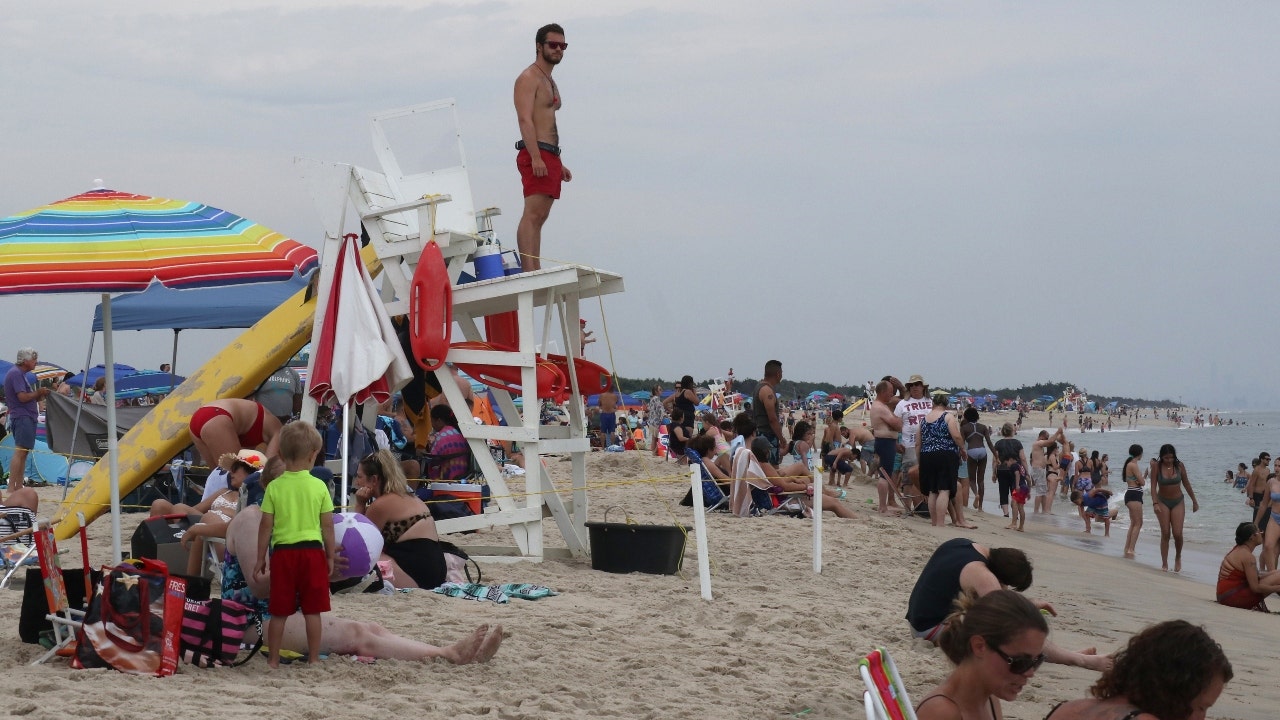
A growing number of New Jersey mayors of beach towns are hoping the state will back away from a recent push to lessen penalties for youthful offenders as they take aim at bad parenting amid an influx of teen mobs wreaking havoc on vacation communities.
A false alarm about an active shooter in Seaside Heights sent throngs of kids running in a panic off the boardwalk Saturday night. In Ocean City, a famously dry town that bills itself “America’s greatest family resort,” video shows a group of young men and boys punching and kicking a teen pinned down on the boardwalk. A 15-year-old was also stabbed. Wildwood leaders quelled “civil unrest” by declaring a state of emergency and closing the boardwalk.
All three beach towns are summer vacation hot spots for families, graduating high schoolers planning after-prom parties and other seasonal visitors. But a huge influx of unsupervised young people is stressing local police, businesses and tourists.
In Seaside Heights, Mayor Anthony Vaz imposed summer-long curfews for juveniles and a ban on house rentals without an adult present.
NJ TEEN STABBED AT POPULAR BOARDWALK, ‘CIVIL UNREST’ IN ANOTHER BEACH TOWN
Raucous behavior flooded the beach towns of New Jersey over the Memorial Day holiday weekend. (Alexi Rosenfeld/Getty Images)
“We’re supposed to enforce no smoking and no cannabis smoking on the boardwalk, no kids drinking underage,” Vaz said. “Well, that’s well said and done. Give me thousands of cops to do this. Thousands. You could try your best. They cannot succeed without legislation that says you’re going to be penalized for this.”
“There is no respect for law enforcement.”
Vaz is urging other local leaders to team up and head to the state legislature to ask for stiffer penalties for the worst juvenile offenders and stricter repercussions for teens who get caught smoking pot or drinking alcohol in public.
WATCH: ‘Unruly, unparented children’ spark Wildwood state of emergency
In Wildwood, a 90-minute drive down the Garden State Parkway, Mayor Tony Troiano Jr. declared a state of emergency overnight from Sunday into Monday on Memorial Day weekend due to out-of-control teens.
NJ ANNOUNCES EMERGENCY DUNE REPAIRS IN SHORE TOWN PENALIZED FOR DOING THEM ITSELF
Troiano says Wildwood will not stand for rowdy behavior. (Gary Hershorn/Getty Images)
He told FOX 29 Philadelphia his city “will not tolerate unruly, undisciplined, unparented children, nor will we stand by while the laws of the state tie the hands of the police”
“We want everyone to have a good experience. Simple as that,” he told Fox News Digital. “Pretend that you are home. If you act the fool at home, then stay home.”
In a notice to residents Monday, the city said police were inundated with calls about the “extremely large” mob, many of them teens and young adults without their parents. The department already has less than 50 officers this summer when it usually has closer to 100 and has run into trouble sending officers to respond to other emergencies.
VIDEO SHOWS MOMENT US MARINE SAVES JERSEY SHORE SWIMMER FROM DEADLY RIP CURRENT
Troiano says unparented children need to steer clear of the beach resort town and that parents need to watch for unacceptable behavior. (Alexi Rosenfeld/Getty Images)
With help from neighboring law enforcement agencies, he later reopened the boardwalk and invited visitors back, asking them to behave.
“Come down enjoy what we have to offer,” he said. “Just obey the laws. No underage drinking and smoking dope.”
Troiano said he got a call from the governor after the emergency declaration and was hoping to see changes to state law that would “uncuff” his officers, who are working with a depleted roster and tasked with enforcing rules that repeat offenders continue to break due to the lack of consequences.
POPULAR ATLANTIC BEACH DESTINATION HIT WITH DANGEROUS RIP CURRENTS AS STORMS LINGER; HUNDREDS RESCUED
Troiano says he’s diligently working to “uncuff” police officers to enforce strict rules against bad beach behavior. (Michael Bocchieri/Getty Images)
“Everything about this is bad,” he said. “You’re enabling these kids to break the law, and there’s nothing you can do about it.”
Ocean City Police arrested multiple teens and were quick to “restore order” on the boardwalk there, according to Mayor Jay Gillian.
“As in recent years and in other shore towns, Ocean City experienced a number of issues related to large crowds of teens on the boardwalk, fights, shoplifting and disorderly conduct during the start of Memorial Day weekend,” he said in a statement over the weekend. “I understand the impact that this behavior has on all of our residents, guests and business owners, and I want to assure everybody that Ocean City will not tolerate it.”
The worst offenders have always broken rules, according to Vaz in Seaside Heights. But he said he has repeatedly witnessed misbehaving minors exhibit no fear of repercussions whatsoever.
The biggest offenses have come from Seaside Heights, N.J., a beach town that rose to worldwide prominence as a result of the MTV reality show “Jersey Shore.” (Gary Hershorn/Getty Images)
“And the young people know this, being younger than 18 and over 18,” he said. “I’ve seen with my own eyes, where a cop has stopped a young person for whatever, cannabis smoking, and the answer is, ‘You can’t do anything to me.’”
“They don’t believe in authority. They believe in entitlement.”
They refuse to cooperate and often give fake names, he said.
“That’s what the cop has to write down — ‘Joe Schmo’ — because that’s what the kid said his name was,” he said.
The mayor, a former superintendent of schools, said he’s worked with teens for decades and noticed a monumental shift in how they interact with not just police, but adults across the board.
Officials and residents of several New Jersey shore towns say the state’s law decriminalizing marijuana use is having an unintended effect by emboldening large groups of teenagers to run amok on beaches and boardwalks, knowing there is little chance of them getting in trouble for it. (AP Photo/Wayne Parry)
“When I was young, I wasn’t exactly an angel, but I feared repercussions if I did anything wrong, [and] that my parents, particularly my father, would take it into his own hands if I did something really bad,” he said. “We don’t have those parents today for the most part.”
What he sees are groups of kids, some as young as 14, arriving in town without any adult supervision and getting their hands on drugs or alcohol.
“Good kids become bad kids,” he said. “If you have no respect, that’s more than being disobedient.
“If I was a boy, 17, I had a beer, and I got caught by a cop, I would have been nervous as hell,” he said. “They’re not nervous. They don’t care.”
Vaz said he also considered a state of emergency when his department became overwhelmed by the sheer number of kids on the boardwalk. He credited neighboring law enforcement agencies for supplying backup that helped calm things down.
“Saturday was a cluster of kids, thousands,” Vaz said. “I’m here 58 years. This was the biggest crowd I’ve ever seen of young people.”
People walk and ride along the boardwalk the day before the Memorial Day weekend, the unofficial start of summer, in the shore community of Wildwood, N.J. (Spencer Platt/Getty Images)
Then someone yelled, “Shots fired!” Video shows the ensuing chaos, horrified teens running for cover.
Investigators later determined there were no actual gunshots, the mayor said. But if there had been, the whole situation would’ve been far worse.
Betsy Branter Smith, a former police sergeant and a spokesperson for the National Police Association, said many of the troubles begin with lax parenting, but they get worse in an environment where police can’t do their jobs due to state law or soft-on-crime prosecutors.
“This ultimately goes back to parenting, doesn’t it? But you can’t regulate that. You can’t legislate that,” she said. “So, the business owners and the tourists are the ones who are gonna pay.”
Jersey Shore mayors are hoping the governor will work with them to combat the new problem of unescorted juveniles going wild in their beachfront towns. (Michael M. Santiago/Getty Images)
But she pointed to several recent cities that ran into the same problem of unruly youths and fixed them — spring break locations including Miami and Fort Lauderdale in Florida and Gulf Shores in Alabama.
“What they have done is adopted an absolute zero-tolerance policy not just toward the mayhem, but toward alcohol use, things like that,” she said. “I think it would be great for these Jersey Shore mayors and police leaders to talk about it, advertise ‘we’re not gonna tolerate this,’ and they’re going to have to follow through on it.”
On the other hand, cities like Washington, D.C., and Chicago continue to embrace “woke” prosecutors and policies, she said.
“Look at the spikes in juvenile crimes, that’s serious crime,” Smith said. “Look at the teen takeovers in Chicago. The talk of Chicago right now is exactly what happened on the Jersey Shore this weekend, and they’re bracing for it as well, where they have these kids who are going to just wreak havoc knowing that nothing will happen.”
The Jersey Shore mayors have already begun their campaign. Troiano says he’s got his fingers crossed the state will let his officers do their jobs.
“For the governor to call you direct, apparently, we hit the right nerve,” he said. “But it’s all about safety and to make sure that our businesses thrive during the summer.”
Read the full article from Here


A historic 78,000-acre conservation project in the western Maine woods is nearing completion.
The Magalloway Conservation Project will ensure the land remains open for fishing, hunting, and other recreational activities for generations to come.
The project will also protect wildlife habitat and support the regional timber economy.
The effort began last March and is expected to be completed later this month.
BE THE FIRST TO COMMENT
Four conservation groups are leading the project.

NEWYou can now listen to Fox News articles!
A Massachusetts city with one of the nation’s largest Cape Verdean communities has imposed a temporary curfew ahead of Friday’s historic World Cup match between the West African nation and Argentina.
The curfew will be in effect in Brockton, just south of Boston, from 10 p.m. Friday until 5 a.m. Saturday.
City officials said the decision follows recent World Cup celebrations that led to dangerous and unlawful behavior.
“World Cup celebrations have resulted in incidents of reckless driving, illegal street gatherings, vandalism, assaults, fireworks violations, disorderly conduct and other criminal activities,” the city said.
WATCH THE WORLD CUP FINAL ON FOX ONE
A Cape Verde fan attends the 2026 FIFA World Cup Group H match between Uruguay and Cape Verde at Miami Stadium in Miami on June 21, 2026. (Craig Williamson/SNS Group)
Brockton is home to one of the largest Cape Verdean communities in the United States, with nearly one in four residents identifying as Cape Verdean, according to local outlet The Enterprise.
Friday’s match was expected to draw large celebrations, as the 2026 tournament marks the first time the African island nation has qualified for the FIFA World Cup.
Following previous World Cup matches, Brockton police said several people were injured in shootings that erupted during postgame celebrations, according to local outlet Boston 25 News — prompting city officials to impose the temporary curfew ahead of Friday’s matchup.
FOX ONE’S NEW WORLD CUP VIEWING EXPERIENCE
A mural on the side of the Mayor Bill Carpenter Garage in Brockton, Massachusetts, on Oct. 8, 2020. (Lane Turner/The Boston Globe via Getty Images)
Under the curfew order, no one will be permitted to enter establishments serving alcohol after 7 p.m.
Patrons already inside will be allowed to remain until 10 p.m., but “last calls” for alcoholic beverages must end by 9:30 p.m.
The city said only limited exceptions to the curfew will be permitted.
Such cases include law enforcement officers and other first responders, individuals traveling directly to or from lawful employment, those seeking medical care, and those responding to emergencies.
Cape Verde goalkeeper Vozinha celebrates at the end of the World Cup Group H match against Uruguay in Miami Gardens, Florida, on June 21, 2026. (Lynne Sladky/AP)
CLICK HERE TO DOWNLOAD THE FOX NEWS APP
Brockton officials described the measure as a public safety measure intended to preserve public order.
“The purpose of this curfew is to protect public safety, reduce criminal activity associated with post-match celebrations, and enable police, fire, and emergency personnel to effectively maintain order and respond to emergencies,” the city said.
“Residents and visitors are urged to celebrate responsibly, obey all laws, avoid unlawful gatherings, and cooperate with public safety officials to ensure that all World Cup celebrations remain peaceful and safe.”

Local News
A sergeant who served in the New Hampshire State Police for 19 years has died, authorities announced.
Sgt. Brian J. Ross, of Greenland, New Hampshire, died Monday at 41 years old, according to his obituary.
“Our hearts are broken by this loss,” State Police said in a Facebook post. “Sgt. Ross served the people of New Hampshire with courage and integrity, and all of us will miss him greatly.”
Ross began his career as a patrol trooper and later fulfilled other roles, including working with the Major Crime Unit, Special Events Response Team, and Motorcycle Unit. He recently served as the commander of the Collision Analysis and Reconstruction Unit, according to State Police.
“We ask everyone to join us in offering his family, including his wife and three children, the support and privacy they deserve at this time,” State Police said.
State Police added that a fund has been established for Ross’ family.
“Brian was a devoted husband, proud father of three beautiful children, dedicated Trooper, and beloved coach,” the fund states. “His family is now facing a future they never imagined.”
A walk-through for police officers and other public safety personnel is scheduled for 3 p.m. on July 6 at the Remick & Gendron Funeral Home-Crematory in Hampton, according to the obituary.
Public visiting hours are expected to take place from 4 p.m. to 7 p.m. in the funeral home. Services will be at 1 p.m. on July 7 at the United Church of Christ in North Hampton, the obituary states.
Authorities did not specify the cause of death, but said it was “unexpected.”
State Police noted that resources are available for anyone struggling with a mental health crisis.
“Anyone can call or text the Suicide and Crisis Lifeline at 9-8-8 for free and confidential support for themselves, a friend or a loved one,” State Police said.
Get everything you need to know to start your day, delivered right to your inbox every morning.


FBI assigns 260 staffers to Georgia election investigation


Trump OKs disaster declaration for northern Idaho counties


Hawaii commemoration of America’s birthday funded on a shoestring – The Garden Island


Fireworks Near Me: July 4th Events Around Chicago Heights For 2026


Retro Indy: These cities could have been Indiana’s capital


11 beaches on Iowa DNR’s swimming not recommended list for July 4


Kentucky Wildcats News: Tyler Herro helped UK get Milan Momcilovic


Supreme Court rules in indictment against Louisiana attorney general

