Northeast
NJ police eye absent parents after young mobs upend family-friendly vacation hot spots

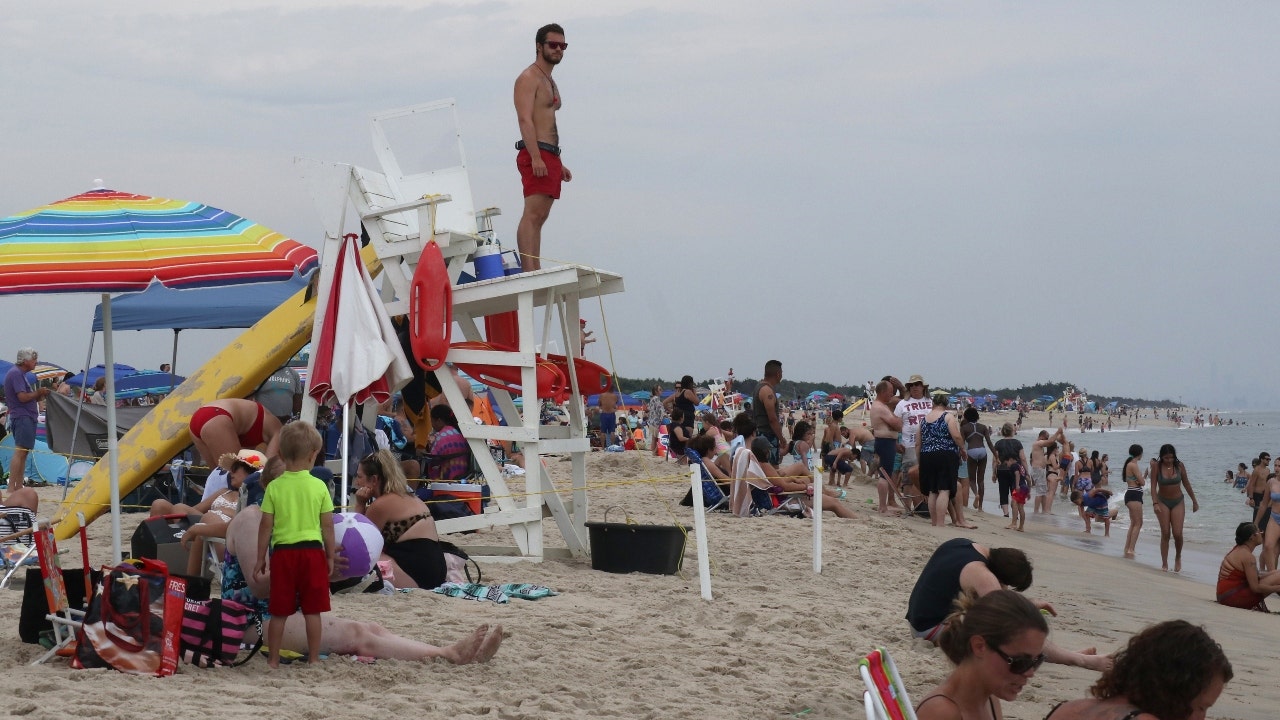
A growing number of New Jersey mayors of beach towns are hoping the state will back away from a recent push to lessen penalties for youthful offenders as they take aim at bad parenting amid an influx of teen mobs wreaking havoc on vacation communities.
A false alarm about an active shooter in Seaside Heights sent throngs of kids running in a panic off the boardwalk Saturday night. In Ocean City, a famously dry town that bills itself “America’s greatest family resort,” video shows a group of young men and boys punching and kicking a teen pinned down on the boardwalk. A 15-year-old was also stabbed. Wildwood leaders quelled “civil unrest” by declaring a state of emergency and closing the boardwalk.
All three beach towns are summer vacation hot spots for families, graduating high schoolers planning after-prom parties and other seasonal visitors. But a huge influx of unsupervised young people is stressing local police, businesses and tourists.
In Seaside Heights, Mayor Anthony Vaz imposed summer-long curfews for juveniles and a ban on house rentals without an adult present.
NJ TEEN STABBED AT POPULAR BOARDWALK, ‘CIVIL UNREST’ IN ANOTHER BEACH TOWN
Raucous behavior flooded the beach towns of New Jersey over the Memorial Day holiday weekend. (Alexi Rosenfeld/Getty Images)
“We’re supposed to enforce no smoking and no cannabis smoking on the boardwalk, no kids drinking underage,” Vaz said. “Well, that’s well said and done. Give me thousands of cops to do this. Thousands. You could try your best. They cannot succeed without legislation that says you’re going to be penalized for this.”
“There is no respect for law enforcement.”
Vaz is urging other local leaders to team up and head to the state legislature to ask for stiffer penalties for the worst juvenile offenders and stricter repercussions for teens who get caught smoking pot or drinking alcohol in public.
WATCH: ‘Unruly, unparented children’ spark Wildwood state of emergency
In Wildwood, a 90-minute drive down the Garden State Parkway, Mayor Tony Troiano Jr. declared a state of emergency overnight from Sunday into Monday on Memorial Day weekend due to out-of-control teens.
NJ ANNOUNCES EMERGENCY DUNE REPAIRS IN SHORE TOWN PENALIZED FOR DOING THEM ITSELF
Troiano says Wildwood will not stand for rowdy behavior. (Gary Hershorn/Getty Images)
He told FOX 29 Philadelphia his city “will not tolerate unruly, undisciplined, unparented children, nor will we stand by while the laws of the state tie the hands of the police”
“We want everyone to have a good experience. Simple as that,” he told Fox News Digital. “Pretend that you are home. If you act the fool at home, then stay home.”
In a notice to residents Monday, the city said police were inundated with calls about the “extremely large” mob, many of them teens and young adults without their parents. The department already has less than 50 officers this summer when it usually has closer to 100 and has run into trouble sending officers to respond to other emergencies.
VIDEO SHOWS MOMENT US MARINE SAVES JERSEY SHORE SWIMMER FROM DEADLY RIP CURRENT
Troiano says unparented children need to steer clear of the beach resort town and that parents need to watch for unacceptable behavior. (Alexi Rosenfeld/Getty Images)
With help from neighboring law enforcement agencies, he later reopened the boardwalk and invited visitors back, asking them to behave.
“Come down enjoy what we have to offer,” he said. “Just obey the laws. No underage drinking and smoking dope.”
Troiano said he got a call from the governor after the emergency declaration and was hoping to see changes to state law that would “uncuff” his officers, who are working with a depleted roster and tasked with enforcing rules that repeat offenders continue to break due to the lack of consequences.
POPULAR ATLANTIC BEACH DESTINATION HIT WITH DANGEROUS RIP CURRENTS AS STORMS LINGER; HUNDREDS RESCUED
Troiano says he’s diligently working to “uncuff” police officers to enforce strict rules against bad beach behavior. (Michael Bocchieri/Getty Images)
“Everything about this is bad,” he said. “You’re enabling these kids to break the law, and there’s nothing you can do about it.”
Ocean City Police arrested multiple teens and were quick to “restore order” on the boardwalk there, according to Mayor Jay Gillian.
“As in recent years and in other shore towns, Ocean City experienced a number of issues related to large crowds of teens on the boardwalk, fights, shoplifting and disorderly conduct during the start of Memorial Day weekend,” he said in a statement over the weekend. “I understand the impact that this behavior has on all of our residents, guests and business owners, and I want to assure everybody that Ocean City will not tolerate it.”
The worst offenders have always broken rules, according to Vaz in Seaside Heights. But he said he has repeatedly witnessed misbehaving minors exhibit no fear of repercussions whatsoever.
The biggest offenses have come from Seaside Heights, N.J., a beach town that rose to worldwide prominence as a result of the MTV reality show “Jersey Shore.” (Gary Hershorn/Getty Images)
“And the young people know this, being younger than 18 and over 18,” he said. “I’ve seen with my own eyes, where a cop has stopped a young person for whatever, cannabis smoking, and the answer is, ‘You can’t do anything to me.’”
“They don’t believe in authority. They believe in entitlement.”
They refuse to cooperate and often give fake names, he said.
“That’s what the cop has to write down — ‘Joe Schmo’ — because that’s what the kid said his name was,” he said.
The mayor, a former superintendent of schools, said he’s worked with teens for decades and noticed a monumental shift in how they interact with not just police, but adults across the board.
Officials and residents of several New Jersey shore towns say the state’s law decriminalizing marijuana use is having an unintended effect by emboldening large groups of teenagers to run amok on beaches and boardwalks, knowing there is little chance of them getting in trouble for it. (AP Photo/Wayne Parry)
“When I was young, I wasn’t exactly an angel, but I feared repercussions if I did anything wrong, [and] that my parents, particularly my father, would take it into his own hands if I did something really bad,” he said. “We don’t have those parents today for the most part.”
What he sees are groups of kids, some as young as 14, arriving in town without any adult supervision and getting their hands on drugs or alcohol.
“Good kids become bad kids,” he said. “If you have no respect, that’s more than being disobedient.
“If I was a boy, 17, I had a beer, and I got caught by a cop, I would have been nervous as hell,” he said. “They’re not nervous. They don’t care.”
Vaz said he also considered a state of emergency when his department became overwhelmed by the sheer number of kids on the boardwalk. He credited neighboring law enforcement agencies for supplying backup that helped calm things down.
“Saturday was a cluster of kids, thousands,” Vaz said. “I’m here 58 years. This was the biggest crowd I’ve ever seen of young people.”
People walk and ride along the boardwalk the day before the Memorial Day weekend, the unofficial start of summer, in the shore community of Wildwood, N.J. (Spencer Platt/Getty Images)
Then someone yelled, “Shots fired!” Video shows the ensuing chaos, horrified teens running for cover.
Investigators later determined there were no actual gunshots, the mayor said. But if there had been, the whole situation would’ve been far worse.
Betsy Branter Smith, a former police sergeant and a spokesperson for the National Police Association, said many of the troubles begin with lax parenting, but they get worse in an environment where police can’t do their jobs due to state law or soft-on-crime prosecutors.
“This ultimately goes back to parenting, doesn’t it? But you can’t regulate that. You can’t legislate that,” she said. “So, the business owners and the tourists are the ones who are gonna pay.”
Jersey Shore mayors are hoping the governor will work with them to combat the new problem of unescorted juveniles going wild in their beachfront towns. (Michael M. Santiago/Getty Images)
But she pointed to several recent cities that ran into the same problem of unruly youths and fixed them — spring break locations including Miami and Fort Lauderdale in Florida and Gulf Shores in Alabama.
“What they have done is adopted an absolute zero-tolerance policy not just toward the mayhem, but toward alcohol use, things like that,” she said. “I think it would be great for these Jersey Shore mayors and police leaders to talk about it, advertise ‘we’re not gonna tolerate this,’ and they’re going to have to follow through on it.”
On the other hand, cities like Washington, D.C., and Chicago continue to embrace “woke” prosecutors and policies, she said.
“Look at the spikes in juvenile crimes, that’s serious crime,” Smith said. “Look at the teen takeovers in Chicago. The talk of Chicago right now is exactly what happened on the Jersey Shore this weekend, and they’re bracing for it as well, where they have these kids who are going to just wreak havoc knowing that nothing will happen.”
The Jersey Shore mayors have already begun their campaign. Troiano says he’s got his fingers crossed the state will let his officers do their jobs.
“For the governor to call you direct, apparently, we hit the right nerve,” he said. “But it’s all about safety and to make sure that our businesses thrive during the summer.”
Read the full article from Here


A broken elevator has left some residents of a Boston apartment building unable to leave, but a new stairlift has brought temporary relief.
When 80-year-old Silke Evans, who lives at the Villa Michelangelo Apartments in the North End, spoke with NBC10 Boston last Wednesday, she had been stuck inside for weeks.
“I feel imprisoned. That’s it,” she said at the time. “I feel like I’m in prison.”
Silke Evans, an 80-year-old woman living at the Villa Michelangelo Apartments in the North End, has been unable to use the elevator at her building for three weeks.
“She was stuck up on the third floor for a total of three-and-a-half weeks,” her daughter, Katharine Clark, said Thursday.
Thursday, Metro Management, which runs the building, installed the stairlift as a temporary solution while waiting for elevator repairs.
It allowed Evans to leave for the first time in nearly a month.
“They had food, and got to eat out, and just feel like a normal person,” Clark said. “She’s been looking kind of sad for weeks, so it’s the first time I saw some pictures where she was genuinely smiling.”
The fix brought major joy to Evans, with hopes of a long-term solution in the future.
“We’re not out of the woods. We still have a broken elevator. Hopefully, it’s not too many months with just a chairlift,” Clark said.
Jeff Buono, director of property management, told NBC10 Boston last week that the process to repair the elevator has been difficult.
“They’re estimating four to five weeks to get the parts and then four to five weeks for the install,” Buono said in a phone interview. “It’s tough to get parts in general. It takes longer to get them than it ever has before. So the systems now just need to be modernized. I mean, it does take a toll on our elderly population — it really does. And we do feel for them. They’re likely family to us.”
NBC10 Boston reached out to the management company for further comment Thursday, but staff had already left for the holiday weekend.
Pittsburg, PA
Pittsburgh is promising its biggest fireworks show ever. Here’s what the setup looks like.

We are just two days away from the Fourth of July, and that means fireworks. The final preparations are underway for the City of Pittsburgh’s show, which is promised to be the largest in history. In all, five barges full of fireworks will be set off for this show.
Under the blistering sun, the true heat is packed on the barges along the Ohio River. Thousands upon thousands of fireworks will go off during the 25-minute show Saturday night, done by Starfire Corporation.
“Being down here, for our family to be able to perform for Pittsburgh is such an honor,” Starfire Corporation vice president Vince Terrizzi Jr. said.
Planning started back in February for this event. The barges will go on the Mon, Allegheny and right near The Point, creating a triangle effect around the Golden Triangle.
“We have one rooftop location that will surprise people and come in and out during the show,” Terrizzi said.
In all, nine truckloads of fireworks were brought in to be part of the show. Inspectors with the Pittsburgh Bureau of Fire inspected and will do a final inspection before the show. For the inspector, it’s her last show as she plans to retire in a few months.
“Going out with literally the biggest bang the city has ever seen,” Lisa Epps-Cuda said with a laugh.
Starfire has done the about a half dozen of the city’s shows over the years, and it never gets old for them.
“Listening to the crowd’s response, boats cheering, those kind of things make it worth its while,” Terrizzi said.
As for the weather, the big concern will be lightning; the fireworks can still be fired off in the rain. The show is set to go off at 9:35 on Saturday night.

In order to get to the truth, it’s important to define your terms.
For example, what precisely do you mean by the word Connecticut? Or is it Quinnehtukqut, in the Algonquin language?
It’s also important how you frame your story.
That is, what do we miss if we only start Connecticut’s story in 1776? What about the long, century-and-a-half colonial/religious run-up beginning in 1638? What about the 10,000 years before that, of indigenous habitation along our state’s long and short rivers? And what of all Long Island Sound?
Depending on where you start, you might have a geography story, a political story, a theological struggle.
You also need to include not only 50 or 60 founding fathers, but a full range of voices — you must try to expand the historical house, and also tell a whole story, not a partial.
For example, even in a copiously told tale of the Elm City Signer-in-Chief Roger Sherman, if you stopped his story at the mere signing of the Declaration of Independence, he’d still be a guy in a homespun suit among many in the founders’ chorus.
Although John Hancock appointed Sherman to the committee — along with Jefferson, Franklin, and Adams, to write the document we are all celebrating this year — it’s clear he wasn’t much of a writer, or editor, or speller. John Adams, when he recollected those days, couldn’t even remember Sherman in the room of the writing of the document that changed the world. Apparently only Franklin and Adams dared to edit the brilliant Jefferson’s prose.
However, continue the story to 1787, and Roger Sherman’s political and personal skills help lead the way to the bicameral compromise — a Congress with one legislative house based on population side by side with another house of equal number of senators from each state.
Without this deal — known as the Connecticut Compromise — there would have been two-and-a-half strikes against the possibility of ever passing a Constitution; and as a consequence, perhaps no United States. That makes Sherman a profound hero of the democratic story, and, of course, earns our sobriquet as the Constitution State.
All this fascinating, perspective-altering stuff was at the heart of a by-turns erudite and entertaining lecture — call it a sermon on history– entitled “Why Connecticut 250 Matters,” delivered by Connecticut State Historian Andy Horowitz.
Receiving it Wednesday night was a standing-room-only crowd of some 200 New Haven history glitterati gathered at the New Haven Museum.
Horowitz’s lecture was the companion piece to a gala evening marking the opening of the New Haven Museum’s new exhibition, “New Haven’s Unfinished Revolutions.”
With opening remarks by City Historian Michael Morand and exhibition director Joanna Steinberg and designers David Jon Walker and John Kudos, attendees also took in the spiffy photo and large, wall-text-festooned new space — the gallery to the left as you enter the museum’s first floor.
The exhibition is designed to include all those voices that Horowitz talked about — the centerpiece being a kind of grand kiosk or large table where you can put “tablets” of, so far, largely 18th century documents into a “cradle,” and then the docs come alive.
You hear, for example, a selection of the deposition by Sarah Townsend of the British invasion of New Haven in 1779. It’s a rare document in the NHM’s collection, but how many have had a chance to read it?
Enter the new exhibition, and the text appears on a screen in front of you — in both the original handwriting and an easy-to-read print version, as her voice speaks in the voice of local actors from New Haven who have done the recordings.
It’s immersive and the whole packed space — 900 square feet, which is not much bigger than a comfortable one-bedroom Elm City apartment — is trying to tell a Big Story, much of it under-told or never-told. It’s also designed for classes and groups and to be a kind of teaching house, said Steinberg.
The “table” is its centerpiece, a kind of hearth — designer John Kudos agreed to this reporter’s characterization — is where an individual, a family, or a group of school kids gather round to warm to the sounds and evocations of long ago and also to not-so-long-ago overlooked voices.
And the design is such that new documents can be added, indeed, are being added from the museum’s collection, along with contemporary documents/voices as they emerge in the living history of the city.
“The soul of New Haven is on display,” said Walker, one of the designers, via video hook up.
By that he meant, in part, under-told stories such as that of the Winchester Repeating Arms Company and those many African American immigrants from a racist South who labored on its factory floors and built new lives and institutions in the Elm City; the Model City era of the late 1960s; May Day of 1970, with the mutual aid groups such as the Hill Parents Association and the local Black Panthers who organized in the run-up; and New Haven’s important labor history as captured in the watershed 1975 teachers strike. The exhibition ends with material from the environmental movement of the 1980s.
In addition to Roger Sherman, the two other “souls” from New Haven’s 1776-era history whom Horowitz summoned and evoked to structure his tale were Hannah Mamanash, an indigenous woman of the Wangunk tribe (related to the Quinnipiacs and Mohegans); and Cuff Wells (also known as Cuffee Saunders), kidnapped as a child from Guiana, in South America, and enslaved in Colchester, Connecticut.
Known mostly through land deeds and an extensive petition for Revolutionary War pensions, Mamanash saw four of her sons enlist in George Washington’s forces. Three, perhaps all four, were killed in the Revolutionary War fighting.
“It’s hard to believe,” said Horowitz, “that anyone made a larger sacrifice to the American Revolution than Hannah Mamanash.”
But Horowitz deepend the story: Mamanash also had a daughter, who married a Samson Occam, a Mohegan who was Christianized, became a minister, and was the first Native American to publish a book. In another document, from 1775, a letter to the Oneida tribe, Mamanash’s son-in-law Occam tried to explain and advise which side that tribe should take in the fast-arriving rupture with Great Britain.
He basically took a neutral position, citing Jesus as a template for being peace-makers, not side-takers, although he did characterize the English as the oppressors and the patriots as the oppressed.
Yet Horowitz’s point is that there was no inherent, clear, obvious reason for Mamanash and her sons to make the choices they made, and the sacrifices they gave. Their history goes back much farther, sometimes siding with the English, sometimes the French, often with no one. You widen the story, and it gets deeper, more complex.
Wells’s enslaver was an apothecary and with that skill, which he learned, Wells enlisted in the Continental Army tending the sick and likely saving lives at the army hospital in Danbury, and later at Valley Forge.
And yet, Horowitz taught, it’s important to know that at the start of the Revolution neither Washington nor the creators of the Declaration wanted Blacks to enlist at all, whether they were apothecaries or not. Like the British they were afraid of what enslaved people might do if given firearms.
In fact, the phrase, among the list of colonists’ grievances in the Declaration itself, is the tell in this context: “Exciting domestic insurrections amongst us” primarily refers to British inducements to enslaved African Americans to flee their American masters and to fight for the king in exchange for offers of freedom.
And still Wells enlisted and deployed his skills, survived the war, received a pension, bought three acres of land in Lebanon, and sired a son, Prince, who went on to graduate from Dartmouth College.
If that isn’t a little-known American story that should be better known, I don’t know what is.
Horowitz was at pains to point out, also, that Wells is known, in the extensive 127-page pension file, the key source of his biography, also as Cuff Saunders.
“He changed his name,” Horowitz surmised, “because he did not want Wells, his enslaver’s name.”
“And such stories are not that unusual,” Horowitz added, “among Black soldiers, who gave themselves names like Caesar, Liberty, Beman. Every description is a form of argument.”
“So what to make of these stories?” Horowtiz drew towards his conclusion and, of course, the relation of the past to the present.
He said the kind of historical research, the poring over documents in archives, that yielded these stories is precisely the kind that is being threatened today, along with, of course, doing the opposite of expanding the historical frame, which is the policy direction of the current administration.
He didn’t mention the name of President Trump, but the narrowing of history, the bee in the bonnet of the current administration, was clearly the elephant in the room, to mix the zoological metaphors.
“When I began, there were three people in the office of state historian. Now I’m the only one. Seventy percent of professors teaching history are un-tenured. History departments are closing down. As a tenured historian I’m like a typewriter repairman, the last of my kind.”
And if there were a single theme to this wide-ranging yet also deep dive into Connecticut’s 1776, it was this: “A narrow sense of history yields a narrow sense of the future.”
Which is why Morand had concluded his remarks, in the new exhibition space of “New Haven’s Unfinished Revolutions,” singing from the same hymnal, with similar congratulatory, if minatory, praise:
“This is a major addition to understanding what New Haven has been and what it has become and to what they and we can do to affect the future. . . Our history is not about the past, it’s made active, it’s story upon story, not punctuated by a period, but an ellipsis. This show is really about America 251, 252, 253 . . . ”
 100vw, 1024px”/><figcaption class=) State Rep. Pat Dillon and local historian Aaron Goode discuss democracy and what to do with the U.S, Supreme Court!
State Rep. Pat Dillon and local historian Aaron Goode discuss democracy and what to do with the U.S, Supreme Court!
 100vw, 1024px”/><figcaption class=) Former teachers union President Frank Carrano, listening to what he said about the 1975 strike.
Former teachers union President Frank Carrano, listening to what he said about the 1975 strike.
Related
-

 Crypto2 minutes ago
Trump Made $1.4bn From Cryptocurrency Since Returning to Office
-

 Finance9 minutes ago
9 steps to avoid a financial retirement “cliff-edge”
-

 Fitness12 minutes ago
Fitness Experts Reveal Walking Exercises That May Help You Build Muscle
-
Movie Reviews24 minutes ago
‘Baby Do Die Do’ movie review: In the mood for Mumbai
-
World32 minutes ago
Iran prepares for dayslong funeral for late Supreme Leader Ayatollah Ali Khamenei, killed in war
-
 Lifestyle1 hour ago
To be or not to be a parent : It’s Been a Minute
-

 Technology1 hour ago
Sony’s PlayStation disc factory is already being repurposed
-

 World1 hour ago
Couple publicly caned after alleged TikTok kiss sparks outrage in Indonesia


