Connect with us

Northeast

New York halts robotaxi expansion plan

Published

on

New York halts robotaxi expansion plan

NEWYou can now listen to Fox News articles!

New York just hit pause on expanding robotaxis beyond New York City. 

Gov. Kathy Hochul has withdrawn her proposal that would have allowed commercial robotaxi services in smaller cities across the state. That means places outside New York City will not see driverless ride services anytime soon.

If you live in Buffalo, Rochester or Albany, that future just got pushed further down the road. Meanwhile, one major player still plans to move forward inside the city.

Sign up for my FREE CyberGuy Report
Get my best tech tips, urgent security alerts and exclusive deals delivered straight to your inbox. Plus, you’ll get instant access to my Ultimate Scam Survival Guide — free when you join my CYBERGUY.COM newsletter.

Advertisement

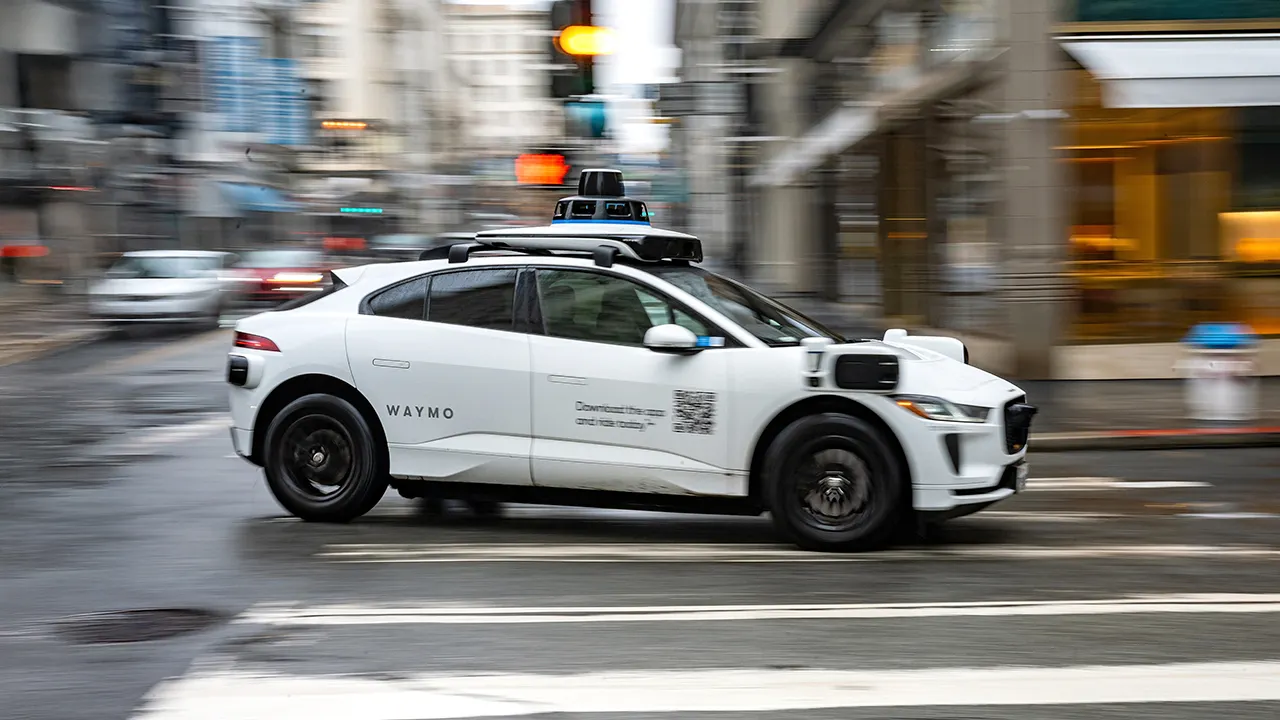
New York has paused plans to expand robotaxi service beyond New York City, slowing statewide deployment.  (AP Photo/Terry Chea, File)

Waymo moves forward despite New York robotaxi expansion pause

Waymo, the self-driving arm of Alphabet, received its first permit last year to test autonomous vehicles in New York City. However, the permit requires a trained specialist behind the wheel. That testing permit remains in place. So, while statewide expansion is off the table for now, Waymo’s New York City testing program continues. The company already offers paid driverless rides in parts of:

  • The San Francisco Bay Area
  • Los Angeles
  • Phoenix
  • Austin
  • Atlanta

According to company data and state regulators in Arizona and California, Waymo has logged millions of fully autonomous miles. Arizona transportation officials have reported lower crash rates per mile compared with human drivers in certain operational zones. California’s DMV and Public Utilities Commission continue to monitor safety performance and incident reporting.

The company says it hears from thousands of New Yorkers who have ridden in Waymo vehicles elsewhere and want the service at home. Still, expanding beyond the city now faces a political roadblock.

UBER UNVEILS A NEW ROBOTAXI WITH NO DRIVER BEHIND THE WHEEL

Waymo can continue testing autonomous vehicles in NYC with a trained safety specialist behind the wheel. (Waymo)

Advertisement

Why Hochul pulled the New York robotaxi expansion plan

The governor’s office said support was not there in the state Legislature after conversations with stakeholders. That language matters. Self-driving vehicle rules involve state lawmakers, labor groups, local officials, safety advocates and insurance regulators. Expanding robotaxi services into smaller cities likely raised concerns about:

  • Safety oversight
  • Liability rules
  • Local job impact
  • Emergency response coordination

Autonomous vehicle deployment remains under intense scrutiny nationwide. After a high-profile incident involving Cruise in San Francisco in 2023, regulators tightened oversight. Cruise later suspended operations, and General Motors scaled back its robotaxi ambitions. Waymo has not recorded a similar major injury event in public reporting. That distinction has helped it expand in states like Arizona and Texas. Even so, public trust remains fragile.

What this means for you

You might be thinking, “I do not live in New York. Why should I care?” Because state decisions like this often ripple outward. If New York, one of the largest transportation markets in the country, slows expansion outside its biggest city, other states may take note. Lawmakers across the country watch how New York handles new technology.

Here is what this pause signals:

Robotaxi rollouts will stay uneven

Some cities will embrace them quickly. Others will wait for more data and clearer rules.

Politics matter as much as technology

Even if autonomous vehicles prove safer per mile in controlled settings, public policy decides where they operate.

Advertisement

Your city could be next in line

As companies push for expansion in major metros, debates over safety, job liability and infrastructure will follow. If you rely on ride-hailing services, autonomous vehicles could eventually lower costs and increase availability. On the other hand, local drivers and labor groups may push back hard. This tension will play out city by city.

ATLANTA TESTS DRIVERLESS POD TRANSIT LOOP

State lawmakers across the country are watching as New York weighs safety, regulation and the future of driverless rides. (Waymo)

The bigger national picture for robotaxi expansion

Federal agencies like the National Highway Traffic Safety Administration continue to collect crash data and investigate autonomous vehicle performance. However, states control many of the rules governing commercial operations. That means America may not get one unified robotaxi system. Instead, it may look like a patchwork. Phoenix might move fast. Austin might expand aggressively. Buffalo might wait.

In the meantime, companies like Waymo continue refining software using real-world miles and sensor data. The more data they collect, the stronger their safety case becomes. Yet public perception often hinges on a single viral incident. Technology evolves quickly. Regulation moves more slowly.

Advertisement

Take my quiz: How safe is your online security?

Think your devices and data are truly protected? Take this quick quiz to see where your digital habits stand. From passwords to Wi-Fi settings, you’ll get a personalized breakdown of what you’re doing right and what needs improvement. Take my Quiz here: Cyberguy.com.

Kurt’s key takeaways

New York’s decision is not a death blow to robotaxis. It is a reminder that innovation must pass a political test. Waymo still plans to move forward in New York City. Smaller cities across the state will wait. Other states will watch. The question is no longer whether autonomous vehicles will expand. It is how fast and where.

If driverless cars reduce crashes and improve pedestrian safety, should lawmakers speed up approval? Or should they move cautiously and protect existing systems until every risk is understood? What would you want your city to do? Let us know by writing to us at Cyberguy.com.

CLICK HERE TO DOWNLOAD THE FOX NEWS APP

Sign up for my FREE CyberGuy Report
Get my best tech tips, urgent security alerts and exclusive deals delivered straight to your inbox. Plus, you’ll get instant access to my Ultimate Scam Survival Guide — free when you join my CYBERGUY.COM newsletter.

Advertisement

Copyright 2026 CyberGuy.com. All rights reserved.

Related Article

Congress moves to set national rules for self-driving cars, overriding states

Read the full article from Here

Advertisement

New York

How a Family of 3 Lives on $25,000 in Corona, Queens

Published

on

How a Family of 3 Lives on ,000 in Corona, Queens

How can people possibly afford to live in one of the most expensive cities on the planet? It’s a question New Yorkers hear a lot, often delivered with a mix of awe, pity and confusion.

We surveyed hundreds of New Yorkers about how they spend, splurge and save. We found that many people — rich, poor or somewhere in between — live life as a series of small calculations that add up to one big question: What makes living in New York worth it?

Advertisement

As an Uber driver in New York City, Anup Baniya works long hours behind the wheel of his S.U.V., navigating snarled traffic.

The passengers he ferries across the city may be surprised to learn how little he earns.

Advertisement

Mr. Baniya, an immigrant from Nepal, brings home roughly $25,000 each year after paying for his vehicle and other business expenses.

His wife, Sonu Khadka, stays home with their 7-month-old son, Ivaan. There is little money left at the end of each week.

“If I make a few extra bucks, maybe we can get some things for the baby,” he said.

Advertisement

Mr. Baniya said making money as an Uber driver has become more difficult.

Advertisement

Mr. Baniya, 36, said it had become more difficult over the years to make a living driving for Uber. His costs have risen, and trips are harder to find.

He has considered doing other jobs like becoming a data analyst. But he likes choosing his own hours. It was important for him to join his wife for her prenatal appointments and to attend his son’s pediatrician visits.

“I like the freedom I get from it,” he said. “Through my wife’s pregnancy, I had flexibility.”

Advertisement

A Family Friendly Complex in Queens

The family lives in a small apartment in LeFrak City, a housing complex in Corona, Queens, that has long been a haven for working class and immigrant families.

Advertisement

The rent is $2,500 per month, which they split in half with a roommate. Mr. Baniya pays roughly $400 per month for internet and utilities.

The complex feels like its own village with 20 high-rise buildings and sprawling lawns of green space. Ivaan recently started using the swing set at the playground.

Their apartment is cramped, and Mr. Baniya worries about rent increases. Their roommate sleeps in a small room that typically serves as a den.

Advertisement

Mr. Baniya used to pay for a parking garage, but now parks on the street to save money.

His work day usually starts at 7 a.m. and ends at 5 p.m., except for Tuesdays which he takes off to spend with his family. He drives for Uber and sometimes for Lyft.

Advertisement

“The more jobs we do, the more income we get — I’m usually on the road for 10 hours,” he said.

A recent Monday was a “bad day,” he said. Business was slow. He spent five hours on the road with passengers and made about $125, or $25 per hour before expenses.

Advertisement

The Economics of Driving for Uber

Mr. Baniya’s greatest expense is the vehicle he uses for work. He pays $2,400 per month to rent a hybrid RAV 4 S.U.V. and $450 per month for car insurance.

He spends about $100 per week on gas, though that could increase with the recent jump in gas prices. He visits the carwash twice a week and gets regular oil changes. All together, his business expenses cost more than $30,000 per year, according to a copy of a recent tax return.

Advertisement

His family relies on a low-cost health insurance plan through a federally-subsidized program called the Essential Plan.

Around 2017, he joined the Independent Drivers Guild, a group that represents Uber drivers, to help fight for higher pay.

Advertisement

Mr. Baniya said that the city’s minimum pay rules for ride-share drivers had not kept pace with inflation and that Uber was keeping too much of the fare — nearly one-fourth per trip, according to research by the driver group. The city’s cap on new vehicle licenses raised the cost of renting a vehicle, and he argued that the city should instead limit the number of new drivers.

“I feel like customers are paying way more than they used to pay, but drivers are making way less than they used to make,” he said.

Uber, which is expanding its offices in New York, has argued that drivers do make a good living, roughly $52,000 per year for many full-time drivers, and that congestion pricing tolls and airport fees have contributed to higher costs for passengers.

Advertisement

When Mr. Baniya is working, it is often difficult to find a place to stop for a break. Parking spots are elusive in Manhattan, and he worries about violating the city’s complex parking rules, which carry large fines, including $115 for parking near a fire hydrant or $50 to $250 for blocking a bus lane.

“There is nowhere for us to rest or to try to run and get a cup of coffee,” he said.

Advertisement

Many drivers rely on tips from passengers in the app, but he said they were rare.

“Out of 10 riders, maybe one tips,” he said.

Advertisement

Living on a Budget

The family spends about $800 per month on groceries and baby food. They cook at home and eat at a restaurant once a month.

The couple recently visited Food Bazaar and picked up chicken breasts for $7.66, along with chickpea spaghetti and tomato sauce for dinner. Mr. Baniya’s job is sedentary, and he tries to eat healthy because he does not get much exercise.

Advertisement

“You’re sitting the whole day,” he said. “I considered myself more healthy before I started driving.”

The family did not take a vacation last year and does not have plans for one this year. Someday, Mr. Baniya wants his son to be able to visit family in Nepal.

Advertisement

When his wife was pregnant and a passenger unexpectedly tipped him $500 for a long trip from Manhattan to Philadelphia, he knew immediately how he would spend it.

“I went out and bought a stroller and car seat for the baby,” he said.

We are talking to New Yorkers about how they spend, splurge and save.

Advertisement

Continue Reading

Boston, MA

Dry, breezy today, but a few snowflakes could mix with rain tomorrow in Boston

Published

on

Dry, breezy today, but a few snowflakes could mix with rain tomorrow in Boston


It’s been a dry, breezy start to the week here in the Boston area. As we continue moving through this afternoon, the sun will be in and out of the clouds, but it should remain dry through the evening.

Winds will gust up to 25-30 mph at times. Highs should reach the low 50s today. Tonight, low temperatures will be in the low to mid 30s.

As Tuesday rolls in, a weak disturbance will push into the area, giving way to a rain/snow mix. Yes, a little snow!

Areas along and north of the Massachusetts Turnpike will have the best chance of seeing a few passing snowflakes and flurries Tuesday morning. But a few flakes will drift south of the Pike from time to time as well. Some snow could also mix with rain later in the evening as the system wraps up and moves away from our region. 

Advertisement

A light coating of snow is possible tomorrow, especially along and north of the Pike and across Worcester Hills and the higher terrain, mainly on grassy and elevated surfaces. But we don’t expect major problems as our temperatures climb from the 30s into the 40s and 50s by afternoon. In other words, the snow won’t stick around. Otherwise, we’ll see mostly cloudy skies Tuesday.

Wednesday will be the coolest day of the week. In fact, it will feel like winter all over again Wednesday morning! Temps will start the day in the mid to upper 20s. Highs will reach the upper 40s by afternoon under mostly sunny skies. Our high temperatures rebound into the 50s and 60s by Thursday and Friday with sunshine. A few showers are possible on Saturday.


Source link

Continue Reading

Pittsburg, PA

Primanti Bros. closes Monroeville and North Versailles locations

Published

on

Primanti Bros. closes Monroeville and North Versailles locations


4-DAY PLUS 4 MORE. YOU CERTAINLY HAVE OUR ATTENTION THERE BRIAN. THANK YOU. NEW AT NOON, TWO LOCAL BROTHERS LOCATIONS CLOSING THEIR DOORS FOR GOOD. THE COMPANY CONFIRMING THE SHUTTERING OF THE RESTAURANTS IN MONROEVILLE AND NORTH VERSAILLES, SAYS THESE ARE THE LATEST CLOSURES IN WESTERN PA. THE PENN AVENUE LOCATION IN GARFIELD CLOSE

Advertisement

Primanti Bros. closes restaurants in Monroeville and North Versailles

Updated: 12:42 PM EDT Apr 6, 2026

Editorial Standards

Advertisement

Primanti Bros. has closed two more restaurants, both in the Pittsburgh area.The Monroeville and North Versailles locations are permanently closed, a Primanti Bros. spokesperson confirmed to Pittsburgh’s Action News 4 on Monday.These are the latest Primanti Bros. closures in western Pennsylvania, following last year’s closure of the Penn Avenue location in Pittsburgh’s Garfield neighborhood.A reason for the Monroeville and North Versailles closures was not immediately announced.Earlier this year, when the Pittsburgh-based company closed its Camp Hill and Lancaster locations in the Susquehanna Valley, Primanti Bros. Vice President Ryan Wilkinson said, “This is not a decision we take lightly. While we are adjusting our overall footprint to best meet demand, our commitment to both loyal customers in Central Pennsylvania and the iconic sandwiches we’ve been serving for almost a century remain unchanged.”This is a developing story. Stay with Pittsburgh’s Action News 4 for updates. Download the WTAE app to stay connected with breaking news. Sign up for our email newsletters to get breaking news in your inbox.Where are Primanti’s locations in Western Pennsylvania?Primanti Bros. still operates many locations in the Pittsburgh area.Here is a list of local restaurants from the company’s website.Allegheny CountyHampton TownshipHarmar TownshipHomesteadMonroevilleMoon TownshipMt. LebanonPittsburgh (Downtown)Pittsburgh (Oakland)Pittsburgh (South Side)Pittsburgh (Strip District)Pleasant HillsRobinson TownshipRoss TownshipPittsburgh International AirportSouth FayetteBeaver CountyCenter TownshipButler CountyCranberry TownshipFayette CountyUniontownIndiana CountyIndianaWashington CountyNorth Strabane TownshipWestmoreland CountyGreensburgAbout Primanti Bros.Primanti Bros. traces its roots to the Great Depression, when Joe Primanti began selling sandwiches from a small cart in Pittsburgh’s Strip District before opening a storefront in 1933 to serve truck drivers and shift workers around the clock.The brand’s signature sandwich, topped with fries, was born when Joe’s nephew, John DiPriter, fried potatoes to see if they were frozen and started adding them to sandwiches, creating a one-handed meal that quickly became a hit.

Primanti Bros. has closed two more restaurants, both in the Pittsburgh area.

The Monroeville and North Versailles locations are permanently closed, a Primanti Bros. spokesperson confirmed to Pittsburgh’s Action News 4 on Monday.

Advertisement

These are the latest Primanti Bros. closures in western Pennsylvania, following last year’s closure of the Penn Avenue location in Pittsburgh’s Garfield neighborhood.

A reason for the Monroeville and North Versailles closures was not immediately announced.

Earlier this year, when the Pittsburgh-based company closed its Camp Hill and Lancaster locations in the Susquehanna Valley, Primanti Bros. Vice President Ryan Wilkinson said, “This is not a decision we take lightly. While we are adjusting our overall footprint to best meet demand, our commitment to both loyal customers in Central Pennsylvania and the iconic sandwiches we’ve been serving for almost a century remain unchanged.”

Advertisement

This is a developing story. Stay with Pittsburgh’s Action News 4 for updates.

Download the WTAE app to stay connected with breaking news. Sign up for our email newsletters to get breaking news in your inbox.

Where are Primanti’s locations in Western Pennsylvania?

Primanti Bros. still operates many locations in the Pittsburgh area.

Here is a list of local restaurants from the company’s website.

Allegheny County

Advertisement
  • Hampton Township
  • Harmar Township
  • Homestead
  • Monroeville
  • Moon Township
  • Mt. Lebanon
  • Pittsburgh (Downtown)
  • Pittsburgh (Oakland)
  • Pittsburgh (South Side)
  • Pittsburgh (Strip District)
  • Pleasant Hills
  • Robinson Township
  • Ross Township
  • Pittsburgh International Airport
  • South Fayette

Beaver County

Butler County

Fayette County

Indiana County

Washington County

Westmoreland County

Advertisement

About Primanti Bros.

Primanti Bros. traces its roots to the Great Depression, when Joe Primanti began selling sandwiches from a small cart in Pittsburgh’s Strip District before opening a storefront in 1933 to serve truck drivers and shift workers around the clock.

The brand’s signature sandwich, topped with fries, was born when Joe’s nephew, John DiPriter, fried potatoes to see if they were frozen and started adding them to sandwiches, creating a one-handed meal that quickly became a hit.


Source link

Advertisement
Continue Reading

Trending