New Jersey
Hockey sticks, Gatorade left in tribute on NJ road where NHL star Johnny Gaudreau, brother Matthew were killed: ‘Forever in our hearts’


Grieving hockey fans erected a memorial Saturday on the New Jersey corner where an alleged drunk driver claimed the lives of NHL star Johnny Gaudreau and his younger brother Matthew.
A cross crafted from old hockey sticks bearing the names of the brothers and their respective player numbers was plunged into the ground alongside County Route 551 in Oldmans Township, where the duo had been cycling together Thursday evening.
Several other sticks were arranged on the grass peppered between dozens of flower bouquets, balloons and a sign promising that the brothers will be “forever in our hearts.”
Suchat Pederson/New York Post
Odes to the Gaudreaus’ respective hockey careers were also offered up at the memorial — including two bottles of Gatorade, which served as a nod to Johnny Gaudreau’s tradition of sharing a bottle of the sports drink with his old Calgary Flames teammates after scoring a goal.
One man who laid down flowers told The Post that the offerings were left by “the entire hockey community across the country.”
They even left behind flowers, hockey sticks and even jerseys front of the home of their surviving family members — who were meant to be celebrating a wedding rather than the loss of both brothers.
“What makes this so sad is that it could have been preventable. If he drank, why didn’t he just take an Uber?” one grieving visitor, who declined to share their name, said of the alleged drunk driver.
Johnny, 31, and Matthew, 29, were biking in their New Jersey hometown when they were struck and killed by a motorist who allegedly told a state trooper he guzzled “five to six” beers” before the crash.
The driver, Sean Higgins, reportedly attempted to pass an SUV in front of him, which had moved into the middle of the roadway to give the brothers plenty of room, just after 8 p.m.
Follow the NY Post’s coverage on NHL star Johnny Gaudreau’s tragic death at 31:
The US Army Major tried to pass the SUV on the right, striking the Gaudreaus from behind. The county road is rural, with crops on either side. There are no shoulders or street lights.
The tragedy struck one day before the Gaudreau brothers were set to take part as groomsmen in their sister Katie’s wedding to hockey player Devin Joyce in Gloucester City, NJ. The family had even celebrated the wedding rehearsal just hours before the tragedy.
Johnny, who played for the Columbus Blue Jackets, leaves behind a wife and two young daughters.
Matthew’s wife is pregnant and is expecting their first child in December.
Higgins — who appeared to sigh with exasperation in court upon learning he would be held in jail through next week — faces two counts of vehicular homicide.



New Jersey
What to know about Freedom Fuel Network as Trump urges cheaper gas prices in Pennsylvania, NJ

PHILADELPHIA (WPVI) — There are 25 new Freedom Fuel Network gas stations opening across the Philadelphia area and South Jersey as Americans closely watch gas prices.
This comes after President Trump announced the privately-owned network on social media last week, saying it will help drivers save money at the pump.
There are 25 new Freedom Fuel gas stations opening across the Philadelphia area and South Jersey as Americans closely watch gas prices.
The first location in Dresher, Montgomery County, opened on Friday, with the price of $3.47 per gallon.
This cost was a nod to President Trump serving as the nation’s 47th president.
However, that price has already started to rise after the president announced new U.S. strikes, sending oil and gas prices higher.
Some of those locations with gas stations participating in the Freedom Fuel Network include Lansdowne, Bensalem and Pottstown in Pennsylvania; and Marlton in New Jersey.
Gas Calculator: Find out how much it costs to fill your tank
A White House official told ABC News the administration is not involved with the company and is not providing any funding or subsidies.
Instead, the company says it is cutting its own profit margins to offer lower prices.
Some drivers are applauding this move while others, including gas analysts, are skeptical.
“$3.47 a gallon is a Godsend, honestly,” said one consumer. “Great price because this was a Sunoco before and prices were a lot higher.”
“I want Americans to be asking, ‘Where is that money coming from? Why are corporations and businesses willing to subsidize gas 50-cents a gallon for people, to make President Trump look good,” said another consumer.
Trump is also encouraging other gas retailers to lower their prices. He has not identified the company behind Freedom Fuel, saying only that it’s a private retailer.
Action News is still working to learn how long these lower prices will last and whether more stations will open.
Copyright © 2026 WPVI-TV. All Rights Reserved.

JAMESBURG, New Jersey (WABC) — When it comes to home deliveries, having your order stolen right off your doorstep can be infuriating, so one New Jersey man did it right.
Peter Tsistinas had his brand-new cell phone delivered to a so-called safe pickup site, designated by the seller, where it was stolen.
Delivery services can drop off your item at any number of safe locations, where you can later pick up your order. But as exclusive video obtained by 7 On Your Side shows, porch pirates are upping their game.
Captured on a security camera, a man calmly walks into the CVS store, asks for a delivery, shows an ID, signs for it, and walks off with a brand-new iPhone. There’s just one problem.
“They saw somebody that was not me getting my package,” said Tsistinas when asked what the police were seeing on the tape.
The real Peter, a popular DJ for hire, was dumbfounded. He chose the safe drop to avoid being porch pirated, but the thief still got the goods.
“Yeah, I actually paid extra for it. It wasn’t much. It was $7.99,” Tsistinas said.
Tsistinas got a notification from UPS that the phone was dropped off at 12:39 p.m., less than two hours later, he got a notice it was picked up.
But Tsistinas didn’t pick it up. It was the unknown suspect who went into the CVS, walking off with the brand-new iPhone for Peter’s son.
Tsistinas reported the crime to the police and alerted UPS, CVS and T-Mobile, which shipped the smartphone. The response to the DJ was what he called, “crickets.”
“I was watching, you know ABC News, and I saw 7 On Your Side and I’m like, ‘you know, you’re the first thing I thought of,’” Tsistinas said
7 On Your Side reached out to both CVS and the cell phone provider.
Within a week, T-Mobile responded, saying, “Our care team is working with Mr. Tsistinas directly to get him the device he ordered from us, and we’re working closely with CVS and our other partners to further protect our customers’ orders from theft. Our dedicated fraud, crime and logistics teams collaborate with vendors to address these issues and improve delivery processes.”
CVS also sent 7 On Your Side an official statement, saying, “We’ve connected with the customer and apologized for his experience. T-Mobile is now working directly with Mr. Tsistinas to help resolve the matter. Anyone picking up a UPS package at CVS Pharmacy must present identification matching the person and name on the package to be released. We’re working with the store team to help prevent similar situations from occurring in the future.”
After weeks of back and forth with the companies, Tsistinas could finally focus on his beats again.
“I paid almost $500 in deposit, and then it was going to be like so much per month. So, they just squashed all that,” Tsistinas said.
Referencing the Rolling Stones, he says he not only got his satisfaction, but also his money back.
“Nina, you’re the best!” Peter said.
Police are still looking for the suspect in the video and say he’s part of a crime ring. If you recognize him, call Jamesburg police in New Jersey.
———-
SHARE YOUR STORY
Do you have an issue with a company that you haven’t been able to resolve? If so, 7 On Your Side wants to help you!
Fill out the form below or email your questions, issues, or story ideas by filling out the form below or by emailing 7OnYourSideNina@abc.com. All emails MUST INCLUDE YOUR NAME AND CELLPHONE NUMBER. Without a phone number, 7 On Your Side will not be able to respond.
Copyright © 2026 WABC-TV. All Rights Reserved.

A police investigation took place at a Walmart in Cherry Hill, New Jersey on Wednesday morning and shoppers may have noticed an increased presence of officers at the shopping center, officials said.
On social media, the Cherry Hill Police Department alerted residents that an investigation was underway in a Walmart, located along Route 38 in Cherry Hill, New Jersey, at about 9 a.m. on Wednesday.
However, officials did not immediately detail the cause of this increased police presence, other than saying an investigation was underway and “the scene has been secured.”
Police were asking people to avoid the area, if possible, to allow officers the ability to complete this investigation.
However, as of about 10 a.m., police said on social media that the incident was resolved and there was no threat to the public.
OFFICIAL UPDATE: INCIDENT RESOLVED
The police activity at Walmart (500 Route 38) has been resolved without incident. There is no threat to the public.
Thank you to residents and motorists for their patience and cooperation while officers worked in the area. #CherryHillPD pic.twitter.com/668By2Ttht
— Cherry Hill Police Department (@CherryHillPD) July 8, 2026
As of about 10:15 a.m., police had not provided further information on the nature of this investigation, nor did they say if anyone was arrested through the course of this incident.
NBC10 is working to learn more.
This is a breaking news story. It will be updated as new information becomes available.
-

 Tennessee2 minutes ago
Tennessee State men’s hockey cancels 2026-27 inaugural season for second straight year
-

 Texas7 minutes ago
Ted Cruz warns Talarico has ‘real chance’ to flip Texas’ U.S. Senate seat
-

 Utah14 minutes ago
Man suspected in 2006 Utah murder left suicide note in Las Vegas jail cell: police
-
 Vermont17 minutes ago
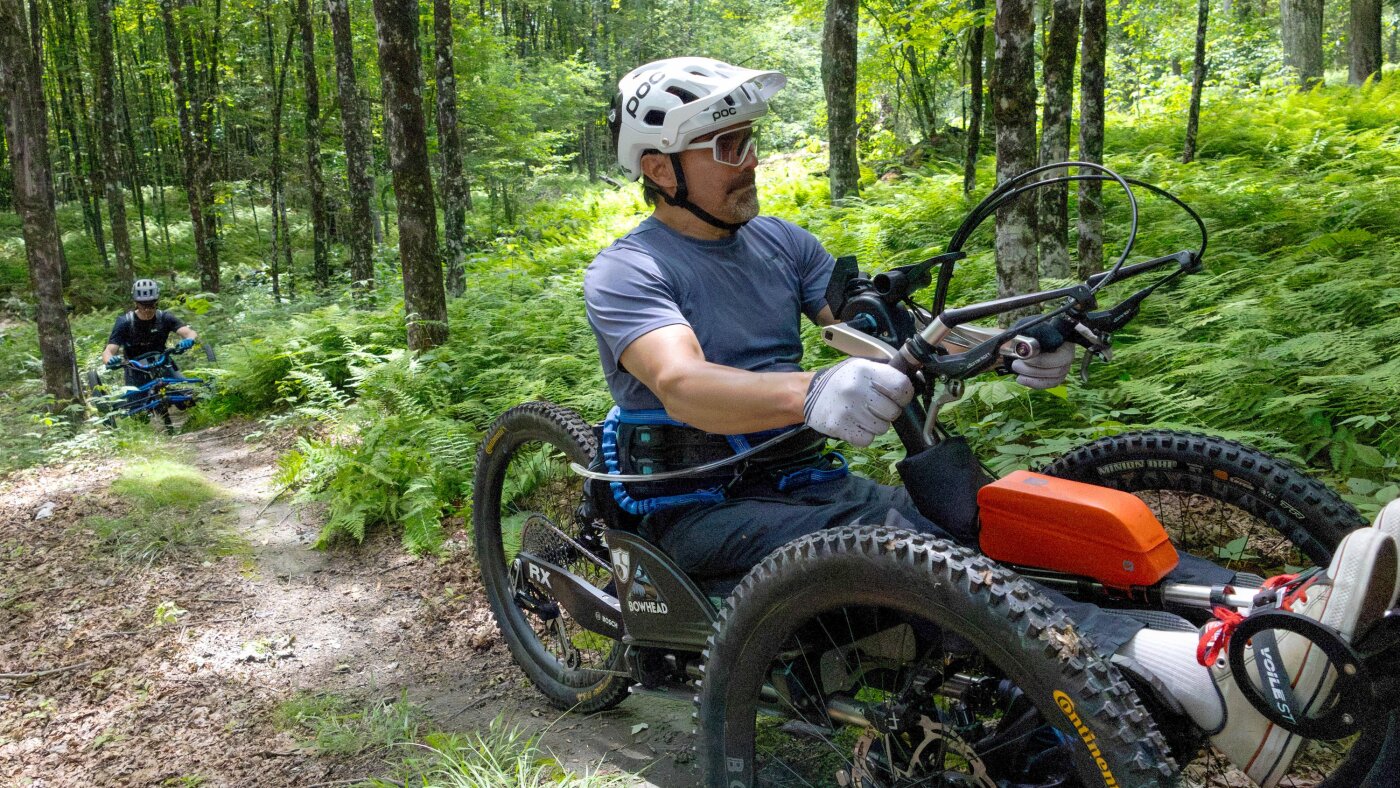
OUTDOOR ACCESS FOR DISABLED IN VERMONT
-
 Virginia22 minutes ago
4 indicted in Virginia double homicide; second victim ID’d as grandmother of 6
-

 Washington29 minutes ago
Washington Commanders are retiring Hall of Famer John Riggins’ No. 44
-

 Wisconsin32 minutes ago
Wisconsin State Patrol rides with truck and bus drivers to spot violations in five areas
-

 West Virginia37 minutes ago
West Virginia town fires entire police force after chief resigns, sergeant alleges evidence room break-in

