A New Jersey Catholic diocese has agreed to pay $180 million to settle clergy sexual abuse claims involving hundreds of survivors, closing a long and contentious chapter in New Jersey’s reckoning with church abuse.
Bishop Joseph Williams, who serves the Diocese of Camden, announced the agreement in a letter on Tuesday.
“For the survivors of South Jersey, this day is long overdue,” Williams wrote. “It represents a milestone in their journey toward restored justice and the healing and recognition they have long sought and deserve.”
The diocese, which serves six counties in southern New Jersey outside Philadelphia, said about 300 survivors brought claims.
Advertisement
GIRLS AT ELITE PREP SCHOOL THREATENED IN ‘REVENGE PORN BLAST’ AS PARENTS SHELL OUT $63K A YEAR TO ATTEND
The Cathedral of the Immaculate Conception in Camden, N.J., April 20, 2022.(AP Photo/Matt Rourke, File)
Attorney Greg Gianforcaro, who represents victims in the case, credited survivors’ persistence in reaching the agreement after years of litigation.
“It’s been an extremely long and arduous battle,” he said, according to The Associated Press.
Bishop Joseph Williams, who serves the Diocese of Camden, said the settlement was long overdue for the roughly 300 survivors.(iStock)
Advertisement
The $180 million figure surpasses earlier settlements in Boston and Philadelphia, which were around $80 million, but remains smaller than the $880 million agreement reached in 2024 by the Archdiocese of Los Angeles.
RETIRED ELEMENTARY TEACHER WHO WORKED AS SANTA ARRESTED ON CHILD ABUSE MATERIAL CHARGES
The Camden diocese filed for bankruptcy after New Jersey relaxed its statute of limitations, triggering a wave of lawsuits. In 2022, the diocese agreed to pay $87.5 million in a previous settlement involving roughly 300 accusers. Victims’ attorneys said the newly announced $180 million total includes those earlier funds.
The $180 million settlement surpasses earlier settlements in Boston and Philadelphia but remains smaller than the $880 million deal by the Archdiocese of Los Angeles.(iStock)
The agreement must still receive approval from a bankruptcy court.
Advertisement
CLICK HERE TO DOWNLOAD THE FOX NEWS APP
The settlement comes as New Jersey’s Supreme Court has cleared the way for a long-delayed state grand jury investigation into decades of alleged abuse by clergy to move forward.
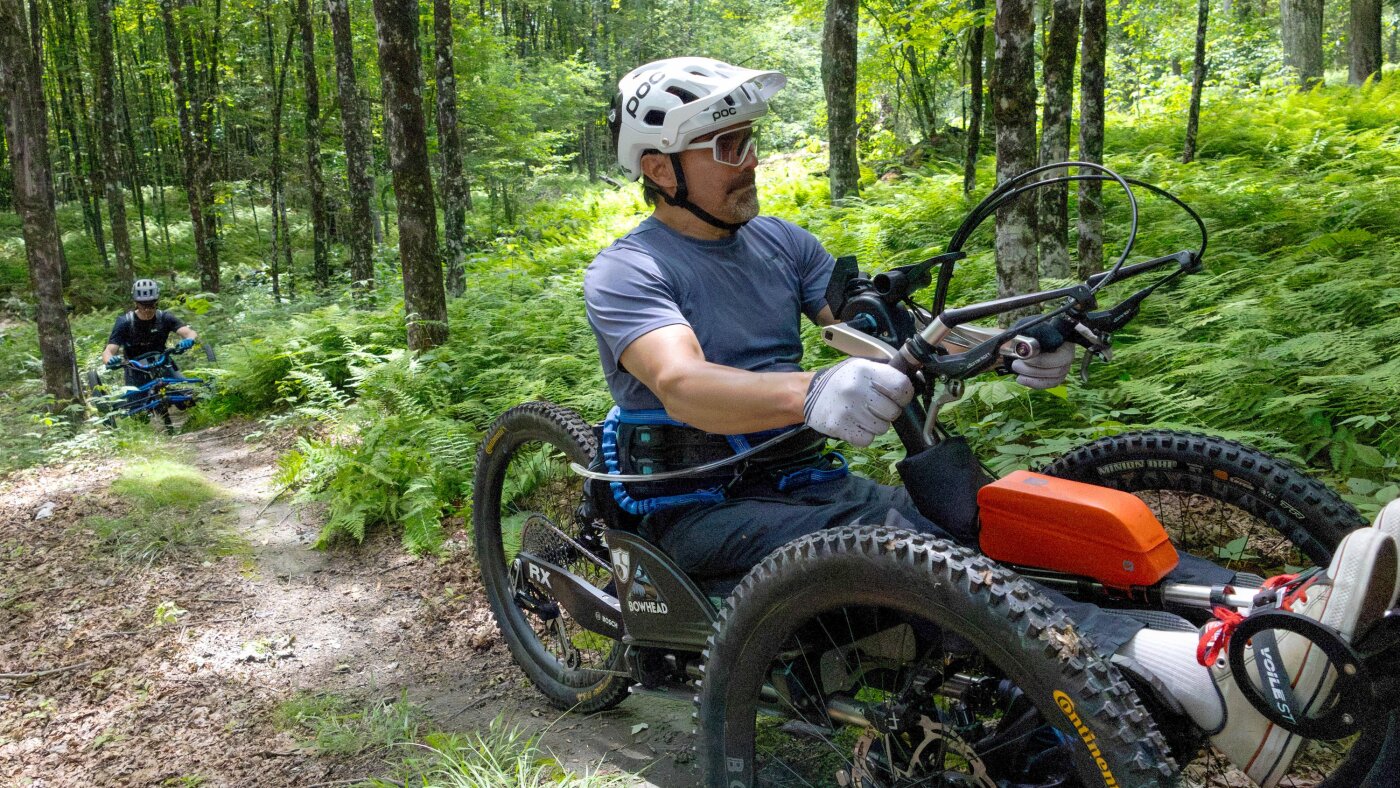
Louis Arevalo rides his adaptive mountain bike through the trails at Randolph Town Forest during an adaptive assessment on Thursday, June 25. Nick Bennette, with the Vermont Mountain Bike Association, rides behind.
Zoe McDonald/Vermont Public
hide caption
Advertisement
toggle caption
Zoe McDonald/Vermont Public
Mountain bike enthusiasts have been working for years on an ambitious 485-mile, multi-use trail called The Velomont that will span the length of the state.
When finished, the collaborative project will knit together existing trail networks, connect 27 communities and include huts and hostels for overnight stays.
Advertisement
New trail construction is finally ramping up after years spent on permits, plans and public input. And organizers say they want to make it as user-friendly as possible.
“For us, it’s not a huge lift to just be mindful when we’re trying to build trail or improve trail to think about the adaptive rider,” said Angus McCusker, the Velomont trail director with the nonprofit Vermont Huts and Trails.
McCusker is referring to the growing number of disabled athletes who mountain bike with specially designed equipment.
“The challenge,” said McCusker, “is we’re connecting to existing trail networks that were never intended for adaptive bikes. So, where we can, we’re trying to do adaptive assessments.”
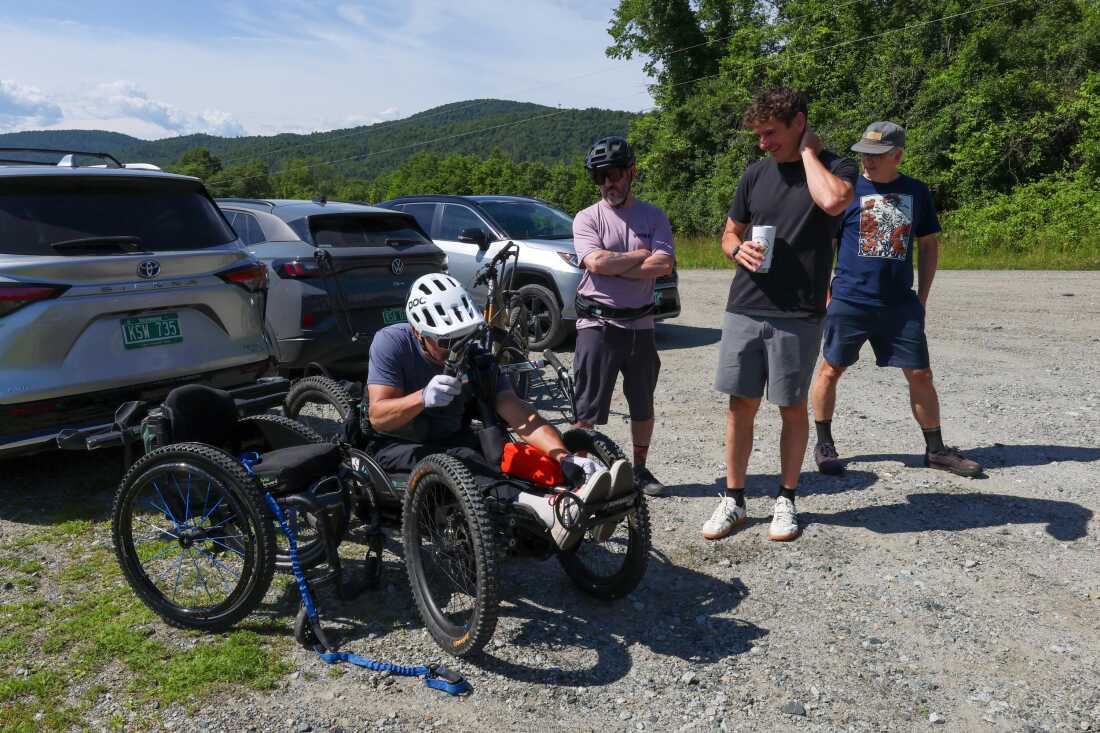
Louis Arevalo, left, straps into his adaptive mountain bike and chats with Jeff Dickson of the Vermont Mountain Bike Association, Angus McCusker with Vermont Huts and Trails, and volunteer Thatcher Hinman (all from left) ahead of a trail accessibility assessment in Randolph, Vermont, on Thursday, June 25, 2026.
Zoe McDonald/Vermont Public
Advertisement
hide caption
toggle caption
Zoe McDonald/Vermont Public
Advertisement
Louis Arevalo of Essex Junction is one of several adaptive athletes helping with that, most recently on some slightly overgrown single track trails in Randolph, a central Vermont town nestled along the eastern edge of the Green Mountains.
Arevalo pedals with his hands. He rides an electric powered recumbent-style three-wheeler that sits low to the ground. His service dog Azul chases along nearby.
“Once you realize what these bikes are capable (of) or this equipment actually opens up, it kind of blows your mind,” he said.
Arevalo was paralyzed in a skiing accident six years ago. Being able to get back on the trails has been a game changer, he said smiling.
“There’s a reason we live in the Green Mountain state. It’s because we like to get outside…you know, seeing the squirrels and chipmunks and birds… I mean, it’s life.”
Advertisement
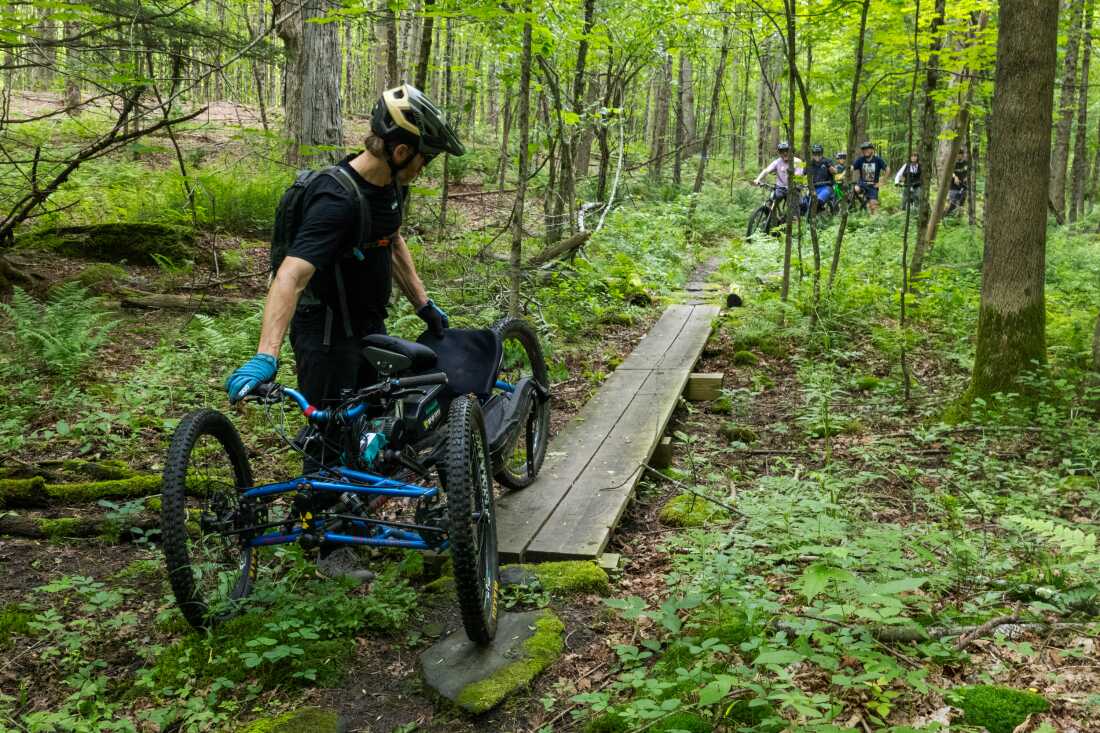
Nick Bennette, of the Vermont Mountain Biking Association, guides an adaptive bike over a narrow bridge, pointing out that other adaptive riders may have trouble getting across.
Zoe McDonald/Vermont Public
hide caption
toggle caption
Zoe McDonald/Vermont Public
Advertisement
But adaptive rigs like Arevalo’s are wider and heavier than regular mountain bikes, and not all trails are user-friendly.
Nick Bennette, who was testing a different type of adaptive bike, got hung up on several tight turns.
“It’s helpful to have different kinds of adaptive bikes on these tests because they all handle a little differently,” he said.
Advertisement
Bennette is executive director of the Vermont Mountain Bike Association, another nonprofit spearheading efforts around the Velomont. He and others involved in the assessment are taking detailed photos and notes on ways to make the trails more accessible.
“Just scalloping out a bit of material on the outside of that corner,” said Bennette, pointing to the area the bike got caught. “That will allow adaptive bikes to make that corner without really changing the way the trail rides.”
Angus McCusker with Vermont Huts and Trails is working to create accessible accommodations along the Velomont Trail, including a multi-group space in Randolph and a hut in Chittenden that has been outfitted with accessibility in mind.
Zoe McDonald/Vermont Public
hide caption
Advertisement
toggle caption
Zoe McDonald/Vermont Public
Contractors are also trying to reduce barriers at the trail’s overnight accommodations. This summer, contractors are building a new ADA accessible hostel in downtown Randolph.
And two remote huts along the trail will have locked sheds with off-road wheelchairs so bikers don’t have to haul their own.
Advertisement
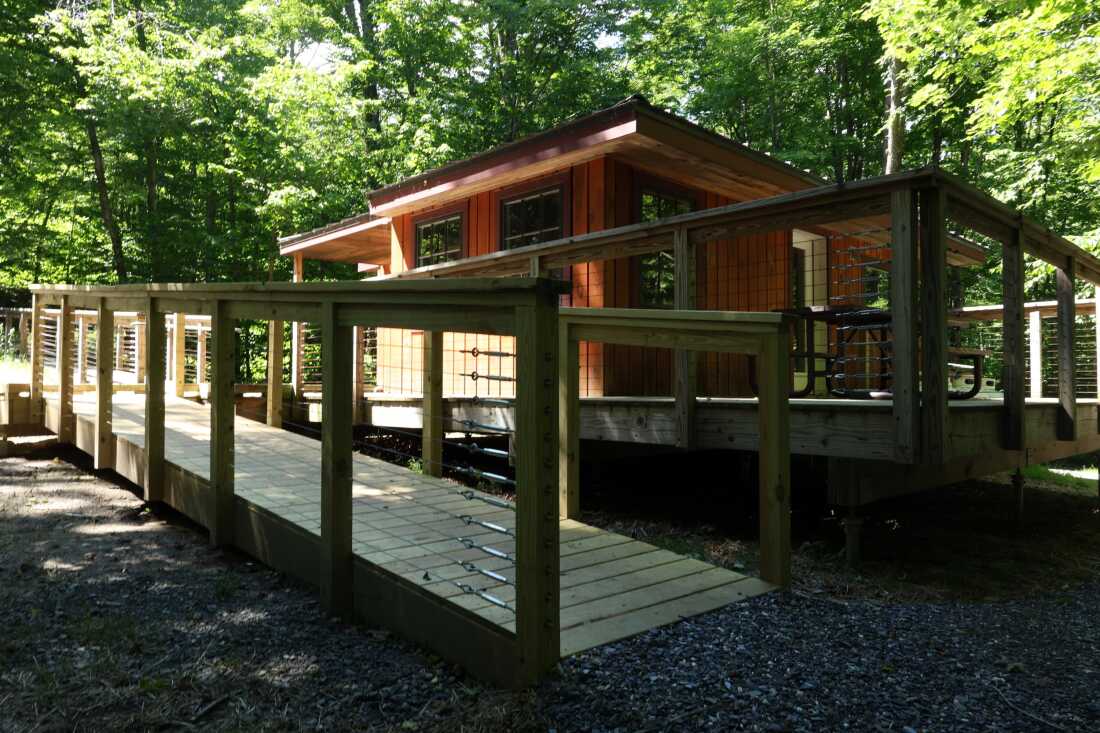
At the Chittenden Brook Hut, McCusker highlighted a new ramp and wider driveway.
“So if you’re an adaptive rider, you can imagine rolling right up here and you can transfer to your chair that’s available here, and then roll down the ramp and go down to the fireplace, to the privy, to make your meal,” he said.
Louis Arevalo stayed at the hut last summer with other adaptive riders — his first camping trip since his accident.
“There was a babbling brook right there…and it was really refreshing to have easy access to a beautifully built hut that was easy to navigate, and then have these world-class trails right out the door,” he said. “And with these Velomont trails, I can actually plan a hut-to-hut trip with other people.”
The Chittenden Brook Hut includes accessible ramps, storage for adaptive bikes and specialized off-road wheelchairs for visitors.
Zoe McDonald/Vermont Public
Advertisement
hide caption
toggle caption
Zoe McDonald/Vermont Public
Advertisement
Jeff Alexander is counting on it. He’s director of strategic partnerships with Vermont Adaptive Ski and Sports, a nonprofit that helps people with disabilities access outdoor recreation.
An economic impact analysis the group commissioned estimates their programming generated more than $10 million last year.
“So the adaptive community has money, they travel, they want to travel and they want to play with everybody,” Alexander said. “We just need to level the playing field so that everyone can play together.”