Massachusetts
Mass. is a national leader in keeping food waste out of landfills, study finds


Scientists and government officials increasingly recognize food waste as a major contributor to climate change. Across the globe, producing and disposing of uneaten food accounts for about half of the greenhouse gas emissions from the entire food system.
Massachusetts was among the first states to pass regulations curbing food waste, and according to new research published in the journal Science, it’s the only state where the rules are working.
Massachusetts Department of Environmental Protection (MassDEP) Commissioner Bonnie Heiple said the state is proud to be recognized as a national leader.
“This has been a long time coming,” she said.
In the United States, About 35% of food produced is never eaten. Much of it winds up in landfills where it gives off methane, a greenhouse gas that contributes to climate change, as it decomposes. Methane emissions from Massachusetts landfills have the same climate impacts as about 116,000 cars on the road for a year.
To stem the flow of lettuce (and other food) to landfills, nine states and a handful of cities and towns have enacted food waste bans — laws and regulations that prohibit sending organic waste to landfills or incinerators.
Massachusetts was among the first five states to enact a food waste ban — the others were California, Connecticut, Rhode Island and Vermont. Massachusetts’ first food waste ban, enacted a decade ago, required any business producing more than a ton of food waste per week to keep it out of landfills or incinerators. Instead, businesses were told to divert edible surplus food to charities or food recovery services, and send food waste to compost facilities or anaerobic digesters that turn it into energy. Massachusetts enacted a stricter ban in 2022, lowering the threshold to a half-ton of food waste per week.
In the new study, researchers looked at data from five states from 2006-2018, the years with the best data available. They found that food waste bans had no effect in California, Connecticut, Vermont and Rhode Island during that time; only Massachusetts saw a significant decline — about 7% — in food waste sent to landfills and incinerators.
Massachusetts has continued to increase food waste diversion since then. Before the first ban took effect in 2014, the state was diverting about 100,000 tons of food waste from landfills and incinerators, according to state data. That number now stands at about 380,000 tons per year, a nearly fourfold increase.
“That downward decline in food waste has caused us to reduce our emissions — really slash our methane emissions from food waste — by more than 25%,” said Heiple.
By 2030, the state’s goal is to divert 780,000 tons of food waste per year.
The study’s authors suggested three possible reasons for Massachusetts’ success: simple regulations, affordable options for managing food waste, and stronger enforcement and monitoring than other states.
“These bans can work, and when they are successful, they can substantially reduce landfill waste,” said Fiorentina Zoi Anglou, a PhD candidate at the University of Texas, Austin and the lead author on the study. “These laws are important, and they hold a lot of potential. But in order for them to be truly effective, they need more than just good intentions, they need careful implementation.”

Despite the high marks from researchers, environmental groups are pushing Massachusetts officials to do more.
A 2024 report from MASSPIRG and other environmental advocacy groups found the state fell 20% short of its food waste diversion goal in 2020. The authors noted the state will need to double its rate of organic waste diversion to meet its ambitious 2030 goal. The report suggested better public education, tax incentives for food donation and renewed investments in composting.
“We appreciate the efforts of the DEP,” said MASSPIRG Executive Director Janet Domenitz, but she added, it’s not enough. “We’re still burying and burning over a million tons of food waste a year here, and that makes methane — the worst kind of contributor to climate change.”
John Fischer, deputy division director for solid waste at MassDEP, said the state’s 2030 goal is “aggressive.” To reach it, he said, regulators will need to start focusing on food waste from homes.
“We’re at a pivot point,” he said. While continuing to divert commercial food waste, his department is beginning to shift attention to residents. “That will be proportionally more of our focus going forward.”



A body part was found in a pond in Shirley, Massachusetts and investigators said foul play is suspected.
It was discovered around 5:30 p.m. Wednesday as a group of people were walking along Veterans Memorial Bridge on Shaker Road.
Police said the group noticed something suspicious in the water of Phoenix Pond. The Middlesex District Attorney confirmed that the item was a body part, but would not elaborate.
Police shut down the road and divers could be seen exploring the pond late Wednesday. Authorities were back at the scene Thursday morning.
No other information is available at this point in the investigation.
Phoenix Pond connects to the Catacoonamug Brook, which flows into the Nashua River. It’s also connected to Lake Shirley.
Shirley, Massachusetts is about 44 miles northwest of Boston and around 13 miles from the New Hampshire border.

Human remains were discovered Wednesday in the water in Shirley, Massachusetts, and authorities suspect foul play.
Police in Shirley said in a social media post at 7:15 p.m. that they responded to “a suspicious object in the water near the Maritime Veterans Memorial Bridge on Shaker Road.” Massachusetts State Police later said the object was believed to be human remains.
The bridge crosses Catacoonamug Brook near Phoenix Pond.
The office of Middlesex County District Attorney Marian Ryan said a group of young people was walking in the area around 5:30 p.m. and “reported seeing what appeared to be something consistent with a body part in the water.”
Foul play is suspected, Ryan’s office said.
Authorities will continue investigating overnight into Thursday, and an increased police presence is expected in the area.
No further information was immediately available.
Massachusetts
Ice covered highways, streets and sidewalks in Boston area rattled nerves during morning commute: “I’m ready for the thaw”

It was a treacherous commute for drivers across Massachusetts Wednesday morning. Ice on roads and highways caused several crashes during rush hour.
In Danvers, 22 miles north of Boston, the ramp from Interstate 95 to Route 1 north was covered in ice, leading to three separate crashes involving twelve cars. Three people were taken to local hospitals.
In Revere, just seven miles north of the city, two tractor-trailers collided on North Shore Road. Police said it will be shut down for most of the day. It’s unclear if this crash was caused by icy conditions.
Forty-four miles west of Boston, a tractor-trailer ran off the westbound side of the Massachusetts Turnpike in Westboro. One person was taken to UMass Memorial Medical Center in Worcester with what were described by the fire department as “non-life threatening injuries.”
The ice wasn’t just a problem for drivers. People walking around Boston were also slipping and sliding Wednesday morning.
“I almost fell at least five times but I didn’t. I don’t know how. I screamed and caught edges,” Swapna Vantzelfde told CBS News Boston about her walk to work in the South End. It took longer than usual.
“The internal streets they just don’t get plowed, the little ones that people live on and then these arteries, the big streets, they’re cleaned a lot better,” she said.
Those on two legs and four were all stepping gingerly across slick spots.
“A little treacherous. Very slick and icy out here,” said a father pushing a stroller. “Sometimes you have something to hold on to, which helps.”
With plenty of snow piled along sidewalks and between parking spots, most people are done with winter.
“I’m over it. I’m ready for the thaw,” said one man.

Lady Vols fall to Alabama in SEC Tournament for seventh loss in row
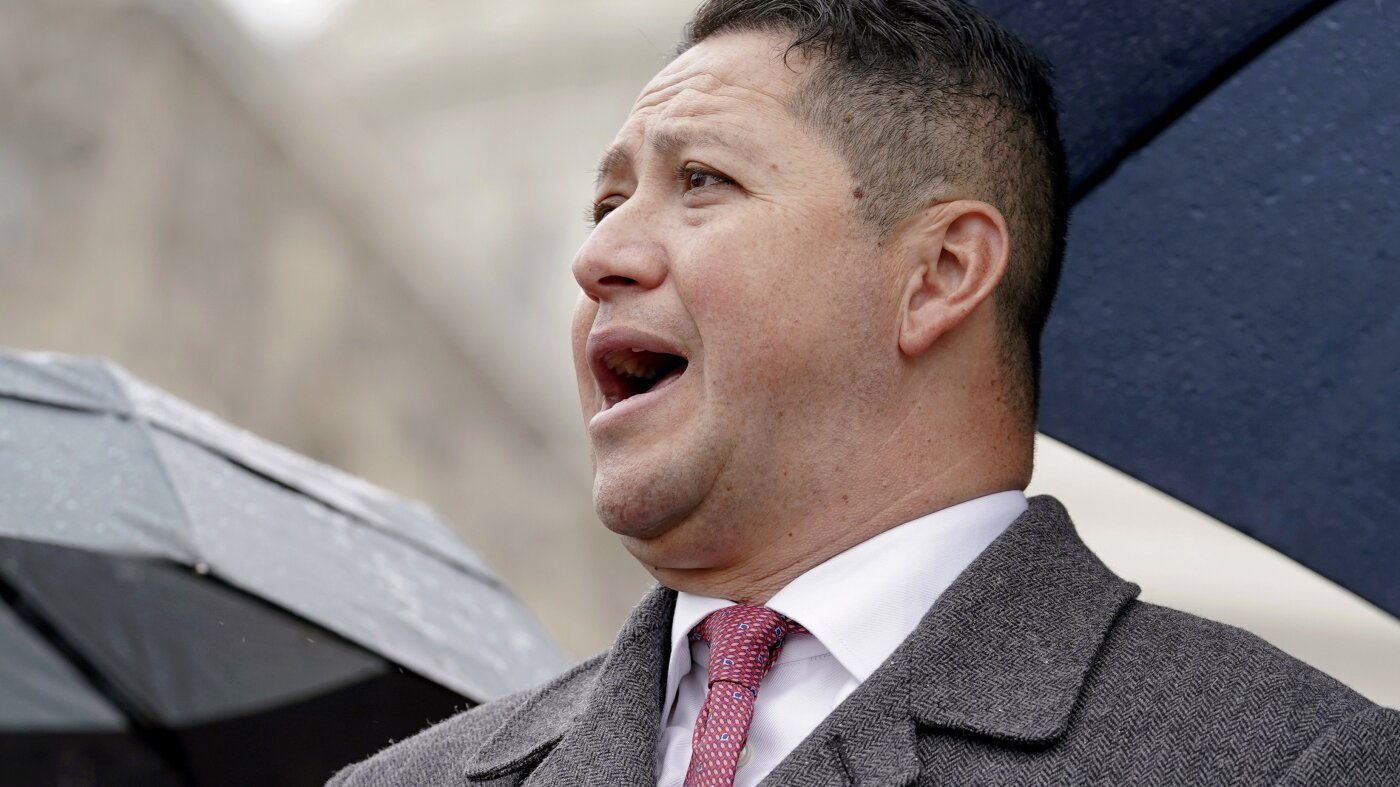
GOP Rep. Tony Gonzales of Texas ends reelection bid after admitting to affair with aide

Utah Blanks Philadelphia, 3-0 | Utah Mammoth

Friends, family rally behind Vermont veteran charged with domestic terrorism

Virginia Tech women overcome slow start to rally past Georgia Tech in ACC Tournament opener

Florida High School Football Rankings: Top 25 teams – Oct. 21

Cleary's 21 help Le Moyne down Central Connecticut State 69-64 in OT

How old is Bo Nix? What to know about Oregon quarterback ahead of 2024 NFL Draft

99th annual Pony Swim held in Virginia

Indiana Members Credit Union announced as new anchor tenant at Bottleworks District

DOJ continues Biden autopen probe despite former president unlikely to face charges
Fact check: Did French border guards mock influencers returning from Dubai amid Iran war?

Iran’s fight for survival / The widening war / Trump’s nebulous goals : Sources & Methods

Map: 4.9-Magnitude Earthquake Shakes Louisiana

Paxton vows he’s ‘staying in this race’ even if Trump backs Cornyn in Texas GOP clash
-

 World1 week ago
Exclusive: DeepSeek withholds latest AI model from US chipmakers including Nvidia, sources say
-

 Wisconsin4 days ago
Setting sail on iceboats across a frozen lake in Wisconsin
-

 Massachusetts1 week ago
Mother and daughter injured in Taunton house explosion
-

 Maryland5 days ago
AM showers Sunday in Maryland
-

 Massachusetts3 days ago
Massachusetts man awaits word from family in Iran after attacks
-

 Florida5 days ago
Florida man rescued after being stuck in shoulder-deep mud for days
-

 Denver, CO1 week ago
10 acres charred, 5 injured in Thornton grass fire, evacuation orders lifted
-

 Oregon7 days ago
2026 OSAA Oregon Wrestling State Championship Results And Brackets – FloWrestling