Maine
Maine announces resource center to aid opioid settlement spending


The attorney general’s office is putting nearly $2.5 million toward a resource center that will offer assistance to Maine counties, cities and towns as they decide how to spend opioid settlement funds, Attorney General Aaron Frey told The Maine Monitor in an exclusive interview.
In June, Frey’s office signed a contract with the University of Southern Maine’s Catherine Cutler Institute to support the development of a resource center dedicated to helping the state’s 39 counties, cities and towns — or “direct share subdivisions” — that are set to receive approximately $66 million in opioid settlement funds over 18 years.
The research and data generated by the center will be made available to the public in an effort to boost transparency and help communities make informed spending decisions. The contract is for five years.
The money the attorney general’s office is using to fund the center and the money going to the direct share subdivisions comes from settlements reached with nearly a dozen pharmaceutical manufacturers, distributors and retailers accused of “supercharging” the opioid epidemic.
Maine expects to receive about $230 million across 18 years, though that number may increase when several pending bankruptcy cases are finalized.
On Thursday, the U.S. Supreme Court blocked Purdue Pharma’s bankruptcy plan that would have added billions of dollars to the settlements nationwide, but would have given the Sackler family immunity from future litigation.
It will likely be years before a resolution is reached and states like Maine see any money from the OxyContin maker.
“While today’s Supreme Court decision means we have more work to do, my office will continue to litigate to obtain resources from the Sacklers to save lives and fight the opioid epidemic,” Frey said in a statement after the ruling. “Make no mistake about our resolve: Confronting the devastation of the opioid epidemic requires that we work to hold accountable those bad actors who are responsible for it, which includes the Sackler family.”
Frey’s office signed memoranda of understanding with more than 50 counties, municipalities and school districts that were party to the massive multidistrict litigation case that led to the settlements.
Under these agreements, Maine’s share of the more than $50 billion that will be distributed nationally will be divided into three funds: 50 percent to the Maine Recovery Council, 3 percent of which must be spent on special education programming in schools; 30 percent to direct share subdivisions that were party to the lawsuits or have a population of at least 10,000; and 20 percent to the attorney general’s office.
“While it’s a significant amount of money, it is limited,” Frey said. “The crisis is such that it is going to be so important that the way in which these resources are directed today, that it provides that foundation so that over the next 18 years these resources do end up addressing the harm that all of these defendants caused.”
Supplement, not supplant
The settlement agreements say the funds must be used for “opioid abatement,” and provide a long list of approved uses, from increasing access to medication for opioid use disorder for incarcerated people to expanding treatment and recovery services for pregnant or postpartum women with substance use disorder, and flooding communities with free, easy-to-access naloxone, the overdose-reversing drug.
The guidance stipulates that the money should be used on evidence-based programs that supplement, not supplant, existing funding.
But designing evidence-based programs for treatment, prevention, harm reduction and recovery requires a level of expertise and access to resources that may be out of reach for some Maine counties and towns.
In the two years since settlement payments began, a number of subdivisions have reached out to the attorney general’s office for assistance, Frey said.
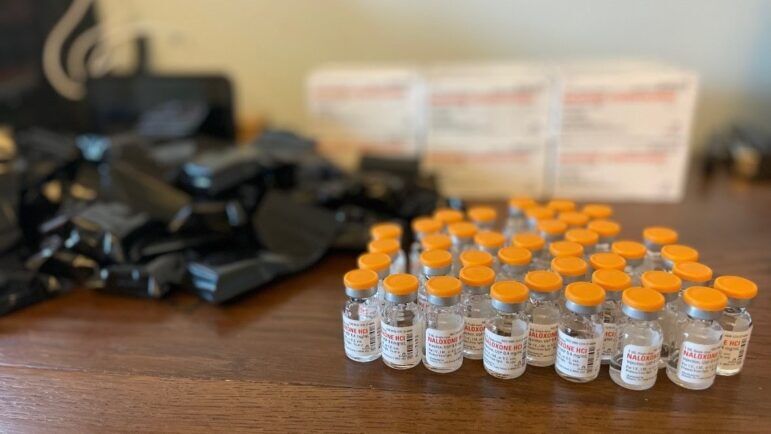
In a survey conducted by the Maine Recovery Council late last year, municipalities noted they could use assistance in conducting a needs assessment, support for creating a grant process to distribute funds and community engagement training.
The attorney general’s office said the resource center will help the subdivisions conduct comprehensive needs assessments, plan evidence-based programs, develop measurable objectives for their spending and more — all at no cost to the subdivisions.
The center will also create publicly available “community profiles” and a data dashboard.
“One of the things that I’ve been very concerned about is just making sure that everybody is on the same page about how these resources can go out and be used in a supplemental way to help address the crisis,” Frey said.
Questionable spending decisions
Earlier this year, The Monitor found that some of the subdivisions’ spending decisions have already begun to raise concerns among experts and advocates. Saco and Falmouth, for instance, have each spent about $20,000 in settlement funds on handheld drug-checking devices for their police departments.
While the departments claim they purchased the devices for “officer and victim safety,” and to quickly and accurately identify substances in an overdose situation, experts doubt the accuracy of the tools.
“Those handheld devices are worse than bad, they are plain dangerous,” Dr. Nabarun Dasgupta, a senior scientist researching street drugs at the University of North Carolina’s school of public health, told The Monitor earlier this year.
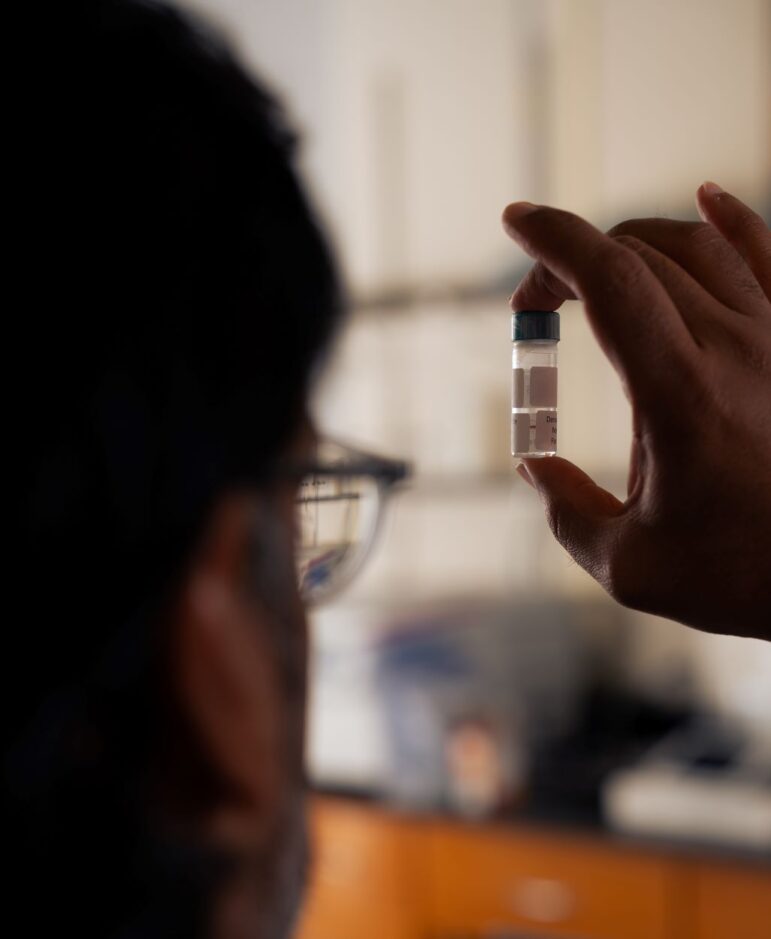
The TacticID-N Plus and TruNarc devices, purchased by Saco and Falmouth, respectively, are “garbage,” Dasgupta said.
The devices use a technology called Raman spectroscopy, which works fine in limited, often lab-controlled circumstances, in which a sample only has one or two substances present, he added. But with street drugs, which often have multiple substances present in a single sample, the drug-checking devices often miss substances and can produce false positives.
“They’re not scientific tools. They’re legal tools for cops to be able to arrest people,” Dasgupta said.
Ever since opioid settlement payments started hitting bank accounts, companies like the ones that make the TacticID-N Plus and TruNarc devices have gone on marketing campaigns to encourage government officials to buy their products, a 2023 investigation by KFF Health News found.
In general, advocates have warned against spending opioid settlement funds on “law enforcement personnel, overtime or equipment.” Yet The Monitor found that nearly a third of the state’s subdivisions have spent money on law enforcement and jail programs.
It is up to the counties, cities and towns to decide how to spend their 30 percent of the funds, so long as they follow the guidance on approved uses. Unlike the Recovery Council, the subdivisions are not required to publicly disclose their spending outside the usual public access laws, according to the MOUs.
And although the list of approved uses is hefty and detailed, it is still open to interpretation.
“There are some interventions or some expenditures that maybe have less efficacy in abating the crisis,” Frey said.
Frey said he hopes the resource center will help steer subdivisions away from that kind of spending.
“Different municipalities, different counties, they’re going to make decisions about how to best do what makes sense for their communities,” he said.
Boosting transparency
The Monitor surveyed all 39 subdivisions earlier this year and found many have yet to determine a process for making these decisions, while others’ approaches varied greatly.
In Franklin County, commissioners abruptly disbanded the opioid settlement committee, which was tasked with soliciting proposals and making recommendations to commissioners. Several members told The Monitor they thought the committee hadn’t been structured properly.
In June, county commissioners agreed to restart the group as the Opioid Settlement Advisory Committee, deciding to cap membership at five rather than nine. People interested in serving on the committee must submit an application that requires they disclose their criminal history and current employer, and list three references.
Bylaws are now publicly posted. The major difference from the previous version (which several former members told The Monitor they never received) is that members are barred from submitting an application while serving on the committee and must recuse themselves from that review round if an organization they are associated with applies.
Frey said he hopes the resource center will help subdivisions “calibrate their spending in a productive way.”
Making the research and data generated by the center publicly available is to not only boost transparency but provide other communities with information for their own spending decisions.
“The more education you have, sort of what works and what does work, it will become harder, I think, for a range of spenders we’ll say, to spend money on programs that are identified as not being evidence-based — that the evidence shows are not programs that are going to address the crisis,” Frey said.
The resource center evolved from a letter the chairs of the legislature’s health and human services committee sent to Frey and the Recovery Council last July with their priorities for the distribution of the opioid settlement funds, including a pitch for a research center within the University of Maine. Frey began meeting with the Cutler Institute in the fall.
The Cutler Institute will receive the first and largest funding installment — about half the total commitment — this summer. The establishment, startup and initial operations of the center are estimated to take about two years, according to the contract. The remainder of the funding will be dispersed in the second and third years.
In addition to the center, the attorney general’s office signed a contract in March with Eliot-based Pinetree Institute to provide a one-time payment of $60,000 to support the initial engagement and implementation of a York County Recovery Coalition.
The attorney general’s office has also allocated $3 million to the Department of Health and Human Services for its OPTIONS (Overdose Prevention Through Intensive Outreach, Naloxone, and Safety) program to double the number of local liaisons — or service navigators — from 16 to 32, and has given $2 million to the Office of Behavioral Health to support substance use programming that was at risk of losing funding.
Emily Bader can be reached at emily@themainemonitor.org.



Almost exactly one year ago, Graham Platner, who has no political experience, was cherry-picked by out-of-state political activists.
According to a person familiar with the campaign, Daniel Moraff and Leanne Fan, who have made a name for themselves by recruiting populist candidates across the country, traveled to Maine and rented a house near Platner’s home in Sullivan to convince him to run for the US Senate. Throughout the process, Moraff became Platner’s “right-hand man”, the person described, speaking on condition of anonymity for fear of backlash.
But homing in on Platner as a newcomer to oust long-serving Republican Susan Collins came at a cost. The Wall Street Journal recently reported that Moraff asked for an expedited, cheaper background check to be completed in a matter of days. The firm Moraff and his team contracted with also did not do a candidate interview or questionnaire, per the Journal’s report.
The fallout of those decisions happened on a colossal scale. In a midterm year with record spending across the country, the Democratic party had come to pin its hopes on Platner to help clinch Senate control with his meteoric campaign and ability to unite independent and progressive voters alike with a clear, anti-establishment message.
Controversies ensued, bringing with them straight-to-camera videos of Platner explaining and denying various scandals. Finally, an allegation that broke the dam this week: a woman he dated accusing him of sexual assault, of drunkenly forcing her to have sex with him after coming to her house uninvited. Asked in an interview on CNN whether Platner raped her, the woman, Jenny Racicot, replied: “By definition, yes, absolutely.”
His support collapsed. Platner waited days as calls grew for him to withdraw. Then on Wednesday, he released an 11-minute video announcing the end of his campaign that left Maine voters scrambling and betrayed, and the country wondering: how did this happen?
“It feels like some of the first rules of politics may have been broken here,” said Andrew Feldman, a national progressive strategist. “We were seeing rookie mistake after rookie mistake, and now we find ourselves in this situation.”
David Farmer, a Democratic strategist based in Maine, said the vetting process for Platner was tantamount to “malpractice”.
“I’ve had to have these conversations with candidates in the past – where you sit down and you ask them really tough questions,” Farmer said. “What drugs have you used? Have you ever had an affair? You ever cheated on your wife? You ever cheated on anybody? It’s really uncomfortable and probing, and a miserable event for everybody involved.”
The person familiar with the campaign said that Moraff and Fan “fell in love with an aesthetic without knowing the state” that ultimately did a “disservice” to Maine’s working-class voters.
Platner’s campaign did not respond to the Guardian’s request for comment on the methods used to check the former nominee’s background.
A rising star and an early redemption arc
Platner’s early campaign days – after he announced his run in August of last year – saw a rare rush of grassroots excitement as he criss-crossed the state for town halls, with backing from Bernie Sanders and an ad produced by Zohran Mamdani’s 27-year-old media strategist, Morris Katz.
An oyster farmer and marines veteran, Platner issued plain-spoken warnings that Maine’s working class had been hollowed out – healthcare was unaffordable, young people couldn’t buy homes – and said he’d survived only because of the veterans’ benefits he receives from being “blown up” too many times in combat. His searing indictment of the political establishment matched the anti-Washington mood and anger many Democrats felt toward their party’s leaders.
“His tone, his look, his voice, his message captured a frustration with Washington, a frustration with economic injustice,” Farmer noted.
Democratic leaders had someone else in mind: the 78-year-old term‑limited governor Janet Mills. But Mills hadn’t yet announced her run. In the meantime, 41-year-old Platner positioned himself as the gruff local businessman hardened by tours in Iraq and Afghanistan, pushing for generational change. Once Mills entered, he quickly framed her as emblematic of the status quo, arguing that a Chuck Schumer‑backed candidate would mirror Collins‑style “fake moderation”.
The Democratic establishment was skeptical of Platner from the outset, concerned that he brought too much baggage to the race against a seasoned incumbent. But progressives say the party is also to blame for pushing Mills as an alternative. If she had been elected, Mills would have been the oldest freshman in Senate history.
Platner brushed off his earlier scandals: Reddit posts from 2013 to 2021 where – among other things – he called white rural Americans “stupid” and “racist”, questioned why “Black people didn’t tip” and said sexual‑assault survivors should “take some responsibility … and not get so fucked up”. While apologetic, he characterized the posts as side-effects of severe PTSD and disillusionment from combat.
He tried to get ahead of more controversy by revealing a covered-up skull-and-crossbones tattoo that resembled a Totenkopf, a symbol known for its use by the Nazi SS. Platner said it came from a night drinking with military buddies in Croatia 18 years earlier. “I’m not a secret Nazi,” he told the Pod Saves America hosts.
Platner and his allies in Congress argued the uproar was overblown. At the time, Platner told the Guardian that Mainers related to his struggle and didn’t see the posts or tattoo as disqualifying. Many voters also said they could look past his mistakes and viewed his redemption arc as genuine. “If what the voters wanted were people who were grown in vats and had never done or said anything that they might regret their entire lives, we’d have a very different country,” Moraff told the Journal in May.
But inside his campaign, cracks had started to appear. In October, Platner’s political director, Genevieve McDonald, and his finance director both left his team. The latter, Ronald Holmes III, said his “professional standards” no longer “fully aligned with those of the campaign”. McDonald said Platner’s failure to fully disclose the extent of his Reddit posts led to her departure. She went on to question whether Platner really didn’t know the meaning of his tattoo.
Bracing for the worst
There was lingering concern among Maine locals and political operatives that more would come out about Platner’s past. One voter at a town hall in April asked him – point‑blank – if there were examples of sexual misconduct in past relationships that could emerge and endanger his chances. Another said that she was extremely wary about how untested Platner was.
Ultimately, his star continued to outshine the septuagenarian governor’s lackluster campaign. Mills, citing dwindling financial resources, eventually dropped out of the race, giving Platner a glidepath to the nomination.
And then – 10 days before the Democratic primary – reports revealed that Platner’s wife, Amy Gertner, had confided in McDonald about sexually explicit messages he’d sent outside their marriage, disclosures she made in an attempt to get ahead of any opposition research.
In extraordinary fashion, Platner was summoned to Washington DC to answer lawmakers’ questions about the latest controversy. Shortly after the meeting, the New York Times reported that previous partners described “unsettling” and “toxic” behavior. One of the women, Lyndsey Fifield, a conservative operative who dated Platner from 2013 to 2015, alleged he frequently grabbed her by the shoulders, once yanked her out of a taxi by her wrist, and during one argument twisted her arm behind her back, shoved her into a bedroom and held the door shut until she was “calm”. Fifield also cast doubt on Platner’s claim that he was unaware that his tattoo was a Nazi symbol, telling the Times that he referred to it as “my Totenkopf”.
Platner rejected Fifield’s claims and branded them as “politically motivated”.
While some voters were deterred, Platner still ended up clinching more than 70% of the vote in the primary. National Democrats, however, were left to grapple with a catch‑22: what would be an insurmountable scandal? And would it be worse than if Collins, who had helped overturn Roe v Wade and backed several key Trump policies, was re‑elected to a sixth term?
“It’s like a frog being in a pot of boiling water. If you raise the temperature slowly, you don’t know it’s boiling until it’s too late,” said Farmer.
The final straw
When Politico published their story on Monday, outlining Jenny Racicot’s claims that Platner raped her nearly five years ago, the condemnation came hard and fast. Endorsements evaporated and calls for Platner to withdraw were immediate. As he denied the allegations in a lo-fi self tape, it became clear this would be the red line for those who had stood by him until this point.
“The messenger was not the right person to match the inspiring message,” said Adam Green, executive director of the Progressive Change Campaign Committee. “It is really unfortunate for the overall project of trying to challenge corporate power and shake up a broken political system.”
It would be another two days before Platner published another video announcing his decision to end his campaign, claiming the allegations against him were part of a coordinated political attack.
Troy Jackson, who campaigned alongside Platner while running for the Democratic nomination in the Maine gubernatorial race, and is now one of several candidates running to replace him, told MS Now: “Graham told me point-blank that there was nothing in his past that I had to worry about. And he lied to me. And he lied to a lot of us.”
Now, as Democrats battle with the feeling of deja vu from Joe Biden’s withdrawal from the 2024 presidential race, it’s left some unnerved about whether the Maine Senate race is still winnable. “It’s so upsetting because it feels like we’ve been completely bamboozled by a candidate that so many people believe in,” said Feldman.

LEWISTON (WGME) Nearly three years after the Lewiston mass shooting, the Maine Resiliency Center is asking the public to share how the tragedy has affected them and the community.
The nonprofit has launched a survey to better understand the impacts of the mass shooting in October 2023 and to help guide future support efforts.
The director of the Maine Resiliency Center said the ripple effects have spread widely and the organization wants to hear from anyone who has been affected.
“You could have been a service provider who is providing therapy or counseling for people; you could have been a funeral home director or city employee; you could be someone who lives in this community and knows somebody who is directly impacted or you could be directly impacted yourself. All of those opinions and information are really valuable to us as we look to support the broader community moving forward,” the director said.
To take part in the survey, go to maineresiliencycenter.org.

Politics
Our political journalists are based in the Maine State House and have deep source networks across the partisan spectrum in communities all over the state. Their coverage aims to cut through major debates and probe how officials make decisions. Read more Politics coverage here.
AUGUSTA, Maine — The Maine Supreme Judicial Court on Friday upheld Secretary of State Shenna Bellows’ decision to keep a referendum banning transgender girls from female school sports off the November ballot.
The high court ruled Bellows was “not only authorized but was constitutionally bound” when she moved in May to throw out more than 1,500 signatures gathered by out-of-state circulators who never agreed to submit to Maine’s jurisdiction.
The unanimous ruling from the six-justice panel closes out a monthslong legal fight that began when Bellows’ office invalidated more than 12,000 signatures submitted by Protect Girls’ Sports in Maine, leaving the petition 532 signatures short of the 67,682 needed to qualify.
The group, backed heavily by Republican megadonor Richard Uihlein, had argued Bellows overstepped her authority by enforcing a settlement that ended a 2023 First Amendment lawsuit over Maine’s ban on out-of-state circulators, rather than letting Maine voters decide whether to loosen the state’s residency rules for petition circulators.
The court rejected that argument, finding Bellows was bound by the Maine Constitution’s residency requirement for circulators except where a federal injunction narrowly excused her from enforcing it, and that four nonresident circulators who never checked a box consenting to Maine jurisdiction fell outside that carveout.
Justices also rejected the campaign’s fallback argument that one circulator’s belated affidavit, filed months after the Feb. 2 filing deadline, should have salvaged her roughly 61 signatures, citing a state law requiring circulator affidavits to be filed when the petition is.
The decision effectively ends the campaign’s bid for the 2026 ballot, though the court noted proponents could still gather the roughly 500 additional signatures needed to try again for the 2027 ballot.
-

 World10 minutes ago
Moldova president nominates pro-European businessman Tofan for PM
-

 News37 minutes ago
US congressman says he was detained by armed Israeli settlers in occupied West Bank
-

 Los Angeles, Ca2 hours ago
New details emerge in fatal stabbing of boy in El Monte
-

 Detroit, MI2 hours ago
1 dead, 1 injured after two-vehicle crash at Collingwood and Belleterre in Detroit
-

 San Francisco, CA2 hours ago
4 arrested, 3 cited after brawl following Giants vs. Rockies game at Oracle Park
-

 Dallas, TX3 hours ago
Mark Cuban takes legal action against Dallas Mavericks ownership over potential new arena deal
-

 Miami, FL3 hours ago
South Florida Dirt: A timeline of the Vacchi vs. Stern legal battle
-

 Boston, MA3 hours ago
Tall Ships begin historic Boston parade of sails

