Maine
AI comes with dangers and opportunities. How is Maine responding?


The ad begins with a woman standing in a department store who sort of looks like Gov. Janet Mills, but not quite.
“Introducing the Janet Mills collection, featuring a confusing choice that forces girls to compete against biological males,” the female narrator says over banal instrumental music as the video cuts to “Mills” holding a stopwatch by an outdoor track.
The Mills collection comes “with a no-parent-permission-required estrogen kit,” the narrator continues, as the imposter holds a kit of syringes while patting a boy’s hair, which seems suspiciously stiff. The commercial ends with a real picture of the governor.
As far as ads generated by artificial intelligence go, the one from the National Republican Senatorial Committee is not very convincing. But the commercial serves as a reminder about how the emerging technology is being integrated into political campaigns and other areas of life in Maine.
If state Democratic leaders get their way, AI-generated ads like this won’t be allowed in Maine without a disclaimer.
As AI technology rapidly improves, state policymakers are weighing a variety of measures that could affect how Mainers interact with it. They are taking a two-pronged approach to protect people, especially children, from potential harms — while also preparing for the possible benefits.

The technology comes in the form of virtual personal assistants, internet search results and targeted advertising by businesses. It’s being used by governments for things ranging from traffic signals to budgets and policymaking to facial recognition to surveillance.
Mills said in a written statement that AI could help improve lives, drive economic growth and solve complex problems, but that it must be used in a “prudent, responsible, and ethical manner.”
“As AI becomes more prevalent in our society, its considerable promise must be balanced against harms — known and unforeseen — that can emerge from its widespread use,” she said. “It’s clear we’re only at the beginning of AI’s evolution.”
The governor has proposed $6.7 million in her supplemental budget to begin implementing some of the recommendations of a 21-member task force she created last year to study the issue.
Her proposal, which is being reviewed by lawmakers, would create a statewide AI literacy campaign; fund local and state partnerships to help municipalities use the technology and offer grants to support job training programs to keep Maine’s workforce competitive and productive in AI-enabled workplaces, among other things.
Lawmakers, meanwhile, are considering bills to address potential harms. In a rare bipartisan move, Republicans and Democrats voted unanimously last month in support of a bill (LD 524) making AI-generated child sex abuse material illegal. But that bill must receive about $55,000 before it can be sent to the governor.
They are also considering bills:
- To require political ads in state and local elections to include a disclosure when AI-generated or altered material is used (LD 517).
- To stop human-like chatbots or social AI companions from interacting with children (LD 2162).
- And to regulate how the technology is used in mental health settings (LD 2082).
Last year, lawmakers passed a measure including AI-generated images in the state’s ban on so-called “revenge porn,” and one requiring companies to inform consumers when they’re interacting with an AI assistant. Mills signed both into law.
Other proposals regulating AI use in medical and dental insurance claims and in setting rents died in committees. So did one prohibiting the use of AI in “dynamic pricing,” in which businesses use the technology to offer different real-time prices to different consumers.
Over 1,000 measures focusing on artificial intelligence were debated in state capitols last year, the National Conference of State Legislatures said.
Some states, such as Colorado and California, are taking steps to enact a broad regulatory framework for AI. California has provisions preventing discrimination in the workplace and requiring watermarks on AI content and transparency around data used to produce reports.
But Maine lawmakers are seeking to address potential harms on a case-by-case basis — at least for now.
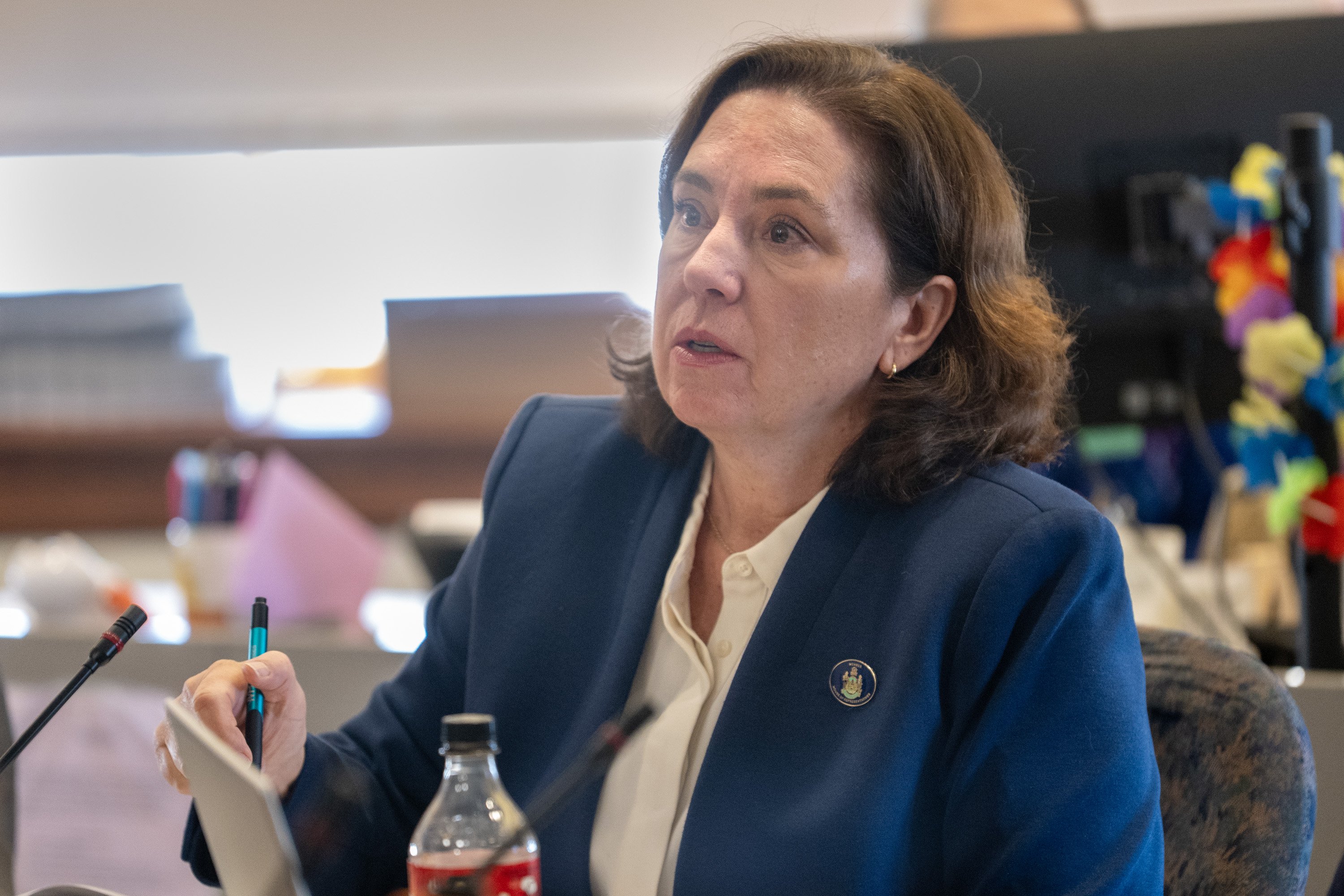
“I think of it as almost a whack-a-mole type of approach where we are developing legislation that very narrowly addresses specific harms of AI,” said Rep. Amy Kuhn, D-Falmouth, who is taking the lead for House Democrats.
“That sort of overarching regulatory framework just feels a little premature for Maine to me right now. I want to see that work its way through the states and let some other states take a swing before we get in there.”
Republicans, however, are worried about overregulation.

Rep. Jennifer Poirier, R-Skowhegan, said her caucus is focused on protecting children from potential harms associated with AI, but she worries that regulation will never keep up with AI’s evolution.
“You can’t always legislate your way out of everything,” Poirier said. “If you have a minor that has access to AI, and it can be used to harm them in any way, it’s our responsibility as adults to keep them safe. … But we are adults, and we need to use our own common sense.”
A recent poll from Pan Atlantic Research showed widespread concern about AI, with 66% of the 810 Mainers surveyed saying they’re mostly concerned about the potential problems of AI, while 25% were mostly optimistic.
More advanced programs can generate text, analyze reports and create increasingly lifelike images and videos. A recent AI video purporting to show Tom Cruise and Brad Pitt throwing down over the death of convicted sex offender Jeffrey Epstein raised alarm bells in Hollywood over its realism.
Other programs have been used by businesses in ways critics say can be exploitative. Consumer Reports recently published a story about how the online grocery shopping service Instacart used AI to charge certain customers higher prices — up to 23% more — if they were flagged as having higher incomes. Instacart reportedly stopped offering stores this option for “surveillance pricing” after the story was published in December.
A lobbying effort is underway to promote AI regulation in Maine. The “Protect What’s Human” campaign launched a website earlier this year, and a spokesperson said they have invested about $210,000 in ads supporting AI regulations. The commercials are targeting Republicans voters in the Bangor and Portland regions. The group is planning to spend another $110,000 on TV, streaming services, social media and podcasts.
Other proposals passed by the Legislature reflect lawmakers’ attempts to get ahead of the AI issue in indirect ways.
The House and Senate have each recently passed a strict data privacy law that would greatly restrict the amount of data — a person’s location, browsing and shopping histories and biometric information, for example— that companies can collect, store and sell. One of the main arguments was that such data can be used to train AI models. However, the chambers will have to iron out the differences between their two versions of the measure, LD 1822, if it is to become law.
And local residents are beginning to grapple with proposed data centers, which have been controversial in other parts of the county because they consume large amounts of water. This is especially true for centers powering AI.
Lawmakers are considering a bill, LD 307, to create a moratorium on such centers and establish a state council to study and review the impact of building them in Maine.
Construction is underway on a data center in Aroostook County, while another is being proposed in Sanford. Others have been proposed in Wiscasset and Lewiston, but did not move forward.
“This whole world is shifting to computer everything,” Poirier said, “and it’s important that we keep up with the times on that.”



This iconic spot is a “road-trip-worthy” Maine destination, but can you handle their newest addition?
Spring has sprung, which means plenty of people will take a well-deserved break from the daily grind and hit the open road. If you’re heading out to explore some cool Maine traditions—and you love lobster rolls—we’ve found the perfect stop.
The Taste of Maine restaurant has been serving up delicious seafood since 1978. They’re famous for a few things: a giant inflatable lobster that covers about 75% of the roof, and their claim to fame—the “World’s Largest Lobster Roll.”
These legendary lobster rolls are 22 inches long, and over the years, many customers have taken on the dare of finishing one. If you succeed, you earn membership in the “Clean Plate Club”—no easy feat given the size of this lobster roll.
But this year, Taste of Maine has gone even bigger. Introducing the “Monster” Lobster Roll: 3 feet long, packed with 2½ pounds of fresh Maine lobster meat—tail, claw, and knuckle—all on a 6-inch roll. This colossal creation carries a price tag of $259.99.
Read More: Maine Amusement Park Reveals New Family Attraction For 2026
Located at 161 Main Street in Woolwich, Maine, Taste of Maine is now open for its 48th season.
One of the best things about Taste of Maine is watching people take on these enormous lobster rolls. Guests love filming themselves attempting to finish them, including a Guinness World Records titleholder for “World’s Largest Mouth Gape.”
Spring Hours:
Monday: Closed
Tuesday: Closed
Wednesday: 11:30 AM – 8:00 PM
Thursday: 11:30 AM – 8:00 PM
Friday: 11:30 AM – 8:00 PM
Saturday: 11:30 AM – 8:00 PM
Sunday: 11:30 AM – 8:00 PM
To see just how long Taste of Maine has been a local favorite, check out this classic TV commercial from the 1980s!
New Arcade in Brewer, Maine Opens This Month
Game on, Brewer! The arcade of your dreams is almost here. Get ready to press start!
Gallery Credit: Arlen Jameson
12 New Restaurants That Opened in Maine in February 2026
Gallery Credit: Sean McKenna

LettersToTheEditor-640×400
To the Editor;
Access to affordable child care plays a direct role in whether Maine families can work, pursue education, and maintain stability. The Child Care Affordability Program helps keep child care costs within reach for working families.
To the Editor;
Access to affordable child care plays a direct role in whether Maine families can work, pursue education, and maintain stability. The Child Care Affordability Program helps keep child care costs within reach for working families. At Penquis, we serve 270 children from 266 families across dozens of communities through our child development programs, including Head Start, Early Head Start, and child care. We see firsthand how access to child care determines whether parents can work, pursue education and build long-term stability for their families, particularly in communities facing workforce shortages and rising cost of living.
Child care availability alone is not enough. We can have programs and facilities in place, but if care is not affordable, it remains out of reach for families who are already struggling.
Without it, the cost of child care places an unsustainable burden on Maine families, consuming as much as 29% to 39% of income for single-parent households and 10% to 13% for two-parent families. CCAP is one of the few tools that effectively addresses this challenge by ensuring child care costs are affordable, capping costs at 7% of income for those with the lowest incomes, and expanding access for many more families.
Investing in CCAP supports children’s healthy development, enables parents to participate in the workforce, and strengthens Maine’s economy. We urge state leaders to prioritize this $15 million investment in the supplemental budget and ensure that affordable child care is accessible to the families who need it most.
Kara Hay Penquis
Bangor
president and chief executive officer
Thank you for reading your4 free articles this month. To continue
reading, and support local, rural journalism, please subscribe.

A woman is dead, and her husband is in serious condition after a fire broke out at their home in Readfield, Maine, Friday night.
The Maine State Fire Marshal’s Office tells NBC10 Boston affiliate News Center Maine that the Readfield Fire Department responded to the house on Plains Road around 9:51 p.m. and found a large fire.
Jerrold Wentworth, 74, had escaped from a second-floor window and told crews that his wife was still on the second floor of the home, officials said, but firefighters were unable to go inside to rescue 75-year-old Carolyn Wentworth due to the fiery conditions.
A photo shared by the fire marshal’s office shows the fire destroyed the home.
Carolyn Wentworth’s body was found in the debris around 1:45 a.m. Saturday, near where she had been sleeping, fire officials tell News Center Maine. An autopsy will be conducted to determine her cause of death.
Jerrold Wentworth was taken to Maine General Medical Center where he’s in serious condition, officials added.
Investigators from the state fire marshal’s office responded to the scene and are working to determine the cause of the deadly fire.
An investigation remains ongoing.

Why Critics Despise The Super Mario Galaxy Movie (But Audiences Love It)

Michigan’s Dominance Poses Threat to NCAA Title Game Ratings

Map: Minor Earthquake Strikes Near San Diego

Video: Trump Escalates Threats to Devastate Iran

Video: Watch Live: Artemis II Mission

Florida High School Football Rankings: Top 25 teams – Oct. 21

How old is Bo Nix? What to know about Oregon quarterback ahead of 2024 NFL Draft

Cleary's 21 help Le Moyne down Central Connecticut State 69-64 in OT

99th annual Pony Swim held in Virginia

Indiana Members Credit Union announced as new anchor tenant at Bottleworks District
Map: Minor Earthquake Strikes Near San Diego

Trump claims he’d win as the president of Venezuela — just needs to ‘quickly’ learn Spanish

US Supreme Court clears path for Steve Bannon criminal case dismissal

Trump reiterates threats to bomb Iran’s power plants and bridges

Trump threatens Iranian infrastructure over Strait of Hormuz | BBC News
-

 South-Carolina1 week ago
South Carolina vs TCU predictions for Elite Eight game in March Madness
-

 Atlanta, GA2 days ago
1 teenage girl killed, another injured in shooting at Piedmont Park, police say
-

 Vermont1 week ago
Skier dies after fall at Sugarbush Resort
-

 Movie Reviews5 days ago
Vaazha 2 first half review: Hashir anchors a lively, chaos-filled teen tale
-

 Politics1 week ago
Trump’s Ballroom Design Has Barely Been Scrutinized
-

 Atlanta, GA1 week ago
Fetishist ‘No Kings’ protester in mask drags ‘Trump’ and ‘JD Vance’ behind her wheelchair
-
 Entertainment5 days ago
Inside Ye’s first comeback show at SoFi Stadium
-

 Politics1 week ago
JD Vance says he was ‘obsessed’ with UFOs, believes aliens are actually ‘demons’