Maine
AI comes with dangers and opportunities. How is Maine responding?


The ad begins with a woman standing in a department store who sort of looks like Gov. Janet Mills, but not quite.
“Introducing the Janet Mills collection, featuring a confusing choice that forces girls to compete against biological males,” the female narrator says over banal instrumental music as the video cuts to “Mills” holding a stopwatch by an outdoor track.
The Mills collection comes “with a no-parent-permission-required estrogen kit,” the narrator continues, as the imposter holds a kit of syringes while patting a boy’s hair, which seems suspiciously stiff. The commercial ends with a real picture of the governor.
As far as ads generated by artificial intelligence go, the one from the National Republican Senatorial Committee is not very convincing. But the commercial serves as a reminder about how the emerging technology is being integrated into political campaigns and other areas of life in Maine.
If state Democratic leaders get their way, AI-generated ads like this won’t be allowed in Maine without a disclaimer.
As AI technology rapidly improves, state policymakers are weighing a variety of measures that could affect how Mainers interact with it. They are taking a two-pronged approach to protect people, especially children, from potential harms — while also preparing for the possible benefits.
The technology comes in the form of virtual personal assistants, internet search results and targeted advertising by businesses. It’s being used by governments for things ranging from traffic signals to budgets and policymaking to facial recognition to surveillance.
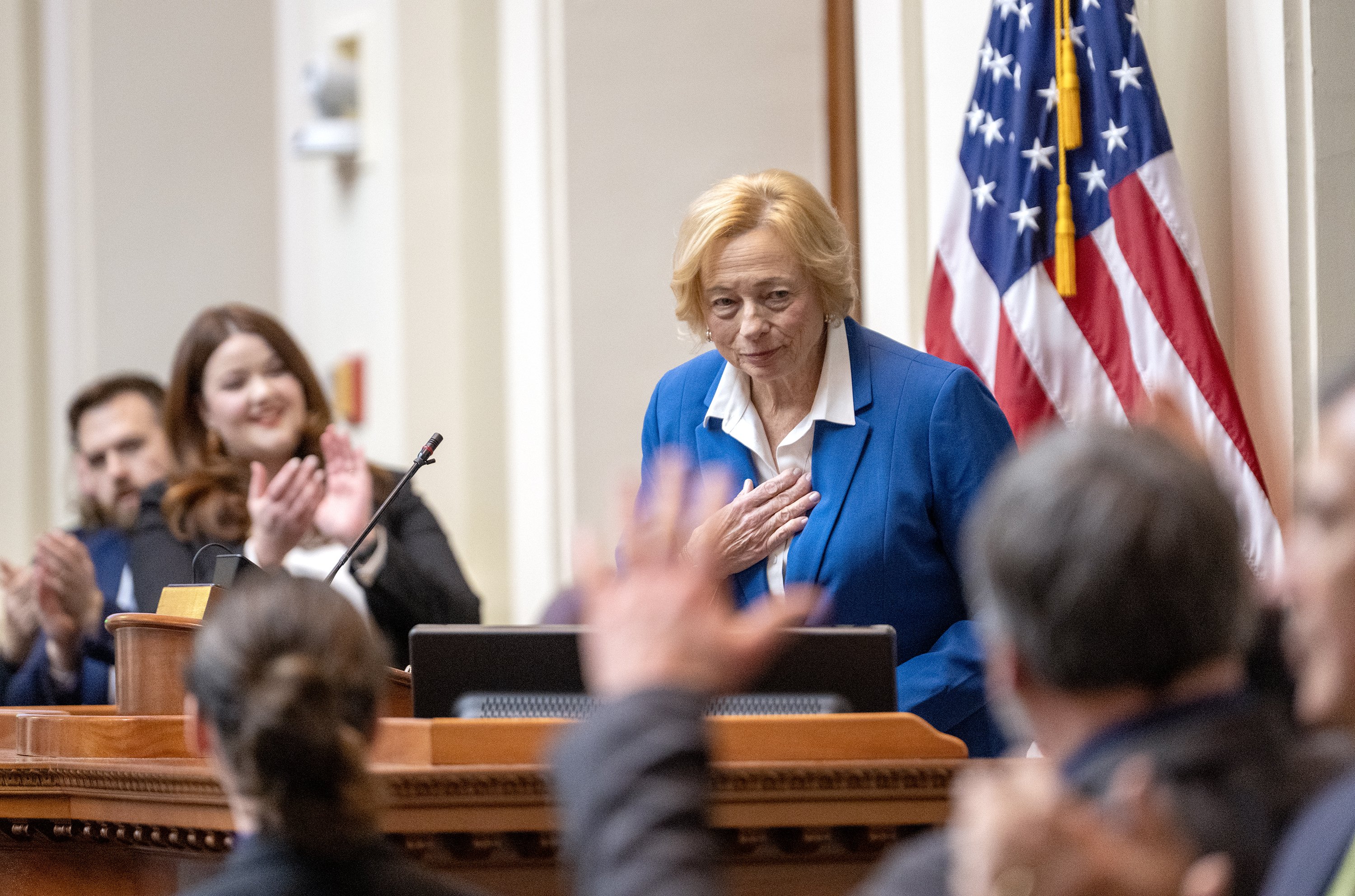
Mills said in a written statement that AI could help improve lives, drive economic growth and solve complex problems, but that it must be used in a “prudent, responsible, and ethical manner.”
“As AI becomes more prevalent in our society, its considerable promise must be balanced against harms — known and unforeseen — that can emerge from its widespread use,” she said. “It’s clear we’re only at the beginning of AI’s evolution.”
The governor has proposed $6.7 million in her supplemental budget to begin implementing some of the recommendations of a 21-member task force she created last year to study the issue.
Her proposal, which is being reviewed by lawmakers, would create a statewide AI literacy campaign; fund local and state partnerships to help municipalities use the technology and offer grants to support job training programs to keep Maine’s workforce competitive and productive in AI-enabled workplaces, among other things.
Lawmakers, meanwhile, are considering bills to address potential harms. In a rare bipartisan move, Republicans and Democrats voted unanimously last month in support of a bill (LD 524) making AI-generated child sex abuse material illegal. But that bill must receive about $55,000 before it can be sent to the governor.
They are also considering bills:
- To require political ads in state and local elections to include a disclosure when AI-generated or altered material is used (LD 517).
- To stop human-like chatbots or social AI companions from interacting with children (LD 2162).
- And to regulate how the technology is used in mental health settings (LD 2082).
Last year, lawmakers passed a measure including AI-generated images in the state’s ban on so-called “revenge porn,” and one requiring companies to inform consumers when they’re interacting with an AI assistant. Mills signed both into law.
Other proposals regulating AI use in medical and dental insurance claims and in setting rents died in committees. So did one prohibiting the use of AI in “dynamic pricing,” in which businesses use the technology to offer different real-time prices to different consumers.
Over 1,000 measures focusing on artificial intelligence were debated in state capitols last year, the National Conference of State Legislatures said.
Some states, such as Colorado and California, are taking steps to enact a broad regulatory framework for AI. California has provisions preventing discrimination in the workplace and requiring watermarks on AI content and transparency around data used to produce reports.
But Maine lawmakers are seeking to address potential harms on a case-by-case basis — at least for now.
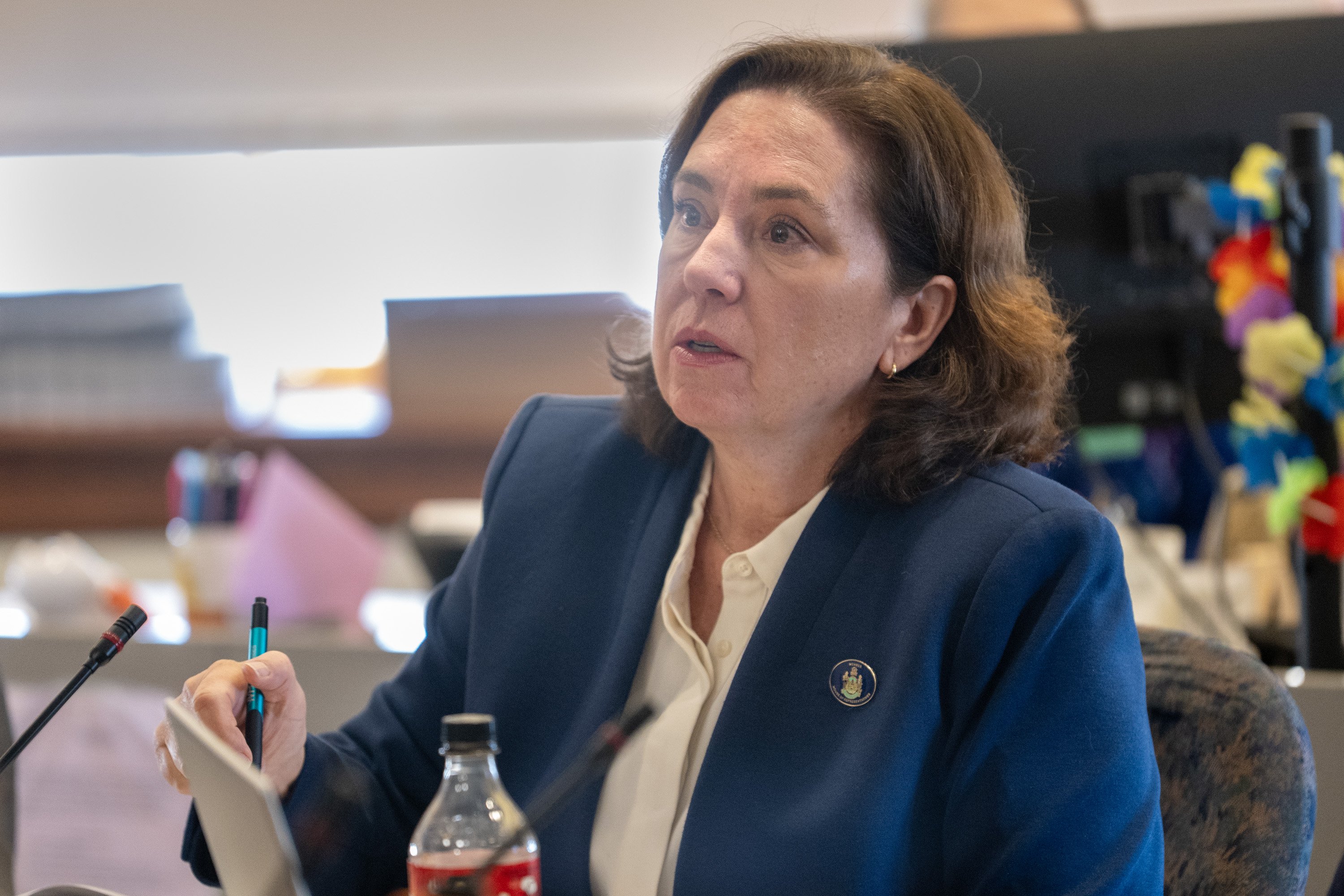
“I think of it as almost a whack-a-mole type of approach where we are developing legislation that very narrowly addresses specific harms of AI,” said Rep. Amy Kuhn, D-Falmouth, who is taking the lead for House Democrats.
“That sort of overarching regulatory framework just feels a little premature for Maine to me right now. I want to see that work its way through the states and let some other states take a swing before we get in there.”
Republicans, however, are worried about overregulation.
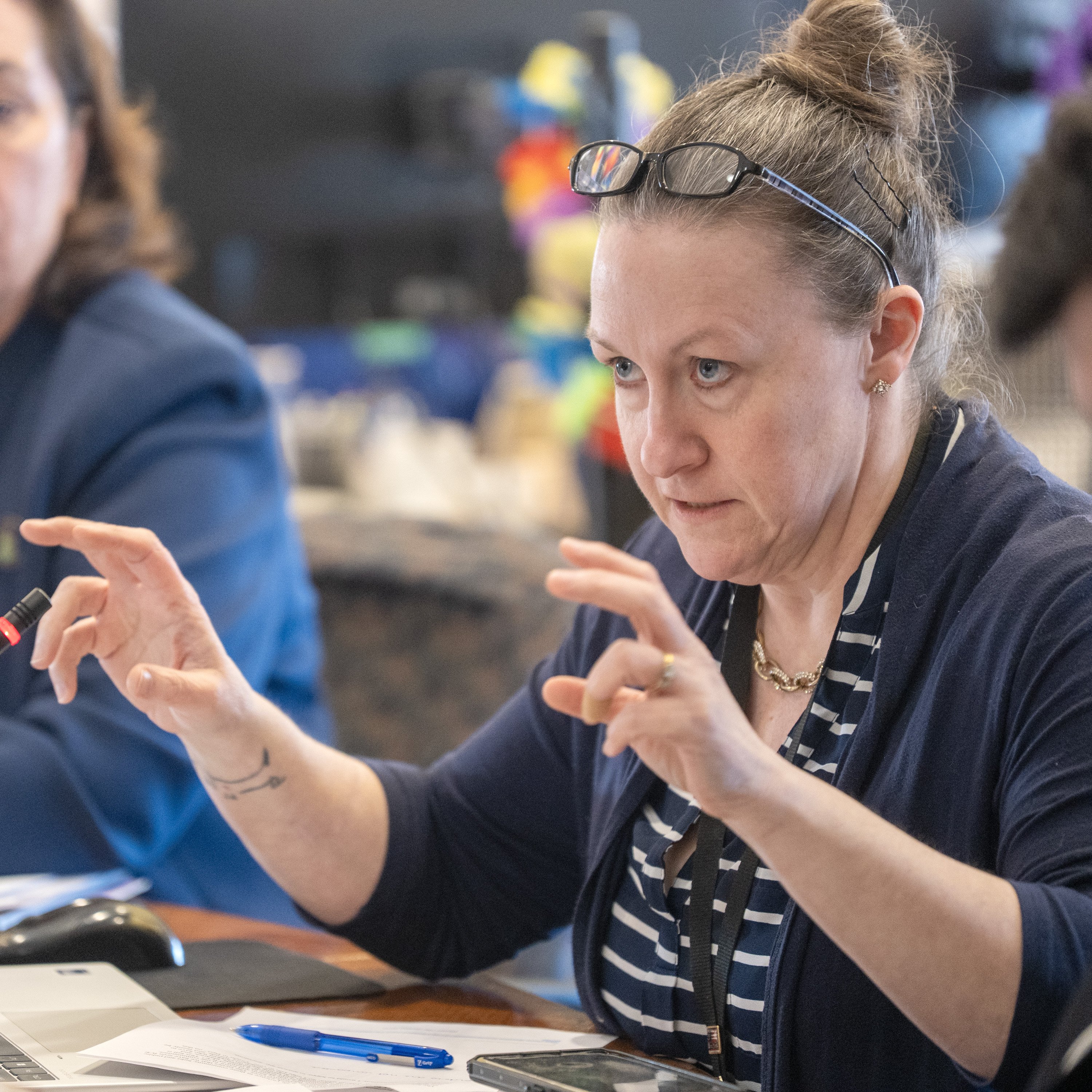
Rep. Jennifer Poirier, R-Skowhegan, said her caucus is focused on protecting children from potential harms associated with AI, but she worries that regulation will never keep up with AI’s evolution.
“You can’t always legislate your way out of everything,” Poirier said. “If you have a minor that has access to AI, and it can be used to harm them in any way, it’s our responsibility as adults to keep them safe. … But we are adults, and we need to use our own common sense.”
A recent poll from Pan Atlantic Research showed widespread concern about AI, with 66% of the 810 Mainers surveyed saying they’re mostly concerned about the potential problems of AI, while 25% were mostly optimistic.
More advanced programs can generate text, analyze reports and create increasingly lifelike images and videos. A recent AI video purporting to show Tom Cruise and Brad Pitt throwing down over the death of convicted sex offender Jeffrey Epstein raised alarm bells in Hollywood over its realism.
Other programs have been used by businesses in ways critics say can be exploitative. Consumer Reports recently published a story about how the online grocery shopping service Instacart used AI to charge certain customers higher prices — up to 23% more — if they were flagged as having higher incomes. Instacart reportedly stopped offering stores this option for “surveillance pricing” after the story was published in December.
A lobbying effort is underway to promote AI regulation in Maine. The “Protect What’s Human” campaign launched a website earlier this year, and a spokesperson said they have invested about $210,000 in ads supporting AI regulations. The commercials are targeting Republicans voters in the Bangor and Portland regions. The group is planning to spend another $110,000 on TV, streaming services, social media and podcasts.
Other proposals passed by the Legislature reflect lawmakers’ attempts to get ahead of the AI issue in indirect ways.
The House and Senate have each recently passed a strict data privacy law that would greatly restrict the amount of data — a person’s location, browsing and shopping histories and biometric information, for example— that companies can collect, store and sell. One of the main arguments was that such data can be used to train AI models. However, the chambers will have to iron out the differences between their two versions of the measure, LD 1822, if it is to become law.
And local residents are beginning to grapple with proposed data centers, which have been controversial in other parts of the county because they consume large amounts of water. This is especially true for centers powering AI.
Lawmakers are considering a bill, LD 307, to create a moratorium on such centers and establish a state council to study and review the impact of building them in Maine.
Construction is underway on a data center in Aroostook County, while another is being proposed in Sanford. Others have been proposed in Wiscasset and Lewiston, but did not move forward.
“This whole world is shifting to computer everything,” Poirier said, “and it’s important that we keep up with the times on that.”


Maine could face up to $50 million in penalties next year due to errors in its payments for federal food benefits under the Supplemental Nutrition Assistance Program.
Newly released data from the U.S. Department of Agriculture find that Maine’s error rate last year was nearly 11%, the bulk of which were overpayments. That’s in line with the U.S. average. But starting in October of next year, states with error rates above 6% must cover a portion of the SNAP benefits.
Anna Korsen, executive director of Full Plates, Full Potential, said the overpayments aren’t fraud — they’re human error. She said this new cost-shifting policy enacted last year under the Trump administration further complicates the SNAP application process.
“Instead, we could make this program more accessible and more efficient,” Korsen said. “And that would reduce the number of errors and also ensure that Mainers who are eligible for SNAP have access to it.”
She’s urging Congress to delay or reverse the policy under the farm bill that’s currently under consideration.
Maine’s Department of Health and Human Services said it’s taking steps to reduce the error rate, including modernizing its systems and hiring an additional 40 eligibility specialists.
This story appears through a media partnership with Maine Public.

PORTLAND (WGME) — The third annual Celebration of America 300 is set for Thursday night at Oxford Plains Speedway.
This race was a favorite of NASCAR star Kyle Busch, who tragically passed away back in May. He was just 41.
Now, a Maine-born driver who worked on Busch’s team is ready to take the 8 car into victory lane.
For the past five years, Windham native Derek Kneeland was Busch’s eye in the sky, working as a spotter for the cup star. Kneeland says his relationship with Busch was like a brotherhood.
“I was fortunate enough where I got to have a personal relationship with him,” Kneeland said. “He came up, and he ran several races with me in late models and stuff at Oxford and Lee Speedway, and we got to do a lot of cool things together.”
Kneeland says dealing with the sudden loss has been both painful and difficult.
“It’s still hard,” Kneeland said. “I’m having a hard time with it. The weekdays are the hardest. At the track is where I’m most comfortable.”
Kneeland will be at the track and behind the wheel Thursday night, competing in the Celebration of America 300, driving the number 8 car.
“You know, a few days after everything went down, his dad called me, and his dad is a man of very few words, and I said, ‘You know, I’m thinking about running the 8 or 51 as long as I have your guys’ blessing, I would like to do that.’ And he said, ‘Short track world knows him as 51, but the world knows him as 8,’” Kneeland said.
Kneeland says it will be an emotional race, but he’s confident he’ll have a special co-pilot leading the way.
“Hoping he’s going to be on my shoulder and give me the guiding way and but to win it for Kyle, I think that would put the stamp on it,” Kneeland said.

FRIENDSHIP, Maine — A federal judge has ordered U.S. Immigration and Customs Enforcement not to relocate a Friendship man who ICE agents arrested Saturday.
Dhavalkumar Kalidas Patel was seized by four ICE agents at Wallace’s Market, which Patel and his wife operate on Harbor Road in Friendship.
His wife said the agents did not say why he was being taken away in handcuffs.
Attorney Audrey Richardson of Greater Boston Legal Services filed a motion for habeas corpus, meaning he is to be brought to a court in person.
U.S. District Court Judge Indira Talwani of Massachusetts issued an emergency order hours after Patel was seized that prohibits him from being moved elsewhere.
“To provide a fair opportunity for the judge who will be randomly assigned to this case to review the merits of the petition and to rule on any contested issues of jurisdiction, unless otherwise ordered by the assigned judge, respondents will not remove the petitioner from the jurisdiction of the United States or transfer petitioner to a judicial district outside that of Massachusetts for a period of at least 72 hours from the time this Order is docketed,” Talwani wrote.
Patel is being held at the Plymouth County Correctional Facility in Plymouth, Massachusetts.
The petition filed by the attorney representing Patel argues that he is being held unlawfully.
No further hearing dates have been scheduled, but the federal government has until July 6 to file a response.
Richardson issued a statement on the arrest.
“This is another example of ICE illegally and illegitimately taking someone who is working hard to support their family,” she said, including a child born in the United States. “The family is a critical part of the fabric of a small community.”
The Patels have operated the store since 2024. The attorney said ICE agents initially did not even identify themselves. They did not say where he was being taken but he was allowed to make a call when they stopped in Scarborough.
Rob Sample, a customer of the store, said he could not understand why such an action was taken.
“We appreciate them,” he said of the Patel family, adding that they work hard to provide a community service by operating the store.
Knox County Sheriff Patrick Polky said ICE notified his department after its action. He noted the agency is not required to notify the department.
Patel is a native of India.
This story appears through a media partnership with Midcoast Villager.
-

 Wyoming1 minute ago
Free Crow Culture Program at Fort Phil Kearny
-

 Crypto4 minutes ago
UK investors sue Binance in London for £150 million
-

 Finance9 minutes ago
What the Supreme Court’s campaign finance ruling means for the 2026 election
-

 Fitness16 minutes ago
I pushed myself too hard at the gym – and ended up in the hospital
-

 Movie Reviews24 minutes ago
Young Washington (Christian Movie Review) – The Collision
-

 World34 minutes ago
Neon Closing in on Luca Guadagnino’s Sam Altman Open AI Movie ‘Artificial’ After Amazon Drops Controversial Film
-
 Lifestyle1 hour ago
‘Dead but Dreaming of Electric Sheep’ is full of beautifully written grotesqueries
-

 Technology1 hour ago
Google’s NotebookLM can sum up your research in a TikTok-style clip

