Northeast
GREGG JARRETT: NY judge desperate to brand Trump 'convicted felon' before inauguration

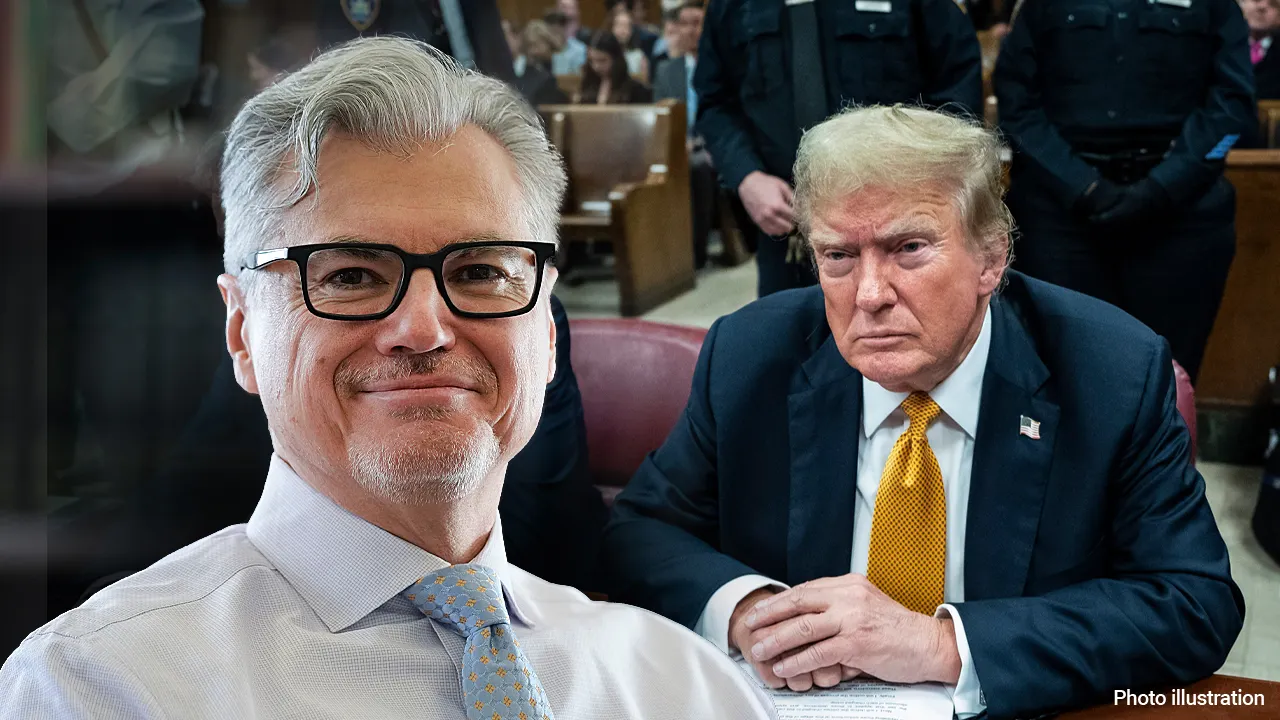
Trump NY sentencing set for January 10th
Fox News legal analyst Gregg Jarrett and Harvard Law professor emeritus Alan Dershowitz discuss the latest developments in the New York legal case against President-elect Donald Trump during an appearance on ‘Hannity.’
NEWYou can now listen to Fox News articles!
New York Judge Juan Merchan’s dogmatic refusal on Friday to dismiss the misbegotten case against President-elect Donald Trump and, instead, proceed to sentencing on Jan. 10 is yet another middle finger extended to the law. And to Trump.
At the same time, Merchan unwittingly concedes the folly of the entire prosecution by notifying the defendant that neither the court nor District Attorney Alvin Bragg will seek any meaningful punishment. Trump, the judge disingenuously advises, would receive an “unconditional discharge” with no incarceration, fine, or probation following the guilty verdicts by a Manhattan jury last May.
TRUMP SLAMS MERCHAN, DEMOCRATS, WHO JUST WANT ‘A POUND OF FLESH’ AMID FAILED CASES
Never mind that state law does not support a jail sentence under these circumstances. Forget that the district attorney deliberately contorted statutes and mangled evidence to pursue a meritless prosecution that was motivated purely by political vengeance. And ignore the fact that there is little chance that the biased jury’s guilty verdict, compounded by Merchan’s chronic reversible errors, will withstand judicial scrutiny on appeal. Eventually.
It seems obvious that Merchan is desperate to stain Trump with the formal stricture of “convicted felon.” To do it, he must sentence the incoming president. A jury’s verdict alone is insufficient under the law. Hence, the offer of what amounts to a non-sentence if only Trump will, at the very least, appear virtually during a hearing 10 days before he is sworn in.
It is another charade meant to bookend —and cover-up— a sham trial. Show up to be verbally tarred and feathered, but no stocks or pillory will be deployed.
In some sense, it may be tempting to accept Merchan’s contingent surrender. Why? Under law, Trump is foreclosed from challenging the myriad of mistakes the judge made at trial, as well as the prosecution’s specious legal theory, until sentencing occurs. Only then is he officially “convicted.” A successful appeal erases the conviction, albeit belatedly.
And there’s the rub.
Your average defendant would accept the Faustian bargain that guarantees no jail time and starts the clock immediately on the appellate process. But Trump is different. He is an inveterate fighter who refuses to capitulate, even when his opponents are facing reproach. It’s one of the many reasons why voters rewarded him with a second term in office. He does not give up or give in. Nor should he.
A competent or objective judge would have long ago tossed the Trump indictment in the garbage where it belonged. On its face, it was patently deficient, if not ludicrous, and a transparently politicized prosecution.
Trump is determined to clear his name. So, you can expect that his legal team will challenge Merchan’s ruling on both the dismissal and sentencing. There are various legal options available, such as filing for an emergency “stay” from the appellate courts that, if granted, may push any further proceedings beyond inauguration on Jan. 20.
Since it is well established that presidents are immune from any criminal process while in office —a principle that even Merchan accepts— a court-ordered pause would effectively delay sentencing until 2029. Of course, that assumes the case still has a pulse four years from now.
Trump has a credible argument that the verdicts against him should be vacated now. As president-elect, his lawyers contend that “immediate dismissal is mandated by the federal Constitution, the Presidential Transition Act of 1963, and the interest of justice.” Sentencing would disrupt the orderly transfer of executive power.
Justice Juan Merchan looks on as Republican presidential candidate and former U.S. President Donald Trump attends his criminal trial over charges that he falsified business records to conceal money paid to silence porn star Stormy Daniels in 2016, at Manhattan state court in New York City, U.S. May 30, 2024 in this courtroom sketch. (REUTERS/Jane Rosenberg)
In essence, a state has no right or power to transgress federal laws passed by Congress, including the Transition Act. Interference by a local prosecutor and/or judge constitutes a violation of the Supremacy Clause in the Constitution.
But there are other compelling reasons to end this case sooner, rather than later.
In an earlier ruling, Merchan readily acknowledged his authority to set aside the verdicts if mistakes were made at trial which would merit reversal. Yet, he stubbornly refuses to recognize the plethora of errors that demand dismissal.
Chief among them is that prosecutors relied on tainted evidence prohibited in the presidential immunity standard enunciated by the Supreme Court on July 1. Testimony from White House officials and numerous presidential records should never have been introduced. Merchan disregards all this by insisting that such evidence was trifling, even though prosecutors emphasized it during closing arguments to the jury.
He also turned a blind eye to Bragg’s convoluted and incoherent legal theory that it must somehow be a crime to conceal a perfectly legal non-disclosure agreement. It is not. He then allowed the district attorney to shred the law by resurrecting expired business record misdemeanors and transmuting them into phantom election felonies that were falsely portrayed as unduly influencing the 2016 presidential contest.
It was a pretty neat trick inasmuch as Trump’s transactions were recorded and reimbursed after the election. Moreover, Bragg, as a local prosecutor, had no jurisdiction to enforce federal campaign laws. The payments to former adult film star Stormy Daniels did not even qualify as contributions under any statute or regulation.
As I have noted before, a competent or objective judge would have long ago tossed the Trump indictment in the garbage where it belonged. On its face, it was patently deficient, if not ludicrous, and a transparently politicized prosecution.
But Bragg’s disgraceful legerdemain did not bother Merchan in the least. Just the opposite. His honor merrily went along with the hocus-pocus. At trial, he shed his black robe to join the jurisprudential circus as co-prosecutor.
When the preordained verdicts were announced, no one knew exactly what Trump was convicted of. Theoretically, bookkeeping errors were allegedly committed to further another crime in an unlawful attempt to influence the election.
But what crime? No one can say. Was it federal campaign law violations? Taxation laws? False business records? Select from the aforementioned menu of imaginary possibilities. Trump doesn’t know because prosecutors never said. And neither did the jurors.
In an appalling instruction to the panel, Merchan declared that they did not have to identify which crimes were supposedly perpetrated and need not agree unanimously. He abandoned with impunity the bedrock principle of unanimity in criminal convictions which the Supreme Court has reinforced repeatedly.
Merchan’s courtroom devolved into a cesspool of incomprehensible rulings by a conflicted and hostile judge that deprived Trump of a fair trial. Merchan and prosecutors worked in concert to engineer the guilty verdicts. Political bias smothered the defendant’s due process rights. It was a harebrained case driven by a district attorney who enthusiastically embraced the Democrats’ corrupt lawfare campaign against their Republican opponent.
None of it fooled American voters. Indeed, it appears to have backfired spectacularly. Many deeply resented how Trump’s adversaries disfigured the law to bring a series of criminal indictments designed to destroy his chances of returning to the White House. Outrage was voiced at the ballot box on Nov. 5. Decisively.
CLICK HERE FOR MORE FOX NEWS OPINION
Despite their best efforts to sabotage the outcome of the election, the unscrupulous duo of Merchan and Bragg can do nothing now to stop Trump. Even if his anticipated bid to halt the sentencing next Friday fails, the newly elected president still benefits. He can commence appealing the shameless perversion of the law that was waged against him and the miscarriage of justice that ensued.
It wasn’t a fair trial. It was a farce.
In the meantime, it is incumbent on the incoming Department of Justice to open a comprehensive investigation into the lawfare campaign that Special Counsel Jack Smith, Fulton County District Attorney Fani Willis, and Manhattan District Attorney Alvin Bragg brought almost simultaneously and only after Trump announced his bid for election.
Coincidence? Hardly. There is reason to believe that there was coordination among them with President Joe Biden’s White House or with Attorney General Merrick Garland’s DOJ. Maybe both. If laws were broken, prosecutors should be exposed and held accountable for weaponizing the justice system.
Democrats have spent the last four years lecturing us that no one is above the law. Inconveniently now, that same standard applies to them.
CLICK HERE TO READ MORE FROM GREGG JARRETT
Read the full article from Here

Boston, MA
Jaylen Brown says Celtics showed ‘lack of respect’ after trade to 76ers – The Boston Globe

Amid several reports that said Brown didn’t request a trade and that Boston actually thought Derrick White was the best player on the 2025-26 roster, an already motivated Brown now has an even larger chip on his shoulder after the Celtics dealt him away.
“The message was received,” Brown said. “I wasn’t thrilled with the amount of respect that was shown throughout this process. I think there was a bit of a lack of respect. I think it was fine at one point, then out of nowhere, things just went left. I think Brad [Stevens] is getting a lot of the criticism. I wasn’t thrilled with the way he facilitated some of the conversations.”
After the Celtics fell short in their pursuit of Giannis Antetokounmpo — Brown was the centerpiece of Boston’s trade package — Stevens was noncommittal when asked about Brown’s future in Boston.
“Jaylen Brown is a big part of us,” Stevens said. “I’m never going to predict the future, but every indication, everything that I think about over the past few years has been building around those guys, right? So obviously, you never know. But at the same time, the one thing I want to make very clear is how valued he’s always been.”
“He’s been amazing. He’s been an amazing teammate, a great person to be around. And whether that run ends 10 years from now when he retires, or before, there’s a lot to celebrate. We have a great relationship, an open relationship where we talk about everything. But I don’t want to predict the future. I look at it as, this is our team.”
Stevens traded Brown to the 76ers on Wednesday in exchange for Paul George, two first-round picks, and two second-round picks. The deal was widely criticized.
For Brown, the most puzzling aspect was the lack of an explanation.
“I definitely think there’s more to it,” Brown said. “I just wish that more to it could’ve been explained to me. Because I think if more to it was explained, I would’ve understood. I thought I earned the respect to get that explanation. But hey, obviously, I was wrong. That’s life. You move on.”
Brown will now join a 76ers team that, with Tyrese Maxey, Joel Embiid, and V. J. Edgecombe already in place, could be poised to leapfrog Boston in the Eastern Conference.
“I don’t want [any] special treatment, I don’t need no handouts … I plan on earning my respect one day at a time by putting in the work,” Brown said of playing for Philadelphia. “I’m looking forward to getting in the gym, the whole process.”
“The hard part is, the last 10 years, I’ve been programmed to hate Philadelphia. The history of the rivalry, the playoff battles … I’ve been programmed to think like, ‘[Expletive] The Process’. It’s funny, now I’ve got to reverse-engineer it. But I’ll be ready to go by the time the season starts.”
Conor Ryan can be reached at conor.ryan@globe.com.

The 90-foot tall Ferris wheel will run from July 1 through July 5 on the North Shore. Tickets are on sale now and 50% of all proceeds will be donated to the Veterans Leadership Program. Tickets can be purchased at: pittsburghpa.gov/july4.
The BNY Main Stage at Point State Park will have entertainment starting at 4 p.m. Headlining the performances will be Grammy- and Tony-Award nominated national pop rock band the Plain White T’s. Shows are free,
As part of the National Flag Foundation’s Light to Unite, the city’s skyscrapers will be illuminated in red, white and blue across Downtown at 9 p.m.
The city’s fireworks spectacular is set to be the city’s largest fireworks display in decades. For the first time, there will be a drone performance immediately before the fireworks start.
The fireworks show will utilize six barges on all three rivers – and some rooftops. Fireworks will begin at 9:35 PM on July 4.
Connecticut
Motorcyclist seriously injured after crashing into parked, unoccupied vehicle in Meriden

MERIDEN, Conn. (WTNH) — A motorcyclist has serious injuries after a crash early Friday morning in Meriden, according to police.
The crash happened just after 3:00 a.m. in the area of Lincoln Street. The motorcyclist was navigating a turn when they struck a parked, unoccupied vehicle, police said.
The motorcyclist was taken to an area trauma center, according to police.
A section of Lincoln Street is blocked for the investigation, police said.
Meriden’s accident investigation team responded to the scene.
Additional information was not immediately available.
Download the News 8 app to get breaking news and weather alerts.
Watch News 8 on WTNH.com or the free WTNH News 8 streaming app on Roku, Apple TV, Amazon Fire TV and select Samsung Smart TVs.
-
 News52 seconds ago
Oregon ER doctors win a ‘David and Goliath’ battle against a national company
-

 Videos1 hour ago
Iran gets ready for Khamenei’s funeral • FRANCE 24 English
-

 Los Angeles, Ca1 hour ago
2 arrested after 3 LASD deputies injured during East L.A. World Cup celebration
-

 Detroit, MI2 hours ago
Ex-girlfriend in custody after Taylor man found fatally stabbed, police say
-

 San Francisco, CA2 hours ago
Marina braces for Golden Gate Bridge fireworks show, massive crowds
-

 Dallas, TX2 hours ago
Maradona’s ‘Hand of God’ ball heads to auction in Dallas
-

 Miami, FL2 hours ago
Miami-Dade sheriff urges residents to celebrate Fourth of July safely
-

 Boston, MA2 hours ago
Jaylen Brown says Celtics showed ‘lack of respect’ after trade to 76ers – The Boston Globe

