Newsletter Signup
Stay up to date on all the latest news from Boston.com


The Boston Globe
Dave Porter was ready to bring his people back into the office on Fridays. They’d been working Monday through Thursday at the Seaport headquarters of Baystate Financial for nearly three years, but the workplace just didn’t seem as lively and collaborative as it did when everyone came in five days a week.
When Porter broached the topic at a meeting in November, however, “the body language got really bad,” he said. People slumped in their chairs. One employee did a Google search and announced “nobody is back” five days a week. A new hire proclaimed, “I wouldn’t have taken this job if I’d known I had to come in on Fridays.”
Abigale Shields, the firm’s director of financial planning, was bombarded with messages from staffers after the meeting and conveyed their dismay to Porter. “I think I used the word ‘riot,’ ” she said.
Nearly four years after the pandemic upended the longstanding Monday-through-Friday commute for many white-collar workers, most employers have settled into a hybrid arrangement. Office occupancy has been about 50 percent for the past year in major metro areas studied by Kastle Systems, and only 4 percent of CEOs said bringing workers back full time is a priority, according to a new survey by The Conference Board.
“I think that’s a thing of the past,” said Harvard Business School professor Prithwiraj Choudhury, whose recent study identifies the “sweet spot” for hybrid work as two days a week in the office, on average, for optimum job satisfaction, work-life balance, and performance.
Still, a growing number of managers want butts in seats more often, citing the connections, collaborations, and innovations that in-person work can bring. State Street Corp., for instance, the Boston financial services firm, brought people back four days a week in November. Last year, 88 percent of employers nationwide said they expected workers to be in a certain number of days a week, up from 69 percent in 2022, according to a customer survey by Robin, the Boston workplace management software company.
But companies are proceeding with creativity, and caution — encouraging attendance instead of requiring it, in many cases, well aware that people have become very attached to working from home. Almost three-quarters of human resources professionals told researchers at the University of Chicago that getting workers back to the office has been an issue; a fifth described it as a “major problem.” David Solomon, chief executive of Goldman Sachs, one of several major companies back in the office full-time, admitted that getting people to come in on Fridays has been a challenge.
Indeed, about half of recent US job candidates at Copyright Clearance Center in Danvers, which has no in-office requirements, have told hiring managers they are looking for new jobs because of return-to-office mandates at their current employers.

But not all RTO mandates are created equal. Employees at MassMutual, the Springfield-based life insurance provider, started coming in at least three days a week in September but work off-site the weeks of Thanksgiving, Christmas, and July Fourth and can take an additional four remote weeks of their choosing.
At Baystate Financial, Porter listened to workers’ concerns about losing work-from-home Fridays, many revolving around their “brutal commute” into the Seaport. For Shields, who spends an hour each way to get there via ferry from Hingham, the best part of working from home on Fridays is having breakfast with her 3-year-old son. The thought of losing that left her feeling “deflated.”
So, last month, Porter announced a compromise. If the company hits its quarterly goals, which bonuses are already tied to, the roughly 300 people who work in the company’s 12 offices could work from home on Fridays for the next quarter. (The 600 financial advisers on staff have always had a flexible schedule). Employees are already paying closer attention to the firm’s performance, Porter said: “The whole company is going in the same direction now.”
But the threat of a riot still looms. “There’s going to be … another wave of anger if we don’t hit those goals,” Shields said.
Researchers at the Federal Reserve Bank of San Francisco who examined 43 industries found that remote work has not had an impact on productivity. Still, some employers are so determined to make sure people are in the office that they’re tracking attendance. Eighty percent of 800 employers surveyed by ResumeBuilder.com in December said they planned to monitor employees’ badge swipes or Wi-Fi logins or even use sensors under workers’ desks. Google is among those tracking badge swipes for its three-day-a-week in-office policy, according to CNBC, and plans to include office attendance in performance reviews.
Some workers are finding ways around these methods. Nearly 60 percent of hybrid workers surveyed by Owl Labs, the Boston video-conference provider, said they have “coffee badged,” meaning, went into the office for a few hours to show their face.
At some companies, in-office requirements are focused on new hires. The Boston staffing agency The Hollister Group expects all new employees to come in at least three days a week for the first few months. Chief executive Kip Hollister, who has been “slow dripping” people back into the office, recently started basing each person’s in-office attendance on their individual performance and allows employees who have been doing well remotely to come and go as they please.
“We want that as a carrot,” she said.
The new approach will be “a wake-up call but also a gift” for those who aren’t performing well, said Hollister, who isn’t worried about it being viewed as punishment: “If coming into the office … is going to help you be more productive and have greater results, won’t you want that for yourself?”
As the CEO of a staffing firm, Hollister is well aware how hard it is for employers who require more than three days a week on-site to attract talent. But sometimes, that’s what it takes.

One of her managers recently suggested that a sales associate start coming in four days a week instead of three to learn and help boost his staffing placement numbers. The associate, Nicolas Coppolo, 23, who has been there for just over a year, acknowledged that being around more experienced colleagues is helpful, even if it’s just overhearing how they talk to clients on the phone.
At the Boston marketing automation provider Klaviyo, where employees live determines their in-office expectations. Starting this month, anyone who lives within 30 miles of a US hub in Boston, Denver, and one opening soon in San Mateo is supposed to come in twice a week — Tuesday and Thursday for most teams — a change from last year, when those within 50 miles came in three days a week every six weeks.
Commuter benefits have also increased from $90 to $300 a month.
Remote hiring, which was responsible for more than half of the company’s growth during the pandemic, has also come to an end, and some positions are now taking longer to fill, said Klaviyo chief people officer Lisa Maronski.
The twice-a-week, 30-mile policy applies to just over 60 percent of the company’s 1,800 employees, but exemptions are being granted.
Tori Shulman, Klaviyo’s senior manager of performance media, lives in Westwood and takes the commuter rail in twice a week. A new hire on her team who lives just beyond the 30-mile mark has also been coming in two days a week, but if she needs to scale back, that’s fine, too.
“Ultimately, the goal is for each individual to do their best work,” Shulman said.
To Maronski’s knowledge, so far no one has left Klaviyo over the new policy: “I don’t have anyone that specifically said, ‘I am out. I’m quitting because, you know, two days a week is just completely crazy.’”
Stay up to date on all the latest news from Boston.com


Britten partnered with the Massachusetts Port Authority (Massport) to bring an ambitious public-facing installation to life, celebrating Boston’s role in the global excitement surrounding the FIFA World Cup 2026.
Massport envisioned a bold experiential marketing activation at Piers Park II in East Boston, centered around a Guinness World Record attempt for the world’s largest soccer ball. The nearly 50-foot structure needed to become a highly visible waterfront landmark while meeting strict engineering, safety, and verification requirements. The challenge extended far beyond fabrication. The installation needed to withstand unpredictable coastal conditions, operate safely in a public environment, and be completed on a fixed timeline tied to FIFA fan programming.
Massport needed an experienced event production partner capable of transforming a large-scale concept into a fully engineered, installed, and record-breaking experience. Britten served as the central event fabrication partner, managing production coordination, logistics, and on-site execution from concept through completion. Working alongside Massport and engineering partners, Britten helped translate the creative vision into a buildable solution capable of meeting Guinness World Records standards. Every detail, from material selection and structural integrity to panel alignment and inflation systems, required precision to support a nearly 50-foot inflatable structure.
After off-site fabrication, Britten coordinated transportation, staging, and installation at Piers Park II. The waterfront location introduced additional challenges, including wind exposure, tidal conditions, limited staging space, and public access. Britten oversaw anchoring systems, inflation sequencing, and installation operations to ensure the soccer ball was safely deployed and successfully verified. Through close collaboration with stakeholders, engineers, and Guinness World Records officials, Britten delivered a seamless execution where creative vision, engineering expertise, and experiential marketing came together.
The completed installation achieved official Guinness World Records recognition as the world’s largest soccer ball, measuring approximately 47.9 feet in diameter. The record-breaking brand activation transformed Piers Park II into a must-visit destination along Boston’s waterfront, creating a memorable community experience connected to the FIFA World Cup. Visible across Boston Harbor and from approaching aircraft, the installation generated widespread attention and became a recognizable symbol of Boston’s tournament celebrations.

What are the Red Sox going to do with Patrick Sandoval?
The veteran left-hander has yet to appear in a big league game for the Red Sox, having missed his first season and a half with the organization while working his way back from Tommy John surgery. But after a deliberate ramp up throughout the spring and then an April setback Sandoval is now nearing a return to the big league roster.
Sandoval made the fifth start of his current rehab assignment Sunday for the WooSox, allowing one run over four innings on three hits, a walk and three strikeouts. He threw 60 pitches, a slight uptick from the 53 he threw over 3 1/3 innings his last time out on Tuesday.
Under MLB rules rehab assignments for a pitcher can last up to 30 days, which means there’s only enough time for Sandoval to make one more start before the Red Sox would have to either activate him or designate him for assignment. Red Sox interim manager Chad Tracy said Sandoval might make one more start in the minors, but he acknowledged a decision will have to be made soon.
“There’s still room to get the count built up some more,” Tracy said. “He got to 60 today and there’s probably room for another one to get it further and then we have to have a conversation after that.”
The Red Sox likely won’t want to lose Sandoval, but how he fits in roster-wise is tricky. The Red Sox starting rotation has been on a roll recently, and the most likely candidate to be optioned is rookie left-hander Jake Bennett, who has pitched brilliantly since coming up to fill Brayan Bello’s spot.
Boston could also insert Sandoval into the bullpen, but the Red Sox are likely about to get fellow left-hander Jovani Moran back off the injured list, and long reliever Ryan Watson can’t be optioned as a Rule 5 pick without being DFA’d himself.
Tracy said those will be issues the Red Sox will have to sort out, but noted that these sorts of logjams often have a way of working themselves out.
“Having depth is a good thing and it’s been tested for us, we had depth when Brayan went down and you know he’s down there and he’s got a specific purpose and mind of trying to get it right, well we’re kind of out of starting depth,” Tracy said. “So getting Sandy helps us in that way, but what we’re going to do yet we haven’t gotten that deep into it but obviously it’s looming.”
Left-hander Jovani Moran (left elbow inflammation) made his second rehab appearance for the WooSox on Sunday, retiring all six batters he faced on just 14 pitches over two perfect innings. Tracy said the club hasn’t decided if Moran will need another rehab outing before he’s activated. … Tracy said shortstop Trevor Story (sports hernia) is continuing to make progress but likely won’t start a rehab assignment before the All-Star break. … Right-hander Kutter Crawford (right wrist surgery recovery) is in the early stages of his throwing program in Fort Myers but remains a long way off from a return.

BOSTON (WHDH) – A 20-year-old man is dead, and an 81-year-old man will face criminal charges following a wrong-way crash on Interstate 93 in Boston late Saturday night, officials said.
Troopers responding to a reported multi-vehicle crash on Route 93 northbound before Exit 15A around 11:45 p.m. determined a driver in a 2004 Cadillac Escalade got on the highway in the wrong direction and nearly struck two vehicles — a Honda Odyssey and an Audi A4 — causing both to swerve and crash into each other, according to state police.
The occupants of the Honda Odyssey, a family of four, were transported to a Boston-area hospital for evaluation.
Shortly after the initial crash, the wrong-way driver, later identified as Antone Carvalho, of Somerset, collided head-on with a Chevrolet Cruze.
The driver of the Chevrolet Cruze, a man in his 20s from Haverhill, died from his injuries. His name has not been released.
Carvalho will be issued a summons to appear in court at a later date.
This is a developing news story; stay with 7NEWS on-air and online for the latest details.
(Copyright (c) 2026 Sunbeam Television. All Rights Reserved. This material may not be published, broadcast, rewritten, or redistributed.)


Arthur Hayes Bets $2.2 Million on SYN, Backing Hypercall to Challenge Deribit


Palestinian Authority pushes electronic payments to combat financial crisis, Israeli restrictions | The Jerusalem Post


Business News: Stock and Share Market News, Economy and Finance News, Sensex, Nifty, Global Market, NSE, BSE Live IPO News – Moneycontrol.com


Movie Review: ‘Supergirl’ – Catholic Review


Clockenflap’s Justin Sweeting and Woozi Studio’s Mia Min Yen on Asia’s Live Music Boom at Golden Melody Festival: ‘No Longer Is a Fan Just Buying a Ticket, But Investing in a Memory’
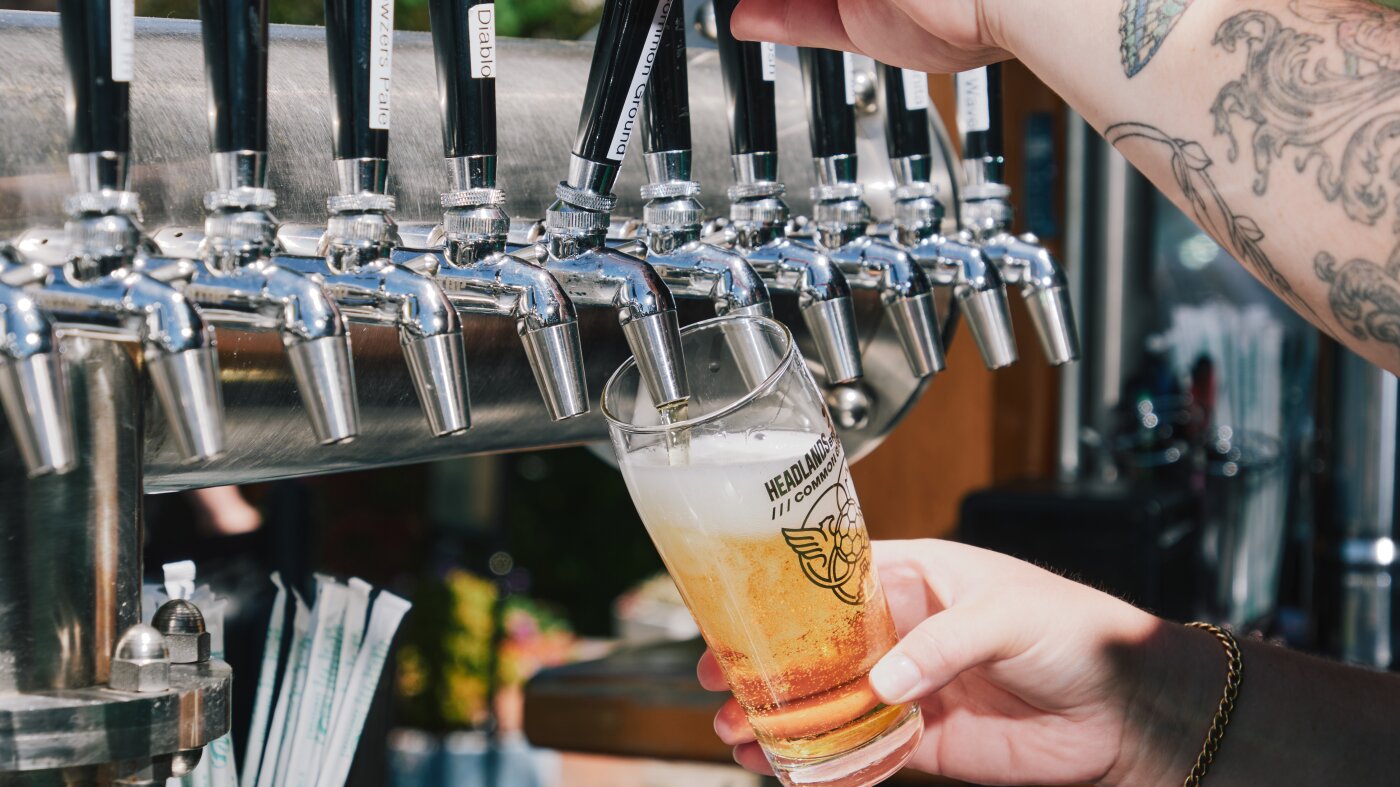
3 World Cup rivals find ‘Common Ground’ in a cross-border beer


The Flipper Zero creators’ Busy Bar productivity display will go on sale next month


Families watch in horror as skydiving plane crashes in France, killing all 11 aboard

