📚 Stay up-to-date on the Book Club
Catch up on the latest Boston.com Book Club pick and join the virtual author discussions.


Book Club
Last month, “The Boston Globe Story of the Celtics,” a comprehensive book of nearly every recorded moment in Celtics history, was released. The book’s editor Chad Finn, a sports columnist for The Boston Globe and Boston.com, collected hundreds of Celtics stories written by renowned sports reporters, such as Bob Ryan and Jackie MacMullan, since the team’s inception in 1946.
For Boston.com’s Book Club, Finn joined Boston.com sports writer Hayden Bird to discuss his process and insights in editing his book. Watch the full video, or read highlights of the discussion below.
Below is an abbreviated version of the discussion, which has been edited and condensed for clarity.

With something like this, where it’s a compilation of the Globe‘s coverage of the Celtics throughout their mutual histories, the one thing you’re really wondering about is: Was everything covered?
I think it was a little bit more complicated, a little bit more reason to worry about it, with the Celtics book because of the race element with Bill Russell. Did they cover some of the stuff that players endured back then? Not being able to eat with their teammates when they would go to North Carolina for an exhibition game or something like that. So it was very satisfying, and also a bit of a relief, to find out that the Globe … had covered every single step, every single significant story along the way with the Celtics, from their launch in 1946 until putting out banner No. 18 a couple of weeks ago.
The first thing you have to do is sit down and make a thorough list of every significant thing chronologically that happened in Celtics history. Once you have that list of 450 different things that happened in Celtics lore, then you go into the archives and you say, “Do we have this?”
A lot of it is also our researcher, Jerry Manion, who’s just an absolute expert at finding what you’re looking for. I can’t tell you how many times in putting this book together where I would message Jerry and say, “Can you find that?” and I’d have it five minutes later. To be able to have that kind of support when you’re putting together a project that could be overwhelming is incredible. I’m incredibly grateful for that.
The game stories and the stories from the coverage tended to be play by play, whereas nowadays, it’s a little bit of a look ahead, or a little bit of context on what you just saw, because you know about Jayson Tatum’s dunk and Jaylen Brown’s three-pointer that tied the game. Back then, that was news to you in the morning. You didn’t see it yourself.

One is Bob Ryan’s lead when they drafted Larry Bird. Red Auerbach took him while he still had a year left of college in Indiana State because back then there was a loophole … where you could draft a player if his college class had graduated.
Bob Ryan had seen Larry Bird play in person. He knew what Red had just pulled off, and his lead basically said Red didn’t just look like he swallowed the canary, it looked like he swallowed the whole aviary — perfect lead for Larry Bird. The whole column turned out to be prescient about how Larry’s career would go. I have some favorite stories in the book, but that one would be right up there in the top five just because of how he started it, how he wrote it, and how right he was.
I learned that the quality of writing really elevated in the late ‘60s. People took more chances with their writing.
In 1969, Leigh Montville got hired at the Globe, and I think if you asked every Globe columnist that has worked here the last 50 years, they would tell you Leigh Montville was the best columnist of all in terms of pure writing ability. He was lyrical, and he joined the beat covering the Celtics in Bill Russell’s last year.
There was another writer at the same time named Bob Sales. His style was very easy to read and thoughtful, and did not shy away from opinions that probably were considered pretty progressive at the time. He was very supportive of the Black players on the Celtics. I thought Bob Sales, even more than Leigh Montville because he came before him, was somebody who really changed the style of writing about the Celtics and the approach that people took to it.
Then a whole different topic, but Bob Ryan came around. He started the Globe the same day as [Peter] Gammons in 1968 as interns. When he took over the NBA beat in the early ‘70s, it changed everything.
If there was an incident, or if they were not treated as equals — which happened a lot — to their white teammates, the Globe wrote about it. And I wasn’t sure going into the book if that was going to be the case, and it was.
There are still misconceptions about how the Celtics handled race, and a big part of that is because their team — that a certain generation remembers so well — is Bird, McHale, Danny Ainge. There was a perception: Oh yeah, Celtics, Boston, White. I mean they had the best white players, but it had nothing to do with race why they were here, and Celtics history tells you that.
Look at Celtics history, and Red just wanted to win. He didn’t care about the race or color of his players. He just wanted the best players, and that was well ahead of its time back then.

You get into the eighties, and Magic and Bird change the game in a bunch of different ways — saying they save the league really isn’t an exaggeration. To have grown up watching that, it was really cool to be able to get into that phase of the book where we are doing things that I remember and that I witnessed.
But it was the hardest chapter in the book to edit, and it’s by far the biggest chapter in the book, for two reasons. Obviously they accomplished a lot, and they won the three titles in that era, and there were so many memorable games, the Lakers and the rivalry, the Sixers, and later on the Pistons. And with a book like this, you can’t just put the championships in it. There were so many games that resonated with people along the way.
The other thing was the quality of the writing was mind-blowing. It was Bob Ryan at the peak of his powers; it was Dan Shaughnessy, Montville; Jackie MacMullan came along in the late ‘80s. So the hardest thing I had to do with this book was pick which story to use without being redundant when two or three of them wrote about the same subject. Which one do I use?
I dedicated the book to my daughter who’s the biggest Celtics fan I know. I also dedicated to Bob Ryan, who is my writing hero.
I also think just writing about the family aspect of it — that’s become a really big thing with the Celtics themselves. I’ve never seen a team that was as connected and as willing to allow people around the players, their kids, their wives, to be as big a part of things as the 2024 Celtics were.
I think it bonded them together even more where they’ve developed this culture, where it’s just greater than what they have on the court.
Catch up on the latest Boston.com Book Club pick and join the virtual author discussions.


Getty
CHARLOTTE, NORTH CAROLINA – NOVEMBER 01: Jayson Tatum #0 of the Boston Celtics reacts in the first quarter during their game against the Charlotte Hornets at Spectrum Center on November 01, 2024 in Charlotte, North Carolina. NOTE TO USER: User expressly acknowledges and agrees that, by downloading and or using this photograph, User is consenting to the terms and conditions of the Getty Images License Agreement. (Photo by Jacob Kupferman/Getty Images)
On Sunday night, the Boston Celtics played the Charlotte Hornets in North Carolina.
The Celtics won by a score of 114-99.

GettyFOXBOROUGH, MASSACHUSETTS – MARCH 26: Jayson Tatum, player of Boston Celtics looks on prior to the international friendly match between Brazil and France at Gillette Stadium on March 26, 2026 in Foxborough, Massachusetts. (Photo by Michael Owens/Getty Images)
Jayson Tatum finished the win with 32 points, five rebounds, eight assists and one block while shooting 12/23 from the field and 5/10 from three-point range in 31 minutes of playing time.
Tatum also made history during the game.
Celtics Stats wrote: “Jayson Tatum scored his 14,000th career point tonight at Charlotte, becoming the ninth player in franchise history to reach that mark.”

GettyBOSTON, MASSACHUSETTS – MARCH 06: Jayson Tatum #0 of the Boston Celtics looks on during the second quarter at TD Garden on March 06, 2026 in Boston, Massachusetts. (Photo by Maddie Meyer/Getty Images)
Tatum is now averaging 20.9 points, 9.1 rebounds, 4.2 assists and 1.1 steals per contest while shooting 39.9% from the field and 32.3% from three-point range in 11 games this season.
Celtics Stats added: “Jayson Tatum recorded a season-high 32 points tonight at Charlotte. It marked his 16th career game with at least 30 points without committing a turnover – the most in franchise history.”

GettyCHARLOTTE, NORTH CAROLINA – NOVEMBER 02: Jayson Tatum #0 of the Boston Celtics dunks against the Charlotte Hornets during the second half of the game at Spectrum Center on November 02, 2024 in Charlotte, North Carolina. (Photo by Grant Halverson/Getty Images)

GettyDETROIT, MICHIGAN – OCTOBER 26: Jayson Tatum #0 of the Boston Celtics looks on against the Detroit Pistons during the second quarter at Little Caesars Arena on October 26, 2025 in Detroit, Michigan. (Photo by Nic Antaya/Getty Images)
With their win over the Hornets, the Celtics improved to 50-24 in 74 games, which has them as the second seed in the Eastern Conference.
They are in the middle of a three-game winning streak (and have won seven out of their last ten).
On the road, the Celtics have gone 24-13.
Following the Hornets, they will play their next game on Monday night when they visit the Atlanta Hawks at State Farm Arena in Georgia.

GettyBOSTON, MASSACHUSETTS – MARCH 08: Jaylen Brown #7 of the Boston Celtics talks with head coach Joe Mazzulla during the second half against the Los Angeles Lakers at TD Garden on March 08, 2025 in Boston, Massachusetts. The Boston Celtics defeated the Los Angeles Lakers 111-101. (Photo by Elsa/Getty Images)
With Tatum playing like himself, the Celtics will have a real chance to win their second title in three years.
They are coming off a year where they lost to Jalen Brunson and the New York Knicks in the second round of the 2025 NBA playoffs.

GettyCHARLOTTE, NORTH CAROLINA – MARCH 26: (R-L) LaMelo Ball #1 talks with Moussa Diabate #14 of the Charlotte Hornets in the second half against the New York Knicks during their game at Spectrum Center on March 26, 2026 in Charlotte, North Carolina. (Photo by Jacob Kupferman/Getty Images)
The Hornets dropped to 39-36 in 75 games, which has them as the 10th seed in the Eastern Conference.
They are in the middle of a two-game losing skid (but have won seven out of ten).
Ben Stinar Ben Stinar has been covering the NBA for over seven years.
He has written for OnSI, Forbes, Amico Hoops, The Big Lead and had a podcast with former All-Star Jameer Nelson. More about Ben Stinar
Loading more stories
![!$+∇√$[+[!LIVESTREAMs!]+] Minnesota Wild vs Boston Bruins Live Free Streams On Tv Channel 2026-03-29](https://i2.wp.com/encrypted-tbn0.gstatic.com/images?q=tbn%3AANd9GcReQZPBURuIIuh0fPF6YTAqOY-y1_BeWJWzPA&s&ssl=1 "!$+∇√$[+[!LIVESTREAMs!]+] Minnesota Wild vs Boston Bruins Live Free Streams On Tv Channel 2026-03-29")
Minnesota Wild vs Boston Bruins
HERE’S (*WAY TO WATCH*) Minnesota Wild VS Boston Bruins Free LIVE 2026-03-29 Rose Bowl Parade 2026 live: Rose Bowl Parade 2026 look to seize control of thrilling Rose Bowl Parade 2026. Every team in the Rose Bowl Parade 2026 has two wins apiece as we go into the final two game weeks. Rose Bowl Parade 2026 will host Rose Bowl Parade 2026 at Live NHL mAtch Durban’s Kings Park Stadium with the Rose Bowl Parade 2026 a single point ahead of Rose Bowl Parade 2026 in the standings and just one behind leaders Rose Bowl Parade 2026.

Boston Legacy FC vs Utah Royals
Boston Legacy FC vs Utah Royals LIVE GAME: Boston Legacy FC vs Utah Royals look to seize control of thrilling Boston Legacy FC vs Utah Royals. Every team in the Boston Legacy FC vs Utah Royals has two wins apiece as we go into the final two game weeks. Boston Legacy FC vs Utah Royals will host Boston Legacy FC vs Utah Royals at Boston Legacy FC vs Utah Royals Park Stadium with the Boston Legacy FC vs Utah Royals a single point ahead of Boston Legacy FC vs Utah Royals in the standings and just one behind leaders Boston Legacy FC vs Utah Royals.







IOC addresses execution of 19-year-old Iranian wrestler Saleh Mohammadi


Jannik Sinner’s Girlfriend Laila Hasanovic Stuns in Ab-Revealing Post Amid Miami Open


Clovis shooting leaves one dead, four injured


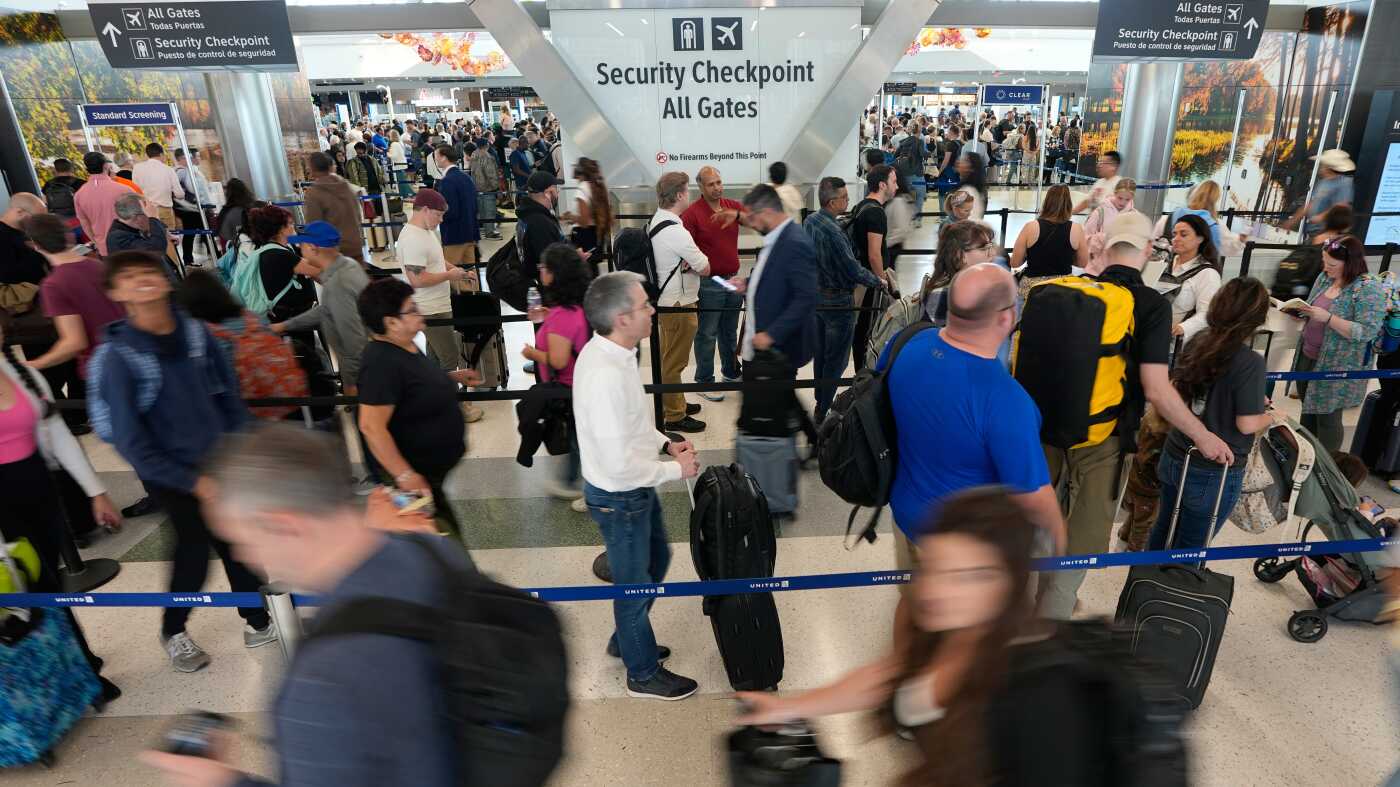
Schumer gambit fails as DHS shutdown hits 36 days and airport lines grow


Tennessee Police Investigating Alleged Assault Involving ‘Reacher’ Star Alan Ritchson


Boy who shielded classmate during school shooting receives Medal of Honor


Record Heat Meets a Major Snow Drought Across the West


Trump gives Iran 48-hour ultimatum to reopen Strait of Hormuz or face strikes on power plants


